
Written by: Ellie Pranckevicius, FNP-BC, Aesthetic Nurse Practitioner & Aesthetic Injector | Facial Restoration & Regenerative Injectable Specialist, Mirror Plastic Surgery | Last updated: July 31, 2026
Key Takeaways
- Concierge peptide consultations in Tampa include a full medical history review, targeted lab analysis, and custom peptide stacks instead of generic protocols.
- Ellie Pranckevicius, FNP-BC, leads peptide therapy at Mirror Plastic Surgery, drawing on neuroscience ICU experience and aesthetic training, and offers 24/7 patient support.
- Common peptides address inflammation and repair, weight management, anti-aging, neurological health, and sexual wellness, each with specific uses and regulatory details.
- A structured five-stage clinical process supports safe peptide therapy through medical history review, lab panels, custom formulation, patient education, and ongoing monitoring.
- Schedule a personalized consultation with Mirror Plastic Surgery for lab-driven, concierge peptide care tailored to your health goals.
Why Ellie Pranckevicius, FNP-BC, Leads Peptide Care at Mirror
Ellie Pranckevicius is a board-certified Family Nurse Practitioner who leads peptide therapy and non-surgical aesthetics at Mirror Plastic Surgery. She spent four years in the Neuroscience ICU at Tampa General Hospital, where she built advanced skills in physiology and metabolic health, and she previously trained as a licensed esthetician at a high-end medical spa in Boston. This dual foundation in critical-care nursing and aesthetic science allows her to evaluate both the systemic and cosmetic sides of a patient’s goals. Ellie focuses on education and plain-language explanations, tells patients when a therapy is not appropriate, and offers direct 24/7 text access for support, questions, and refill requests. When surgical care is relevant, she works alongside a Harvard-educated, Johns Hopkins-trained plastic surgeon and founder of Mirror Plastic Surgery.
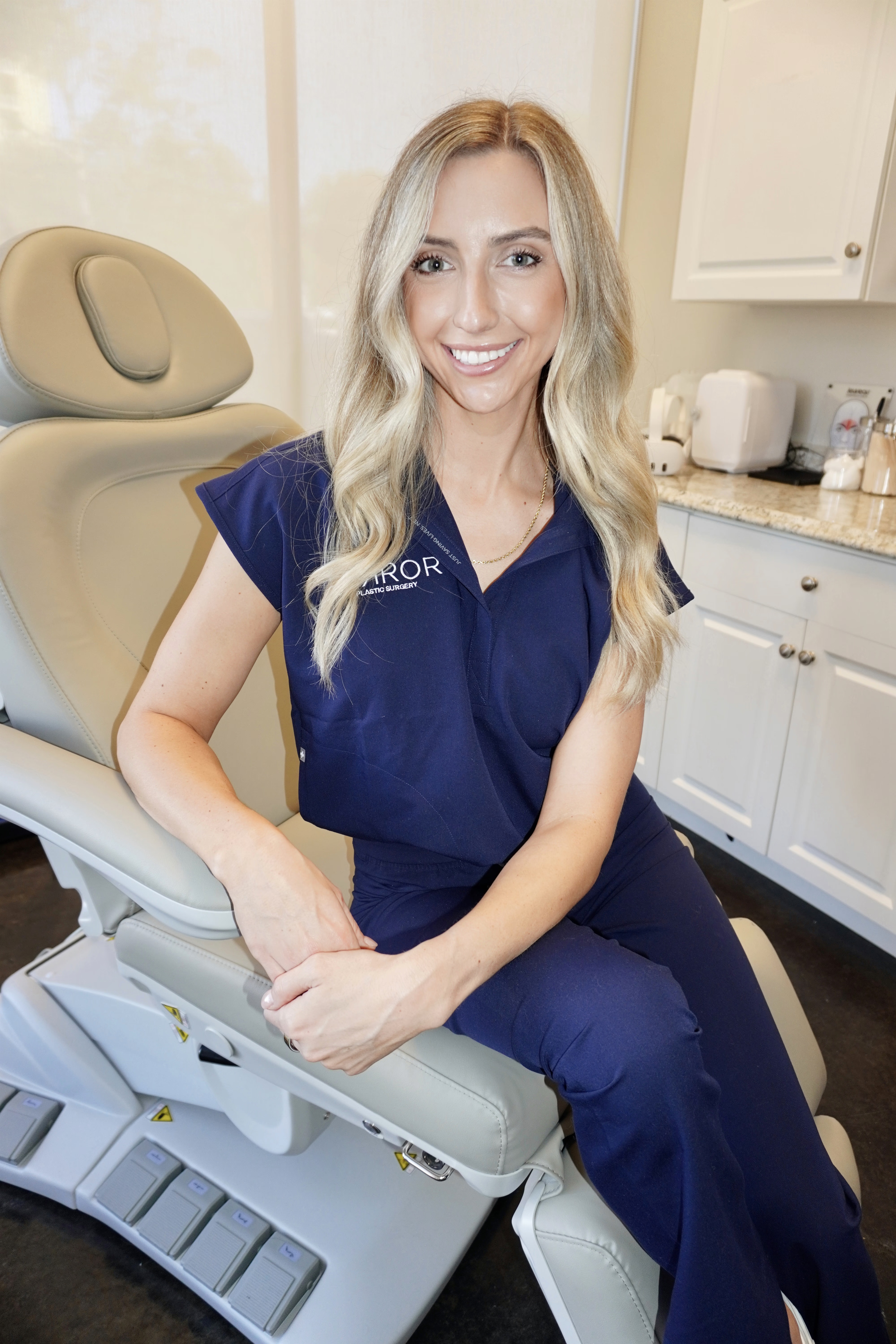
Book an appointment with Ellie to start a consultation grounded in lab results, clear clinical assessment, and individualized care.
Key Concepts: Common Peptides Used in Tampa Concierge Care
Before your consultation, it helps to understand the therapeutic categories Ellie works with. Peptides are short chains of amino acids that signal specific biological processes in the body. Different peptides act on different physiological pathways, so Mirror Plastic Surgery groups its offerings by therapeutic focus to match each patient’s needs.
Inflammation and Repair
- BPC-157 (Body Protective Compound 157): Supports systemic inflammation control and musculoskeletal repair, targeting muscle, tendon, ligament, and joint tissue. On February 27, 2026, HHS announced plans to move BPC-157 and other peptides from Category 2, with formal removal from Category 2 occurring in April 2026, but full reclassification to Category 1 and restoration of compounding access require subsequent PCAC review and FDA rulemaking.
- TB-500 (Thymosin Beta-4): Focuses on soft tissue inflammation and wound repair. TB-500 was removed from Category 2 in April 2026 and had no FDA category as of July 2026, when a PCAC panel recommended it for the 503A bulks list.
- KPV: Targets inflammation within the gut microbiome and may be relevant for certain irritable bowel conditions.
Weight Management and Metabolic Health
- GLP-3R Compounding: A newer-generation GLP-type peptide reported to cause fewer gastrointestinal side effects than earlier formulations, with broader indications that include insulin resistance and cardiovascular risk factors. The global GLP-1 receptor agonist market was valued at $66.38 billion in 2025, which reflects the scale of validated interest in peptide-based metabolic therapies.
Anti-Aging and Energy
- GHK-Cu (Copper Peptide): Supports collagen and elastin production, skin health, and hair and nail rejuvenation. It is available individually or as part of the Glow Stack.
- NAD (Nicotinamide Adenine Dinucleotide): Acts on cellular mitochondria to support energy production and cellular vitality.
- Sermorelin / Ipamorelin: Growth hormone-releasing peptides that stimulate natural GH production and support muscle retention and recovery. Sermorelin is available only as a 503A compounding pharmacy preparation dispensed by prescription.
Neurological and Mood
- Selank: A nootropic peptide used for anxiety and depression, acting on similar brain pathways as benzodiazepines without the same dependency profile.
Sexual Health and Fertility
- PT-141 (Bremelanotide): Used for sexual arousal and libido enhancement and requires blood pressure monitoring because it can cause transient BP elevation.
- Kisspeptin: A fertility peptide that shows promise in IVF trials for improving positive outcomes.
What to Expect: The Five-Stage Clinical Flow at Mirror
Mirror Plastic Surgery follows a structured five-stage process for every peptide therapy patient. A medically supervised evaluation must cover symptom timeline, prior treatment history, current medication review, and documentation of why peptide therapy is appropriate before any protocol begins.
- Medical History Review: A 30–60 minute consultation covers health history, current medications, prior peptide or hormone-replacement experience, and clearly defined patient goals. Ellie screens for contraindications at this stage, including active malignancy, uncontrolled diabetes, pregnancy, and autoimmune flares.
- Lab Panel Ordering: Baseline labs required before starting peptide therapy include CBC with differential, CMP, lipid panel, HbA1c, fasting glucose, fasting insulin, and a full sex hormone panel. For GH-releasing peptides, IGF-1 is added. For GLP-type peptides, TSH and calcitonin are included. For healing peptides, high-sensitivity CRP and ESR establish inflammatory baselines. Clinics that skip pre-treatment blood work are not following a legitimate standard of care.
- Custom-Stack Formulation: Ellie uses consultation findings and lab results to design a personalized peptide stack. Examples include the Glow Stack (GHK-Cu, BPC-157, TB-500) for inflammation and skin health, or a metabolic protocol centered on GLP-3R compounding for weight management.
- Patient Education on Reconstitution and Administration: Patients receive clear instructions for self-administration, often with video demonstrations. Ellie explains the physiology behind each peptide so patients understand what they are taking and why they are taking it.
- Ongoing Monitoring: The three-phase follow-up schedule includes weekly check-ins during weeks 1–4, full reassessment panels at 8 and 12 weeks, and quarterly key markers thereafter. Ellie remains available via text 24/7 throughout this process.
Current Industry Landscape: Why Local Supervision Matters
The peptide therapeutics market has experienced dramatic growth, with the global market valued at $140.9 billion in 2025 and projected to reach $294.6 billion by 2033, and North America holding the largest share. This commercial expansion has been accompanied by a parallel surge in consumer interest and online searches for peptide therapy.
This growth has also brought a rise in unregulated online sourcing. A 2026 Peptidepedia survey of over 1,000 self-selected peptide users found that 70% sourced peptides from “Research Use Only” suppliers, a practice that carries significant safety risks. The regulatory landscape is actively evolving in response to access and quality concerns, and the February 2026 HHS announcement mentioned earlier reflects this shift. Reclassification does not equal FDA approval, so the 503A framework, documentation, and medical-necessity requirements still apply.
This regulatory complexity highlights why local, physician-supervised care in Tampa is often safer than unregulated online sources. Under Section 503A of the FD&C Act, bulk drug substances used in compounding must be accompanied by a valid certificate of analysis and manufactured by an FDA-registered establishment, standards that research-chemical vendors do not meet.
Important Considerations Before Starting Peptide Therapy
Several factors shape whether peptide therapy is appropriate and how it should be structured for each person. The foundation is sourcing quality.
- Sourcing standards: Recent analyses of peptide samples from online suppliers show that many fail to meet purity and dosing standards, and some contain endotoxin contamination. Mirror Plastic Surgery sources exclusively from reputable providers with batch testing and certificates of analysis. This quality foundation supports true personalization.
- Personalization: Individual response to peptides varies based on genetics, baseline labs, lifestyle, and the specific protocol used. A custom stack built from lab results is more likely to produce meaningful outcomes than a generic protocol.1 Once a personalized plan begins, realistic expectations about timing and duration become essential.
- Expected timelines: Some patients notice initial improvements within the first week, while others need several weeks of consistent use before measurable changes appear.1 Ellie sets expectations during the consultation so patients understand likely timelines. These expectations connect directly to maintenance planning.
- Maintenance requirements: Peptide therapy usually functions as an ongoing regimen rather than a single intervention. Sustained benefits often require maintenance protocols, similar to other long-term health strategies. Even with consistent maintenance, individual biology still shapes outcomes.1
- Outcome variability: Results remain subjective and individual, and no practitioner can guarantee identical outcomes across patients.1
Risks, Limitations, and Common Challenges of Peptide Therapy
Peptide therapy carries documented risks that make medical supervision essential. Unregulated peptide sources have documented quality failures including incorrect peptide identity, actual potency ranging from 50 to 200 percent of labeled concentration, bacterial endotoxin contamination, and heavy metal contamination.
Specific risk considerations by peptide class include the following.
- GH secretagogues (Sermorelin, Ipamorelin): Absolute contraindications include active malignancy, uncontrolled diabetes, active proliferative diabetic retinopathy, and untreated pituitary tumors. Common mild effects include water retention, tingling in extremities, and vivid dreams.
- GLP-type peptides: GLP-1/GIP peptides most commonly cause gastrointestinal side effects including nausea, vomiting, diarrhea, and constipation, usually mild to moderate and occurring mainly during dose escalation. A personal or family history of medullary thyroid carcinoma is an absolute contraindication.
- Healing peptides (BPC-157, TB-500): A 2025 systematic review published in HSS Journal reviewed 36 studies on BPC-157 and found only one human clinical study, with the remaining 35 being animal models. Human safety data remains limited, so lab screening and clinical oversight are essential.
- PT-141: Bremelanotide is associated with nausea in approximately 40% of users, flushing in about 20%, and transient blood-pressure increases, and it is contraindicated in uncontrolled hypertension.
Batch-to-batch variability in compounded peptides and individual physiologic differences mean that the baseline and ongoing lab monitoring described in the clinical process above is essential to detect adverse trends early.
Correcting Common Misconceptions About Peptide Therapy
“Peptides are only for weight loss.” GLP-type peptides receive significant media attention for weight management, but the therapeutic range of peptides is far broader. Mirror Plastic Surgery uses peptides to address systemic inflammation, autoimmune conditions, post-surgical recovery, anxiety, energy, skin aging, sexual health, and fertility support.
“All online peptides are the same as clinic-dispensed peptides.” A gray-market peptide analysis found that 30% contained incorrect amino acid sequences and 65% exceeded endotoxin safety thresholds, with additional detections of arsenic at unsafe levels. Licensed 503A compounding pharmacies operate under regulatory inspection, verify identity and potency, and provide certificates of analysis, standards that research-chemical vendors do not meet. Earlier survey data about “Research Use Only” sourcing further reinforces this gap.
“Stopping peptide therapy has no consequences.” Discontinuing a peptide protocol usually leads to a gradual return of the underlying condition being managed. For example, inflammation suppressed by BPC-157 or TB-500 will likely return to its prior state without a maintenance protocol.1 Ellie reviews realistic maintenance expectations with every patient before therapy begins.
Frequently Asked Questions
Are peptides FDA-approved?
Most compounded peptides used in wellness and anti-aging protocols are not FDA-approved drugs. They are prescribed and dispensed through the 503A compounding framework, which requires a valid physician prescription, a certificate of analysis, and sourcing from FDA-registered manufacturers. Some peptides, such as GLP-1 agonists for diabetes and weight management and tesamorelin for HIV-associated lipodystrophy, do carry FDA approval for specific indications. The regulatory landscape changed significantly in February 2026, when approximately 14 peptides previously restricted under Category 2 were returned to Category 1, restoring legal compounding access. This change does not make those peptides FDA-approved, so the 503A requirements still apply in full.
Does insurance cover peptide therapy?
Most compounded peptides are not covered by insurance because they lack FDA approval for the wellness indications most patients seek. Certain FDA-approved products, such as brand-name semaglutide for diabetes or qualifying weight-loss indications, may have coverage depending on the plan. Medicare began covering GLP-1 agonists for weight loss in 2026, but this does not extend to compounded versions. HSA and FSA funds may be usable when a licensed provider issues a valid prescription for a documented medical condition. Ellie reviews coverage considerations during the consultation so patients can plan ahead.
How long does it take to see results from peptide therapy?
Timeline varies by peptide class, individual physiology, and the condition being addressed.1 Some patients report noticeable changes, such as reduced inflammation or improved energy, within the first week. Others need several weeks of consistent use before measurable improvements appear.1 Anti-aging and collagen-focused protocols usually show gradual, cumulative results over months.1 Ellie sets realistic expectations during the initial consultation based on each patient’s lab results, health history, and specific protocol.
What happens if I stop taking peptides?
The benefits of peptide therapy usually fade once therapy stops.1 Inflammation that was being managed will likely return, growth hormone axis support from secretagogues will diminish, and metabolic improvements from GLP-type peptides will typically reverse over time. Mirror Plastic Surgery therefore emphasizes ongoing maintenance protocols rather than one-off treatments. The goal is a sustainable, long-term approach to the underlying condition instead of a short-term fix.
Can peptide therapy be managed remotely, or do I need to visit the Tampa clinic in person?
Mirror Plastic Surgery offers the full consultation, prescription, and shipping process both in person at the clinic and remotely across the United States, including Hawaii and Alaska. Ellie conducts telemedicine consultations, reviews labs digitally, and provides 24/7 text-based support throughout the protocol. Patients who prefer in-person care are welcome at the clinic, and the same lab-driven, personalized standard of care applies in both formats.
Deciding Whether Concierge Peptide Care in Tampa Is Right for You
The decision to pursue peptide therapy works best when you have complete information, including an honest view of the evidence base, a clear understanding of regulatory status, and a protocol built from individual lab results rather than generalized assumptions. The risks associated with unregulated sourcing, such as contamination, incorrect dosing, and absent medical oversight, are well documented and avoidable when care comes through a licensed, medically supervised practice.
Mirror Plastic Surgery’s concierge model offers what high-volume or online-only alternatives often cannot. Ellie spends meaningful time with each patient, orders and interprets the right labs, formulates a custom peptide stack, educates patients on administration and physiology, and remains directly accessible throughout the entire protocol. Her combined background in critical-care nursing and aesthetic medicine allows her to evaluate the full clinical picture, not just a surface-level goal.
For Tampa-area professionals navigating the growing but complex landscape of peptide therapy, a consultation grounded in science, transparency, and individualized care provides the most reliable starting point. Book an appointment with Ellie at Mirror Plastic Surgery to begin your lab-driven, concierge peptide consultation in Tampa.
1 Results may vary from person to person. Editorial content, before and after images, and patient testimonials do not constitute a guarantee of specific results.
Peptide therapy is intended for wellness and optimization purposes and is not prescribed to diagnose, treat, cure, or prevent disease unless specifically stated. Many peptides are not FDA-approved and may be used off-label. Some have limited long-term safety data, with a potential for unknown risks, complications, or desensitization with prolonged use.