
Written by: Dr. Akash Chandawarkar, Board Certified Plastic Surgeon, Mirror Plastic Surgery | Last updated: July 23, 2026
Key Takeaways for Nose Reshaping Decisions
- Nose reshaping includes both surgical rhinoplasty and temporary non-surgical filler options, and each path carries specific benefits, limits, and risks.
- Responsible decision-making follows a safety-first, function-second, aesthetics-third hierarchy that protects long-term structure and breathing.
- Skin thickness, medical history, breathing concerns, and psychological readiness all shape which approach makes sense for each patient.
- Non-surgical rhinoplasty offers minimal downtime and immediate results but cannot reduce nasal size or improve breathing, while surgical rhinoplasty provides permanent structural change with a defined recovery period.1
- Selecting a board-certified surgeon with specialized training and a patient-centered approach is essential; start with a comprehensive evaluation at Mirror Plastic Surgery to explore the best option for your goals.
How Nose Reshaping Works in Aesthetic Medicine
Nose reshaping procedures address two overlapping categories of concern: cosmetic goals such as refining nasal shape, reducing a dorsal hump, or improving tip definition, and functional goals such as correcting a deviated septum, addressing collapsed nasal valves, or relieving chronic nasal obstruction. These categories frequently intersect. A structural correction that improves breathing may also change appearance. A cosmetic refinement that disrupts nasal valve integrity can impair airflow.
Surgical rhinoplasty is one of the most commonly performed facial plastic surgeries. Informed decision-making requires clarity about what each approach can achieve, what it cannot, and which risks accompany each path.
The Safety-Function-Aesthetics Care Model at Mirror Plastic Surgery
Mirror Plastic Surgery follows a clear principle: safety is non-negotiable, function comes next, and aesthetics emerge from respecting both. This hierarchy reflects how evidence-based surgical planning works in practice. Procedures that sacrifice structural integrity for cosmetic gain often lead to higher complication rates, breathing problems, or revision surgery.
In practice, this model means every patient receives a comprehensive top-to-bottom anatomical assessment before any treatment is recommended. This evaluation covers nasal bone and cartilage framework, soft tissue and skin thickness, overall facial proportion, septal position, and airway function, and each element guides decisions about safe cosmetic change. To support this level of attention, the practice limits surgical volume to one to two procedures per day, a deliberate contrast to high-volume centers that perform five to ten daily, so clinical focus remains undivided throughout the perioperative period.
Non-surgical treatments follow the same philosophy. Care focuses on long-term planning instead of one-off procedures, and product selection is based on evidence rather than supplier quotas.
Meet Dr. Akash: Training, Expertise, and Philosophy
The clinical standard at Mirror Plastic Surgery reflects the training and philosophy of Dr. Akash. His academic path began at MIT, where he studied neuroscience and nuclear engineering, and he then entered the highly selective Harvard-MIT Division of Health Sciences and Technology program, graduating from Harvard Medical School with Honors. He completed a seven-year integrated plastic and reconstructive surgery residency at Johns Hopkins University, widely regarded as one of the world’s premier programs.
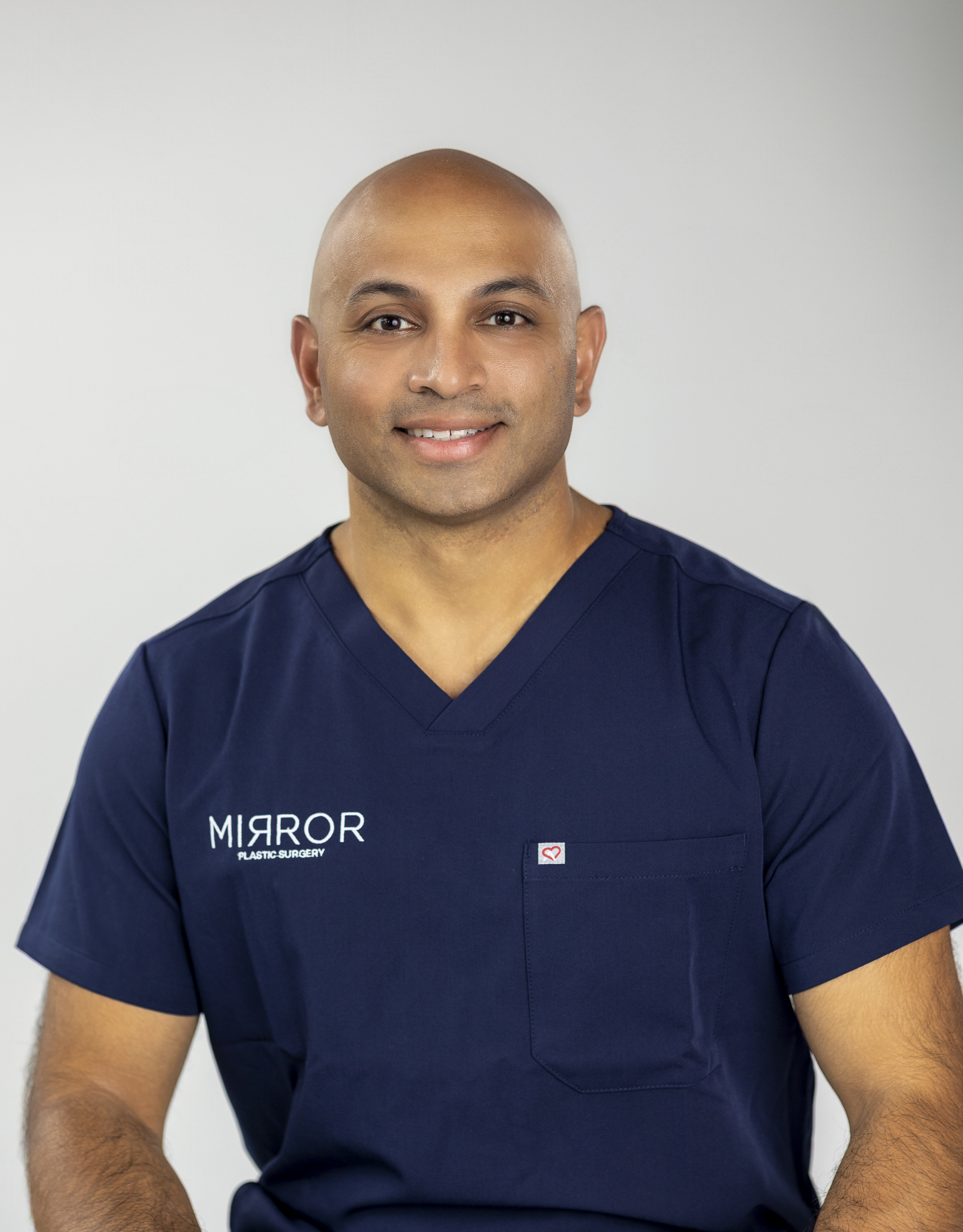
He then pursued an aesthetic surgery fellowship at the Manhattan Eye, Ear and Throat Hospital (MEETH), which represents the highest level of specialization in cosmetic surgery. He also completed the Stanford University Biodesign Innovation Fellowship, where physicians learn to develop technological solutions to unmet clinical needs.
Dr. Akash is board certified by the American Board of Plastic Surgery, serves as Next Generation Editor for the Aesthetic Surgery Journal, has testified before the FDA on breast implant safety, and has been recognized by Newsweek as one of America’s Best Plastic Surgeons for two consecutive years. His research on artificial intelligence and machine learning for objective rhinoplasty analysis has been presented at The Rhinoplasty Society Annual Meeting.
His guiding philosophy is straightforward: natural results come from restoring and supporting underlying anatomy, not from forcing a standardized aesthetic template.
Key Nose Reshaping Terms in Plain Language
Clear vocabulary around nose reshaping supports more productive consultations and more realistic expectations.
- Open rhinoplasty: A surgical approach using a small external incision across the columella, the tissue between the nostrils, which provides direct visibility of the nasal framework. Open rhinoplasty is best suited for complex cases, revisions, and significant cartilage grafting, where direct visualization supports precision.
- Closed rhinoplasty: An approach where all incisions are placed inside the nostrils, leaving no external scar. Closed rhinoplasty offers reduced need for grafting and faster recovery but provides less direct visualization, so it fits moderate refinements.
- Functional rhinoplasty: Surgery that focuses on restoring nasal airflow by addressing a deviated septum, turbinate hypertrophy, or collapsed nasal valves, while often also improving appearance.
- Preservation rhinoplasty: A technique that maintains the native dorsal structure instead of removing and rebuilding it, and is associated with higher early patient satisfaction and comparable longer-term functional outcomes versus structural rhinoplasty.
- Non-surgical nose reshaping (liquid rhinoplasty): Injection of dermal fillers, most commonly hyaluronic acid, to camouflage contour irregularities or create the appearance of a smoother profile. Results are temporary and this approach cannot reduce nasal size.
- Nasal valve: The narrowest segment of the nasal airway. Collapse or narrowing here is a common structural cause of breathing obstruction that surgical rhinoplasty can address.
Current Rhinoplasty Techniques and Patient Priorities
Rhinoplasty technique has advanced considerably over the past decade. Ultrasonic (piezoelectric) rhinoplasty reduces bruising, swelling, and risk of bony irregularities by selectively cutting bone while sparing soft tissue, cartilage, and blood vessels1, although it applies specifically to cases that require bony framework modification. Preservation techniques have gained traction for their ability to maintain native dorsal anatomy. A 2025 systematic review of 662 patients found that dorsal preservation rhinoplasty produced significant NOSE-score improvements with low complication and revision rates1.
Perioperative protocols have also evolved. A 2026 systematic review found that tranexamic acid significantly reduces intraoperative bleeding and improves operative field quality in rhinoplasty, which supports precision across techniques. A 2023 meta-analysis showed that intraoperative regional nerve blocks lower postoperative pain scores, reduce opioid consumption, and increase patient satisfaction.
Patient priorities have shifted in parallel. Many candidates now seek surgeons who can explain technique choices, show functional outcomes, and provide realistic before-and-after documentation across a wide range of anatomies.
Major Factors That Shape Your Nose Reshaping Plan
Several factors determine which approach, surgical or non-surgical, fits a given patient.
- Candidacy: A good rhinoplasty candidate has good overall health, clear specific concerns, and a realistic understanding of what surgery can and cannot achieve. Facial growth should be complete, and a minimum age of 17 is generally preferred for cosmetic rhinoplasty.
- Skin characteristics: Moderate skin thickness tends to yield the most defined natural results. Very thick skin can limit visible tip definition, while very thin skin can make small irregularities more apparent.
- Functional breathing: Patients with chronic obstruction from a deviated septum or collapsed nasal valves are candidates for functional rhinoplasty. Both conventional spreader graft and internal nasal valve graft techniques produce statistically significant NOSE-score improvements at one year, and anatomy guides technique selection.
- Medical history: Uncontrolled diabetes, active autoimmune disorders, bleeding disorders, and significant cardiovascular disease can affect candidacy and may require specialist clearance. Active smokers must stop nicotine use at least four weeks before and after surgery.
- Psychological readiness: A 2023 meta-analysis found a notable prevalence of body dysmorphic disorder among rhinoplasty candidates. Thorough psychological screening forms a standard part of responsible candidacy evaluation.
- Tampa recovery considerations: Florida’s heat and humidity affect post-rhinoplasty recovery. Swelling is influenced by activity level, sleep quality, and allergy status. Factors that prolong swelling include thicker skin, more extensive tip work, revision surgery, smoking, uncontrolled allergies, poor sleep, and returning to intense exercise too early. Tampa patients should plan for outdoor activity limits and sun avoidance during the initial healing phase.
Surgical vs Non-Surgical Nose Reshaping: Structured Comparison
The table below compares key attributes of surgical rhinoplasty and non-surgical (liquid) rhinoplasty, highlighting the core trade-off. Surgical rhinoplasty offers permanent structural change and potential breathing improvement with a recovery period, while non-surgical options provide immediate results and minimal downtime but cannot reduce size or improve airflow. Every figure is cited inline.
| Attribute | Surgical Rhinoplasty | Non-Surgical (Liquid) Rhinoplasty |
|---|---|---|
| Can reduce nasal size | Yes | No, cannot reduce size or remove tissue |
| Result longevity | Permanent (with normal aging) | Typically 6–12 months |
| Functional breathing benefit | Yes, when septum or valves are addressed | None |
| Serious adverse event risk | Risk of revision and infection1 | Risk of adverse events including vascular complications1 |
| Recovery to social activity | One to two weeks for most, with final contour at 12+ months1 | Minimal downtime, with results visible immediately |
| Reversibility | Not reversible without revision surgery | Hyaluronic acid fillers are dissolvable with enzyme, calcium hydroxylapatite is not |
Each approach carries specific pros and cons.
- Surgical rhinoplasty advantages: Permanent structural change, potential improvement in functional breathing, and a full range of cosmetic modifications including size reduction, tip reconstruction, and septal correction.
- Surgical rhinoplasty limitations: Requires anesthesia and a recovery period, may require revision surgery in some cases, and final results may take up to one year to fully appear.
- Non-surgical rhinoplasty advantages: No downtime, immediate reversibility with hyaluronic acid, and useful camouflage of minor contour irregularities or dorsal humps through optical illusion.
- Non-surgical rhinoplasty limitations: Cannot reduce nasal size, and the nose tip is a higher-risk area due to blood supply, so major tip refinements cannot be achieved safely with filler. Calcium hydroxylapatite carries additional risks for nasal injections.
Misconceptions About Liquid Rhinoplasty and Choosing a Provider
Many people assume that liquid rhinoplasty can achieve everything surgery can, just on a temporary basis, but the two procedures serve different goals and are not interchangeable. Non-surgical rhinoplasty is a camouflage technique rather than a structural one. It cannot narrow nostrils, remove bone or cartilage, or improve breathing.
Provider selection strongly influences outcomes. Rhinoplasty is one of the most technically demanding facial plastic surgeries because every modification to one nasal structure can affect another. High-volume practices that perform many procedures each day may not provide the individualized anatomical assessment that complex or functional cases need. Technical errors and failures of informed consent are common allegations in rhinoplasty malpractice cases, which highlights the importance of thorough preoperative communication.
Patients should confirm that their surgeon is board certified by the American Board of Plastic Surgery, can demonstrate experience with both open and closed techniques, and maintains hospital privileges for the rare event of a complication. Qualified surgeons show experience with cartilage grafting from nasal, ear, or rib sources and routinely address functional concerns alongside cosmetic goals.
Frequently Asked Questions About Rhinoplasty and Fillers
How does Dr. Akash choose between open and closed rhinoplasty?
Open rhinoplasty uses a small external incision across the columella to provide direct visibility of the nasal framework, which makes it preferable for complex cases, revisions, and significant cartilage grafting. Closed rhinoplasty places all incisions inside the nostrils, leaves no external scar, and typically allows faster recovery, so it fits moderate refinements. Dr. Akash selects the approach based on each patient’s anatomy, the complexity of the goals, and whether functional correction is needed. Both techniques can produce excellent results in experienced hands, and the approach functions as a tool rather than a hierarchy.
Can non-surgical nose reshaping replace surgery?
Non-surgical rhinoplasty with hyaluronic acid fillers can camouflage minor contour irregularities and create the optical appearance of a smoother profile. It cannot reduce nasal size, narrow nostrils, remove bone or cartilage, or improve breathing. Results typically last six to twelve months.1 The two approaches serve different goals and do not replace each other. Patients whose main concern is size reduction, functional breathing, or permanent structural change need a surgical evaluation.
What does a realistic recovery timeline look like after surgical rhinoplasty in Tampa?
Most patients return to non-strenuous work or social activities within one to two weeks as major bruising and swelling improve. Approximately two-thirds of postoperative swelling resolves within the first month, with around 95 percent reduction by six months and about 97.5 percent by one year.1 Subtle tip swelling can persist beyond twelve months, especially in patients with thicker skin or more extensive tip work. Tampa-specific considerations include avoiding sun exposure and intense outdoor activity during the initial healing phase, because heat and exertion can prolong swelling. Uncontrolled allergies, smoking, and poor sleep also extend recovery.
How does Mirror Plastic Surgery approach breathing improvement with rhinoplasty?
Rhinoplasty can significantly improve nasal breathing when structural causes of obstruction, such as a deviated septum, turbinate hypertrophy, or collapsed nasal valves, are addressed during the procedure.1 Multiple techniques, including preservation rhinoplasty and internal nasal valve grafting, have shown statistically significant improvements in validated breathing outcome scores at one year. Mirror Plastic Surgery’s safety-function-aesthetics hierarchy makes functional evaluation a standard part of every rhinoplasty consultation rather than an optional add-on. Patients with chronic nasal obstruction are assessed for structural contributors before any cosmetic planning begins.
What should I look for when selecting a rhinoplasty surgeon in the Tampa Bay area?
Key criteria include board certification by the American Board of Plastic Surgery, fellowship-level training in facial or aesthetic surgery, experience with both open and closed techniques, and the ability to address functional concerns alongside cosmetic goals. Review the surgeon’s own before-and-after photographs across a range of anatomical presentations. Confirm that the practice conducts thorough preoperative evaluation, including anatomical assessment, medical history review, and psychological readiness screening, instead of offering standardized treatment plans. Hospital privileges serve as an important safety indicator because they ensure access to higher-level care in the rare event of a complication. Practices that limit daily surgical volume often provide more individualized perioperative attention than high-volume settings.
Summary: Choosing the Right Nose Reshaping Path
Nose reshaping decisions work best when grounded in anatomical reality, honest expectations, and a clear view of the trade-offs between surgical and non-surgical approaches. Surgical rhinoplasty offers permanent structural change and the potential to improve breathing, with a defined recovery period and the need to choose a highly qualified surgeon. Non-surgical rhinoplasty offers a low-downtime camouflage option with meaningful limitations and a vascular risk profile that still requires expert providers.
Neither approach suits every patient. The right choice depends on individual anatomy, specific goals, medical history, and the strength of the clinical relationship guiding the decision. At Mirror Plastic Surgery, every rhinoplasty evaluation begins with that relationship, through an hour-long, top-to-bottom assessment with Dr. Akash, whose training and recognition were detailed earlier, and whose research in rhinoplasty outcomes has been presented at The Rhinoplasty Society Annual Meeting.
1 Results may vary from person to person. Editorial content, before and after images, and patient testimonials do not constitute a guarantee of specific results.