
Written by: Ellie Pranckevicius, FNP-BC, Aesthetic Nurse Practitioner & Aesthetic Injector | Facial Restoration & Regenerative Injectable Specialist, Mirror Plastic Surgery | Last updated: July 8, 2026
Key Takeaways
- MRI studies show hyaluronic acid fillers can persist in facial tissue for years, challenging the belief that they fully dissolve within 6–18 months.1
- Delayed inflammatory nodules and granulomas are uncommon but can appear years later, often after illness or immune activation, so patients need ongoing monitoring.1
- Vascular occlusion and blindness risks, though rare, are highest in the glabella, nose, nasolabial folds, and forehead, and expert anatomy-based technique reduces that risk.1
- HA and biostimulatory fillers offer safer long-term profiles than permanent fillers because they allow enzymatic or natural reversal and simpler complication management.1
- Patients considering filler treatments can schedule a consultation at Mirror Plastic Surgery to review cumulative filler history and create an evidence-based, long-term monitoring plan.
How This Evidence Review Was Built
Source selection prioritized PMC-indexed systematic reviews, meta-analyses, and prospective cohort studies published from 2018 through mid-2026. Search parameters included the terms: dermal filler long-term safety, hyaluronic acid persistence MRI, vascular occlusion filler, delayed inflammatory nodule filler, and permanent filler complication. Inclusion criteria required peer-reviewed publication, human subjects, and reporting of outcomes at twelve months or beyond. Findings are organized by complication category and filler type to support direct clinical application.
MRI Evidence of Hyaluronic Acid Persistence
Recent MRI evidence on HA longevity shows that residual HA filler can remain detectable in facial tissue years after injection in many patients. No complete filler dissipation appeared in the study participants over the observation window.
These observations challenge the widely repeated claim that HA fillers are fully metabolized within six to eighteen months. Patients who believe their filler has worn off may still carry residual product in facial tissue planes. For providers, this highlights the value of imaging-informed assessment before adding new volume. For patients, it reframes reversibility as a more complex process than a single hyaluronidase session. Cumulative layering across multiple treatment cycles, without accounting for residual product, likely contributes to the overfilled appearance that many patients want to avoid.
Delayed Nodules and Granulomas Linked to Long-Term Filler
Beyond persistence itself, the long-term presence of filler material raises a related concern: delayed inflammatory complications. Delayed inflammatory nodules and foreign body granulomas represent the most clinically challenging long-term complication category for HA and non-HA fillers alike. The incidence of delayed nodules remains low across HA products, though underreporting is widely acknowledged as a limitation. Granulomas, a distinct histological entity involving a chronic immune response to filler material, occur at lower reported rates but carry greater management complexity.
Triggering factors identified in the literature include viral illness, dental procedures, and systemic immune activation. These events can provoke inflammatory responses in tissue that holds residual filler years after injection. Evidence-supported management strategies include intralesional corticosteroids, hyaluronidase for HA-based nodules, and in refractory cases, systemic immunomodulatory therapy. For patients, long-term monitoring, not a single post-treatment follow-up, represents the appropriate standard of care. This approach is especially relevant for individuals with autoimmune histories or those who have accumulated filler over multiple years.
Vascular Occlusion, Blindness Risk, and Technique Choices
Vascular occlusion is the most acutely dangerous complication associated with facial filler injection. Vision loss resulting from retrograde embolization of filler into the ophthalmic arterial system appears in the literature, with the glabella, nose, nasolabial fold, and forehead identified as the highest-risk anatomical zones. The incidence of filler-related blindness is very low, yet the consequence is irreversible in most reported cases.
Technique-related factors consistently identified as risk modifiers include injection depth, use of sharp needles versus blunt cannulas in high-risk zones, injection pressure, bolus volume per deposit, and the injector’s real-time knowledge of facial vascular anatomy. Aspiration before injection remains debated in the literature, and some studies question its reliability with modern small-bore needles. Slow, low-pressure delivery and careful attention to anatomical landmarks receive broad support as risk-reduction measures. For patients, choosing a provider with documented anatomical training and complication management experience offers the most practical way to reduce risk.
Permanent Fillers Compared With Reversible Options
Permanent fillers, including polymethylmethacrylate (PMMA) microspheres, carry a distinct long-term complication profile compared to HA products. Because they cannot be dissolved, delayed granulomas and nodules associated with permanent fillers often require surgical excision or prolonged immunosuppressive therapy rather than enzymatic reversal. Systematic reviews consistently report higher rates of late-onset inflammatory complications with permanent and semi-permanent agents relative to HA fillers, even when early complication rates appear comparable.
HA fillers retain the key advantage of enzymatic reversibility with hyaluronidase. This option is not instantaneous or always complete, given the persistence data above, yet it provides a meaningful safety margin that permanent options lack. CaHA and PLLA fillers occupy an intermediate position. They are biostimulatory, not permanent, and long-term reviews generally show favorable complication profiles when providers use them in appropriate anatomical locations and patient populations. Overall, the evidence supports HA and biostimulatory fillers as safer long-term choices for most facial indications when reversibility and complication management matter.
What We Still Do Not Know After Five to Ten Years
The current literature contains meaningful gaps for outcomes beyond five to ten years. Most prospective studies follow patients for twelve to twenty-four months, and the Master et al. MRI data represent an exception rather than the norm. Longitudinal data on cumulative filler burden, tissue remodeling over decades, and the interaction between aging facial anatomy and retained product remain largely absent from the peer-reviewed record.
These gaps directly affect informed consent. Patients considering filler treatments today should understand that the full picture of very long-term outcomes, beyond a decade, has not yet been established by controlled prospective evidence. This reality does not argue against evidence-supported treatments. It supports choosing providers who conduct thorough baseline assessments, document treatment history carefully, and build monitoring into the long-term care plan rather than treating each session as an isolated event.
Complication Rates, New Formulations, and Patient Factors
Complication data from large registry studies and systematic reviews show that overall serious adverse event rates for HA fillers remain low per treatment session.1 Most complications fall into mild and transient categories such as bruising, swelling, and erythema. Serious complications, including vascular occlusion, granuloma, and infection, account for a small fraction of events but appear frequently in the literature because case reports focus on them.
Formulation evolution over the review period adds important context. Cross-linking technology, particle size, and rheological properties vary significantly across HA brands and product lines, and these variables influence both longevity and tissue integration. Patient-level factors, including skin quality, tissue laxity, prior filler burden, immune status, and anatomical variation in vascular architecture, shape individual risk in ways that population-level incidence rates cannot fully capture.
How This Evidence Guides Treatment Planning and Follow-Up
The evidence reviewed here supports several concrete implications for patients and providers.
- Pre-treatment assessment should account for cumulative filler history, not just the current session’s planned volume.
- Patients with five or more years of filler treatments benefit from a structured baseline evaluation, ideally by a provider with imaging literacy, before additional product is placed.
- Long-term monitoring for delayed nodules should be built into the care plan, with clear guidance on symptoms that require prompt evaluation.
- Provider selection should weight anatomical expertise, vascular risk awareness, and documented training in complication recognition and management.
- Reversibility planning, including which products can be dissolved and under what circumstances, belongs in informed consent, not as an afterthought.
Book a consultation with Ellie to review your full filler history, discuss cumulative burden, and build a monitoring plan grounded in current evidence.
Limits of the Current Research
This review reflects the published literature as of mid-2026 and carries the limitations inherent to that body of evidence. These include heterogeneity in study design, product variability, underreporting of adverse events in non-registry settings, and the absence of long-term controlled trials beyond ten years. Complication rates reported here represent population-level estimates. Individual risk depends on anatomy, technique, product selection, and patient health status. Regulatory differences across countries affect which products appear in the literature, and findings from non-U.S. markets may not translate directly to FDA-cleared formulations available in the United States.
Why These Findings Matter for the Aesthetics Industry
Accumulating MRI and registry data are reshaping how the injectable aesthetics field approaches treatment planning, informed consent, and provider training. Regulatory bodies and professional societies increasingly incorporate long-term persistence data into guidance documents. The concept of filler burden, the cumulative volume of retained product across treatment cycles, is gaining traction as a clinical variable rather than a theoretical concern.
For patients, this shift means that the standard of care is moving toward longitudinal management rather than episodic treatment. This model demands more from providers in documentation, assessment depth, and continuity of care.
Expert Perspective from Mirror Plastic Surgery
Ellie Pranckevicius, FNP-BC, approaches every filler consultation at Mirror Plastic Surgery with a full-face, top-to-bottom assessment before she makes any product recommendation. Her dual background in esthetics and advanced nursing, combined with four years in a Neuroscience ICU, supports a clinical framework that treats surface anatomy and subdermal vascular architecture as equally important.
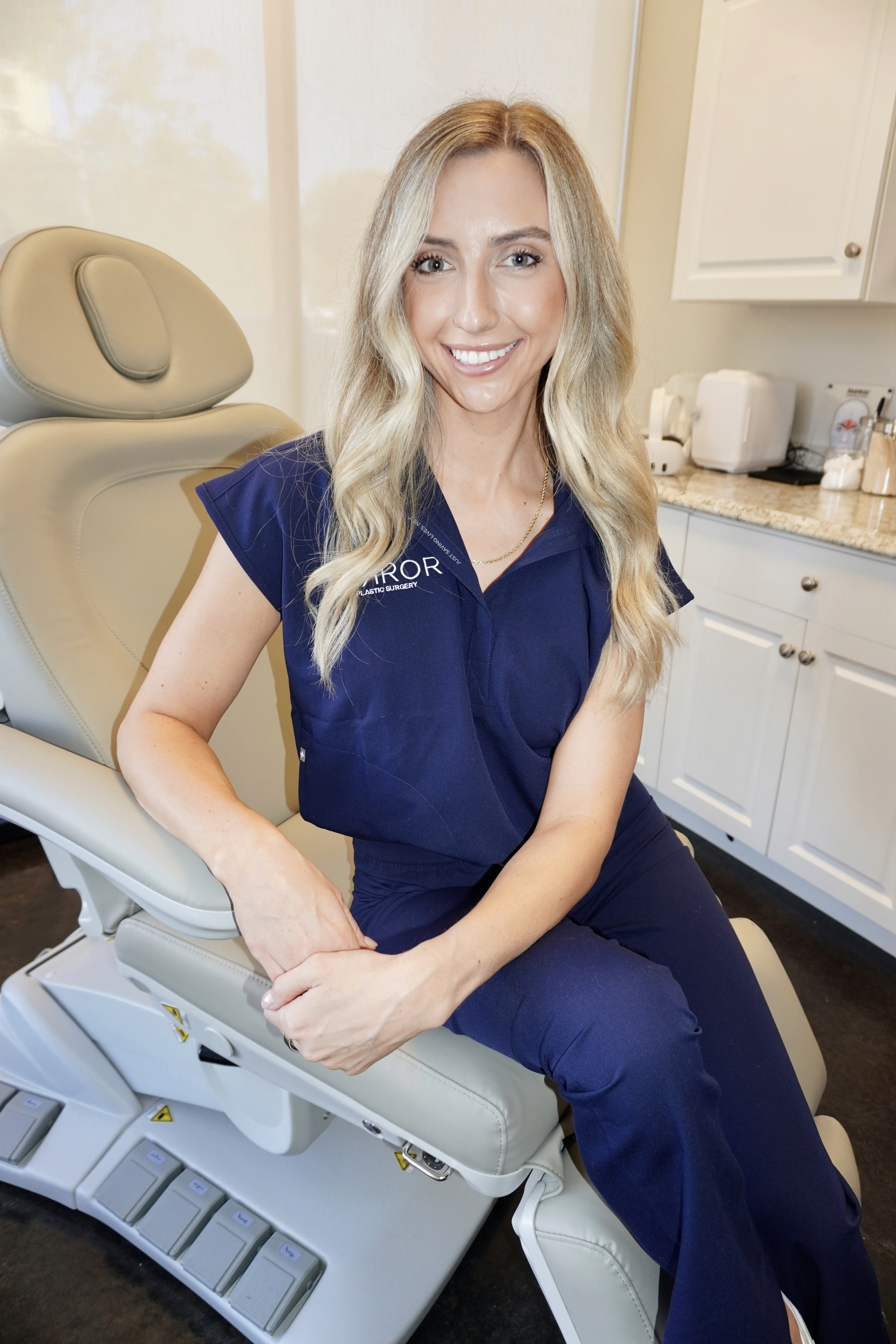
“The MRI persistence data changes the conversation I have with every new patient,” Ellie notes. “Before I place anything, I want to understand what is already there, not just what the patient remembers receiving, but what their tissue is actually holding. That is the only way to plan responsibly for the next five years, not just the next six months.”
Her injection protocol prioritizes slow, low-pressure delivery in high-risk anatomical zones, cannula use where evidence supports reduced vascular risk, and conservative volume per session with planned follow-up rather than single-session overcorrection. Patients at Mirror Plastic Surgery receive explicit guidance on delayed complication symptoms and direct access to Ellie for any post-treatment concerns. This continuity model differs from the experience at many high-volume practices.
Book a consultation with Ellie to experience an anatomy-first assessment that translates the current evidence into a personalized, long-term injectable plan.
Frequently Asked Questions
Can MRI detect filler that was injected years ago, even if I think it has dissolved?
Yes. MRI imaging has demonstrated that hyaluronic acid filler can remain detectable in facial tissue for years after injection, even when patients report no recent treatments and believe their filler has fully metabolized. This finding does not mean filler is harmful in place. It does mean that providers should assess cumulative burden before adding new volume, and patients should disclose their full treatment history at every consultation.
What are the warning signs of a delayed inflammatory nodule, and when should I seek evaluation?
Delayed inflammatory nodules typically present as firm, tender lumps at a prior injection site, appearing weeks to years after treatment, often after illness, dental work, or immune activation. They differ from the temporary swelling that follows injection. Any new lump, persistent firmness, redness, or warmth at a filler site that develops more than four weeks after treatment deserves prompt evaluation by a qualified provider. Early intervention with hyaluronidase for HA-based nodules or intralesional corticosteroids generally produces better outcomes than delayed management.
How does vascular occlusion happen, and what reduces my risk?
Vascular occlusion occurs when filler enters or compresses a facial artery, blocking blood flow to downstream tissue or, in the most serious cases, traveling backward into the ophthalmic circulation and causing vision loss. Risk is highest in anatomically dense vascular zones such as the glabella, nose, nasolabial folds, and forehead. Patient-side risk reduction centers on provider selection. Choose an injector with documented training in facial vascular anatomy who uses appropriate technique, including slow delivery, low pressure, and anatomically informed depth, and who has a clear protocol for recognizing and managing occlusion emergencies. Hyaluronidase availability in the treatment room is a non-negotiable safety standard for any practice that administers HA fillers.
Are biostimulatory fillers like Radiesse or PLLA safer long-term than hyaluronic acid fillers?
Biostimulatory fillers, including CaHA such as Radiesse and PLLA, show favorable long-term safety profiles in the peer-reviewed literature when used in appropriate anatomical locations and patient populations.1 They are not permanent and degrade over time while stimulating collagen production. They are also not enzymatically reversible the way HA fillers are. If a complication arises, management options are more limited. The right choice between HA and biostimulatory products depends on individual anatomy, treatment goals, prior filler history, and the specific area being treated. A thorough consultation with an experienced injector provides the best setting for that decision.
How often should I have a follow-up if I receive regular filler treatments?
No single interval fits every patient, yet evidence on long-term persistence supports more structured follow-up than the industry has historically recommended. Patients with multiple years of filler history benefit from a comprehensive reassessment, not just a touch-up appointment, at least annually. This reassessment should evaluate cumulative volume, tissue response, changes in facial anatomy due to aging, and whether the current treatment plan remains appropriate. Patients who have not had a full baseline assessment in over two years, or who are considering adding volume to areas with significant prior treatment, are strong candidates for an imaging-informed evaluation before proceeding.
Conclusion
Peer-reviewed evidence through 2026 shows that hyaluronic acid fillers persist in facial tissue far longer than traditional marketing timelines suggest. Delayed inflammatory complications are real and require long-term monitoring. Vascular risks, while rare, depend heavily on technique and provider expertise, which makes injector selection a safety decision rather than only an aesthetic choice. Permanent fillers carry a less manageable complication profile than reversible HA and biostimulatory options. Evidence gaps beyond ten years remain and reinforce the importance of informed consent and longitudinal care. For patients in the St. Petersburg and Tampa Bay area, Mirror Plastic Surgery’s anatomy-first, concierge approach, led by Ellie Pranckevicius, FNP-BC, translates this evidence into individualized treatment planning, conservative technique, and ongoing monitoring that aligns with current science.
Book a consultation with Ellie at Mirror Plastic Surgery to begin a long-term injectable relationship grounded in evidence, anatomy, and honest communication.
Disclaimer: Results may vary from person to person. Editorial content, before and after images, and patient testimonials do not constitute a guarantee of specific results.
1 Results may vary from person to person. Editorial content, before and after images, and patient testimonials do not constitute a guarantee of specific results.