
Written by: Ellie Pranckevicius, FNP-BC, Aesthetic Nurse Practitioner & Aesthetic Injector | Facial Restoration & Regenerative Injectable Specialist, Mirror Plastic Surgery | Last updated: July 17, 2026
Key Takeaways for Tampa Patients
- Personalized peptide therapy works throughout the body using lab-guided protocols, while typical medical spa treatments stay localized and surface-level.
- Peptide therapy requires medical supervision, baseline and follow-up lab testing, and sourcing from licensed compounding pharmacies for safety and predictable results.
- Most peptide protocols take 8–12 weeks or longer to show meaningful changes, while neurotoxins and fillers create visible results within days.1
- Peptide therapy can address inflammation, metabolism, and hormone regulation, while medical spa services focus on visible aesthetic improvements.
- Tampa patients interested in lab-driven peptide therapy can meet with Ellie Pranckevicius at Mirror Plastic Surgery to see whether this approach fits their health and aesthetic goals.
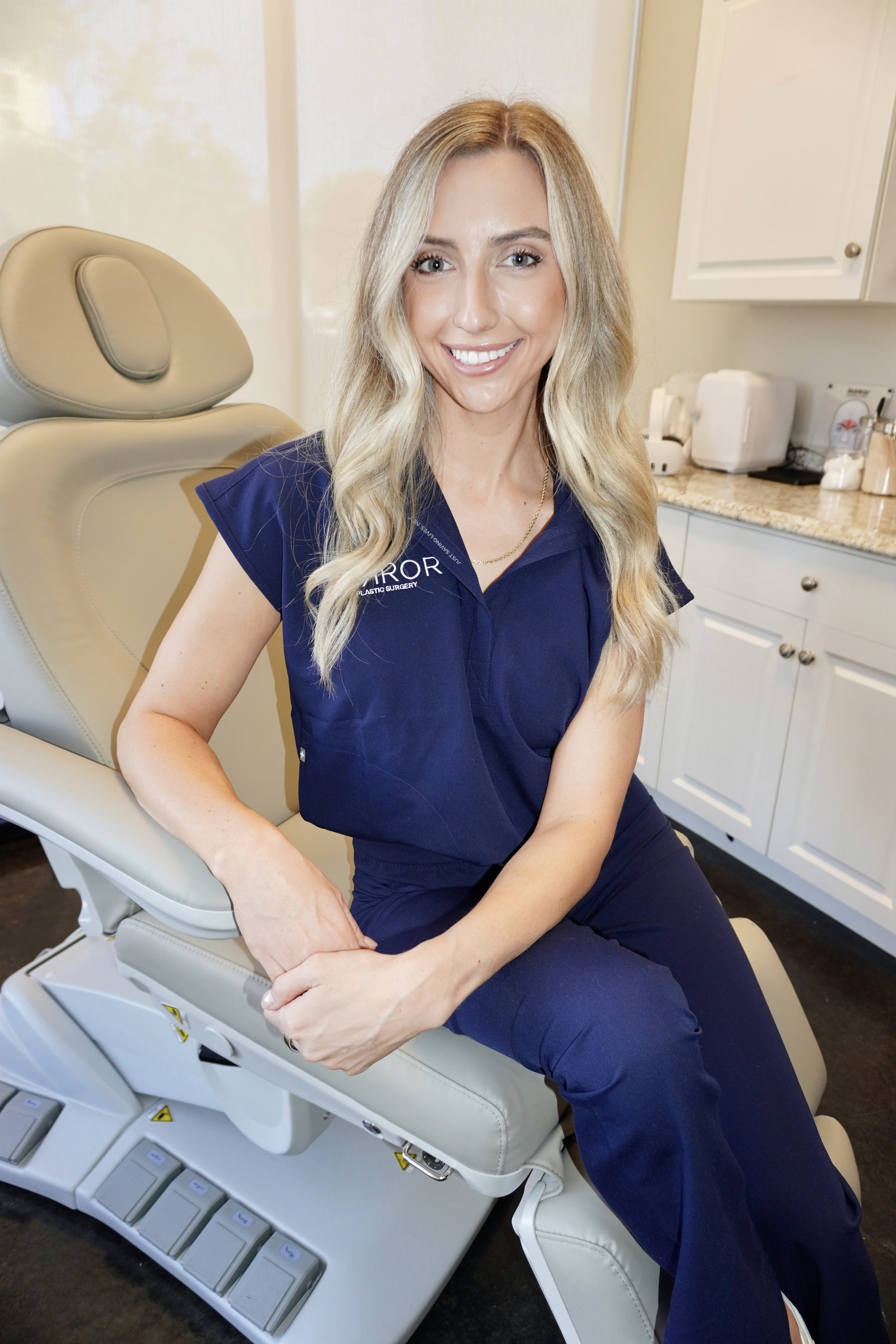
Meet the Practitioner: Ellie Pranckevicius, FNP-BC
Peptide therapy at Mirror Plastic Surgery is led by Ellie Pranckevicius, a board-certified Family Nurse Practitioner with experience in both aesthetic medicine and advanced clinical care. Ellie earned her Bachelor’s in Health Science from Boston University on the premedical track, completed an aesthetics licensure program, and obtained both her Bachelor’s and Master’s in Nursing from the University of South Florida. She spent four years in the Neuroscience ICU at Tampa General Hospital, where she managed complex patients and developed a strong command of physiology, metabolic health, and recovery.
Ellie began her career at a high-end medical spa in Boston, which gave her direct experience with skin physiology, aesthetic assessment, and client care before she pursued her nurse practitioner credentials. That dual background, combining esthetician training and advanced nursing expertise, shapes her approach to peptide therapy. She understands the aesthetic outcomes patients want and the clinical science required to reach those outcomes safely. Her practice centers on education and transparency. She explains the physiology behind each recommendation in accessible terms, tells patients when a service is not yet necessary, and prioritizes long-term outcomes over short-term revenue. When surgical considerations arise, her work can be complemented by Dr. Akash Chandawarkar, Mirror Plastic Surgery’s Harvard-educated, Johns Hopkins-trained, fellowship-trained plastic surgeon.
Key Terms for Comparing Peptides and Med Spa Care
This section defines common terms used in peptide therapy and medical spa care so you can compare providers and protocols with less confusion.
- Peptides: Short chains of amino acids that act as biological signals within the body. The body produces peptides naturally to regulate many functions, so synthetic versions can mimic or amplify those signals to target specific processes such as collagen synthesis, inflammation modulation, or growth hormone secretion.
- Medical supervision: Oversight by a licensed medical professional, such as a physician, nurse practitioner, or physician assistant, who evaluates the patient, orders and reviews diagnostic testing, prescribes treatment, monitors outcomes, and adjusts protocols based on clinical findings.
- Lab-driven protocol: A treatment plan guided by baseline and follow-up laboratory testing. For peptide therapy, relevant panels may include metabolic markers, hormone levels, inflammatory biomarkers, thyroid function, and organ-function indicators. Laboratory monitoring provides data on efficacy, safety, and dose calibration that symptom reporting alone cannot provide.
- Systemic vs. topical/localized mechanism: Systemic therapies affect the body broadly through internal biological pathways. Topical or localized treatments act at or near the site of application. Injectable peptides given subcutaneously or intramuscularly enter systemic circulation and can influence multiple organ systems at the same time.
- Compounding pharmacy (503A/503B): A licensed pharmacy that prepares customized medications for individual patients. Section 503A pharmacies prepare patient-specific prescriptions, while 503B outsourcing facilities operate under stricter current good manufacturing practice standards and can supply larger batches to healthcare providers.
How Peptide Therapy and Med Spa Treatments Are Delivered
Personalized peptide therapy at a concierge practice follows a structured, stepwise process. An initial consultation, usually 30 to 60 minutes, covers medical history, current symptoms, health goals, and any prior treatments. Relevant laboratory panels are reviewed or ordered. Based on those findings, Ellie designs a custom peptide protocol, sources it from a licensed compounding pharmacy with documented batch testing, and provides detailed reconstitution and self-administration instructions.
Follow-up visits occur at defined intervals, commonly at four to eight weeks initially and then quarterly. Repeat lab panels track efficacy, safety markers, and dose appropriateness. A monitoring protocol includes scheduled laboratory testing at defined intervals, structured symptom tracking, and predefined dose adjustment criteria that Ellie establishes before the first dose.
Typical medical spa treatments follow a different structure. A consultation focuses on the patient’s aesthetic concern and visible tissue condition. Treatment is administered in-office using FDA-cleared or FDA-approved devices and commercially manufactured products such as neurotoxins, hyaluronic acid fillers, laser platforms, or radiofrequency devices. Results are localized and visible within days to weeks. Maintenance sessions are scheduled based on product longevity or device protocol, usually every three to twelve months depending on the treatment.
The Tampa Wellness Landscape and Peptide Demand
Tampa Bay residents are navigating a rapidly expanding wellness and aesthetics market. The global medical spa market was forecasted to reach USD 22.2 billion by the end of 2024 and grow to USD 83.9 billion by 2033 at a CAGR of 15.7%, driven in large part by expansion into wellness, prevention, and longevity services. Within that growth, patient demand has shifted toward systemic therapies. A survey of 507 U.S. physicians found that weight loss and anti-aging are leading drivers of patient demand for peptide therapies, and nearly half of physicians reported that patients voluntarily disclosed using non-FDA-approved peptides in the past 12 months.
That demand has created a wide spectrum of providers, ranging from high-volume medical spas that offer peptides as an add-on service to concierge practices built around lab-integrated, medically supervised protocols. Employers increasingly expect practitioners to use biomarkers, functional labs, and precision assessments to create personalized protocols, with data-informed care moving from innovative to essential. Mirror Plastic Surgery’s concierge model, which limits patient volume, dedicates extended consultation time, and integrates laboratory analysis, reflects this shift toward individualized, evidence-aware care.
Decision Factors When Comparing Peptides and Med Spa Services
The table below outlines key decision factors for comparing personalized peptide therapy with typical medical spa treatments. Each data point comes from cited sources.
| Factor | Personalized Peptide Therapy (Lab-Guided) | Typical Medical Spa Treatments |
|---|---|---|
| Mechanism | Systemic, as peptides signal internal biological processes such as inflammation, hormone secretion, tissue repair, and metabolism | Localized, targeting visible tissue at or near the treatment site |
| Supervision standard | Requires a licensed prescribing provider; a medical director must establish protocols, supervise staff, and review charts | Medical supervision required for prescription treatments; supervising MD/DO or NP holds ultimate responsibility |
| Lab integration | Baseline and follow-up labs are essential; without them, clinicians cannot confirm intended effects or detect adverse metabolic changes | Generally not required, with treatment decisions based on visual assessment and patient history |
| Personalization | Protocol designed from individual lab results, medical history, and specific health goals, with custom peptide stacks adjusted over time | Treatment selected from a menu of services, with some customization of technique or product but no lab-informed design |
| Regulatory status of products | Many peptides are not FDA-approved; compounded versions must meet 503A/503B requirements; Category 2 peptides are prohibited from human compounding | FDA-approved dermal fillers and neurotoxins are commercially manufactured products with established prescribing information |
| Sourcing risk | Unregulated sources have documented quality failures including incorrect peptide identity, potency ranging from 50–200% of labeled concentration, and bacterial endotoxin contamination, while licensed 503A and 503B sourcing reduces these risks | FDA-approved injectables and devices follow established manufacturing standards, with risk increasing when providers use off-label or unverified distributors |
| Expected timeline for results | Most protocols require at least 8–12 weeks for meaningful results, GLP-1 weight management often extends 6–12 months or longer, and anti-aging protocols are often ongoing1 | Neurotoxins appear within 2–5 days and last 3–5 months; hyaluronic acid fillers provide immediate results lasting 6 months to over a year1 |
| Maintenance requirement | Weight regain often occurs after stopping GLP-1 peptides, so ongoing treatment is typically required to sustain benefits, and cyclical protocols are common for other peptide categories | Repeat sessions occur at product-specific intervals, with no systemic maintenance required |
Realistic Risks, Limitations, and Challenges of Peptide Therapy
Peptide therapy carries real limitations and risks that informed patients should understand before starting treatment.
- Regulatory complexity: Peptides that were placed on the FDA’s Category 2 bulks list (and removed April 2026) include BPC-157, TB-500, injectable GHK-Cu, and KPV, which means they cannot legally be compounded for human use under current rules. The regulatory landscape continues to evolve, and the FDA is scheduled to meet July 23-24, 2026, to discuss whether seven peptide substances should be included on the 503A Bulks List for compounding.
- Evidence variability: The weakest claims involve broad anti-aging, cognitive enhancement, recovery, and inflammation benefits for experimental peptides such as BPC-157, KPV, and TB-500, which lack strong human trial evidence and rely primarily on mechanistic, animal, or small pilot studies. GLP-1 receptor agonists currently have the strongest human clinical evidence base.
- Sourcing variability: Compounded semaglutide samples have shown concentration variations of 68–122% of labeled strength, which means patients may receive significantly more or less than their prescribed dose. This variability makes sourcing from licensed compounding pharmacies with documented batch testing, as defined earlier, a non-negotiable safety requirement.
- Outcome variability: Results differ between individuals based on genetics, baseline health status, lifestyle, and protocol adherence. No peptide protocol can guarantee the same outcome for every patient.
- Ongoing support requirement: No clinical data exists on long-term use of most peptides; compounds such as BPC-157 have only three human studies while TB-500 has zero, which places many tissue-repair protocols in exploratory territory. Ongoing monitoring functions as the primary safety mechanism rather than an optional extra.
- Contraindications: Absolute contraindications for GLP-1 receptor agonist peptides include personal or family history of medullary thyroid carcinoma, Multiple Endocrine Neoplasia syndrome type 2, and pregnancy or lactation. Pre-screening through lab work and medical history review helps identify these risks before treatment begins.
Common Misconceptions About Peptide Therapy
Misconception: Peptides are only for weight loss. GLP-1 receptor agonists such as semaglutide and tirzepatide receive the most public attention because of their weight-loss data, and tirzepatide produced an average 20.9% body-weight reduction at the 15 mg weekly dose over 72 weeks in the SURMOUNT-1 trial1. This focus can make peptides seem like a single-purpose weight loss tool. In reality, peptides address a much broader range of systemic concerns. GHK-Cu has been studied for potential anti-inflammatory effects and for stimulating collagen and elastin production. Growth hormone secretagogues such as sermorelin and ipamorelin have shown improvements in lean muscle mass, body fat percentage, and sleep quality in older adults.1 Nootropic peptides such as Selank act on anxiety pathways. Taken together, the peptide category spans inflammation, recovery, metabolic health, skin aging, energy, and neurological function.
Misconception: Any provider can safely dispense peptide therapy. Med spas cannot source peptides from unregulated online vendors, overseas suppliers, or research-use-only distributors and administer them to patients, because this constitutes administering an unapproved drug. Compliant peptide therapy requires a licensed prescribing provider, a patient-specific prescription, a licensed compounding pharmacy, informed consent documentation, and ongoing monitoring. Grey market peptides expose providers to risks including disciplinary action, loss of licensure, civil lawsuits, criminal charges, and malpractice claims.
Misconception: Lab testing is optional for peptide therapy. Peptide therapy requires comprehensive baseline lab testing including IGF-1, metabolic panel, inflammatory markers, and body composition assessment before initiation, because dosing without biomarker context amounts to guesswork rather than personalized medicine. Beyond the baseline and follow-up labs discussed earlier, different peptide categories call for different lab panels. Weight management protocols rely on metabolic and hormone markers, while tissue-repair protocols emphasize inflammatory biomarkers and organ function. Effective lab work matches the peptide category instead of following a generic template.
Frequently Asked Questions About Peptides at Mirror Plastic Surgery
This section answers five of the most common questions Tampa patients ask about peptide therapy and how it fits with other services.
Are peptides FDA-approved?
Some peptides are FDA-approved for specific indications. Semaglutide and tirzepatide, for example, are FDA-approved for chronic weight management and type 2 diabetes. Many other peptides used in wellness and anti-aging contexts, including growth hormone secretagogues, tissue-repair peptides, and nootropic peptides, are not FDA-approved for those uses and are administered as compounded medications or off-label prescriptions. The regulatory status of individual peptides continues to evolve, and the FDA’s Pharmacy Compounding Advisory Committee reviews specific substances for inclusion or exclusion from the compounding bulks list. At Mirror Plastic Surgery, Ellie provides full informed consent that explains the regulatory status of each peptide in a patient’s protocol, and all peptides are sourced from licensed compounding pharmacies with documented batch testing, as described earlier.
What is the difference between buying peptides online and receiving them through a medical practice?
Online peptide vendors frequently sell products labeled “for research use only,” which are not legally intended for human administration. These products do not follow the same quality controls as compounded medications prepared by licensed 503A or 503B pharmacies. Documented quality failures in research-grade peptides include incorrect peptide identity, potency ranging from 50–200% of labeled concentration, bacterial endotoxin contamination, heavy metals, and non-sterile preparations. A licensed medical practice sources peptides through compliant compounding pharmacies, requires a valid patient-specific prescription, conducts pre-treatment laboratory evaluation to screen for contraindications, and provides ongoing monitoring. The clinical and legal frameworks differ in every major respect.
How long does it take to see results from peptide therapy, and are they permanent?
Timelines vary by peptide category and individual health status. Tissue-repair protocols such as BPC-157 or TB-500 are typically used in shorter cycles of four to twelve weeks. Growth hormone secretagogues generally show changes in body composition and sleep quality over three to six months of consistent use. GLP-1 weight management programs often extend six to twelve months or longer. Anti-aging and inflammation protocols are frequently cyclical or ongoing. Results do not behave like a permanent surgical change. When peptide therapy stops, the biological signals it was providing cease, and the conditions being managed, such as inflammation, metabolic dysfunction, or hormonal decline, may drift back toward their prior state. Maintenance protocols form a realistic part of long-term peptide therapy.
What does a lab-guided peptide consultation at Mirror Plastic Surgery involve?
A consultation with Ellie Pranckevicius typically runs 30 to 60 minutes and covers a comprehensive review of medical history, current symptoms, medications, prior treatments, and specific health goals. For weight management, metabolic concerns, or inflammatory conditions, relevant laboratory panels, which may include thyroid function, liver and kidney markers, hormone levels, fasting glucose and insulin, lipid panel, and inflammatory biomarkers, are reviewed or ordered. Based on those findings, Ellie designs a custom peptide stack and protocol. She explains the physiology behind each recommendation, discloses the regulatory status of each peptide, and provides detailed instructions for reconstitution and self-administration, often with video demonstrations. Ongoing support is available through direct text communication and scheduled telemedicine appointments throughout the protocol.
Can peptide therapy and medical spa treatments be used together?
Peptide therapy and medical spa treatments can often work together. The two approaches address different layers of health and aesthetics and do not compete with each other. A patient managing systemic inflammation or pursuing metabolic improvements through peptide therapy may also benefit from localized aesthetic treatments such as neurotoxins, fillers, or energy-based skin treatments. Patients undergoing aesthetic procedures may find that systemic peptide protocols that support collagen production, reduce inflammation, or improve skin quality from within can complement their surface-level results. At Mirror Plastic Surgery, the full spectrum of surgical and non-surgical aesthetic services is available alongside peptide protocols, which allows Ellie and Dr. Akash Chandawarkar to coordinate care across both domains when that combination supports the patient’s goals.
Summary: Choosing Between Peptides and Med Spa Treatments
Personalized, lab-driven peptide therapy and typical medical spa treatments serve different purposes and use different mechanisms. Medical spa treatments address localized, visible concerns at the tissue level using FDA-approved or FDA-cleared products and devices. Personalized peptide therapy works systemically, using amino acid signaling molecules to influence internal biological processes such as inflammation, metabolism, hormone secretion, tissue repair, and cellular energy under medical supervision informed by laboratory data.
For Tampa Bay residents who have already explored conventional options and are evaluating peptide therapy, the most important decision criteria include supervision quality, sourcing standards, lab integration, and the provider’s willingness to individualize the protocol based on measurable data rather than a generalized menu. Physicians surveyed have expressed concern about patients self-directing peptide use without medical oversight, and the regulatory environment is tightening in response to gray-market access. The concierge model at Mirror Plastic Surgery, which includes extended consultations, comprehensive lab analysis, licensed pharmacy sourcing, and direct ongoing access to Ellie Pranckevicius, is designed to address each of those criteria.
Start your lab-guided peptide evaluation at Mirror Plastic Surgery in St. Petersburg.
1 Results may vary from person to person. Editorial content, before and after images, and patient testimonials do not constitute a guarantee of specific results.
Peptide therapy is intended for wellness and optimization purposes and is not prescribed to diagnose, treat, cure, or prevent disease unless specifically stated. Many peptides are not FDA-approved and may be used off-label. Some have limited long-term safety data, with a potential for unknown risks, complications, or desensitization with prolonged use.