
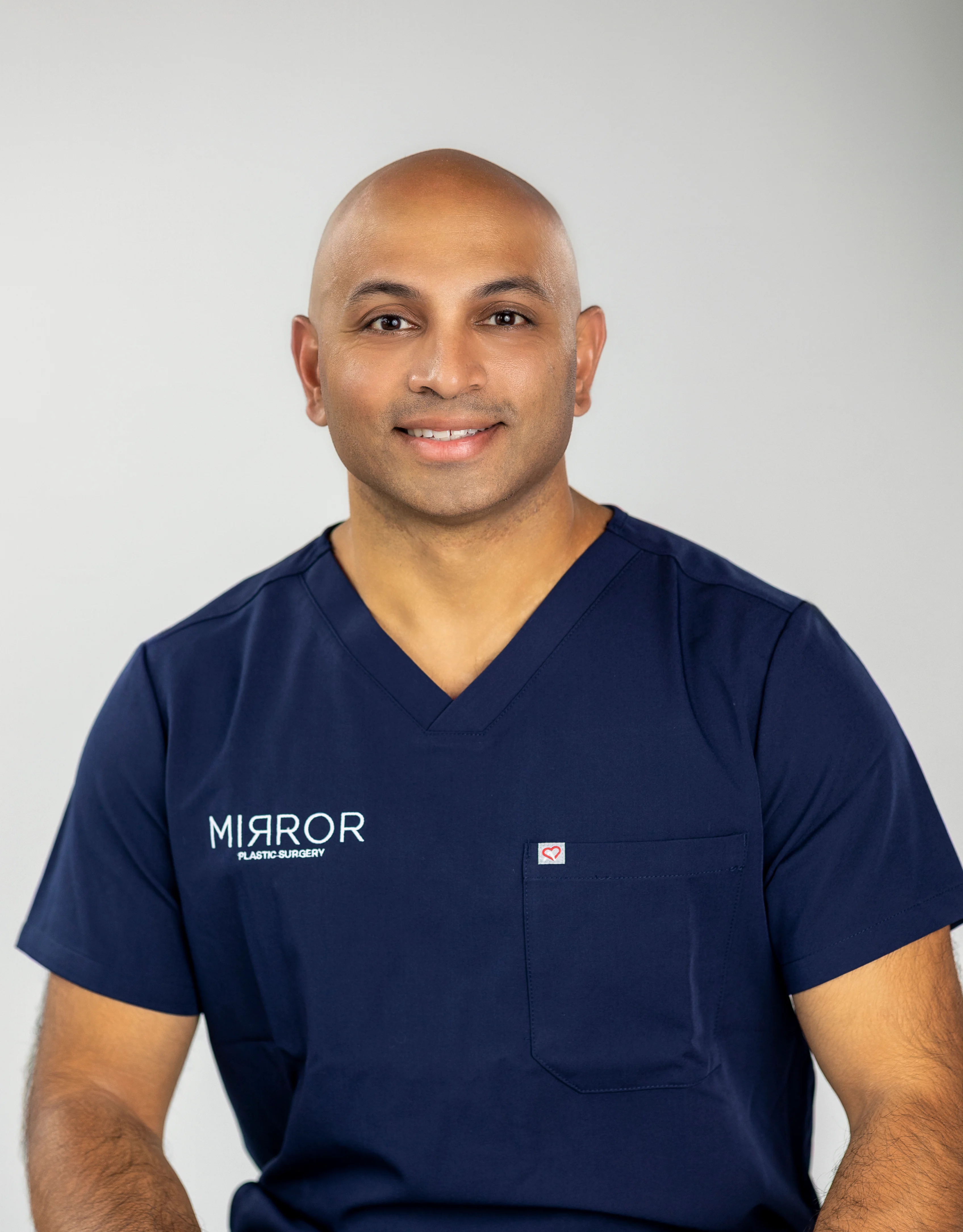
Written by: Dr. Akash Chandawarkar, Board Certified Plastic Surgeon, Mirror Plastic Surgery
By Dr. Akash Chandawarkar, MD
Harvard-Educated Physician · Johns Hopkins-Trained Plastic Surgeon · American Board Of Plastic Surgery Certified · MEETH/Lenox Hill Aesthetic Surgery Fellow · Advisory Board Member, Merz Aesthetics & Tiger Aesthetics
Key Takeaways
- Juvéderm duration ranges from about 6 months to 2 years depending on the formula and treatment area.1
- The main variables that affect how long Juvéderm lasts are the formula, treatment area, individual metabolism, and injector technique.
- High-movement areas such as lips and nasolabial folds break down filler faster than more static areas like the cheeks or jawline.
- Correct placement plane, conservative volume, and an injector with deep anatomical knowledge are the most controllable factors for longer-lasting, natural results.
Juvéderm Duration By Formula Across The Collection
The ranges below reflect manufacturer data from juvederm.com. Real-world duration varies with patient anatomy, metabolism, treatment area, and injector technique. The manufacturer figures represent ceilings achieved under clinical trial conditions that included an optional touch-up session, rather than typical outcomes from a single conservative syringe.
| Product | Primary Treatment Area | Approximate Duration |
|---|---|---|
| Juvéderm Voluma XC | Mid-Face And Cheek Volume | Up To 24 Months In Cheeks, Shorter In Chin And Temples |
| Juvéderm Vollure XC | Moderate Wrinkles And Folds (Nasolabial Folds) | Up To 18 Months |
| Juvéderm Volbella XC | Lips And Perioral Lines | Up To 12 Months |
| Juvéderm Ultra XC | Lips And Moderate Facial Wrinkles | 9–12 Months, Lips Typically Around 1 Year |
| Juvéderm Volux XC | Jawline And Lower-Face Definition | Up To 12 Months |
The same collection spans a wide range because each formula is engineered differently, with variations in cross-linking density, molecular weight composition, and gel stiffness. The treatment area also influences how quickly the body breaks the product down. These factors interact with patient biology and injector technique to create the duration each person actually experiences.
Schedule Your Personalized Juvéderm Assessment To Find Out Which Formula Fits Your Anatomy And Goals.
The Variables That Change Juvéderm Duration
Four main factors determine where a patient lands within any formula’s duration range.
- Treatment Area And Muscle Movement. High-movement areas such as lips, perioral lines, and nasolabial folds subject the filler to constant mechanical stress from talking, chewing, and expression. This mechanical stress accelerates breakdown. Lip products are labeled for roughly 9–12 months, cheek products such as Voluma XC for up to 24 months, and jawline products such as Volux XC for up to 12 months. Relatively static areas metabolize filler more slowly.
- Individual Metabolism. How quickly a patient metabolizes hyaluronic acid varies with individual biology, including baseline hyaluronidase activity, and lifestyle factors such as diet and activity. Patients who exercise intensively tend to metabolize filler faster. No reliable method predicts in advance exactly how quickly a specific patient will break down a given product.
- Product Thickness And Cross-Linking. Most Juvéderm formulas use Vycross technology, a blend of high- and low-molecular-weight hyaluronic acid, while Ultra XC uses Hylacross technology, which is 100% high-molecular-weight HA. These technologies differ in cross-linking density and gel stiffness. Thicker, more highly cross-linked formulas such as Voluma XC and Volux XC resist enzymatic breakdown longer than softer formulas such as Volbella XC. Higher cross-linking limits the access of the body’s natural hyaluronidase enzymes to the gel’s polymer chains, which slows degradation.
The fourth variable is placement plane and injector technique. The same product can last longer and look more natural when placed at the correct anatomical depth, in the correct volume, and in the correct tissue plane. Superficial or overfilled placement produces inferior results. Deep supraperiosteal placement near robust bony support zones tolerates firmer, more elastic products, while superficial planes require softer, more tissue-integrative products. An injector without a surgeon’s command of subdermal anatomy cannot reliably make this distinction. Dr. Akash can, because he operates in these tissue planes surgically.
How The Body Clears Juvéderm Over Time
Juvéderm can migrate from its original placement site, although confirmed HA gel migration is uncommon and more often linked to poor injection technique than to the product itself. Juvéderm is a cross-linked hyaluronic acid gel. The body gradually breaks hyaluronic acid down with its own enzymes, primarily HYAL-2 at the cell surface and HYAL-1 inside lysosomes. These enzymes cleave the polymer into progressively smaller fragments that are then cleared through the lymphatic system and metabolized in the liver. The end products are water and carbon dioxide. The gel degrades gradually, so the aesthetic result softens over time rather than disappearing overnight.
One nuance matters for expectations. As the gel degrades, fragments can become more hydrophilic and retain water while mass is being lost. Visible volume and visible correction can fade at different rates. A result can look settled or less crisp before the product is fully gone.
How Often To Schedule Juvéderm Maintenance
Maintenance cadence depends on the treatment area and the formula used. As a realistic guide:
- Lips and perioral lines typically need touch-ups around the 6–12 month mark.1
- Nasolabial folds treated with Vollure XC may hold 12–18 months before re-treatment.1
- Mid-face cheek volume with Voluma XC may hold up to 24 months, and jawline definition with Volux XC is labeled for up to 12 months.1
Product duration and aesthetic duration differ. Volume can persist in tissue while the result looks softer sooner. Tissue remodeling induced by the gel can maintain visible benefits beyond the presence of intact gel, and the gel itself loses water and integrates with surrounding tissue over time. Some patients choose to re-treat before the product is fully gone, which is a legitimate preference. Stacking new product on top of still-present filler creates overfilled faces over time.
At Mirror Plastic Surgery, maintenance functions as a long-term partnership rather than a standing subscription. Dr. Akash uses an assess-then-treat approach. Each visit begins with an honest evaluation of what is still present and what your anatomy actually needs, instead of an automatic refill. Pricing is personalized and discussed at consultation based on your anatomy and goals.
Plan Your Juvéderm Maintenance With Dr. Akash And Build A Realistic, Anatomy-Based Schedule.
Habits And Techniques That Help Juvéderm Last Longer
Several factors support longer, more natural-looking results from Juvéderm treatment.
- Placement Technique And Injector Experience. Correct depth, volume, and plane are the most controllable variables. Because Dr. Akash is a board-certified plastic surgeon with a surgeon’s command of facial and subdermal anatomy, he selects the right formula, places it in the correct plane, and uses the right volume for each patient’s anatomy. He avoids a single-product, one-size-fits-all approach.
- Managing High-Movement Areas. Lips and perioral lines metabolize filler faster than the mid-face or jawline. Clear expectations about this pattern form part of honest treatment planning.
- Sun Protection And Skin Health. UV exposure and oxidative stress accelerate hyaluronic acid degradation. Consistent sun protection and a sound skincare regimen support the longevity of any injectable result.
- Realistic Volume Rather Than Overfilling. Overfilling, driven by inadequate anatomical knowledge, inaccurate pretreatment assessment, and cumulative effects of prior treatments, is the primary driver of the “pillow face” or overfilled syndrome. Conservative, anatomy-guided dosing produces results that look natural longer and rarely require correction.
Mirror Plastic Surgery is a supplier-neutral practice. Product recommendations reflect each patient’s anatomy and goals. They do not reflect a limited portfolio or commission structure. Dr. Akash works across a full range of formulas and brands and selects the most appropriate option for each individual.
When Juvéderm May Not Be The Whole Answer
Juvéderm is a safe, reversible, and well-studied treatment, yet honest guidance also covers its limitations.
The most common concern in current aesthetic medicine is cumulative overfilling. Modern concern with dermal fillers focuses on cumulative overfilling accumulated over years, which can create a puffy, heavy, unnatural look that reads as “done” rather than refreshed. This pattern reflects repeated treatment without adequate assessment of what is already present.
The cost of repeated maintenance also matters. Lips may need attention every 6–12 months, and cheeks every 18–24 months. Over years, this represents a meaningful investment. Patients deserve a clear view of that commitment before starting.
Some patients, particularly those who want to re-treat less frequently, move toward biostimulatory alternatives such as Radiesse (calcium hydroxylapatite), which Dr. Akash uses and advises on through Merz Aesthetics. Radiesse typically lasts 12–18 months and works by stimulating the body’s own collagen production rather than simply filling space. Biostimulatory fillers are not reversible with hyaluronidase, which makes product selection and injector expertise even more consequential.
This context explains why Dr. Akash often tells patients directly when an expensive service is not necessary for them yet. His initial focus is on restoring inherent facial characteristics before considering volume augmentation. That philosophy forms the foundation of a long-term patient relationship built on trust.
How Long Juvéderm Lasts In Lips Specifically
Lip results from Juvéderm typically last 6–12 months, often closer to 1 year.1 The lips are a high-movement area subject to constant dynamic stress from talking, chewing, and expression, which accelerates mechanical breakdown of the filler gel. Lip products such as Volbella XC and Ultra XC are formulated as softer, more pliable gels rather than the firmer structural products used in the cheeks or jawline. Patients who want lip results to last as long as possible benefit from conservative initial volume, correct product selection, and an injector who understands lip anatomy at a surgical level.
Frequently Asked Questions About Juvéderm Safety And Reversibility
Can Juvéderm Be Dissolved If I Do Not Like The Result?
Juvéderm is reversible with hyaluronidase. This enzyme breaks down hyaluronic acid filler so the body can clear it more quickly. Heavily cross-linked Vycross products may require higher enzyme concentrations and multiple dissolving sessions. Dissolving should be performed by an experienced injector who understands facial anatomy and emergency protocols.
What Are The Main Risks Of Juvéderm?
Common, temporary effects include swelling, bruising, and tenderness at injection sites. Less common risks include lumps, asymmetry, or visible product in superficial planes. Rare but serious complications include vascular occlusion, which requires prompt recognition and treatment with hyaluronidase. Choosing a board-certified injector who understands anatomy and emergency protocols significantly reduces these risks.
Can Juvéderm Migrate Over Time?
Juvéderm can migrate from its original placement site, although confirmed HA gel migration is uncommon and more often linked to poor injection technique than to the product itself. Proper product selection, correct placement plane, and conservative dosing reduce the likelihood of visible migration. If migration occurs, hyaluronidase can often correct it.
Conclusion: Building A Realistic Juvéderm Plan
Clear expectations about how long each Juvéderm formula lasts help patients plan realistically, choose the right product for their anatomy, and select an injector whose expertise matches the precision the treatment requires. The formula, the area, the placement plane, and the injector’s anatomical knowledge all shape the actual outcome.
At Mirror Plastic Surgery, every injectable treatment begins with an hour-long assessment, a frank conversation about what your anatomy needs, and a recommendation based on your goals rather than a product quota. Dr. Akash sometimes advises patients that a procedure is not necessary for them yet. That approach builds long-term relationships based on honest guidance.
To schedule a personalized assessment with Dr. Akash Chandawarkar at Mirror Plastic Surgery in St. Petersburg, Florida, call or text 727-361-6515, email hello@mirrorplasticsurgery.com, or use the link below.
Consult With Dr. Akash About Your Juvéderm Plan And Get A Formula-By-Formula Assessment Built Around Your Anatomy, Your Goals, And Your Long-Term Plan.
Disclaimer: Results may vary from person to person. Editorial content, before and after images, and patient testimonials do not constitute a guarantee of specific results.
1 Results may vary from person to person. Editorial content, before and after images, and patient testimonials do not constitute a guarantee of specific results.