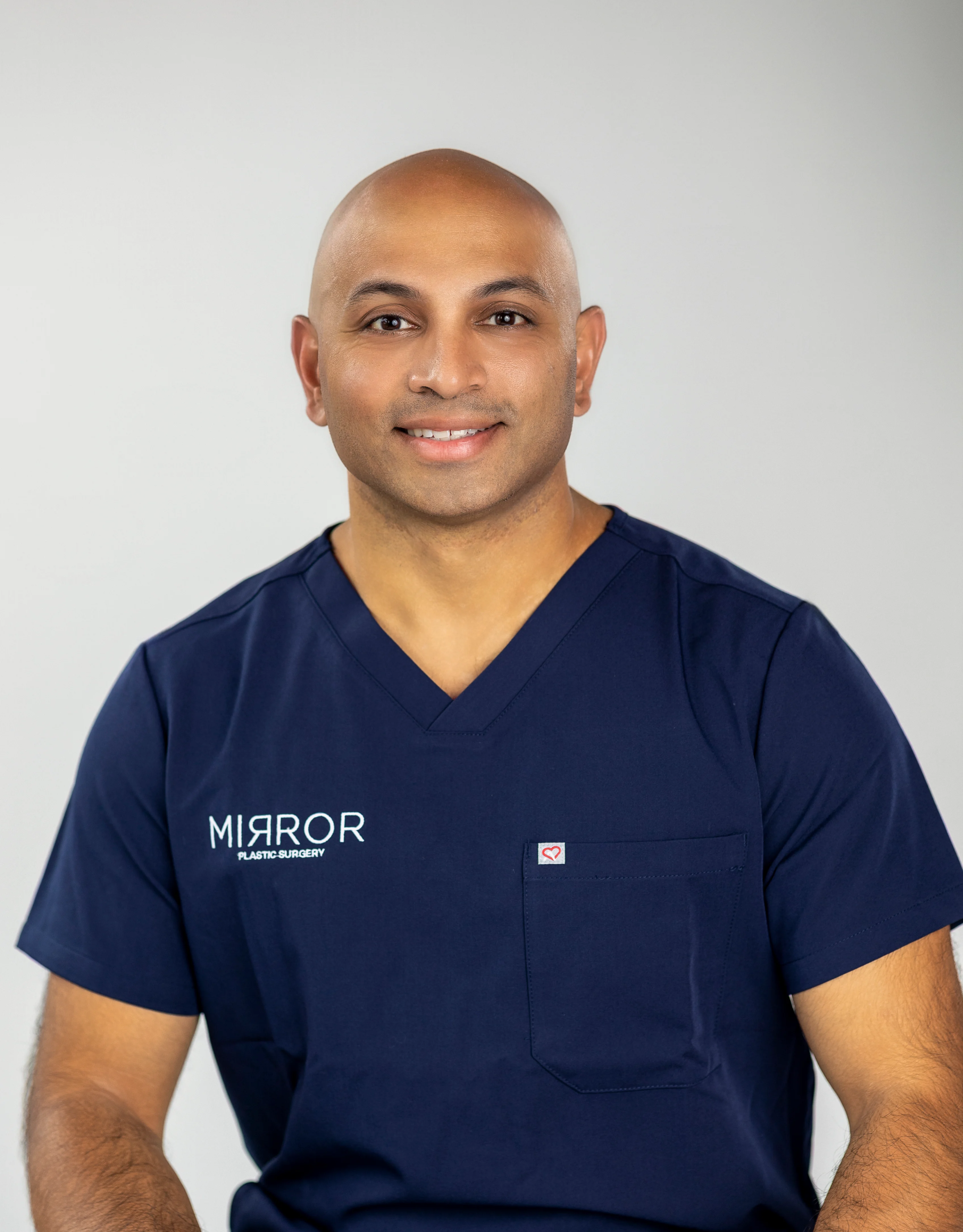
Written by: Dr. Akash Chandawarkar, Board Certified Plastic Surgeon, Mirror Plastic Surgery
Key Takeaways
- Selank, Semax, oxytocin, and DSIP are investigational peptides being studied for anxiety, and none are FDA-approved for this use.
- Among the four, Selank has the strongest human evidence, but studies are small, regionally concentrated, and not replicated in large Western trials.
- Long-term safety data are lacking for all four peptides, and regulatory status remains uncertain under current FDA compounding rules.
- Proven non-addictive options such as SSRIs, buspirone, and CBT have stronger evidence and remain first-line recommendations for anxiety.
Discuss Whether Peptides Fit Your Anxiety Plan
Who Is Writing This Report
Dr. Akash Chandawarkar, MD, is the founder of Mirror Plastic Surgery and the lead physician for all peptide therapy protocols at the practice. He is board-certified by the American Board of Plastic Surgery. He trained in neuroscience and nuclear engineering at MIT, graduated with Honors from Harvard Medical School through the Harvard-MIT Division of Health Sciences and Technology, completed a seven-year integrated plastic and reconstructive surgery residency at Johns Hopkins University, and trained at the Stanford Biodesign Innovation Fellowship. Every peptide protocol at Mirror Plastic Surgery is personally designed and supervised by Dr. Akash, not delegated to support staff.
Defining Peptides And “Non-Addictive” In Anxiety Care
Peptides are short chains of amino acids that signal specific biological targets. In the anxiety context,“non-addictive” refers to the absence of the GABA-A receptor dependence profile characteristic of benzodiazepines, the mechanism that drives tolerance, physical withdrawal, and craving. Selank, Semax, oxytocin, and DSIP do not directly bind GABA-A receptors the way benzodiazepines do; Selank’s GABA link is indirect and transcriptional with no demonstrated direct binding, Semax acts on melanocortin receptors, DSIP has no confirmed receptor, and oxytocin modulates amygdala reactivity rather than binding GABA-A. “Non-addictive” describes the dependence profile only and does not mean risk-free, proven, or FDA-approved. Each compound carries its own evidence limitations, regulatory status, and safety unknowns.
Talk With Dr. Akash About Non-Addictive Options
The Evidence Hierarchy For Four Commonly Discussed Peptides
This report presents the four compounds in descending order of strength of human anxiety-specific evidence. Each profile covers mechanism, human evidence, regulatory status, and a key risk so you can see where each peptide stands.
Selank: Strongest Human Evidence In This Group
Mechanism: Selank modulates GABAergic activity indirectly, enhancing GABA-A receptor sensitivity and increasing GABA concentration in hippocampal neurons without directly binding the GABA-A receptor as benzodiazepines do. It also influences serotonergic tone through modulation of genes involved in serotonin synthesis and transport, and inhibits enzymes that degrade enkephalins. For a deeper look at how Selank compares mechanistically to benzodiazepines, see Mirror Plastic Surgery’s dedicated article Selank Vs Benzodiazepines: Anxiety Treatment Compared.
Human Evidence: A 2008 active-comparator trial by Zozulya et al. (n=62) in patients with generalized anxiety disorder and neurasthenia found that intranasal Selank produced anxiolytic effects with no statistically significant difference in overall effectiveness versus the benzodiazepine medazepam.1 The Selank group had no reported sedation, muscle relaxation, tolerance, or withdrawal.1 Adverse events occurred in 3 of 42 Selank recipients versus 13 of 20 medazepam recipients, which suggests a more favorable short-term tolerability profile.1 A 2020 neuroimaging study by Panikratova et al. (n=52) provided fMRI evidence of amygdala-centered connectivity changes following a single intranasal Selank dose in healthy adults. This finding supports a mechanistic signal rather than clinical efficacy. A 2014 randomized, open comparison by Medvedev et al. (n=60) found phenazepam superior for acute anxiety reduction at day 14, with 55% versus 26.3% anxiety subscale reduction.1 At day 21 after treatment stopped, responders numbered 17 of 30 with prior Selank versus 9 of 30 with prior phenazepam.1 That delayed finding was not supported by blinded assessment or independent replication.
Regulatory Status: Selank has been approved in Russia since 2009 as a 0.15% intranasal solution for generalized anxiety disorder and neurasthenia. It is not FDA-approved. The FDA lists Selank acetate among bulk substances that may present significant compounding risks due to potential aggregation, peptide-related impurities, immunogenicity, and missing human safety information. For a full discussion of Selank’s U.S. legal status, see Mirror Plastic Surgery’s article Is Selank Legal In The U.S.? What Patients Should Know.
Key Risk: The evidence base is small, regionally concentrated in overlapping Russian investigator networks, and not replicated in large Western placebo-controlled trials. Long-term safety data are lacking. Evidence from the registered Russian nasal solution does not automatically apply to injectable, compounded, or lyophilized formulations.
Semax: BDNF-Mediated Mood Effects With Limited Anxiety Data
Mechanism: Semax is a synthetic analog of the ACTH(4-10) fragment that increases BDNF protein levels and TrkB phosphorylation in the hippocampus. It also modulates serotonergic tone by increasing striatal 5-HIAA. It is completely devoid of hormonal activity and does not stimulate cortisol production despite its ACTH-derived structure.
Human Evidence: Semax has been approved in Russia as a prescription nootropic for ischemic stroke and cognitive impairment since the late 1990s. Anxiety-specific human evidence is weaker than Selank’s, and most published human data address cognitive and neurological endpoints. The BDNF and TrkB mechanism evidence is entirely preclinical and supports biological plausibility without establishing clinical anxiolytic efficacy in humans.
Regulatory Status: Semax is not FDA-approved. The FDA proposed in July 2026 that Semax not be added to the 503A Bulks List. At the July 23–24, 2026 Pharmacy Compounding Advisory Committee (PCAC) meeting, the committee voted to recommend Semax for the 503A list. That recommendation is advisory and non-binding, and formal rulemaking would take at least a year before any change takes effect.
Key Risk: Anxiety-specific human data are thin. Most evidence is preclinical or focused on cognitive and stroke-recovery endpoints rather than anxiolytic outcomes.
Oxytocin: Social Anxiety Research With Mixed Results
Mechanism: Oxytocin is a neuromodulator acting in the amygdala, hippocampus, prefrontal cortex, and bed nucleus of the stria terminalis (BNST), influencing social, emotional, and stress-related behaviors. It downregulates CRH expression in the paraventricular nucleus, reducing ACTH and cortisol secretion and supporting physiological stress recovery.
Human Evidence: The strongest fear-related amygdala attenuation in human studies appears around 24 IU intranasal dosing approximately 45–70 minutes after administration, but the anxiolytic signal is context-dependent rather than uniform, with effects varying by sex, dose, and amygdala subregion. Results across studies are mixed and inconsistent.
Regulatory Status: Oxytocin is listed as a Category 1 substance under evaluation for 503A compounding, with intranasal formulations under review for social bonding and mental health uses. It is not FDA-approved for anxiety.
DSIP (Delta Sleep-Inducing Peptide): Sleep And Stress Effects With Sparse Anxiety Data
Mechanism: DSIP is a nonapeptide that modulates sleep architecture and HPA-axis stress response, and its precise receptor target remains undefined after decades of investigation. It has been reported to blunt ACTH and cortisol responses to acute stressors without producing baseline endocrine suppression.
Human Evidence: Bes et al. (1992) conducted a double-blind placebo-controlled study in chronic insomniacs and reported modest improvements in subjective sleep quality and sleep onset latency. Dick et al. (1984) reported reduced withdrawal symptoms in alcohol and opiate detoxification patients, interpreted as HPA-axis and autonomic dampening. Anxiety-specific human evidence is thin.
Regulatory Status: DSIP is not FDA-approved. At the July 24, 2026 PCAC meeting, the committee declined to recommend emideltide (DSIP) for the 503A Bulks List.
Key Risk: Published evidence focuses on sleep architecture and stress adaptation rather than anxiolytic endpoints. No long-term safety data exist.
What The Evidence Does Not Show
As of July 2026, no peptide is FDA-approved for anxiety or any other mental health condition. Long-term safety data are lacking for all four compounds discussed. No head-to-head trials compare Selank or Semax against SSRIs, buspirone, or CBT in human populations. The claim that Selank is “better than SSRIs for anxiety” remains unsupported because no head-to-head comparison with any SSRI exists. The human evidence for all four peptides is limited in sample size, geographic concentration, and methodological rigor by Western regulatory standards.
Safety And Regulatory Reality For Patients
The FDA’s bulk-substance compounding framework distinguishes between two categories that matter for peptides. Under FDA 503A rules, Category 1 substances can continue to be compounded by registered 503A pharmacies with a valid prescription while the FDA evaluates them, and Category 1 status indicates that the FDA has not completed its review. Category 2 substances have potential safety or quality issues identified, and compounding is restricted pending a formal PCAC hearing.
Vendor-supplied certificates of analysis are select-sample reports with method and chain-of-custody limits, and a certificate cannot establish that every vial in every batch matches it. Forensic testing of common illicit peptide products has found arsenic and lead, in some samples at up to ten times the injectable toxicity limit, with purity ranging from roughly 5% to 75%. Injectable peptides raise additional risk because contamination bypasses the gut barrier, and self-injection technique and reconstitution errors can drive serious adverse events.
Peptides Vs. Proven Non-Addictive Options For Anxiety
The comparison below shows why peptides remain a secondary option for anxiety care. Established treatments have replicated human evidence, guideline support, and clear regulatory status, while peptide evidence remains limited and investigational. All data points are drawn from the cited sources.
Hydroxyzine may be useful in mild generalized anxiety disorder or as an adjunct, but it carries anticholinergic effects, excessive sleepiness, and potential QTc prolongation, and is less suitable for elderly patients. The 2024 American Geriatrics Society Beers Criteria flags first-generation antihistamines like hydroxyzine as potentially inappropriate for older adults due to increased fall risk and cognitive effects. Peptides are an emerging, investigational option and currently serve as a complement to proven care rather than a replacement. For a detailed side-by-side of Selank and benzodiazepines specifically, see Mirror Plastic Surgery’s article Nootropic Peptides For Anxiety And Depression: Selank And Semax.
Review Your Anxiety Treatment Options
What Supervised Peptide Therapy Looks Like At Mirror Plastic Surgery
Mirror Plastic Surgery offers a concierge-level peptide therapy program led exclusively by Dr. Akash Chandawarkar. Every protocol begins with a 30–60 minute consultation that covers full medical history, current medications, and health goals. When appropriate, lab panels are ordered before any protocol starts. For anxiety-focused protocols, Selank is one option Dr. Akash considers when it fits the clinical picture.
Peptides are sourced from reputable suppliers with documented batch testing, rather than from unverified online vendors. This sourcing approach supports consistent quality and safety. Patients also receive direct 24/7 text access to Dr. Akash for questions, dosing guidance, and refill requests, which keeps care continuous between visits. The entire process, from consultation through prescription and shipping, can occur in person at the St. Petersburg, Florida practice or remotely across the United States, including Hawaii and Alaska.
This model addresses the core risk highlighted in recent FDA enforcement actions. The FDA has cited online vendors operating outside the compounding framework and selling unapproved injectable peptides without prescriptions, physician oversight, or verified sourcing. For a broader overview of what to look for in a supervised peptide program, see Mirror Plastic Surgery’s guide Peptide Therapy Near Me: A Physician’s Guide To Safe Care.
How To Evaluate A Peptide Source: A Physician’s Checklist
Patients evaluating any peptide source can use the checklist below as a practical safety screen.
- Third-Party Batch Testing: Identity, potency, purity, sterility, endotoxins, and particulates each require their own test. Passing one test does not guarantee the others.
- Chain-Of-Custody Documentation: A vendor-supplied certificate of analysis is a select-sample report and cannot establish that every vial in every batch matches it.
- Valid Prescription From A Licensed Physician: No legitimate compounding pathway authorizes an unapproved injectable sold from a web storefront without a prescription.
- Licensed 503A Compounding Pharmacy: State-licensed, FDA-registered pharmacies that compound pursuant to valid prescriptions operate under USP <797> sterile compounding standards.
- Pre-Existing Condition And Medication Screening: Unregulated peptide products carry risks of endotoxin contamination, wrong sequences, and underdosing that can trigger fever, chills, or septic-like reactions after injection.
- Ongoing Clinical Support: Dosing guidance, reconstitution instructions, and access to a physician throughout the protocol function as core safety requirements rather than optional extras.
When Peptides Are Not The Right Answer
Peptide therapy for anxiety does not suit every patient. Some individuals benefit more from starting or continuing an FDA-approved medication, engaging in CBT, or addressing an underlying medical condition that drives anxiety symptoms. Dr. Akash tells patients when a service is unnecessary for them and prioritizes long-term outcomes over short-term revenue. A thorough consultation, including medical history review and lab work when indicated, provides the only responsible starting point for deciding whether peptides belong in a patient’s care plan.
Frequently Asked Questions
What Is The Best Peptide For Anxiety?
Selank currently has the strongest human evidence among the four peptides discussed in this report. As the Zozulya trial discussed above showed, Selank matched medazepam on overall effectiveness without sedation, tolerance, or withdrawal, but that finding rests on a single small trial. None of the four peptides are FDA-approved for anxiety, and the overall evidence base for all of them remains small and not replicated in large Western randomized controlled trials. In this context, “best” simply means the peptide with the most human data, not a proven superior alternative to established treatments.
Is There A Peptide That Helps With Social Anxiety?
Oxytocin has been studied most directly for social anxiety and social threat processing. Research shows that it modulates amygdala responses to social stimuli and can attenuate responses to fearful faces in some settings. The most consistent effects in human studies appear around 24 IU intranasal dosing approximately 45–70 minutes after administration. Results remain mixed and context-dependent, with variation by sex, dose, and amygdala subregion, and no long-term or chronic-dosing data exist. Oxytocin is not FDA-approved for social anxiety or any anxiety disorder.
Are Peptides FDA-Approved For Anxiety?
As of July 2026, no peptide is FDA-approved to treat anxiety or any other mental health condition in the United States. Selank is approved in Russia for generalized anxiety disorder and neurasthenia, but that approval does not extend to the United States and arose from a regulatory framework that differs from FDA standards. Semax is approved in Russia as a nootropic for stroke and cognitive impairment rather than anxiety. Oxytocin and DSIP are not approved for anxiety in any major regulatory jurisdiction.
Selank Vs. Benzodiazepines For Anxiety: How Do They Compare?
Selank and benzodiazepines act through different mechanisms and carry different risk profiles. Benzodiazepines directly bind GABA-A receptors and have well-documented risks of tolerance, physical dependence, and withdrawal. Selank modulates GABAergic activity indirectly and has not been associated with dependence in the small studies conducted to date. In the 2008 Zozulya et al. trial, adverse events occurred in 3 of 42 Selank recipients versus 13 of 20 medazepam recipients. The overall evidence remains limited, no blinded head-to-head human comparison between Selank and any benzodiazepine exists in the English-language literature, and long-term safety data for Selank are still absent.
How Do I Get Peptides For Anxiety Safely?
Because none of these peptides is FDA-approved, the safeguards that regulation would normally provide need to come from your care team instead. Safe access starts with a licensed physician who reviews your full medical history, screens for pre-existing conditions and current medications, orders relevant labs, and designs a personalized protocol. That physician should also source peptides from suppliers with documented batch testing rather than unverified online vendors. The FDA has issued warning letters to multiple online peptide sellers and has stated that “research use only” labeling does not protect consumers from the risks of unapproved injectable products.
What This Report Means For You
Non-addictive peptides for anxiety, including Selank, Semax, oxytocin, and DSIP, form a promising but still investigational category. None are FDA-approved for anxiety, and the human evidence remains limited in size and geographic scope. Physician supervision, verified sourcing, and honest screening help keep an investigational peptide from becoming a dangerous experiment, including clear guidance about when peptides do not belong in your plan. Mirror Plastic Surgery’s concierge peptide program, led personally by Dr. Akash Chandawarkar, is structured to provide that level of careful, evidence-informed care.
Schedule A Peptide Consultation With Dr. Akash
Required Disclaimers
The content of this article is informational only and does not constitute medical advice. Individual results vary. Many peptides discussed in this report are not FDA-regulated, and long-term safety data are limited or absent. Peptide therapy does not suit all individuals. Readers should consult a qualified, licensed physician before starting any peptide protocol or making changes to existing anxiety treatment.
1 Results may vary from person to person. Editorial content, before and after images, and patient testimonials do not constitute a guarantee of specific results.
Peptide therapy is intended for wellness and optimization purposes and is not prescribed to diagnose, treat, cure, or prevent disease unless specifically stated. Many peptides are not FDA-approved and may be used off-label. Some have limited long-term safety data, with a potential for unknown risks, complications, or desensitization with prolonged use.