
Written by: Dr. Akash Chandawarkar, Board Certified Plastic Surgeon, Mirror Plastic Surgery
Key Takeaways
- Kybella destroys submental fat cells but does not tighten skin or repair the platysma muscle.1 It fits patients with isolated fat and firm skin.
- A neck lift removes fat and treats structural laxity by excising skin and tightening the platysma.1 It fits patients with loose skin or platysmal banding.
- The September 2026 FDA label update added new warnings about persistent nodules and serious adverse events when Kybella is used outside the approved submental region.
- Choosing Kybella for a lax neck can reveal or worsen sagging and may lead to later surgery at a higher total cost.1
- Mirror Plastic Surgery offers anatomy-based consultations where Dr. Akash Chandawarkar evaluates each patient and recommends the most appropriate treatment or advises against intervention.
Plan Your Neck Rejuvenation Consultation At Mirror
Kybella Vs. Neck Lift At A Glance
The table below summarizes how Kybella and a neck lift differ in procedure type, ideal candidate, skin tightening, number of sessions, and downtime.
| Attribute | Kybella | Neck Lift |
|---|---|---|
| Procedure Type | Non-surgical injection lipolysis | Surgical excision and muscle repair |
| Best Candidate | Adults with moderate-to-severe submental fat and firm skin | Adults with fat plus skin laxity or platysmal banding |
| Skin Tightening | None, indicated only for submental fat | Yes, skin excision and platysma plication |
| Sessions | Up to six treatments, each at least one month apart, up to 50 injections per session | Single surgical procedure |
| Downtime | Dramatic swelling lasting about 5 to 10 days per session, with numbness and hardness around injection sites persisting for several weeks | 1–2 weeks off work, full recovery 4–6 weeks |
Does Kybella Get Rid Of A Turkey Neck?
Kybella does not treat a true turkey neck. Laxity is the limiting factor. Kybella destroys submental fat cells but does not tighten the overlying skin or the platysma muscle beneath it. In a neck that already has laxity, removing fat volume can make sagging more visible. The FDA-approved Kybella prescribing information warns about risks such as marginal mandibular nerve injury, dysphagia, injection-site nodules and masses, and injection-site ulceration, necrosis, and infection. It does not list excessive skin laxity or platysmal bands as labeled cautions, though third-party sources note that patients with loose skin may not achieve optimal results. When your concern involves loose skin or visible muscle cords, the hallmarks of a turkey neck, Kybella is the wrong tool. For a full ranking of treatment options by severity, see Mirror’s guide to 7 Turkey Neck Treatments Ranked: Skincare to Surgery.
The September 2026 FDA Label Update: What Changed
That limitation now appears clearly in the label itself. In September 2026, the FDA approved additional labeling for Kybella (deoxycholic acid) injection, adding new Warnings and Precautions language about serious risks associated with use outside the approved submental region. The update followed a review of the FDA Adverse Event Reporting System and the medical literature.
Two findings drove the label change:
- The FDA identified 117 cases of unresolved injection-site nodules or masses associated with deoxycholic acid injections. These nodules were present for a mean of 143 days, roughly five months, at the time of reporting and occurred after both on-label submental use and off-label use elsewhere.
- The FDA identified 129 cases of adverse events when deoxycholic acid was used outside the approved submental region, including blurred or reduced vision with periorbital use and muscle or nerve injury such as facial paresis and paresthesia.
The Kybella prescribing information states that safe and effective use for subcutaneous fat outside the submental region has not been established and is not recommended.
The label also specifically cautions that excessive skin laxity and platysmal bands are factors clinicians must evaluate before treatment. This change affects how every prospective Kybella patient should think about risk before booking a session.
Are You A Candidate? A Self-Assessment Based On Your Anatomy
The right procedure depends on which of three anatomical profiles describes your neck. A surgeon’s examination provides the only definitive answer, but this framework helps you understand what to look for before your visit.
Profile A: Fat Only, Skin Still Tight
Your neck has visible fullness or a double chin, but when you pinch the skin it snaps back quickly. You see no vertical cords or sagging along the jawline. Your skin quality is good and your cervicomental angle, the angle between your chin and neck, is softened by fat volume rather than structural collapse. This profile fits a Kybella candidate. Fat reduction alone, whether by injection or liposuction, improves your contour without leaving excess skin behind.
Profile B: Fat Plus Mild Laxity
Your neck has submental fullness and some early skin looseness, but the laxity is mild. You may notice slight softening of the jawline or early jowling. In this profile, Kybella alone carries a real risk of revealing laxity that fat volume previously masked. A combination or staged approach, such as submental liposuction followed by energy-based skin tightening or a conservative surgical procedure, fits better than injections alone. This is the profile where an honest surgeon-led assessment matters most, because the wrong choice in either direction wastes time and money.
Profile C: Significant Laxity Or Platysmal Banding
Your neck has visible vertical muscle cords, significant skin looseness, jowling that obscures the mandibular border, or a cervicomental angle that has collapsed structurally rather than from fat accumulation. Profile C does not fit Kybella. The platysma’s medial edges separate with aging, allowing soft tissue to descend through the gap. Only platysmal plication with permanent sutures corrects this problem at its source. Injecting Kybella into a neck with significant laxity will not tighten the muscle or the skin and may worsen visible sagging by removing fat volume that was providing some support.
Find Out Which Profile Your Neck Falls Into
What Is The Downside Of Kybella?
Kybella carries a meaningful risk profile that every candidate should understand before committing to a series. The Mayo Clinic monograph for deoxycholic acid lists nerve injury in the jaw as a recognized complication. It can present as an uneven smile or facial muscle weakness and requires immediate medical attention. Additional risks include:
- Injection-site nodules or masses that may not resolve over time and may require medical intervention
- Revealing pre-existing skin laxity that fat volume previously masked
- Difficulty swallowing, bruising, tissue damage, and vascular injury
- Injection-site ulceration, necrosis, and infection
- A multi-session protocol as described in the comparison table above
For a complete breakdown of side effects and recovery expectations, see Mirror’s dedicated article: Kybella Side Effects: A Surgeon’s Guide To Risks & Recovery. For guidance on anatomical zones that should never be injected, see Where Not To Inject Kybella: A Surgeon’s Guide.
What Is The Downside Of A Neck Lift?
A neck lift is surgery, and its risks are surgical in nature. Informed consent for a neck lift includes:
- General anesthesia risks including respiratory and cardiac complications
- Hematoma, which occurs at a pooled rate of approximately 1.8% in direct neck-lift procedures
- Infection, seroma, and delayed wound healing
- Nerve injury, with pooled motor nerve damage rates of approximately 0.66% in facelift literature, and permanent injury far rarer than temporary
- Scarring, which may be hypertrophic in predisposed patients
- A recovery measured in weeks rather than days
Results are long-lasting but not permanent.1 A neck lift including platysmal plication typically provides results lasting 8 to 12 years or longer before significant recurrence of laxity becomes noticeable.1 Natural aging continues after surgery. Skin-only neck lifts performed without platysmal plication tend to relapse considerably sooner.
Kybella Vs. Neck Lift Cost
Every patient’s anatomy and treatment plan is unique, and Mirror Plastic Surgery provides personalized quotes during consultation rather than fixed pricing. General market ranges help frame the decision:
- Kybella typically runs roughly $1,200 to $2,400 per session, with a full series of two to six sessions often totaling $2,400 to $6,000 or more. In clinical trials, up to 59% of patients received all six sessions to achieve maximum contouring.
- Neck lift surgery typically runs roughly $5,000 to $15,000 all-in for surgeon’s fee, anesthesia, and facility costs, and complex cases or high-cost markets can push the total above $20,000.
The hidden cost of Kybella is the series. A patient who requires five or six sessions may spend more on injections than on a single surgical procedure and still need surgery later if laxity was present from the start. Patients with loose skin who undergo Kybella alone are at risk of being left with a deflated, sagging neck that then requires surgical correction. Choosing the wrong procedure first often becomes the most expensive outcome.
Kybella Vs. Neck Lift Vs. Liposuction
Submental liposuction removes fat in a single session rather than across multiple injection appointments. It is faster than Kybella and produces more immediate contouring. However, it shares Kybella’s fundamental limitation: it removes fat volume but does not tighten skin or repair the platysma. A patient with loose skin who undergoes liposuction alone faces the same deflated result described above. For Profile A candidates with firm skin and isolated fat, liposuction is a legitimate one-session alternative to a Kybella series. For Profile B or C candidates, neither liposuction nor Kybella addresses the structural problem.
What Can I Do Instead Of A Neck Lift?
Non-surgical options can help with early or mild neck aging when laxity is limited and the platysma remains structurally sound:
- Energy-based skin tightening (radiofrequency, ultrasound, laser) can improve mild skin laxity by stimulating collagen remodeling. These modalities cannot tighten a separated platysma or eliminate established banding.
- Botox for platysmal bands can soften mild, movement-related vertical cords in a well-padded neck. See Mirror’s guides to Botox For Neck Bands: A Physician’s Guide To Treatment and the Nefertiti Botox: Neck & Jawline Lift Without Surgery technique for detail on how neuromodulators are used in this region.
- Chin liposuction removes fat in one session but does not address laxity or muscle, as described above.
None of these options tighten a structurally separated platysma. Non-surgical treatments fit only mild residual laxity and cannot restore a cervicomental angle lost to anatomical laxity.
Why Is My Neck Still Saggy After A Neck Lift?
Persistent neck laxity after a neck lift has several distinct anatomical causes, and each one calls for a different corrective approach:
- Platysma tightened only at the top and left open below. A short plication at the submental level leaves the lower platysmal edges free to separate and re-band over time. Corset platysmaplasty, which joins the medial platysma edges with a continuous suture running nearly the full height of the neck, is the reference standard for durable correction.
- Skin pulled without treating the muscle. Skin-only neck lifts that do not address the platysma tend to relapse within 2 to 3 years because the structural cause of neck aging is not corrected.
- Unaddressed deep structures. A low-lying submandibular gland or bulky digastric muscle can create persistent fullness that no amount of skin tightening resolves.
- Weight change or continued aging after the original result.
Revision neck lift surgery is generally not considered until at least 12 months after the original operation, though some revision neck procedures may be planned as early as roughly six months to a year once tissues have softened and scars matured. Operating on immature scar tissue earlier carries higher wound-healing risk without producing a better outcome.
What Is The Best Age To Get A Neck Lift?
There is no fixed age at which a neck lift becomes appropriate. Anatomy and skin quality determine timing more than a number on a birth certificate. The key question is whether the neck’s aging changes are structural, such as separated platysma, skin laxity, and jowling that obscures the mandibular border, rather than purely fatty. When laxity and banding dominate and skin quality still supports a durable result, the anatomical conditions for a neck lift are present. Waiting until laxity is severe or skin quality has significantly declined does not improve outcomes and often reduces them.
What Does Reddit Say About Kybella Vs. Neck Lift?
Forum discussions on Kybella versus neck lift follow a consistent pattern. Threads about Kybella in lax necks skew heavily toward frustration. Users report spending on a full series only to find that removing fat made their neck look looser. The recurring forum consensus favors chin liposuction over Kybella for anyone with more than a small, isolated fat pocket, because liposuction achieves similar fat reduction in one session at comparable or lower total cost. For anything involving visible skin laxity or muscle banding, the forum consensus points toward surgery. That consensus is anatomically correct for Profiles B and C. It overgeneralizes when it dismisses Kybella entirely. For a true Profile A candidate with firm skin and isolated submental fat, Kybella remains a legitimate non-surgical option. The forum cannot examine your neck. A surgeon can. See Mirror’s detailed analysis at Kybella Reviews: What Reddit Really Says About Results.
Why Mirror Plastic Surgery For Your Neck Consultation
Mirror Plastic Surgery is a focused resource for an anatomy-based neck rejuvenation decision in the Tampa Bay area. Dr. Akash Chandawarkar personally performs both Kybella injections and neck lift surgery at Mirror. He is board-certified by the American Board of Plastic Surgery and fellowship-trained in aesthetic surgery at Manhattan Eye Ear & Throat Hospital (MEETH)/Lenox Hill Hospital. His background includes training at Harvard and Johns Hopkins, which supports a deep command of facial and subdermal anatomy.
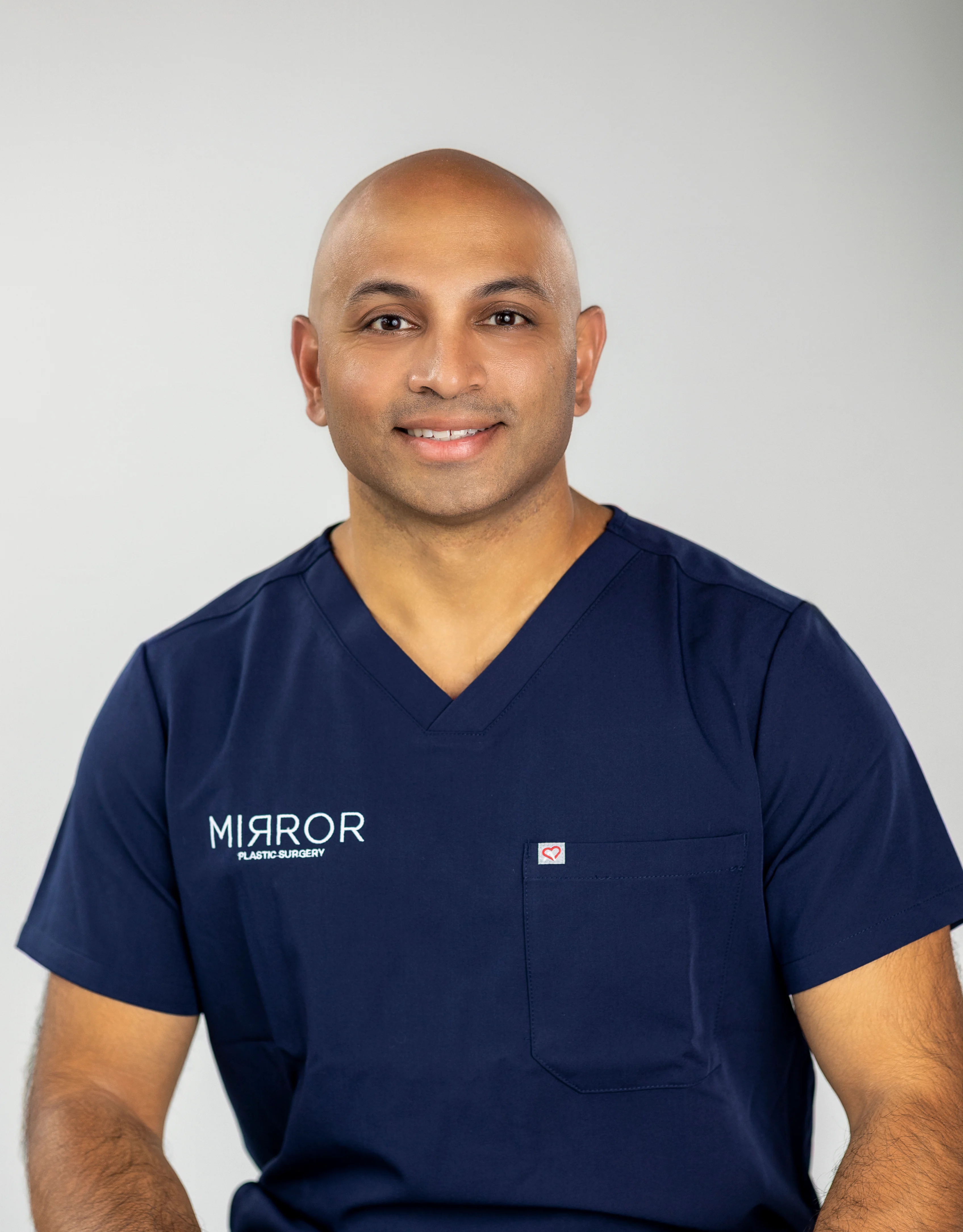
Mirror’s concierge medicine philosophy means Dr. Akash spends up to an hour in consultation and conducts a top-to-bottom anatomical assessment. The practice performs only one to two surgeries per day. This schedule supports focused, unhurried care before, during, and after every procedure. Mirror is supplier-neutral and evidence-based. Recommendations follow your anatomy and the published evidence rather than product margins. Dr. Akash explains clearly which profile your neck falls into, and he explains when the honest answer is that neither procedure fits yet.
Mirror Plastic Surgery is located at 780 4th Ave S, St. Petersburg, FL 33701. Patients can text or call 727-361-6515 or email hello@mirrorplasticsurgery.com to secure an appointment.
Schedule Your Neck Evaluation With Dr. Akash
Frequently Asked Questions
Am I A Candidate For Kybella Or A Neck Lift?
Candidacy depends entirely on your anatomy. Preference and budget come later. If your submental fullness is caused by isolated fat and your skin is firm with no visible laxity or platysmal banding, you may be a Kybella candidate. If you have loose skin, visible muscle cords, jowling, or a combination of fat and laxity, a neck lift or a staged combination approach is more appropriate. Only a physical examination by a surgeon who performs both procedures can give you a reliable answer. A consultation at Mirror Plastic Surgery includes a full anatomical assessment to determine exactly which profile applies to you.
Is Kybella Safe?
Kybella is FDA-approved for submental fat in adults and has an established safety record when used as indicated by a qualified provider. Its risks include injection-site nodules or masses that may persist for months, marginal mandibular nerve injury presenting as an uneven smile, difficulty swallowing, bruising, and tissue damage. The September 2026 FDA label update added new warnings about persistent nodules and serious adverse events associated with off-label use outside the submental region. Safety is highest when a physician with deep anatomical knowledge administers Kybella in the correct anatomical zone to a patient screened for skin laxity and platysmal banding.
How Long Do Results Last?
Kybella permanently destroys the fat cells it reaches, so the fat reduction itself is durable as long as body weight remains stable.1 It does not stop the skin or platysma from aging, so a neck that looks good after a Kybella series may develop laxity over subsequent years as natural aging continues.1 A neck lift with platysmal plication provides the durable structural result described earlier. Longevity depends on the completeness of the platysmal correction, the patient’s rate of aging, weight changes, and sun exposure habits.
What Is Recovery Like For Each Option?
Kybella produces dramatic swelling, sometimes called the “bullfrog” effect, lasting about five to ten days after each session. Numbness, redness, and firmness at injection sites can persist for several weeks, and induration and nodules typically soften and resolve within four to eight weeks. Because the series is spread across multiple months, the cumulative recovery period extends over several months. Neck lift surgery involves one to two weeks off work, with bruising and swelling most pronounced in the first ten to fourteen days and strenuous activity restricted for four to six weeks. Recovery from surgery is concentrated in a single episode rather than distributed across multiple treatment cycles.
Will I Need Maintenance After Either Procedure?
Kybella permanently destroys treated fat cells, but it does not prevent new fat accumulation if body weight increases and does not address ongoing skin aging. Energy-based skin tightening or neuromodulator treatments may be appropriate maintenance options over time. A neck lift addresses structural aging at the time of surgery, but natural aging continues afterward. Patients who maintain stable weight and protect their skin from sun damage tend to enjoy the most durable surgical results. Neither procedure stops the aging process.
Can I Have Kybella And Then A Neck Lift Later?
Yes, though the sequence matters. A 2026 Frontiers in Medicine review warns that over-treating with non-surgical fat reduction can cause excessive subcutaneous fibrosis. That fibrosis disrupts normal tissue planes and complicates future surgery such as a neck lift. This means that aggressive or repeated Kybella treatment can make a subsequent neck lift technically more difficult. If there is any reasonable likelihood that you will need surgery in the future, which is common for Profile B patients, discussing the full treatment roadmap with a surgeon before starting Kybella is the prudent approach.
When Should I See A Surgeon Instead Of Deciding On My Own?
You should see a surgeon before making any decision about neck rejuvenation. The distinction between fat, laxity, and platysmal banding cannot be reliably made from a mirror, a Reddit thread, or a med spa consultation. A board-certified plastic surgeon who performs both injectable and surgical neck treatments is the provider best positioned to give you an unbiased, anatomy-based recommendation, including the recommendation that neither procedure fits yet. At Mirror Plastic Surgery, that assessment is the starting point of every consultation, not an afterthought.
Conclusion: The Right Answer Depends On Your Anatomy
The Kybella versus neck lift decision comes down to anatomy. Kybella destroys submental fat cells. A neck lift removes fat, tightens the platysma, and excises loose skin. The correct procedure is the one that matches what your neck actually needs, and only a thorough examination by a surgeon who performs both can determine that. Dr. Akash Chandawarkar at Mirror Plastic Surgery provides an honest, anatomy-first assessment with no financial incentive to favor one option. He has the surgical and injectable expertise to deliver whichever treatment is genuinely right for you and the candor to say “neither yet” when that is the truthful answer.
For further reading on Kybella specifically, see Mirror’s guides on Kybella Before and After: A Surgeon’s Report on Real Results, Kybella Cost: Per Vial, Per Session & Full Treatment, and Best Kybella Injector: A Plastic Surgeon’s Guide.
Start Your Anatomy-Based Neck Consultation
Disclaimer: Results may vary from person to person. Editorial content, before and after images, and patient testimonials do not constitute a guarantee of specific results.
1 Results may vary from person to person. Editorial content, before and after images, and patient testimonials do not constitute a guarantee of specific results.