Non-injectable lip options include topical plumpers, energy-based treatments like LipLase, lip blush tattooing, and makeup techniques. Each offers different levels of visible fullness and longevity.
Topical lip plumpers create temporary swelling or hydration that lasts a few hours. Peptide-based products can improve texture over weeks but do not build structural volume.
LipLase laser treatments stimulate collagen for gradual, subtle volume changes that last about 4–6 months. It is the most clinically studied non-injectable option for people who avoid needles.
Lip blush tattooing uses color and border enhancement to create an illusion of fullness without adding physical volume. The lip flip still uses a needle and changes lip position, not volume.
By improving the vermilion border and color balance, lip blush can create an optical illusion of fuller lips, yet it cannot change lip projection or structural shape. It is a semi-permanent procedure that typically lasts two to three years, with some sources citing a range of one to five years depending on individual factors. Risks include infection, allergic reactions, pigment migration, dissatisfaction with results, and difficulty reversing the procedure. Lip blush works best as a complement to volume enhancement rather than a standalone substitute.
Another option often mistaken for a non-injectable alternative is the “lip flip,” which benefits from its own clarification.
Needle-free devices present an unacceptable risk profile and should not be used.
Makeup Techniques: Instant, Low-Risk Options
For an immediate, commitment-free result, makeup offers the safest and most flexible tool. Overlining with lip liner, applying plumping glosses, highlighting the cupid’s bow, and using concealer to sharpen the vermilion border can all create the visual impression of fuller lips. These techniques carry essentially no medical risk, wash off at day’s end, and help you test whether a fuller lip aesthetic suits your face before pursuing any clinical treatment.
How to Choose the Right Option for You
Three questions help clarify your decision:
What is your timeline? Makeup and topical plumpers deliver immediate results. LipLase builds gradually over months. Injectable filler provides visible results within days.
What is your goal? Subtle texture improvement and color enhancement differ from noticeable structural volume. Non-injectable options do not reproduce that level of volume.
What is your risk tolerance? All clinical treatments carry some risk. Needle-free devices carry a categorically higher and unacceptable risk compared with professionally administered injectable filler.
The table below summarizes how each option compares across mechanism, duration, and results so you can review them side by side while weighing the questions above.
Given the complexity of these choices, professional guidance plays a central role in safe, satisfying results. Lip volume loss can stem from age-related collagen decline, bone resorption, or muscle atrophy, and the most appropriate solution depends on which factors drive the change for each person. A board-certified plastic surgeon or experienced aesthetic provider can identify those causes and tailor a plan accordingly.
At Mirror Plastic Surgery in St. Petersburg, Florida, that expertise comes from two clinicians with complementary credentials. Dr. Akash Chandawarkar, a Harvard-educated physician, Johns Hopkins-trained plastic surgeon, and fellowship-trained aesthetic surgeon at Manhattan Eye Ear & Throat Hospital/Lenox Hill Hospital, brings deep anatomical knowledge to every surgical and non-surgical decision. Ellie Pranckevicius, FNP-BC, leads all injectable and non-surgical treatments with a dual background in esthetics and advanced nursing, including four years in the Neuroscience ICU at Tampa General Hospital. Her combination of esthetician training and advanced nursing experience provides a detailed understanding of skin physiology and anatomy that supports strong patient outcomes.
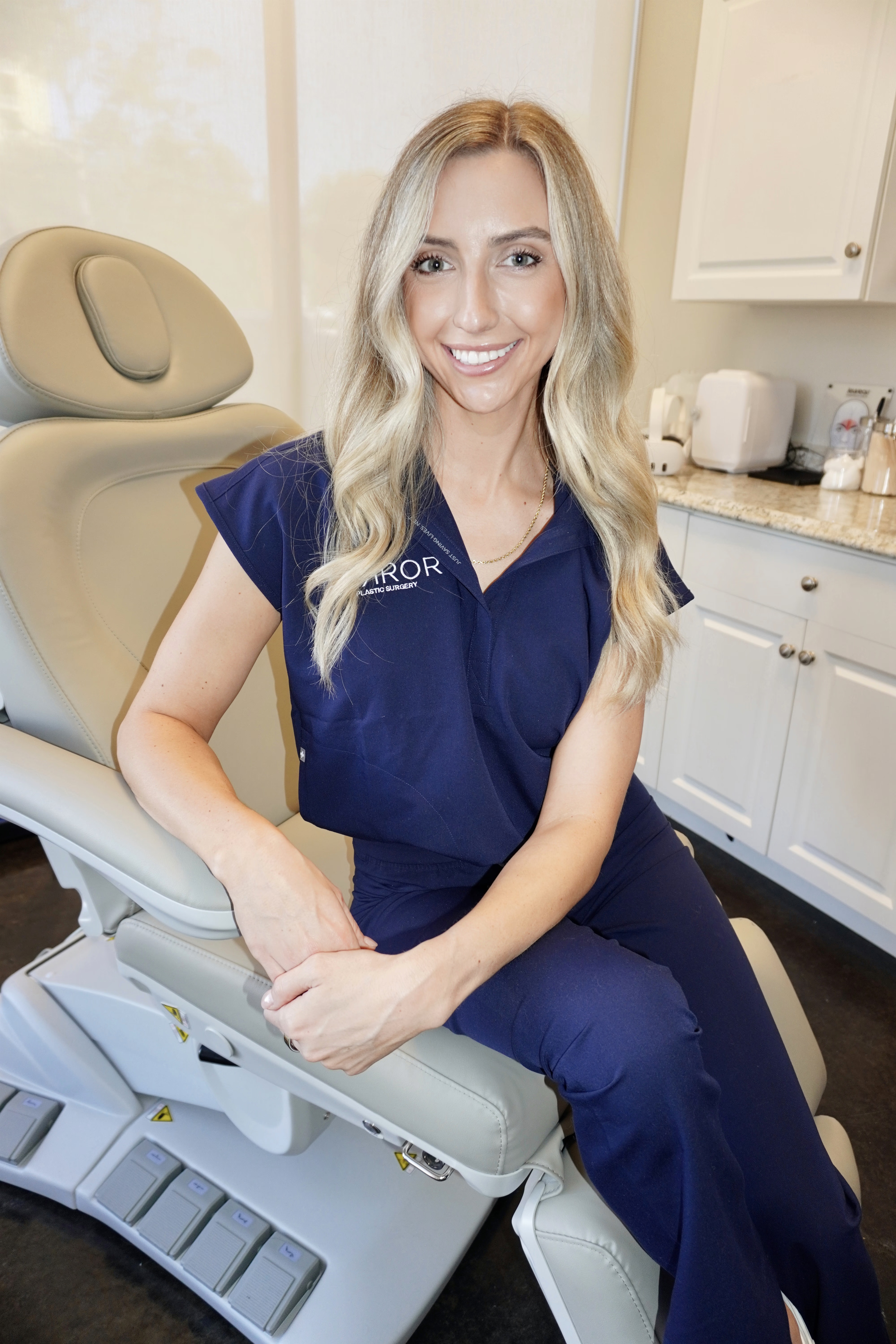
Ellie Pranckevicius, FNP-BC
Mirror Plastic Surgery’s concierge approach, with consultations lasting up to an hour, prioritizes safety first, function second, and aesthetics third. Ellie’s philosophy mirrors that of the practice. She explains skin physiology in relatable terms, helps patients understand the reasoning behind each treatment, and maintains a reputation for transparency, including advising patients when an expensive service is not yet necessary. That honesty builds long-term relationships and results that patients feel proud to share.
Frequently Asked Questions
Is there a way to plump lips without injections?
Yes, but options come with meaningful limitations. Topical plumpers using irritants like capsaicin or menthol create temporary swelling that lasts one to four hours. Energy-based treatments such as LipLase stimulate collagen over a series of sessions, producing gradual, subtle volume improvement that lasts four to six months. Lip blush tattooing creates an optical illusion of fullness through improved color and border definition. Makeup techniques offer immediate, low-risk enhancement. None of these options match the structural, lasting volume that professionally administered injectable filler provides. For patients who strongly prefer to avoid needles, LipLase currently has the most clinical support for modest volume improvement.
What is the most natural lip filler option?
When an experienced, anatomy-focused injector performs treatment, filler can look entirely natural.1 Product selection, volume used, and technique all influence the outcome. Expert consensus increasingly favors conservative initial volumes, anatomically guided placement, and a whole-face approach that considers lip proportion relative to surrounding features.1 At Mirror Plastic Surgery, Ellie Pranckevicius focuses on restoring and harmonizing inherent facial characteristics before adding volume, which consistently produces balanced, natural-looking results.
Are lip plumpers safe?
Over-the-counter topical lip plumpers are generally safe for most people, yet they still carry some risk. Irritant-based formulas containing capsaicin, menthol, or cinnamon can cause allergic reactions, so patch testing before full use is wise. People with a history of cold sores should proceed carefully because irritation around the lips can trigger herpes simplex outbreaks. Hyaluron pens, sometimes marketed as “needle-free lip plumpers,” differ completely and carry serious, documented risks including tissue necrosis, infection, and blindness. As detailed earlier, the FDA has issued a formal safety communication advising consumers to avoid these devices.
What is the difference between a lip flip and filler?
A lip flip uses a small amount of botulinum toxin injected into the upper lip’s orbicularis oris muscle to relax it, allowing the lip to roll outward and show more pink tissue. It does not add volume, and clinical data confirms no significant change in actual lip volume. Results last about 30 to 90 days. Injectable filler physically adds volume to the lip using a filler gel placed precisely within the lip tissue. Results typically last six to twelve months and can be customized for shape, symmetry, and projection. A lip flip suits patients who want more upper-lip visibility, while filler suits patients who want genuine volume. Both involve needles, so the lip flip does not qualify as a non-injectable alternative.
How long do non-injectable lip enhancements last?
Duration varies widely by treatment type. Topical irritant plumpers last one to four hours. Hydrating topical products smooth the lips for a few hours. Peptide-based products require four to twelve weeks of consistent use for modest texture improvements, and effects fade when use stops. LipLase results last four to six months, with maintenance sessions recommended annually. Lip blush tattooing lasts one to three years before fading. Makeup techniques last until removed. By comparison, professionally administered injectable filler typically lasts six to twelve months depending on the product and individual metabolism.
Are hyaluron pens safe?
Hyaluron pens are unsafe. The FDA has issued a formal safety communication explicitly advising consumers and healthcare providers not to use needle-free devices for dermal filler procedures. The agency has not approved any such device for filler delivery and cites severe risks, including permanent skin damage, scarring, vascular occlusion leading to tissue necrosis, infection from non-sterile conditions, and blindness. Complications from hyaluron pens are also harder to treat because the filler disperses across multiple tissue layers, and unregulated fillers may contain materials that cannot be dissolved. These devices should never be used.
Conclusion: Your Path to Natural Lip Volume
Non-injectable lip alternatives offer real but limited results. Topical plumpers provide temporary swelling measured in hours. LipLase delivers gradual, subtle collagen-based improvement over months. Lip blush creates an optical illusion of fullness without adding physical volume. The lip flip increases visible upper-lip tissue without adding volume and still requires a needle. Hyaluron pens remain unsafe under any circumstances.
For patients who want natural, lasting, structural volume, professionally administered injectable filler remains the only treatment with strong clinical evidence for that outcome. When an injector has deep anatomical knowledge and a philosophy centered on natural results, filler becomes a precise, reversible, and highly customizable tool rather than a dramatic, overdone treatment.
The right choice depends on your anatomy, goals, and timeline, and that decision belongs in a thoughtful clinical conversation.
Ready to Explore Your Options?
Mirror Plastic Surgery is located at 780 4th Ave S, St. Petersburg, FL 33701, and serves patients throughout the Tampa Bay area. Consultations with Ellie last up to an hour and provide a thorough, honest, and personalized assessment with no pressure and no upselling.
You can also reach the practice by phone or text at 727-361-6515 or by email at hello@mirrorplasticsurgery.com.
Disclaimer: Results may vary from person to person. Editorial content, before and after images, and patient testimonials do not constitute a guarantee of specific results.
1 Results may vary from person to person. Editorial content, before and after images, and patient testimonials do not constitute a guarantee of specific results.