Written by: Ellie Pranckevicius, FNP-BC, Aesthetic Nurse Practitioner & Aesthetic Injector | Facial Restoration & Regenerative Injectable Specialist, Mirror Plastic Surgery
Key Takeaways for Florida BBL Patients
- Natural BBL results in Florida focus on proportion and symmetry, not extreme curves or dramatic volume alone.1
- Surgical fat grafting and non-surgical biostimulatory fillers create enhancement in different ways and suit different body types.
- Long-term results depend on method, lifestyle, and maintenance, because both approaches change with weight and aging.1
- Surgical BBL recovery usually involves 2–6 weeks of sitting restrictions, while non-surgical options allow near-immediate return to daily life.
- Fat graft survival varies and some fat is reabsorbed, while fillers like Radiesse add volume and stimulate collagen but need maintenance every 12–18 months.1
- For tailored guidance on natural gluteal enhancement, schedule a consultation at Mirror Plastic Surgery to review options that match your anatomy and goals.
Long-Term BBL Outcomes in Florida: 10–20 Years Later
Long-term gluteal outcomes depend on the technique, your starting anatomy, and how you live in Florida’s climate. These factors shape how results age over a decade or more.
For surgical fat grafting, surviving fat cells act like your natural fat cells.1 They expand with weight gain and shrink with weight loss. Patients who lose a significant amount of weight after a surgical BBL usually notice less volume in the buttocks. Florida’s heat and humidity do not change fat survival directly. The state’s active lifestyle does matter, because high-intensity exercise in the early months can interfere with graft healing.
Over 10–20 years, you can expect normal age-related changes.1 Skin loosens, tissues descend, and surrounding areas shift. These changes affect both surgical and non-surgical results. Planning for touch-ups from the beginning, instead of viewing a BBL as a one-time fix, supports more stable long-term outcomes.
Non-surgical approaches that use biostimulatory fillers behave differently.1 Products such as Radiesse encourage your body to build new collagen, so results appear gradually and blend with your own tissue. The new collagen can support the area even after the filler itself breaks down. Periodic maintenance keeps that support and shape consistent over time.
While long-term outcomes depend on method and maintenance, the path to those results starts with recovery. Downtime and restrictions look very different for surgical and non-surgical options.
Recovery Timelines and Sitting Restrictions After Gluteal Enhancement
Recovery after gluteal enhancement varies widely between surgical and non-surgical procedures. For many Tampa Bay patients, the amount of downtime is a deciding factor.
Surgical BBL recovery:
- Sitting directly on the buttocks is usually restricted for 2–6 weeks to protect fat grafts during early healing.
- Patients often use BBL pillows so pressure shifts to the thighs when seated.
- Strenuous activity, including gym workouts and swimming, is commonly paused for 6–8 weeks.
- Most patients return to full activity between 8–12 weeks, while swelling continues to settle for several more months.
Non-surgical injectable BBL recovery:
- There are no extended sitting restrictions after biostimulatory filler injections to the buttocks.
- Mild soreness and swelling at injection sites usually improve within 3–7 days.
- Most patients resume normal daily activities right away, while avoiding heavy pressure on the area for 24–48 hours.
- Florida activities such as beach days, paddleboarding, and cycling are only briefly adjusted compared with surgical recovery.
Fat and Filler Survival Rates: What Current Data Suggest
Fat graft survival in surgical BBLs varies from patient to patient.1 Technique, total volume, blood supply in the area, and how pressure is managed after surgery all influence retention. Studies show a wide range of long-term fat survival.1 A noticeable portion of the transferred fat is usually reabsorbed during the first three to six months. Many surgeons intentionally overfill to offset this early loss. That strategy can make results look larger or less natural in the early healing phase.
Biostimulatory fillers used in non-surgical BBLs, such as calcium hydroxylapatite products like Radiesse and structural allografts like AlloClae, do not depend on fat cells living or dying.1 They create immediate volume and also trigger collagen remodeling. The collagen framework that forms can last longer than the original filler. Maintenance visits, often spaced 12–18 months apart based on product choice and metabolism, help preserve shape and support.1
Neither approach creates a result that stays unchanged for life. Honest discussion about upkeep belongs in every treatment plan from the start.
That maintenance planning is also evolving, as new techniques and products shape how providers approach “natural” BBL results.
2026 Non-Surgical BBL Trends in Florida
In 2026, non-surgical gluteal enhancement is shifting toward subtle, anatomy-focused, regenerative treatments. The goal is a balanced shape that fits the body, not a single-session volume jump.
- Biostimulatory and regenerative products now take priority over simple fillers that only add bulk. Providers aim to improve skin texture, reduce cellulite, and support tissue while refining shape.
- Combination treatment plans often address hip dips, projection, and surface irregularities together. This approach creates smoother transitions and more natural curves.
- Ultrasound-guided injections are becoming more common for safety and precision. Real-time imaging helps injectors see tissue layers and place product accurately.
- Limited daily case volume is viewed as a quality marker. Practices that cap the number of injectable BBLs per day can devote more time and attention to each patient.
- Thorough patient education on timelines and maintenance is treated as part of the procedure. Patients understand how results will evolve and what follow-up they may need.
Surgical vs. Non-Surgical BBL: Comparing Your Options
Candidacy for each approach depends on your anatomy, health history, volume goals, and lifestyle. The comparison below highlights how surgical and non-surgical options differ in invasiveness, downtime, longevity, and risk so you can see which aligns with your priorities.
| Factor | Surgical BBL (Fat Grafting) | Non-Surgical BBL (Biostimulatory Fillers) |
|---|---|---|
| Invasiveness | General or IV sedation, liposuction donor sites, operating room setting | Topical numbing, in-office injections, no incisions |
| Downtime | 2–6 weeks sitting restriction, 8–12 weeks to full activity | 24–48 hours of activity modification, no sitting restriction |
| Longevity | Surviving fat behaves like native tissue, changes with weight and aging, no fixed maintenance schedule | Collagen-stimulating effect, maintenance sessions usually every 12–18 months |
| Risk Profile | Surgical risks including anesthesia, infection, fat embolism, higher overall complication potential | Non-surgical risks including bruising, swelling, asymmetry, serious events are uncommon with expert technique and ultrasound guidance |
Neither option is universally better for every patient. The right choice is the one that fits your anatomy, risk tolerance, schedule, and long-term plan.
Choosing a Tampa Bay Provider for Natural-Looking Results
Provider selection strongly influences both safety and how natural your BBL looks. Together, the factors below create a clear picture of quality care in Tampa Bay.
- Board-certified oversight: Non-surgical injectable procedures should take place in a practice with board-certified plastic surgery oversight, so any complication can be managed at the right level.
- Deep anatomical knowledge: The gluteal area contains complex tissue layers. Injectors with strong clinical backgrounds and advanced anatomy training can place product more safely and precisely.
- Use of ultrasound guidance: Real-time imaging lowers the risk of injecting into a blood vessel and supports accurate placement in the intended plane.
- Full-body proportion assessment: Providers who evaluate posture, hip-to-waist ratio, and skin quality, not just the buttocks, tend to create more harmonious results.
- Limited daily injectable volume: Practices that perform only a small number of injectable BBLs per day can maintain focus and consistency. High-volume “mill” settings often feel rushed.
- Clear, honest communication: A qualified provider will explain when a procedure is not appropriate and why, instead of recommending treatment in every situation.
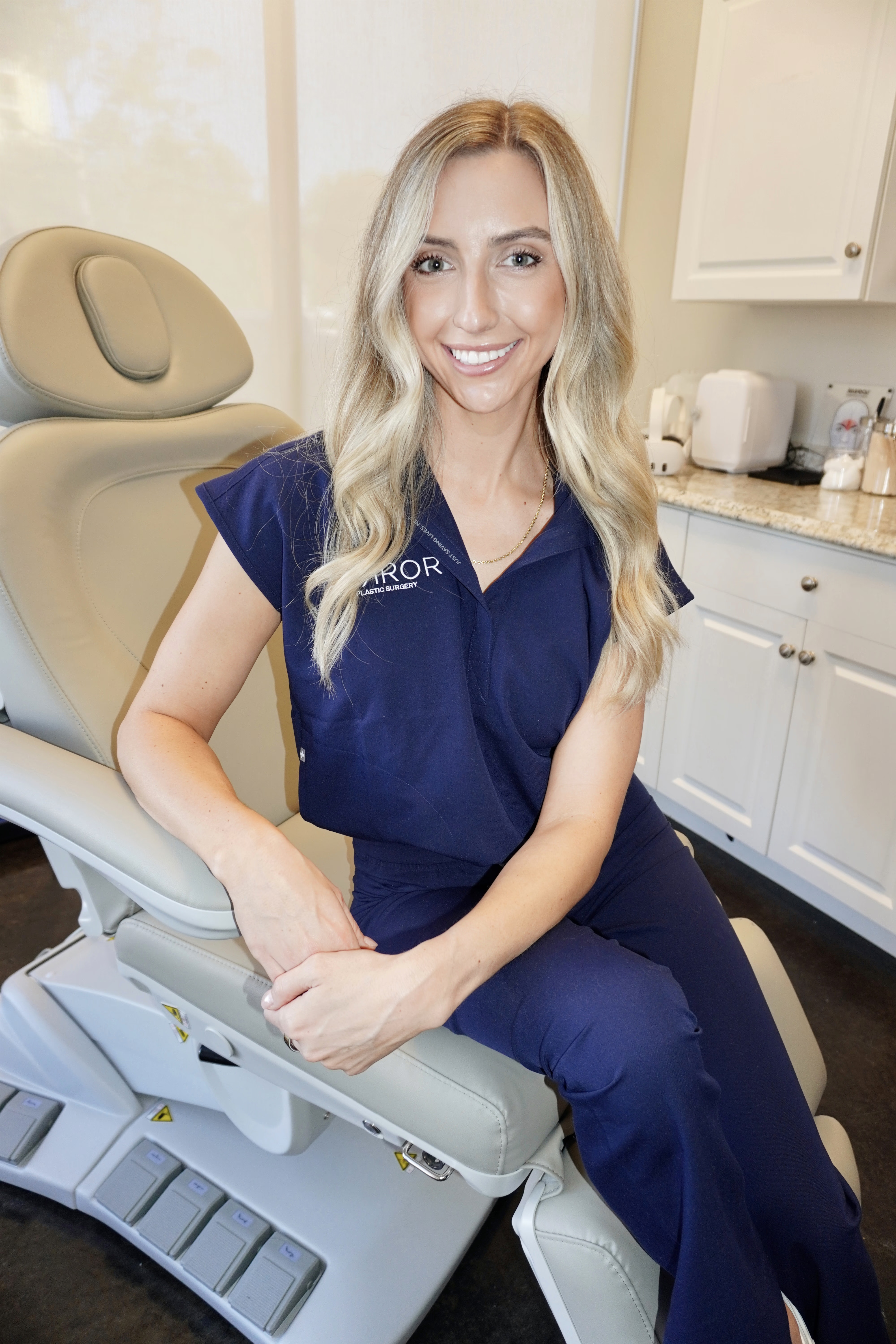
At Mirror Plastic Surgery in St. Petersburg, non-surgical BBL treatments are led by Ellie Pranckevicius, FNP-BC, an Aesthetic Nurse Practitioner with neuroscience ICU experience, advanced aesthetics training, and focused expertise in gluteal biostimulatory fillers. The practice operates under the surgical oversight of Dr. Akash Chandawarkar, a Harvard-educated, Johns Hopkins-trained plastic surgeon with fellowship training at Manhattan Eye Ear & Throat Hospital.
Frequently Asked Questions
Am I a candidate for a non-surgical BBL?
Many adults in good general health who want shape refinement, cellulite improvement, hip dip correction, or modest volume are potential candidates. Patients who want a dramatic size increase or who have very little existing tissue may be better matched with a surgical consult. A thorough in-person exam remains the most reliable way to confirm candidacy, because anatomy, skin quality, and medical history all matter.
How many treatment sessions will I need, and how often?
Most patients reach their initial goal in one or two sessions, depending on desired change and product selection.1 As discussed earlier, maintenance sessions are usually recommended every 12–18 months. Your injector will adjust that schedule based on your metabolism, activity level, and how your body responds over time.
What is the difference between Radiesse and AlloClae for non-surgical BBL?
Radiesse is a calcium hydroxylapatite biostimulatory filler that adds immediate volume and gradually stimulates collagen. AlloClae is a structural allograft used for body contouring, including buttocks and hip dips, and supports tissue through a regenerative integration process. Both can work well for non-surgical gluteal enhancement. The choice, or a blend of both, depends on your anatomy, goals, and your provider’s clinical judgment.
Will a non-surgical BBL look natural?
When performed by an injector with strong anatomical training and a proportional approach, non-surgical BBL results are designed to look natural.1 The focus stays on shape, balance, and symmetry instead of extreme volume. At Mirror Plastic Surgery, Ellie begins with a full-body proportion assessment so the gluteal result fits your overall frame.
When should I schedule an evaluation instead of waiting?
Patients who notice increasing asymmetry, changes in skin texture, or structural concerns in the buttocks benefit from earlier evaluation. Biostimulatory treatments work with your body’s regenerative capacity, and addressing issues before significant tissue decline often produces better outcomes. There is no strict minimum age, and candidacy is always determined individually.
Disclaimer
Disclaimer: Results may vary from person to person. Editorial content, before and after images, and patient testimonials do not constitute a guarantee of specific results.
1 Results may vary from person to person. Editorial content, before and after images, and patient testimonials do not constitute a guarantee of specific results.