
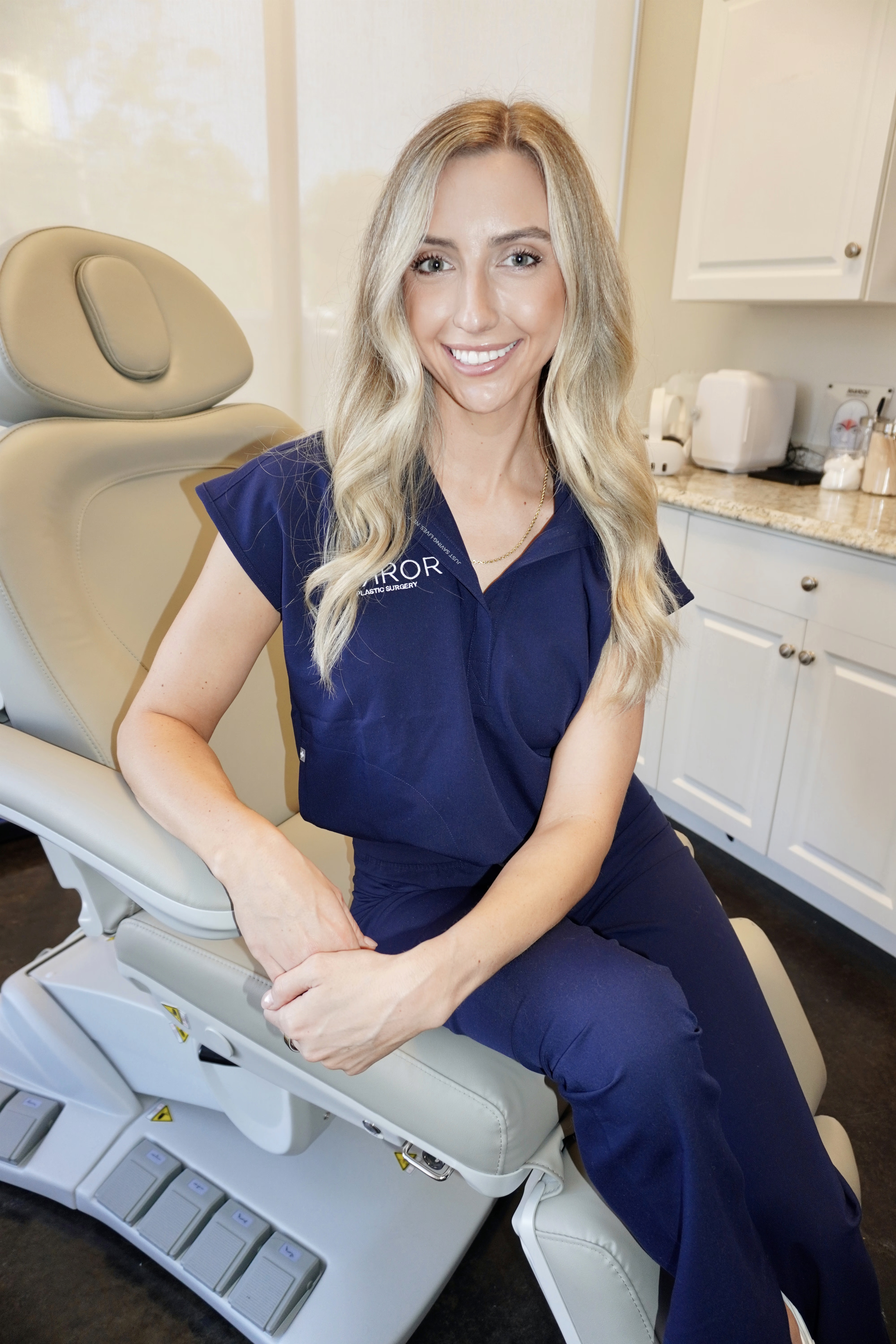
Written by: Ellie Pranckevicius, FNP-BC, Aesthetic Nurse Practitioner & Aesthetic Injector | Facial Restoration & Regenerative Injectable Specialist, Mirror Plastic Surgery
Key Takeaways
- Buying peptides online without a prescription bypasses safety testing, quality control, and medical oversight, which exposes you to contamination, incorrect dosing, and serious health risks.
- Research-grade peptides from unregulated vendors often fail basic quality checks, with documented cases of heavy metal contamination, mislabeling, and purity levels as low as 5%.
- Without medical supervision, you face serious complications including liver and kidney damage, hormonal disruption, severe allergic reactions, and life-threatening infections.
- Legitimate peptide therapy requires a prescription, third-party Certificates of Analysis, and oversight from a licensed healthcare provider to support safety and effectiveness.
- For safe, medically supervised peptide therapy tailored to your health goals, schedule a consultation with Ellie at Mirror Plastic Surgery.
Why Peptides Are Everywhere Right Now
Peptides are short chains of amino acids that act as signaling molecules and influence collagen production, inflammation, metabolism, and cellular repair. People turn to them for many health and aesthetic goals:
- Anti-aging: Peptides like GHK-Cu stimulate collagen and elastin production, which supports healthier-looking skin, hair, and nails.1
- Weight management: GLP-1 and newer GLP-3R peptides help regulate appetite and metabolism.1
- Inflammation and recovery: BPC-157 and TB-500 target systemic inflammation and tissue repair.1
- Energy and vitality: NAD+ supports cellular mitochondria for increased energy.1
A critical distinction exists within this category. Some peptides, such as semaglutide (Ozempic, Wegovy) and tirzepatide (Mounjaro, Zepbound), are FDA-approved prescription medications manufactured under current good manufacturing practice (cGMP) standards. Most popular wellness peptides, including BPC-157, TB-500, and GHK-Cu, are not FDA-regulated. This regulatory gap makes sourcing and supervision crucial.
The Core Risks: What Happens When You Buy Peptides Online Without a Doctor
Contamination and Impurity: You Don’t Know What’s in That Vial
Unlicensed labs do not follow sterile manufacturing standards. Health Canada’s public advisory warns that unauthorized injectable peptides can expose consumers to solvents, heavy metals, particles (fibers, glass, plastic), and microbials (bacteria, fungi, endotoxins).
Regulatory enforcement has followed these contamination concerns. Since September 2025, the FDA has issued over 50 warning letters to research peptide vendors for violations including falsified Certificates of Analysis and therapeutic claims. A January 2026 analysis by The Peptide List and MZ Biolabs found that roughly 3 in 10 research-grade peptide products fail basic quality checks, including mislabeling, low purity, or incorrect dosing.
Incorrect Dosing: A 1,000-Fold Error Is One Mistake Away
People who self-dose peptides without medical guidance frequently make serious dosing errors. Confusing milligrams (mg) with micrograms (mcg) produces a 1,000-fold error, since 1 mg equals 1,000 mcg, and the Institute for Safe Medication Practices lists this among its most error-prone abbreviations. Reconstitution calculations, insulin syringe unit conversions, and titration schedules all require precise knowledge that most buyers do not have. Health Canada further warns that unauthorized peptide drugs may contain too much, too little, or none of the active ingredient.
Organ Damage and Serious Side Effects
Unregulated peptide use can cause serious and sometimes irreversible harm:
- Liver and kidney damage: Health Canada lists liver and kidney damage among potential adverse effects, and the TGA has received reports of liver damage requiring medical attention.
- Hormonal disruption: A 2022 case report by Cardaci et al. documented a 62.3% drop in total testosterone and an 85.7% drop in free testosterone in a 25-year-old using unregulated peptides, along with a tripling of liver enzyme ALT.
- Severe allergic reactions: The TGA has received reports of severe allergic reactions requiring adrenaline and hospitalization.
- Blood clots and tumor growth: Health Canada warns of blood clots and growth of cancerous tumors.
- Life-threatening infections: Medsafe, New Zealand’s medicines safety authority, states there is no evidence that unapproved injectable peptide products are sterile, which creates a high risk of life-threatening infection.
No Medical Supervision: The Most Critical Risk
When you purchase peptides online, no one screens for drug interactions, pre-existing conditions, or adverse reactions. Dr. Daniel Drucker, whose research helped pave the way for GLP-1 medications, warns that you might be allergic to a compound your body has never seen before, which can trigger an immune response with potentially fatal side effects.
A May 2026 Hone survey of 2,491 U.S. adults found that half of people taking research-grade peptides mistakenly believe the compounds they are using are FDA-approved. This misconception becomes especially dangerous when combined with unregulated purchasing. Among users who bought from a social media seller, 45% sought emergency or urgent care because of a reaction, compared with 16% of all peptide users.
Talk with Ellie in a dedicated consultation to review your health goals and receive a personalized, medically supervised peptide plan instead of a random vial with no guidance.
Common Misconceptions About Peptides
“Peptides are only for weight loss.” Peptides address a wide range of conditions, including systemic inflammation, autoimmune conditions, anti-aging, post-surgical recovery, anxiety, energy, sexual wellness, and fertility. For example, the Glow Stack (GHK-Cu, BPC-157, TB-500) targets inflammation and collagen production, while Selank addresses anxiety without the addictive component of benzodiazepines, and NAD+ supports cellular energy.
“All peptides are dangerous.” Properly sourced and medically supervised peptides can be both safe and effective.1 The real danger comes from unregulated products and unsupervised use.
“Buying online is just as good as a doctor’s guidance.” The single largest category of peptide harm comes from the gray market of online “research use only” vials. Physician-supervised therapy sourced from a licensed U.S. pharmacy removes that entire category of risk.
The Legal Landscape: FDA-Approved vs. Research-Only Peptides
A clear understanding of peptide legal status helps you make safer choices. The table below summarizes the three main categories:
Products labeled “For Research Use Only — Not for Human Consumption” remain illegal for human use and are not exempt from regulatory requirements. In February 2026, operators of Paradigm Peptides faced federal charges for distributing misbranded drugs and operating an unlicensed pharmacy after making performance-enhancement claims.
Red Flags: How to Spot an Unsafe Online Peptide Seller
Unsafe peptide sellers share predictable warning signs that you can spot quickly:
- No prescription required: Legitimate peptide therapy always includes a medical evaluation and a valid prescription.
- “Research use only” labels: These disclaimers do not make supply lawful and do not change a product’s regulatory status.
- No third-party Certificates of Analysis: Research chemical CoAs can be altered, forged, or unrepresentative of all batches.
- Health claims on the website: Claims like “boost muscle growth” or “improve fat loss” are common violations cited in FDA warning letters and indicate the product is being marketed as a drug without approval.
- Payment via cryptocurrency: Gray-market peptide vendors received $32 million in cryptocurrency in Q1 2026, a 159% quarter-over-quarter increase, and this sector targets a vulnerable demographic inexperienced with both unregulated pharmaceuticals and cryptocurrency.
- Social media or messaging app sales: As noted earlier, social media purchases are linked to a 45% emergency care rate.
- No physical address or contact information: Legitimate businesses are transparent about their location and licensing.
The Safe Alternative: A Step-by-Step Guide to Medically Supervised Peptide Therapy
Safe peptide therapy follows a structured, clinically grounded process that protects your health at every step. Here is what that process looks like at Mirror Plastic Surgery:
Step 1: Comprehensive Consultation
A thorough evaluation with a qualified practitioner covers your complete medical history, current medications, and specific health goals. At Mirror Plastic Surgery, this is a 30–60 minute one-on-one consultation with Ellie Pranckevicius, FNP-BC, instead of a rushed telehealth visit. Ellie’s background includes four years in the Neuroscience ICU at Tampa General Hospital, which gives her a deep understanding of physiology, metabolic health, and the body’s capacity for recovery.
Step 2: Lab Testing to Identify Root Causes
Blood work supports both safety and effectiveness. Thyroid, liver, kidney, diabetes markers, and hormone panels show whether peptides are appropriate for your physiology and reveal contraindications before any protocol begins. Physician supervision reduces risk by screening for contraindications including pregnancy, cancer history, and certain thyroid and cardiac conditions.
Step 3: Personalized Protocol Design
A custom peptide stack is tailored to your individual needs instead of a one-size-fits-all approach. Ellie explains the physiology behind each recommendation in relatable terms so you understand both what you are taking and why. This educational, transparent approach forms the foundation of safe, effective peptide therapy.
Step 4: Quality-Sourced Peptides
Peptides at Mirror Plastic Surgery come from reputable providers with rigorous batch testing, purity verification, and accurate dosing. Pharmaceutical-grade peptides are produced in FDA-inspected, cGMP-certified facilities and tested for purity, potency, sterility, and endotoxin levels, a standard that research-only online products do not meet.
Step 5: Ongoing Monitoring and Concierge Support
Regular follow-up visits adjust dosing, track progress, and address concerns as they arise. Ellie remains available 24/7 via text for questions, refills, and guidance, which gives you direct access to your provider instead of a call center. Clinical oversight supports correct dosing, appropriate timing and cycling, monitoring of IGF-1 and metabolic markers, avoidance of drug interactions, and early detection of side effects.
Start with a comprehensive consultation and lab review at Mirror Plastic Surgery to build a peptide plan tailored to your health profile.
Why Mirror Plastic Surgery Is the Safe Choice for Peptide Therapy
Mirror Plastic Surgery, serving the St. Petersburg and Tampa Bay area, offers concierge-level peptide therapy that prioritizes safety first, function second, and aesthetics third. The practice limits itself to a small number of procedures per day so every patient receives focused attention before, during, and after their protocol.
Ellie Pranckevicius, FNP-BC, leads peptide therapies with a rare combination of esthetician training and advanced clinical nursing expertise. She is board-certified as a Family Nurse Practitioner, earned her Bachelor’s in Health Science from Boston University on the premedical track, completed an aesthetics licensure program, and obtained both her Bachelor’s and Master’s in Nursing from the University of South Florida. Her ICU background, mentioned earlier, gives her a clinical foundation that most wellness practitioners do not have.
Dr. Akash Chandawarkar, MD, founder of Mirror Plastic Surgery, is a Harvard-educated physician and Johns Hopkins-trained plastic surgeon with fellowship training in aesthetic surgery at the Manhattan Eye Ear & Throat Hospital (MEETH)/Lenox Hill Hospital and medical innovation training at Stanford University. His commitment to evidence-based medicine sets the standard for the entire practice.
Mirror Plastic Surgery stands out through several key elements of care:
- In-depth consultation: Up to an hour dedicated to understanding your health history and goals.
- Comprehensive lab analysis: Identifying root causes before recommending any protocol.
- Quality sourcing: Peptides from reputable providers with batch testing and purity verification.
- 24/7 concierge support: Direct access to Ellie via text for questions, refills, and guidance.
- Remote service: Available in Tampa or remotely across the United States, including Hawaii and Alaska.
Frequently Asked Questions
Are peptides FDA-approved?
Only a small number of peptides are FDA-approved as medications, including semaglutide (Ozempic, Wegovy), tirzepatide (Mounjaro, Zepbound), insulin, and a handful of others used for specific medical conditions. Most wellness peptides, including BPC-157, TB-500, GHK-Cu, and NAD+, are not FDA-regulated. This status does not automatically make them unsafe, but it does mean that sourcing and medical supervision are critical. At Mirror Plastic Surgery, Ellie sources peptides from reputable providers with rigorous batch testing and works with each client to ensure the protocol fits their individual health profile.
What are the side effects of peptides?
Under medical supervision, common side effects are typically mild and manageable. These may include injection-site reactions such as redness or soreness, headache, flushing, nausea, or fatigue. GLP-1 peptides may also cause gastrointestinal effects, which are managed through gradual dose titration. Without supervision, risks increase significantly and can include contamination-related infections, hormonal disruption, liver or kidney damage, severe allergic reactions, and, in rare cases, life-threatening complications. Medical oversight, quality sourcing, and personalized dosing create the difference between these two outcomes.
Can I buy peptides legally online?
Research-only peptides labeled “not for human consumption” occupy a legal gray area. Vendors may sell them for laboratory use, but marketing or using them for human consumption is illegal under the Federal Food, Drug, and Cosmetic Act. FDA-approved peptides require a valid prescription from a licensed physician. Buying unapproved peptides for personal use from online vendors, especially those operating via social media, messaging apps, or cryptocurrency, is both illegal and unsafe. Several vendors have faced federal charges, product seizures, and criminal prosecution for these activities.
How do I know if a peptide supplier is safe?
A safe supplier requires a valid prescription and a medical consultation before dispensing any peptide. They provide third-party Certificates of Analysis with batch numbers, manufacturing facility information, and verified purity levels. They operate as a licensed U.S. compounding pharmacy under 503A or 503B regulations, with transparent sourcing and no health claims on their website. If a supplier does not require a prescription, makes therapeutic claims, accepts cryptocurrency, or sells through messaging apps, they are not a safe source. The safest path is working with a qualified practitioner who sources peptides on your behalf from a vetted, licensed pharmacy.
What happens if I stop taking peptides?
Peptide effects usually diminish over time once therapy stops, similar to pausing any health regimen. If peptides were managing inflammation, hormonal balance, or metabolic function, those conditions may return to their prior state. Many clients benefit from a maintenance protocol to sustain the gains they achieved.1 Ellie works with each client to design a long-term strategy that fits their goals, lifestyle, and health trajectory, instead of a one-time prescription with no follow-up.
Prioritize Your Safety
Evidence from regulatory agencies worldwide, including the FDA, Health Canada, the TGA, and Medsafe, consistently shows that buying peptides online without a prescription exposes you to contaminated products, incorrect dosing, and zero medical oversight, with potentially serious and irreversible consequences.
Medically supervised peptide therapy, with personalized protocols, quality-sourced products, and ongoing monitoring from a qualified provider, offers a safer path and a better chance of meaningful health outcomes. Mirror Plastic Surgery’s concierge model, led by Ellie Pranckevicius, FNP-BC, is built around this standard of care.
Explore a personalized, medically supervised peptide plan at Mirror Plastic Surgery to pursue your health goals with safety at the center.
Disclaimer: Results vary from person to person. Many peptides discussed in this article are not FDA-regulated. The information provided here is for educational purposes only and does not constitute medical advice. Always consult a qualified healthcare provider before starting any peptide therapy.
1 Results may vary from person to person. Editorial content, before and after images, and patient testimonials do not constitute a guarantee of specific results.
Peptide therapy is intended for wellness and optimization purposes and is not prescribed to diagnose, treat, cure, or prevent disease unless specifically stated. Many peptides are not FDA-approved and may be used off-label. Some have limited long-term safety data, with a potential for unknown risks, complications, or desensitization with prolonged use.