
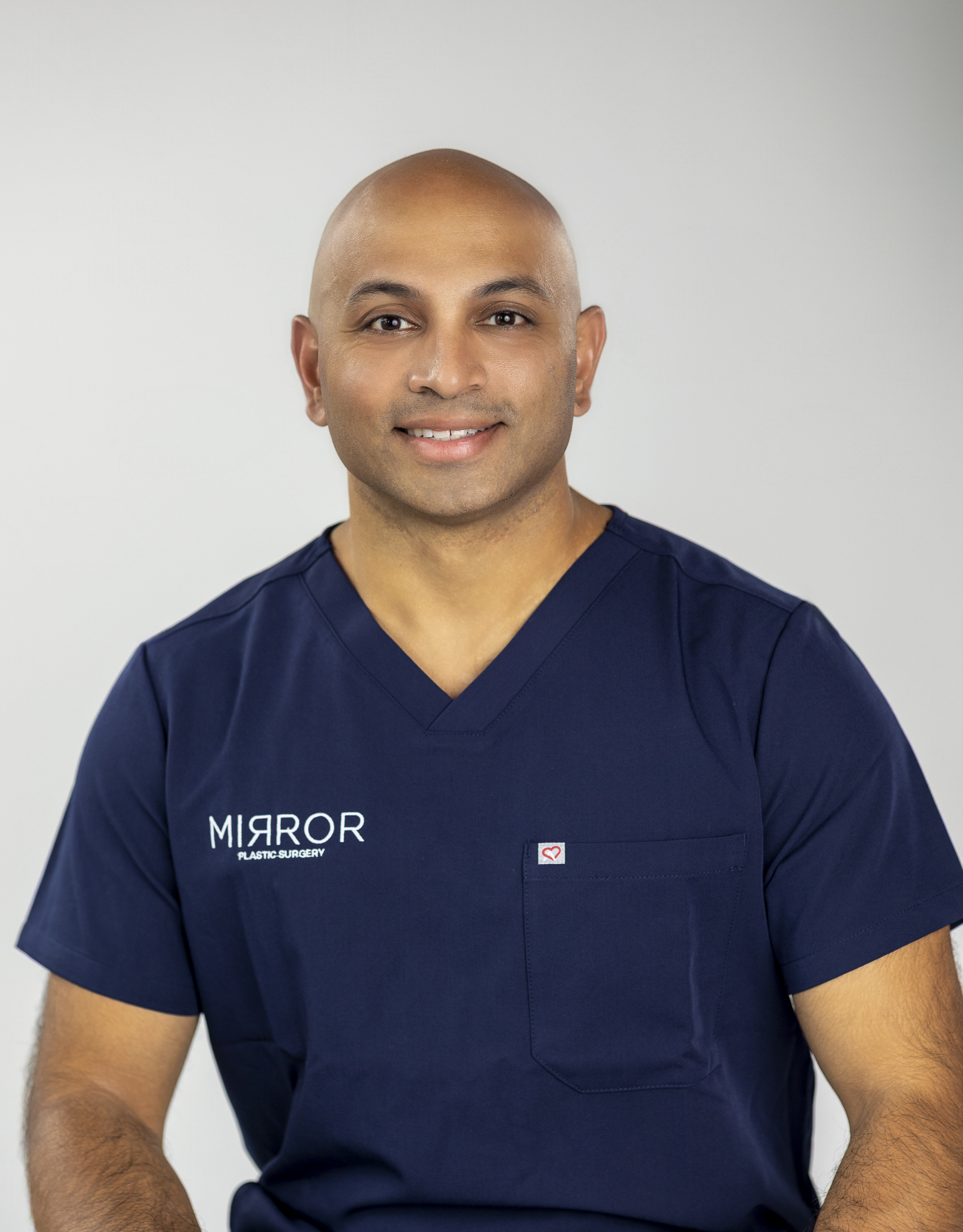
Written by: Dr. Akash Chandawarkar, Board Certified Plastic Surgeon, Mirror Plastic Surgery
Key Takeaways for a Safer BBL in 2026
- BBL safety in 2026 depends on clear, verifiable standards such as ABPS board certification, accredited facilities, and subcutaneous-only fat placement with ultrasound guidance.
- Patients should confirm that their surgeon uses real-time intraoperative ultrasound and limits daily case volume to one or two procedures to reduce risk.
- High-volume surgical models increase complication risk through divided attention, while low-volume practices like Mirror Plastic Surgery provide focused care and direct surgeon access.
- Board-certified surgeons with hospital privileges who operate in accredited facilities offer the safest pathway for emergency management and long-term BBL outcomes.
- Schedule your personalized safety assessment at Mirror Plastic Surgery to review candidacy and receive evidence-based BBL guidance from Dr. Akash.
Why BBL Safety Remains a Top Concern in 2026
The BBL has historically carried one of the highest mortality rates among elective cosmetic procedures. This reality prompted the Aesthetic Society and the American Society of Plastic Surgeons to issue updated joint safety recommendations focused on standardized technique. Patient awareness of these risks has grown, and regulatory bodies in Florida have responded with stricter outpatient facility oversight. In 2026, informed patients recognize that surgeon volume, technique specificity, and facility accreditation function as measurable safety variables, not marketing language.
Five Non-Negotiable Safety Criteria Every Tampa Patient Must Verify
These five criteria work together to create a complete safety framework. Board certification confirms core training, facility accreditation sets infrastructure standards, subcutaneous-only technique addresses the main mechanism of fatal complications, ultrasound guidance enforces that technique in real time, and low surgical volume preserves the focus required to apply all of these safeguards consistently.
- Board Certification by the American Board of Plastic Surgery (ABPS). Only surgeons certified by the ABPS have completed the full continuum of accredited plastic surgery training, including written and oral examinations and ongoing maintenance of certification. Certification by other boards does not provide the same depth of training in body contouring.
- Accredited surgical facility. The procedure should take place in a facility accredited by a recognized body such as the American Association for Accreditation of Ambulatory Surgery Facilities (AAAASF) or the Accreditation Association for Ambulatory Health Care (AAAHC). Florida’s Board of Medicine requires registration, not licensure, for physician offices performing Level II or Level III procedures, which include those involving general anesthesia or deep sedation.
- Subcutaneous-only fat placement technique. The surgeon must deposit fat exclusively in the subcutaneous plane, never into or below the gluteal muscle. Intramuscular injection places fat near large gluteal vessels and represents the primary mechanism of fatal fat embolism.
- Real-time ultrasound guidance. Intraoperative ultrasound allows the surgeon to visualize needle depth and confirm subcutaneous placement throughout the procedure, rather than relying on feel alone.
- Low surgical volume, typically one to two cases per day. Surgeon fatigue and divided team attention are documented contributors to adverse outcomes. Practices that limit daily case volume maintain consistent focus on each patient.
What Defines the Safest BBL Technique in 2026
The safest BBL technique keeps fat in the subcutaneous plane, which is the layer of tissue between the skin and the gluteal muscle fascia. Fat injected into this plane remains separated from the large vascular structures that run within and beneath the muscle. Subcutaneous-only fat grafting has replaced earlier approaches that allowed deeper injection into or below the muscle.
Ultrasound guidance reinforces this standard by providing real-time visual confirmation of cannula position. Without imaging, depth assessment depends entirely on tactile feedback, which changes with patient anatomy and tissue density. Surgeons using ultrasound can identify inadvertent depth changes before fat is deposited, which reduces the risk of intramuscular or intravascular injection.
Fat preparation also matters because harvested tissue contains blood, oil, and damaged cells along with healthy fat cells. Centrifugation, decanting, and filtration remove these contaminants, which would otherwise trigger inflammation and compromise graft survival. By isolating the healthiest fat cells, evidence-based processing protocols reduce inflammation and improve long-term fat retention.1
How Board Certification and Facility Accreditation Reduce Risk
ABPS certification signals that a surgeon has completed rigorous plastic surgery training and has been independently evaluated for competency. For BBL procedures, this background includes detailed understanding of gluteal anatomy, vascular patterns, and safe fat grafting technique. Surgeons performing BBL without ABPS certification may not have the same formal training in these specific anatomical nuances.
Facility accreditation adds another layer of protection through independent inspection of equipment, staffing ratios, emergency protocols, and anesthesia standards. Florida law requires that licensed outpatient surgical centers meet defined regulatory benchmarks. A board-certified plastic surgeon operating in an accredited facility typically holds hospital privileges, which creates a direct pathway for emergency transfer if a rare complication occurs.
At Mirror Plastic Surgery, Dr. Akash, a two-time Newsweek America’s Best Plastic Surgeons honoree including 2025, is board certified by the ABPS and trained at Johns Hopkins, Harvard Medical School, and the Manhattan Eye, Ear and Throat Hospital (MEETH). His hospital privileges ensure that any rare surgical complication can be managed within a full acute-care environment.
Ultrasound Guidance as a Standard in Modern BBL Procedures
Intraoperative ultrasound has shifted from an optional tool to an expected component of safe BBL technique. The technology allows the operating surgeon to visualize the cannula tip in real time, confirm the depth of fat deposition, and avoid the superior gluteal vessels. Practices that do not offer ultrasound-guided BBL rely on anatomical landmarks and tactile feedback alone, an approach that the Aesthetic Surgery Journal’s gluteal fat grafting task force has identified as a modifiable risk factor.
Patients should ask specifically whether ultrasound guidance is used during fat injection, not just for preoperative marking. Preoperative ultrasound provides helpful anatomical mapping but does not account for positional changes or tissue shifts that occur once surgery begins.
Mirror Plastic Surgery uses advanced in-office ultrasound for preoperative assessment and real-time intraoperative guidance, which reflects Dr. Akash’s evidence-based approach to body contouring.
Schedule an ultrasound-guided BBL consultation with Dr. Akash to discuss how real-time imaging will be integrated into your procedure at Mirror Plastic Surgery.
Essential Questions to Ask During Your BBL Consultation
- “Are you board certified by the American Board of Plastic Surgery?” This question establishes the baseline credential. Request documentation if you cannot immediately verify certification on the ABPS public registry.
- “In which accredited facility will my procedure be performed, and what is its accreditation body?” Confirm the facility name and then verify its status independently through the accrediting organization’s public directory.
- “Do you use real-time intraoperative ultrasound guidance during fat injection?” Clarify whether the practice uses ultrasound during the procedure itself, not only for preoperative imaging.
- “How many BBL procedures do you perform per day, and who comprises your surgical team?” A surgeon performing five or more procedures daily divides attention across multiple rooms and recovery phases at the same time.
- “What is your protocol if a complication occurs, and do you have hospital privileges?” The response reveals both emergency preparedness and the surgeon’s credentialing status at an acute-care institution.
High-Volume vs. Low-Volume Surgical Models for BBL
Daily case volume shapes how much attention each patient receives at every stage of care. The following table shows how high-volume and low-volume models differ in focus, monitoring, and access, and how Mirror Plastic Surgery aligns with a low-volume, concierge-style approach.
| Criterion | High-Volume Model (5–10 cases/day) | Low-Volume Model (1–2 cases/day) | Mirror Plastic Surgery |
|---|---|---|---|
| Daily case volume | 5–10 surgeries | 1–2 surgeries | 1–2 surgeries |
| Team focus per patient | Divided across simultaneous rooms | Dedicated to single active case | Entire team focused on one patient at a time |
| Complication monitoring | Shared recovery staff across multiple patients | Concentrated post-operative observation | Dedicated monitoring with direct surgeon availability |
| Patient access to surgeon | Limited, often delegated to staff | Direct, surgeon-led pre- and post-operative care | Hour-long consultations and direct access to Dr. Akash |
High-volume practices may deliver consistent results for straightforward cases, yet the structural demands of running many operating rooms at once reduce the margin for individualized intraoperative decision-making. Low-volume concierge models preserve that margin at every stage, from planning through recovery.
Frequently Asked Questions About BBL Safety and Results
Who is a good candidate for a BBL?
Good candidates are adults at or near their goal weight with enough donor fat for harvest, typically from the abdomen, flanks, or thighs. Patients with very low body fat may not have adequate volume for meaningful augmentation. A thorough preoperative evaluation that reviews skin quality, fat distribution, and overall health determines candidacy. Significant weight fluctuations after surgery can alter the result, so stable weight serves as an important baseline criterion.
What does BBL recovery involve?
Recovery usually involves avoiding direct pressure on the buttocks for two to six weeks to protect the transferred fat while it establishes a blood supply. Patients use specialized cushions when seated and sleep on their stomach or side. Compression garments are worn for several weeks to manage swelling and support tissue remodeling. Many patients return to desk work within two to three weeks and resume full physical activity by six to eight weeks, although individual timelines vary based on the extent of liposuction and each person’s healing response.1
Is BBL safe long-term?
When performed using subcutaneous-only technique with ultrasound guidance in an accredited facility by an ABPS-certified surgeon, the long-term safety profile of BBL is well established.1 Transferred fat that survives the initial engraftment period behaves like native fat, responding to weight changes and aging with the body. The main long-term variable is fat retention, which depends on surgical technique, fat processing, and adherence to post-operative pressure avoidance.
How does weight change affect BBL results?
Transferred fat cells respond to caloric changes in the same way native fat cells do. Significant weight gain after surgery can increase the volume of the augmented area beyond the intended result, while substantial weight loss may reduce it. Patients benefit from reaching a stable, sustainable weight before surgery to support both optimal donor harvest and long-term predictability of the result.
What is the risk of needing a revision after BBL?
Revision rates depend largely on fat survival, which varies with technique, patient anatomy, and post-operative compliance. Surgeons who use evidence-based fat processing and strict subcutaneous placement protocols achieve more predictable retention.1 Choosing a low-volume practice with a surgeon who performs detailed preoperative planning reduces the likelihood of asymmetry or volume loss that might require correction.1 Patients should discuss realistic retention expectations and the practice’s revision philosophy during the initial consultation.
Begin your safety-first BBL evaluation with Dr. Akash, who is Harvard-MIT and Johns Hopkins trained, MEETH fellowship-completed, and a two-time Newsweek honoree, at Mirror Plastic Surgery in St. Petersburg, Florida.
1 Results may vary from person to person. Editorial content, before and after images, and patient testimonials do not constitute a guarantee of specific results.