
Written by: Dr. Akash Chandawarkar, Board Certified Plastic Surgeon, Mirror Plastic Surgery
Key Takeaways
- Tummy tuck revision is a focused corrective procedure that addresses high scars, dog ears, asymmetry, bulging, and unnatural belly buttons after an initial abdominoplasty.
- Revision surgery requires a surgeon with specific expertise in scar tissue, altered blood supply, and the anatomy of a previously operated abdomen.
- Choosing the right specialist means verifying American Board of Plastic Surgery certification, reviewing revision-specific before-and-after photos, and confirming a safety-first, low-volume surgical approach.
- Most patients can consider revision once fully healed from the first surgery, usually after a 6 to 12 month healing period, with stable weight and no nicotine use.1
- If you are unhappy with your tummy tuck results, schedule a consultation with Dr. Akash at Mirror Plastic Surgery to explore your options for corrective surgery and pursue a natural, confident outcome.1
Why Tummy Tuck Revisions Are Needed After Abdominoplasty
Dissatisfaction after a tummy tuck occurs in about 10 to 12% of patients, although most patients are satisfied.1 When dissatisfaction occurs, the surgical scar is the most common cause. Some issues stem from the original surgical technique. Others result from healing patterns, weight changes, or life events such as pregnancy. Revision tummy tuck surgery is problem-solving on an abdomen that has already been surgically altered, with changed tension vectors and modified blood supply patterns.
The most frequent concerns that bring patients to a revision specialist include:
- Dog ears: Excess skin or tissue that bunches at the outer ends of the incision, visible in fitted clothing and from side views. This usually results from an edge geometry mismatch between the skin removed centrally and the redundancy that exists laterally.
- High, wide, or visible scars: Scars that sit above the bikini line, widen beyond a few millimeters, or become raised and rope-like (hypertrophic).
- Asymmetry: Uneven contour between the left and right sides of the abdomen.
- Persistent muscle laxity: A bulge or pooch that remains because the original diastasis recti repair was incomplete or has stretched over time.
- Contour irregularities: Areas of persistent fullness, depression, or unevenness that reflect incomplete contouring, differential healing, or tissue behavior that did not follow the surgical plan.
- Unnatural belly button: A navel that looks unnatural in shape, position, depth, or scarring, which can make an otherwise acceptable result look obviously surgical.
Revision surgery involves working with existing scar tissue and a more fragile blood supply, so you need a surgeon with specific revision expertise rather than someone who only performs primary tummy tucks.
Are You A Candidate For Tummy Tuck Revision?
Most patients can safely undergo tummy tuck revision once they have fully healed from the initial surgery. Candidacy depends on your overall health, the nature of your concern, and complete healing from the first procedure, which usually takes 6 to 12 months. A board-certified plastic surgeon with revision expertise will evaluate your anatomy and recommend the safest plan.
Beyond timing, stable weight, non-smoking status, and good overall health are core candidacy factors. Patients planning significant weight loss or future pregnancies should postpone revision, since those changes can undo the surgical result. Nicotine use, including vaping and nicotine replacement products, disqualifies patients because it increases the risk of infection and skin loss. Revision surgery is often more complex than the primary procedure, so choosing an experienced specialist carries even higher stakes.
Request a tummy tuck revision evaluation with Dr. Akash to learn whether you are a candidate and what a personalized corrective plan may involve.
How To Choose A Tummy Tuck Revision Specialist In Tampa
Revision abdominoplasty requires more than general plastic surgery training. Use these objective criteria when evaluating any tummy tuck revision surgeon in Tampa:
- Board certification by the American Board of Plastic Surgery (ABPS): The ABPS is the only ABMS-recognized board certifying physicians in plastic surgery and requires accredited residency plus rigorous written and oral exams. Verify certification directly on the ABPS website.
- Specialized fellowship training in aesthetic surgery: Advanced training beyond residency signals focused expertise in cosmetic procedures, which goes beyond general plastic surgery experience.
- Proven experience with revision cases: Ask how many revision cases the surgeon performs and how often they address your specific concern. A surgeon who mainly performs primary procedures may not routinely manage complex revisions.
- Before-and-after portfolios of revision patients: Primary surgery photos are not enough. The surgeon should show revision cases with similar prior surgery, tissue damage, and long-term follow-up.
- Hospital privileges: The surgeon should hold privileges at an accredited hospital to manage rare complications that require care beyond the surgical facility.
- A safety-first philosophy: The surgeon should prioritize your well-being over volume and limit daily surgeries to maintain focus and meticulous care.
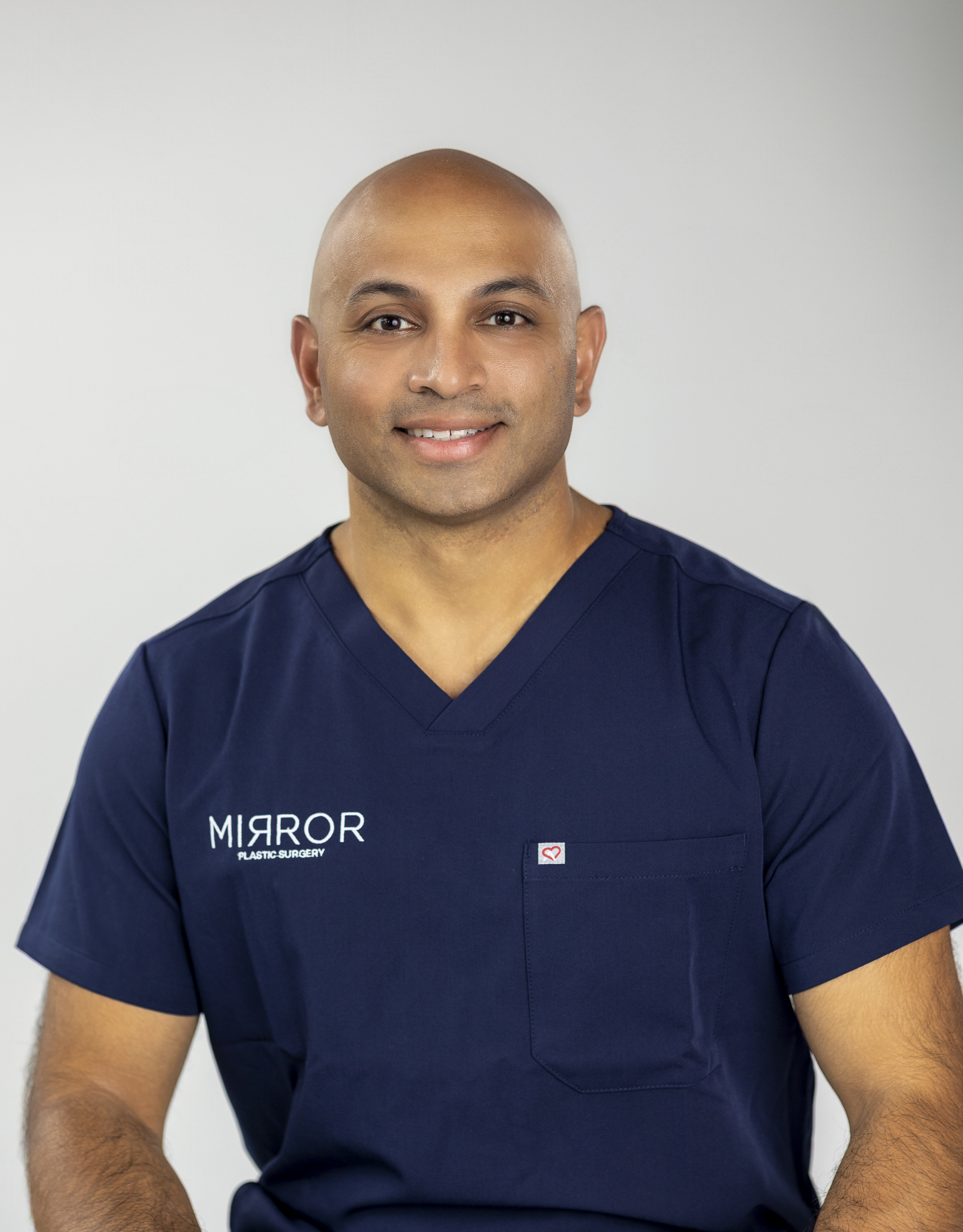
Dr. Akash at Mirror Plastic Surgery meets every one of these criteria. Board-certified by the ABPS, he completed his medical degree at Harvard Medical School with Honors. He then finished his plastic and reconstructive surgery residency at Johns Hopkins University and a specialized aesthetic surgery fellowship at the Manhattan Eye, Ear and Throat Hospital (MEETH), one of the most competitive aesthetic training programs in the country. He has been named in America’s Best Plastic Surgeons 2025 by Newsweek for two consecutive years. His safety-first philosophy, centered on safety, function, and aesthetics, and his concierge approach, with only one to two surgeries per day, ensure each patient receives the team’s full attention.
What To Ask In Your Revision Consultation
Once you have narrowed down potential surgeons, the next step is to prepare for your consultation. A thorough visit with any revision abdominoplasty specialist should last at least 45 to 60 minutes, with the surgeon personally examining your abdomen, reviewing your medical history, and discussing realistic outcomes. Bring these questions:
- How many tummy tuck revisions have you performed, and how often do you perform them?
- What is your specific approach to correcting my concern, such as dog ears, scar placement, asymmetry, or muscle laxity?
- Can you show me before-and-after photos of revision patients with concerns similar to mine?
- What are the specific risks of revision surgery in my case, and how do you minimize them?
- What is the expected recovery timeline, and what activity restrictions will I have?
- Will you review my original operative report to understand what was done previously?
A careful revision surgeon may request previous operative reports, prior photographs, and complication history, and caution is advised when complex revision is planned without reviewing what happened previously. Mirror Plastic Surgery’s concierge approach dedicates up to an hour for initial consultations, which contrasts with high-volume practices that move patients quickly through the process.
Prepare for your revision consultation with Dr. Akash and bring your questions, concerns, and operative history so you receive the time and attention your case deserves.
Recovery And Pain Management After Revision Surgery
Pain and downtime after tummy tuck revision depend on the extent of the procedure. For minor procedures such as small dog ear excisions or localized scar refinement, downtime is typically a few days to one week.1 More extensive combined revisions often require two or more weeks of structured restrictions and a slower return to full exercise.1 Regardless of the extent of surgery, most patients describe the sensation as tightness and muscle soreness rather than sharp pain, with discomfort peaking in the first week and steadily improving.
A general recovery timeline for tummy tuck revision looks like this:
- Weeks 1–2: Initial recovery with rest, compression garments, limited activity, and prescribed pain management.
- Weeks 2–4: Return to light daily activities and desk work for most patients.
- Weeks 4–6: Gradual resumption of moderate exercise with surgeon clearance.
- Months 3–6: Ongoing reduction in swelling and a clearer view of the final contour.
- Up to 12 months: Full scar maturation and final results.
A revision abdominoplasty is often less extensive than the primary surgery, so recovery can be quicker.1 For example, many patients return to desk work in one to two weeks compared with two to three weeks after a primary tummy tuck. Your actual recovery will depend on the scope of correction, and your surgeon will provide a tailored plan.
Deciding Whether To Return To Your Original Surgeon
Many patients wonder whether they should return to their original surgeon for a revision. Returning to the original surgeon offers one advantage, which is familiarity with your anatomy and surgical history. If the original surgeon’s technique or aesthetic judgment contributed to the unsatisfactory result, a fresh perspective may be more helpful.
Relevant revision case experience matters more than general popularity, and honest discussion of limitations is a sign of responsible care. Whether you return to your original surgeon or choose a new specialist, the key factor is demonstrated expertise in revision abdominoplasty rather than only primary tummy tucks.
Some patients feel uncomfortable returning to their original surgeon, and that response is understandable. Your priority is finding a surgeon who listens, understands your specific concerns, and has the skills and training to address them safely.
Risks Of Tummy Tuck Revision And How To Reduce Them
Revision surgery carries higher complication risk than primary surgery because of existing scar tissue and altered blood supply, with reported risks including infection, seroma, prolonged swelling, asymmetry, unfavorable scars, and rarely tissue necrosis. A qualified surgeon reduces these risks through several measures:
- Thorough pre-operative evaluation that may include advanced diagnostic tools such as ultrasound for precise assessment.
- Operating in accredited surgical facilities with board-certified physician anesthesiologists.
- Avoiding too many combined procedures, since studies show that stacking multiple operations at once can raise complication rates significantly.
- Limiting daily surgical volume, as Dr. Akash does by performing only one to two surgeries per day so the team can focus fully on each patient.
- Hospital privileges to manage rare complications that require additional care beyond the surgical facility.
Nicotine exposure, including vaping and nicotine replacement products, is the biggest preventable risk factor in tummy tuck revision, because it can reduce microcirculation and compromise healing. Patients must remain nicotine-free for the period their surgeon specifies before and after the procedure, in line with the nicotine-free requirement discussed earlier.
Frequently Asked Questions
Can You Do A Tummy Tuck Revision?
Yes, in most cases. Candidacy depends on your overall health, the specific concern you want addressed, and whether you have fully healed from the initial surgery during the 6 to 12 month healing period mentioned earlier. Patients should be at a stable weight and free from uncontrolled medical conditions that could impair healing. A board-certified plastic surgeon with revision expertise will evaluate your anatomy, review your surgical history, and recommend the safest and most effective approach.
How Painful Is A Tummy Tuck Revision?
Pain levels vary based on the extent of the revision. Limited procedures such as dog ear excision or localized scar refinement are usually less uncomfortable than the initial surgery and manageable with prescribed medication. More extensive revisions involving muscle repair or significant contouring may feel closer to the primary procedure in recovery intensity. Most patients describe the sensation as tightness and muscle soreness rather than sharp pain, with discomfort peaking in the first week and improving steadily.
How Long Does It Take To Recover From A Tummy Tuck Revision?
Most patients return to light daily activities and desk work within two to three weeks.1 Strenuous exercise and heavy lifting are usually restricted for six to eight weeks.1 Swelling continues to resolve over three to six months, and final contour results become fully apparent as the scar matures over about 12 months.1 Your surgeon will tailor these guidelines to the scope of your revision.
Should You Go Back To The Same Surgeon For A Revision?
Your original surgeon knows your anatomy and operative history, while a revision specialist may offer different training and problem-solving experience. The most important factor is choosing a surgeon with clear expertise in secondary abdominoplasty rather than only primary tummy tucks. Ask how many revision cases they perform, request revision-specific before-and-after portfolios, and assess whether they take time to understand your concerns and set realistic expectations.
Will Insurance Cover Tummy Tuck Revision?
In most cases, insurance does not cover tummy tuck revision. Revision abdominoplasty is usually classified as cosmetic surgery, so insurers rarely contribute to the cost. An exception may apply if the revision addresses a documented functional problem, such as a complication causing chronic pain or infection. Your surgeon’s team can explain what documentation may be needed for an insurance review.
How Soon After A Tummy Tuck Can I Have A Revision?
Most surgeons recommend waiting through the 6 to 12 month healing period after the initial surgery to allow full healing, scar maturation, and swelling resolution. For scar-focused or more complex contour revisions, many surgeons prefer waiting closer to 9 to 12 months. Operating too early risks correcting issues that might have improved on their own and increases the chance of complications in unstable tissue. A scar that appears raised and red at four months may flatten and fade significantly by month twelve.
Your Path To The Results You Envisioned
Tummy tuck revision is a specialized field that demands a surgeon with proven expertise, elite credentials, and a genuine commitment to patient-centered care. The right specialist will listen to your concerns, provide honest expectations, and prioritize your safety above all else. They will not rush you through a high-volume practice where you are one of many surgeries that day.
Dr. Akash at Mirror Plastic Surgery embodies every criterion discussed in this guide. Board-certified by the American Board of Plastic Surgery, Harvard-educated, Johns Hopkins-trained, and fellowship-trained in aesthetic surgery at MEETH, he brings deep anatomical knowledge and surgical precision to every revision case. Named in America’s Best Plastic Surgeons 2025 by Newsweek for two consecutive years, his safety-first philosophy and concierge approach ensure that each patient in the Tampa Bay area receives the time, attention, and personalized care their corrective journey requires.
If you are unhappy with your tummy tuck results, you can pursue a better outcome. Talk with Dr. Akash about your tummy tuck revision options to discuss your specific concerns, explore candidacy for revision surgery, and take the first step toward the natural, confident results you originally envisioned.1
Mirror Plastic Surgery
780 4th Ave S, St. Petersburg, FL 33701
Phone: 727-361-6515
Email: hello@mirrorplasticsurgery.com
1 Results may vary from person to person. Editorial content, before and after images, and patient testimonials do not constitute a guarantee of specific results.