Written by: Ellie Pranckevicius, FNP-BC, Aesthetic Nurse Practitioner & Aesthetic Injector | Facial Restoration & Regenerative Injectable Specialist, Mirror Plastic Surgery
Key Takeaways
- Only licensed medical professionals prescribing through regulated compounding pharmacies provide safe, pure injectable peptides for collagen.
- Injectable peptides like GHK-Cu, BPC-157, and TB-500 lack FDA approval for collagen boosting and remain in a regulatory gray zone.
- Online vendors expose patients to contamination, incorrect dosing, injection errors, and unmonitored adverse effects.
- Choosing a provider requires verifying credentials, confirming regulated sourcing, and ensuring ongoing medical supervision and follow-up care.
- Schedule a personalized consultation at Mirror Plastic Surgery to explore safe, evidence-based peptide therapy tailored to your goals.
Why There Are No FDA-Approved Injectable Peptides For Collagen
The FDA has not approved any injectable peptide specifically for collagen boosting or skin rejuvenation. Common research peptides such as BPC-157, injectable GHK-Cu, and TB-500 are not FDA-approved drug products. The FDA’s Pharmacy Compounding Advisory Committee met on July 23–24, 2026, to review evidence for seven compounds, including TB-500, BPC-157, and MOTS-C, to recommend whether compounding pharmacies should be permitted to produce them. A recommendation to permit compounding does not constitute FDA drug approval.
None of the seven peptides under review has undergone the large-scale trials required for FDA drug approval, and the FDA’s own career scientists recommended against giving compounding pharmacies the green light to produce any of them. In the FDA’s evidence review, no human clinical studies were identified for TB-500.
This regulatory status does not mean these peptides lack potential benefit. As Dr. Anant Vinjamoori, chief medical officer of Hims, noted: “At this point, we do have experience that’s accumulated across close to a decade, thousands of physicians, close to millions of patients, that seems to indicate these peptides can be beneficial to promote health.” That experience remains anecdotal rather than regulatory. As noted earlier, no injectable peptide has FDA approval for collagen, so the safety burden falls entirely on sourcing and medical supervision.
The Dangers Of Online Vendors And Unsupervised Use
The gray market for injectable peptides is thriving and dangerous. Health Canada’s public advisory warns that unauthorized injectable peptides bought online expose consumers to serious risks including hormonal imbalance, blood sugar imbalance, liver or kidney damage, blood clots, and growth of cancerous tumors. Australia’s Therapeutic Goods Administration has reported adverse events including severe allergic reactions requiring hospitalization, systemic inflammatory response syndrome, and musculoskeletal injuries from unapproved peptide products.
The specific risks of buying peptides online include:
- Contamination: Products may contain bacterial endotoxins, heavy metals, or particulate matter, including fibers, glass, and plastic, from improper manufacturing.
- Incorrect dosing: Vials may contain too much, too little, or none of the advertised active ingredient.
- Injection errors: A study published in Public Health Reports found that participants asked to dissolve, draw up, and inject a peptide powder performed fewer than half the steps correctly on average, with errors including choosing expired or cloudy vials, injecting into muscle instead of fat, and failing to sterilize the injection site.
- Unknown long-term effects: Without medical supervision, underlying conditions are not screened and adverse reactions go unmonitored.
Red flags that indicate an unsafe source include:
- Products labeled “for research use only” or “not for human consumption”
- No requirement for a prescription or medical consultation
- No certificate of analysis (COA) available
- No physical U.S. address or licensed pharmacy affiliation
- International shipping without restrictions
Given these dangers, the provider you choose becomes the primary safety mechanism. Careful vetting of your source protects both your health and your results.
How To Identify A Safe Source: Criteria For Choosing A Provider
Because no FDA-approved injectable peptides exist for collagen, the provider you choose functions as your safety net. The following framework helps you vet a legitimate source.
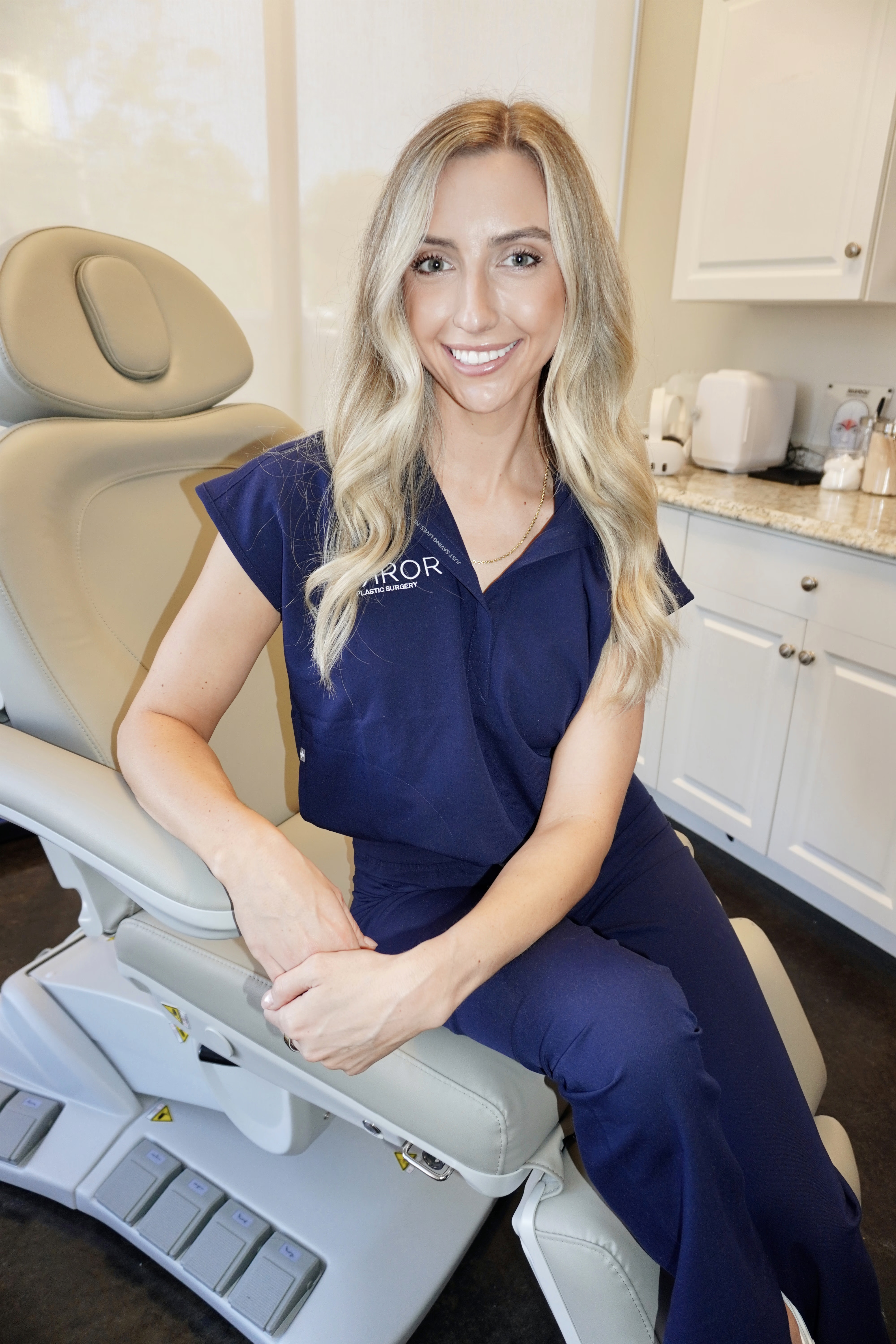
Verify credentials. A legitimate peptide-prescribing clinician must hold an active, unrestricted medical license in the patient’s state, verifiable through the state medical board’s public lookup tool. At Mirror Plastic Surgery, peptide therapy is led by Ellie Pranckevicius, FNP-BC, a board-certified Family Nurse Practitioner with four years of Neuroscience ICU experience at Tampa General Hospital and formal aesthetics licensure. Her work is complemented by Dr. Akash Chandawarkar, a Harvard-educated, Johns Hopkins-trained plastic surgeon with fellowship training in aesthetic surgery at the Manhattan Eye Ear & Throat Hospital.
Confirm the consultation process. Mirror Plastic Surgery emphasizes in-depth lab analysis and may order lab panels for weight loss or inflammatory conditions, but the evidence does not state that baseline labs are universally required before the first dose. This reflects a key principle: a provider who prescribes without reviewing medical history or current medications is not practicing medicine.
Ask about sourcing. A red flag is a peptide clinic that cannot or will not disclose its compounding pharmacy source; legitimate clinics are transparent about their supply chain because quality sourcing is a selling point. Legitimate practices use regulated compounding pharmacies, either 503A pharmacies accredited by the Pharmacy Compounding Accreditation Board (PCAB), which requires full compliance with USP <797> sterile compounding standards verified through onsite inspections, or 503B outsourcing facilities under direct FDA oversight.
Look for ongoing support. Peptide therapy functions as a continuing treatment plan rather than a one-time prescription. A safe provider offers follow-up care, monitors your response, adjusts dosing as needed, and remains available for questions. Mirror Plastic Surgery’s concierge model includes direct access to Ellie via text and scheduled telemedicine appointments, a level of support that online vendors and high-volume clinics do not provide.
Common Misconceptions About Injectable Peptides
“All peptides are the same.” Different peptides have different mechanisms, targets, and risk profiles. GHK-Cu’s primary studied mechanism is collagen synthesis and ECM remodeling; BPC-157’s is angiogenesis and FAK signaling across skin, tendon, and gut; TB-500’s is actin regulation, cell migration, and keratinocyte activation in skin epithelium and hair follicle.1 A qualified provider selects peptides based on your specific needs.
“Peptides are only for weight loss.” GLP-1 peptides have gained attention for weight management, yet peptides address a wide range of concerns, including inflammation, autoimmune conditions, recovery, energy, and collagen production. Mirror Plastic Surgery’s offerings span the Glow Stack for skin and collagen health, NAD for energy and anti-aging, KPV for gut inflammation, and several others tailored to individual needs.
“You will lose all benefits if you stop.” Effects diminish over time, similar to stopping any health regimen. Maintenance protocols are often recommended to sustain results.
Questions To Ask Your Provider
Clear questions help you quickly assess whether a peptide provider is safe and thorough.
- Are you a licensed medical professional with experience in peptide therapy?
- Will you conduct a comprehensive consultation and any necessary lab tests before prescribing?
- Where do you source your peptides? Do you use a regulated compounding pharmacy?
- Can you provide a certificate of analysis for the specific peptides you prescribe?
- What is your protocol for dosing and administration?
- What kind of follow-up and ongoing support do you offer?
- How do you handle adverse reactions or complications?
Specific red flags for peptide clinics include selling peptides without a prescriber evaluation, guaranteeing results, pressuring patients to start immediately, lacking a follow-up protocol, sourcing from overseas or non-compounding suppliers, and dismissing side effects or risks. Mirror Plastic Surgery meets all legitimate criteria, with peptides sourced from reputable providers who undergo rigorous batch testing and a consultation process that includes in-depth lab analysis when indicated.
Book an appointment with Ellie and receive personalized, evidence-based guidance for your health.
What To Expect From A Professional Peptide Consultation At Mirror Plastic Surgery
A legitimate peptide consultation is comprehensive and collaborative. At Mirror Plastic Surgery, the process includes several structured steps.
In-depth consultation (30–60 minutes). Ellie reviews your medical history, discusses your specific health and aesthetic goals, and explains the physiology behind each recommended peptide in relatable terms. This educational approach ensures you understand not just what you are taking, but also why it fits your plan.
Baseline lab testing when indicated. For collagen-focused protocols or systemic concerns, lab panels may include thyroid, liver, kidney, hormone, and inflammatory markers. If you have recent labs, Ellie reviews them. If not, she orders them.
Personalized protocol development. Based on your consultation and labs, Ellie creates a custom peptide stack tailored to your unique physiology. For collagen support, this may include GHK-Cu, which activates at least 32 genes involved in extracellular matrix remodeling, including those encoding collagen types I and III.1 She may prescribe it alone or as part of the Glow Stack with BPC-157 and TB-500 for broader anti-inflammatory and tissue-repair benefits.
Education and ongoing support. You receive detailed instructions for reconstitution and self-administration, often with video demonstrations. Ellie remains available via text or telemedicine for questions, refill requests, and protocol adjustments. The entire process, from consultation to prescription and shipping, can be conducted in person in St. Petersburg, Florida, or remotely across the United States.
FDA-Approved Alternatives For Collagen Stimulation: Biostimulators Like Sculptra
Patients seeking collagen stimulation also have access to FDA-approved injectable biostimulators. Sculptra (poly-L-lactic acid, or PLLA) is the most established option, backed by more than 25 years of clinical evidence and real-world experience across more than 40 countries, with results that can last more than two years.1
Sculptra works by triggering a controlled inflammatory response. Microscopic PLLA particles are injected into tissue, where macrophages and fibroblasts gather and deposit new collagen around them. Sculptra also carries specific considerations. The FDA’s five-year post-approval study, which enrolled 867 patients, found that 28.5% of the total study population developed an injection-site nodule and/or papule at some point during follow-up, and there is no enzyme that dissolves PLLA if complications arise.
The choice between injectable peptides and FDA-approved biostimulators depends on individual goals. Injectable peptides such as GHK-Cu and BPC-157 offer potential systemic benefits, including reduced inflammation, improved skin quality, and better hair and nail health. However, they lack FDA approval and require medical supervision. Sculptra offers FDA-approved, localized collagen stimulation with robust clinical data, but requires multiple sessions and carries a documented nodule risk. A qualified provider can help weigh these options based on medical history, aesthetic goals, and risk tolerance.
Frequently Asked Questions
Which Injectable Peptide Is Best For Collagen Production?
GHK-Cu (copper peptide) is the most studied peptide in skin and collagen research, with extensive evidence for stimulating collagen and elastin synthesis. Many experts consider it the “gold standard” of anti-aging peptides, stimulating the production of collagen types I and III, elastin, fibronectin, and glycosaminoglycans. It can also regulate the expression of a significant portion of human genes, shifting the aging phenotype of cells toward a more youthful pattern. However, the best peptide for any individual depends on their overall health profile, goals, and lab results. A medical provider should determine the appropriate protocol. GHK-Cu may be prescribed alone or as part of a broader stack like the Glow Stack, which combines it with BPC-157 and TB-500 for systemic anti-inflammatory and tissue-repair benefits.
What Is The Safest Website To Buy Peptides?
There is no safe website for buying injectable peptides without a prescription. The only safe source is a licensed medical professional who prescribes through a regulated compounding pharmacy. Products sold online, even those labeled “for research use only,” bypass quality control, sterility testing, and medical oversight. Regulatory agencies in the United States, Canada, Australia, Finland, and Hong Kong have all issued warnings about the dangers of unregulated peptide purchases. Redirecting the question from “which website” to “which provider” is the most important reframe a health-conscious consumer can make.
Are Injectable Peptides For Collagen FDA-Approved?
No injectable peptides are FDA-approved for collagen boosting or skin rejuvenation. Some peptides have FDA approval for specific conditions, such as tesamorelin for HIV-associated lipodystrophy and bremelanotide (PT-141) as the specific product Vyleesi. The peptides commonly used for collagen support, including GHK-Cu, BPC-157, and TB-500, remain unapproved. The FDA’s Pharmacy Compounding Advisory Committee reviewed several of these compounds in July 2026, but a recommendation to permit compounding is not equivalent to drug approval. As noted earlier, the absence of FDA approval makes medical supervision, quality sourcing from regulated compounding pharmacies, and comprehensive lab analysis essential, because the provider and pharmacy function as the primary safety mechanism.
How Long Does It Take To See Results From Peptide Therapy?
Results vary by individual, peptide, and protocol. Some patients report improvements in skin quality and inflammation within weeks, while collagen remodeling, which involves structural changes to the extracellular matrix, takes longer.1 Topical GHK-Cu studies have shown measurable wrinkle reduction appearing by week 8, and post-procedure wound healing benefits within the first 7 to 10 days.1 For injectable protocols, a qualified provider sets realistic, individualized expectations based on your specific peptide stack, dosing, and baseline health. Mirror Plastic Surgery’s concierge model includes follow-up appointments to assess your response and adjust the protocol as needed.
What Are The Risks Of Peptide Therapy Without Medical Supervision?
The risks of unsupervised peptide use are substantial. Without medical oversight, there is no screening for contraindications, such as active malignancy, uncontrolled diabetes, or organ transplant history, that could make certain peptides dangerous for a specific individual. As detailed earlier, unsupervised use also carries risks of contamination, dosing errors, and lack of monitoring. International health agencies have documented adverse events ranging from severe allergic reactions and systemic inflammatory response syndrome to musculoskeletal injuries and hospitalizations from unregulated peptide products. Medical supervision at a practice like Mirror Plastic Surgery addresses these risk factors through comprehensive consultation, quality-tested sourcing, and ongoing concierge support.
The Gold Standard Of Care
Injectable peptides for collagen are a promising frontier in aesthetic medicine, provided they are sourced safely and administered under medical supervision. The absence of FDA approval means the burden of safety falls on the provider, the pharmacy, and the protocol. As AAD president Dr. Murad Alam warned: “Not only are these products not tested for their effectiveness, but they also may not be tested for possible contamination, concentration of ingredients, and manufacturing cleanliness, safety measures put in place to protect you, as suppliers bypass current restrictions.”
Mirror Plastic Surgery exemplifies the gold standard of peptide therapy: board-certified medical leadership, personalized consultation with comprehensive lab analysis, peptides sourced from reputable providers with batch testing, and concierge-level ongoing support. Ellie Pranckevicius brings a rare combination of aesthetic expertise and critical-care nursing experience, ensuring every protocol is both effective and safe. As the American Society of Plastic Surgeons has noted, plastic surgery practices are well-positioned to lead the integration of regenerative peptides into aesthetic care, and Mirror Plastic Surgery is doing exactly that.
Book an appointment with Ellie at Mirror Plastic Surgery to explore safe, personalized injectable peptide therapy tailored to your unique physiology and goals.
Disclaimer: Injectable peptides discussed in this article, including GHK-Cu, BPC-157, and TB-500, are not FDA-approved for collagen boosting or skin rejuvenation. Results vary by individual. Medical supervision by a licensed provider is essential for safe and appropriate use. This article is for informational purposes only and does not constitute medical advice.
1 Results may vary from person to person. Editorial content, before and after images, and patient testimonials do not constitute a guarantee of specific results.
Peptide therapy is intended for wellness and optimization purposes and is not prescribed to diagnose, treat, cure, or prevent disease unless specifically stated. Many peptides are not FDA-approved and may be used off-label. Some have limited long-term safety data, with a potential for unknown risks, complications, or desensitization with prolonged use.