
Written by: Dr. Akash Chandawarkar, Board Certified Plastic Surgeon, Mirror Plastic Surgery
Key Takeaways
- Buccal fat removal is a permanent surgical procedure that sculpts the lower face by removing encapsulated fat pads that do not respond to diet or exercise.
- Ideal candidates are adults in their mid-20s to early 40s with naturally full cheeks, strong cheekbones, good skin elasticity, and realistic expectations for subtle refinement.
- Choosing a board-certified plastic surgeon with specialized facial surgery training and a conservative philosophy is the single most important safety decision.
- Complication rates range from 4–25% depending on technique and expertise, and the most serious risks involve the facial nerve and parotid duct, which demands precise anatomical knowledge.
- Schedule a personalized consultation with the experienced team at Mirror Plastic Surgery to determine whether buccal fat removal fits your facial anatomy and long-term goals.
How To Tell If You Are A Good Candidate For Buccal Fat Removal
Candidacy for buccal fat removal depends on your anatomy, not on trends or social media inspiration. The ideal candidate is an adult, typically in their mid-20s to early 40s, with naturally round, full lower cheeks that persist at a stable, healthy weight. Strong cheekbone structure, good skin elasticity, and realistic expectations for subtle refinement also matter.
A 2021 systematic review in Medicina Oral, Patología Oral y Cirugía Bucal described the ideal candidate as someone with “strong malar bones hidden by prominent cheeks.” The review stated that the procedure is contraindicated in patients with weak cheekbones, where it tends to over-hollow the face. A 2026 scoping review of ten anatomical studies concluded that the buccal fat pad may not begin to decrease until after age 60 or 70. The pad tends to descend vertically rather than lose volume, which helps guide candidacy decisions and long-term expectations.
A practical self-check is the “10-year photo test.” Compare photos of yourself from a decade ago to today. If your face was clearly fuller then and looks noticeably slimmer now, your face may already be thinning, and buccal fat removal could accelerate hollowing. If facial volume appears stable across that decade, you may be a stronger candidate.
Poor candidates often have naturally narrow or hollow faces, weak cheekbones, early midface volume loss, or a family history of thin-faced aging. Motivations driven mainly by social media trends also signal a poor fit. Many patients who see “chubby cheeks” actually have superficial fat, masseter muscle hypertrophy, or thicker skin, not enlarged buccal fat pads. A thorough consultation with tools such as ultrasound imaging can clarify whether buccal fat removal will realistically achieve your goals.
Five Criteria For Choosing A Buccal Fat Removal Surgeon In Tampa
Choosing a buccal fat removal surgeon in Tampa works best when you focus on credentials, experience, and philosophy instead of proximity or price. The five criteria below give you a clear, step-by-step way to evaluate surgeons.
1. Verify Board Certification
Board certification by the American Board of Plastic Surgery (ABPS) is essential. This certification confirms that the surgeon completed rigorous training, passed comprehensive examinations, and follows strict ethical standards. Surgeons who hold certification only in unrelated specialties and treat buccal fat removal as a side procedure create unnecessary risk. The buccal fat pad lies close to the facial nerve and parotid duct, so you need a surgeon with focused facial anatomical expertise.
2. Confirm Facial Surgery Specialization And Case Volume
Fellowship training in aesthetic or facial plastic surgery signals deeper anatomical knowledge than general plastic surgery training alone. Ask how many buccal fat removal procedures the surgeon performs each year. A 2025 systematic review and meta-analysis in the Journal of Cranio-Maxillo-Facial Surgery concluded that buccal fat removal “can be considered safe as long as there is a detailed analysis of anatomical landmarks.” That conclusion places surgeon expertise at the center of the safety equation.
3. Review Training And Academic Background
Elite training programs often expose surgeons to complex cases and high standards of anatomical education. Look for surgeons who trained at top academic medical centers and completed specialized fellowships in aesthetic surgery. Strong training supports a surgeon’s ability to navigate the small but critical anatomical variations that keep buccal fat removal safe.
4. Look For A Conservative Surgical Philosophy
Leading buccal fat removal surgeons now favor a conservative approach. Some practices report declining about 30% of buccal fat removal inquiries because the patient is not a suitable candidate. A surgeon who recommends the procedure to nearly everyone, regardless of anatomy, raises a serious red flag. Prioritize surgeons who provide an honest assessment and clear boundaries instead of a sales pitch.
5. Pay Attention To The Consultation Experience
Mirror Plastic Surgery typically spends up to an hour on consultation for a detailed assessment. During this visit, the surgeon should explain your facial anatomy, clarify why you are or are not a candidate, and discuss risks and long-term aging considerations in plain language. Surgeons who quote prices over the phone without examining you create concern, because accurate assessment requires in-person or video evaluation of your unique facial structure.
How Top Tampa Buccal Fat Removal Surgeons Stand Out
Elite buccal fat removal surgeons share a consistent set of qualities in both research and expert opinion. These qualities define the current standard of care.
- Board certification by the American Board of Plastic Surgery
- Fellowship training in aesthetic or facial plastic surgery
- Specific, documented experience with buccal fat removal
- A patient-centered philosophy that prioritizes safety and natural, long-term outcomes
- Access to accredited surgical facilities with board-certified anesthesiologists
- Willingness to decline procedures when the patient is not a suitable candidate
Dr. Akash at Mirror Plastic Surgery reflects each of these standards. He graduated from Harvard Medical School, cum laude with Honors, through the Harvard-MIT Division of Health Sciences and Technology program. He then completed a seven-year integrated plastic and reconstructive surgery residency at Johns Hopkins University, one of the world’s most rigorous training programs.
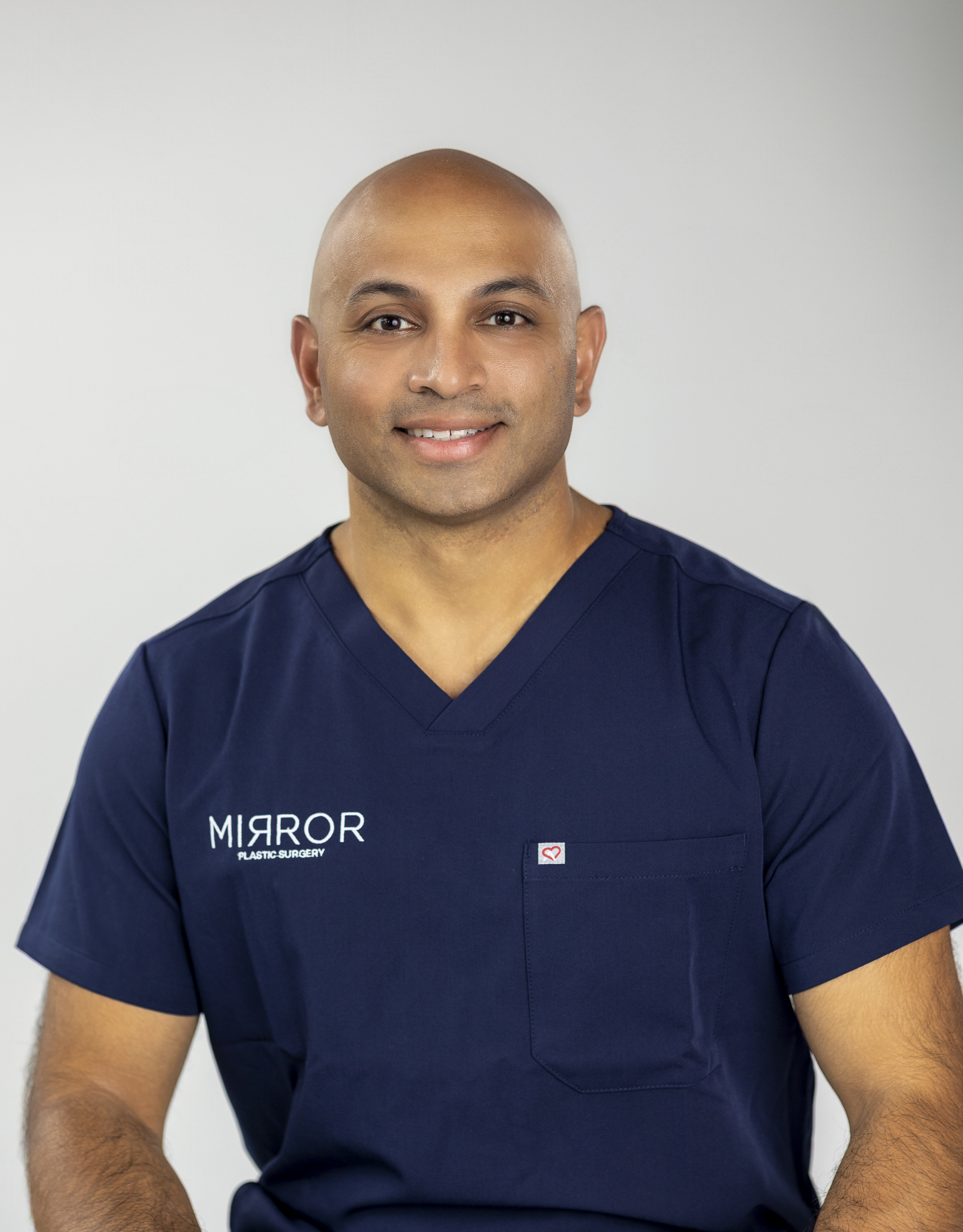
He went on to complete a specialized aesthetic surgery fellowship at the Manhattan Eye, Ear and Throat Hospital (MEETH), which represents a top tier of subspecialty cosmetic training. He also holds a Stanford University Biodesign Innovation Fellowship, highlighting his commitment to evidence-based, technology-forward care. Newsweek has recognized him in “America’s Best Plastic Surgeons” for two consecutive years, and he serves on advisory boards for Motiva, Merz Aesthetics, and Cypris Medical.
Buccal Fat Removal Costs In Tampa
The cost of buccal fat removal in Tampa varies based on surgeon expertise, facility fees, anesthesia type, and case complexity. Each patient receives a personalized quote during consultation, because no two facial anatomies are identical and accurate pricing requires direct evaluation.
For context, the American Society of Plastic Surgeons reports a national average surgeon fee of about $3,142 for buccal fat removal, excluding anesthesia, facility, and pre-operative costs. Total costs across the United States usually range from $2,000 to $5,000 for standalone procedures. Elite markets with subspecialty-trained surgeons can reach $8,600 or more when all fees are included.
Choosing a surgeon based solely on the lowest price introduces real risk. Providers who advertise unusually low prices may cut corners on safety, facility accreditation, or surgical expertise. Buccal fat removal occurs only millimeters from the facial nerve and parotid duct, so those corners matter. Many practices offer financing options, and your consultation should include a clear, line-by-line cost breakdown.
Risks And Safety Considerations For Tampa Patients
Buccal fat removal carries a documented complication profile that every patient should understand before surgery. A 2025 systematic review and meta-analysis in the Journal of Cranio-Maxillo-Facial Surgery pooled 12 studies covering 308 patients and found that about 25% experienced some postoperative complication. The reported issues included:
- Prolonged swelling (edema): 38.4%
- Trismus (jaw restriction): 30.1%
- Pain beyond normal recovery: 19.4%
- Facial asymmetry: 11.7%
- Facial nerve paralysis: 0.97%
- Infection: 0.48%
- Hematoma: 0.48%
The authors concluded that the procedure “can be considered safe as long as there is a detailed analysis of anatomical landmarks,” yet they also noted “evidence for safety concerns and a lack of predictability” and advised that it “be recommended with caution.” A separate 2025 systematic review analyzing 10 studies and 1,123 patients reported a complication rate of 4.2%, with most complications described as minor. Long-term outcomes remained less clear because follow-up periods were limited.
The parotid duct, which carries saliva, runs near the buccal fat pad. Injury can cause saliva to leak into surrounding tissue and create swelling and pain. Dr. Alan Matarasso, a pioneer of modern buccal fat removal techniques, notes that this complication is “almost completely avoidable” when the surgeon places the incision in the correct anatomical location.
The long-term aging debate remains active but nuanced. Rohrich, Stuzin, et al. in Plastic and Reconstructive Surgery (2021) highlighted the risk of “premature aging and midface distortion” from buccal fat excision, and Benjamin and Reish titled their 2018 clinical review “Buccal Fat Pad Excision: Proceed with Caution.” The 2026 scoping review of ten anatomical studies suggests that the buccal fat pad may not significantly decrease until after age 60 or 70. This finding indicates that well-selected patients with conservative resection may age in a normal pattern.
At Mirror Plastic Surgery, Dr. Akash follows a safety-first philosophy that prioritizes safety, then function, then aesthetics. He declines surgery when a patient is not an appropriate candidate and limits his schedule to one to two surgeries per day so each patient receives his team’s full attention.
Book a consultation with Dr. Akash for a detailed, honest assessment of your candidacy and a clear explanation of risks and benefits tailored to your anatomy.
Recovery Timeline And Expected Results After Buccal Fat Removal
Swelling usually peaks around days two to three and often looks more dramatic than the final result.1 Most patients return to work within three to seven days.1 A soft-food diet and saltwater rinses are commonly recommended for one to two weeks to protect the incisions inside the mouth. Final contour typically appears between three and six months, once residual swelling fully resolves.1
Results are permanent because removed buccal fat does not regenerate.1 This permanence makes conservative technique and careful patient selection crucial. When a skilled surgeon treats an appropriate candidate, the change usually looks subtle and natural.1 Extremely dramatic before-and-after photos that circulate online often reflect over-resection, which carries a meaningful risk of long-term regret.
Buccal fat removal can pair with other facial procedures. However, combining too many procedures at once can increase complication rates. A thoughtful surgeon will advise against unnecessary combinations and guide you toward a plan that protects your long-term facial health.
Alternatives To Buccal Fat Removal You May Want To Explore
Not every patient who wants a slimmer lower face qualifies for buccal fat removal. A qualified surgeon will walk you through alternative options and match the approach to your anatomy.
Masseter Botox treats lower-face fullness caused by enlarged jaw muscles rather than buccal fat. Results usually last four to six months and involves no downtime or surgical recovery.
Facial Liposuction targets excess superficial fat in the lower face and jawline. This option refines contour without removing deeper structural fat compartments.
Cheek Filler As A “Test Drive” lets patients preview a more contoured lower face before committing to permanent surgery. Results often last 12 to 18 months and remain fully reversible.
The “Wait And See” Approach suits younger patients whose buccal fat may naturally slim with age. A qualified surgeon can help you decide whether time alone may achieve your goals.
Weight Stabilization supports predictable, lasting results for any facial contouring procedure. Reaching and maintaining a stable target weight helps your surgeon plan accurately and maintain symmetry.
Why Many Tampa Patients Choose Mirror Plastic Surgery
Mirror Plastic Surgery serves the St. Petersburg and Tampa Bay area with a concierge-style approach that prioritizes safety, then function, then aesthetics. Every patient receives an hour-long consultation that includes a comprehensive facial assessment. Dr. Akash performs only one to two surgeries per day, which contrasts with high-volume practices that may perform many more, and this schedule keeps the team’s full focus on you before, during, and after surgery.
Dr. Akash’s credentials represent a top tier of plastic surgery training:
- Board certified by the American Board of Plastic Surgery
- Harvard Medical School graduate, cum laude with Honors, through the Harvard-MIT Division of Health Sciences and Technology
- Seven-year integrated plastic and reconstructive surgery residency at Johns Hopkins University
- Aesthetic surgery fellowship at the Manhattan Eye, Ear and Throat Hospital (MEETH)
- Stanford University Biodesign Innovation Fellowship
- Recognized in Newsweek’s “America’s Best Plastic Surgeons” for two consecutive years
- Advisory board member for Motiva, Merz Aesthetics, and Cypris Medical
Mirror Plastic Surgery uses advanced in-office diagnostic tools, including ultrasound, for precise pre-operative assessment. The practice operates in accredited surgical facilities with board-certified physician anesthesiologists and maintains hospital admitting privileges for the rare event of a complication. Dr. Akash will clearly explain if buccal fat removal does not fit your anatomy, because the best outcome is the one that protects your long-term well-being.
Book a consultation with Dr. Akash today and take the first step toward a confident, informed decision about your facial aesthetic goals.
Frequently Asked Questions
Is Buccal Fat Removal Safe?
Buccal fat removal is generally safe when a board-certified plastic surgeon with specific facial surgery expertise performs the procedure using a conservative technique. A 2025 systematic review in the Journal of Cranio-Maxillo-Facial Surgery concluded that the procedure “can be considered safe as long as there is a detailed analysis of anatomical landmarks,” while also noting “evidence for safety concerns and a lack of predictability” and recommending that surgeons “recommend with caution.” Serious complications such as facial nerve injury occur in under 1% of cases. More common side effects include prolonged swelling, temporary jaw restriction, and pain. The most important safety factor is choosing a surgeon with deep facial anatomy training who performs buccal fat removal regularly and favors conservative removal.
What Is The Ideal Age For Buccal Fat Removal?
Most surgeons prefer that patients be at least in their mid-20s, when facial development is complete. The strongest candidate window usually falls between ages 21 and 35, although anatomy matters more than age alone. Patients over 40 can still qualify if they maintain unusually full cheeks, but conservative resection becomes increasingly important because natural age-related volume loss will add to surgically removed fat over time. A thorough consultation should include an assessment of your facial aging pattern and a review of how close relatives’ faces have aged.
Will Buccal Fat Removal Make Me Look Older?
The aging question sits at the center of the buccal fat removal debate. Some surgeons believe that removing buccal fat speeds up natural hollowing and can create a gaunt look later in life. Newer anatomical research suggests that the buccal fat pad may not significantly decrease until after age 60 to 70, and that well-selected patients with conservative resection can age in a typical way. Key factors include genuinely full cheeks at a stable weight, conservative removal amounts, often around 2 to 3 mL per side instead of full excision, and your family history of facial aging. A skilled surgeon will weigh all of these factors and decline surgery if you appear at higher risk for premature hollowing.
How Long Does Recovery Take?
Most patients return to work within three to seven days. Swelling peaks around days two to three and then gradually improves over the following weeks. A soft-food diet usually continues for one to two weeks to protect the incisions inside the mouth. Most visible swelling fades within two to three weeks, but final results typically appear between three and six months as subtle swelling resolves. Bruising tends to be minimal because all incisions stay inside the mouth, which avoids external scars.
Can Buccal Fat Grow Back?
Buccal fat removal is permanent, and once the buccal fat pads are removed, those fat cells do not regenerate. Other facial fat cells can still enlarge with significant weight gain, which may partially soften the contouring effect over time. This permanence makes conservative removal and careful patient selection essential. Over-resection cannot be fully reversed, and while fat grafting can restore some volume, it rarely recreates the original compartment exactly.
1 Results may vary from person to person. Editorial content, before and after images, and patient testimonials do not constitute a guarantee of specific results.