Written by: Ellie Pranckevicius, FNP-BC, Aesthetic Nurse Practitioner & Aesthetic Injector | Facial Restoration & Regenerative Injectable Specialist, Mirror Plastic Surgery
Key Takeaways for GH-Peptide Therapy at Mirror Plastic Surgery
- Growth-hormone peptide therapy with Sermorelin and Ipamorelin stimulates your own GH production. This approach offers a safer alternative to exogenous hormone replacement for many adults aged 40–55 who notice fatigue, slower recovery, or body-composition changes.
- Programs that start with comprehensive baseline labs can confirm candidacy and guide safe, individualized dosing. These labs include IGF-1, fasting glucose, HbA1c, CMP, lipids, a thyroid panel, and CBC.
- At Mirror Plastic Surgery, Ellie Pranckevicius, FNP-BC, brings ICU-level metabolic expertise and aesthetic training to every protocol. Her background supports both clinical safety and alignment with your wellness and appearance goals.
- Quality care includes ongoing monitoring. IGF-1 is checked at 6–8 weeks, then every 3–6 months, and all peptides are sourced from licensed 503A compounding pharmacies that provide batch-testing documentation.
- You can schedule a personalized consultation at Mirror Plastic Surgery to receive lab-guided peptide therapy that meets 2026 clinical standards and avoids the risks of unregulated or high-volume providers.
How Growth-Hormone Peptide Therapy Works and Who It Serves
Sermorelin and Ipamorelin are growth-hormone secretagogues, meaning they prompt the pituitary gland to produce and release your own growth hormone (GH) instead of adding synthetic GH. Sermorelin is a 29-amino-acid analog of human GHRH that binds the pituitary GHRH receptor and triggers a GH pulse that closely mirrors natural patterns. Ipamorelin activates the ghrelin receptor (GHSR-1a) and selectively stimulates GH release without measurable effects on cortisol, ACTH, or prolactin, which supports good tolerability.
Adults aged 40–55 most often pursue this therapy. Common reasons include persistent fatigue, increased truncal fat, slower exercise recovery, and disrupted or poor-quality sleep. Sleep and recovery improvements are typically reported within 2–4 weeks of starting GH-peptide therapy, while body-composition benefits usually appear at 8–12 weeks1. A qualified provider sets these expectations clearly before any protocol begins.
Ellie’s Background and Why It Matters for Your Care
Ellie Pranckevicius, FNP-BC, personally leads all peptide therapy protocols at Mirror Plastic Surgery. She holds a Bachelor’s in Health Science from Boston University, plus a Bachelor’s and Master’s in Nursing from the University of South Florida, and she is board-certified as a Family Nurse Practitioner. Before advanced practice, she spent four years in the Neuroscience ICU at Tampa General Hospital, where she developed deep experience in metabolic health, physiology, and complex recovery. That training directly supports the careful lab interpretation required for safe GH-peptide dosing.
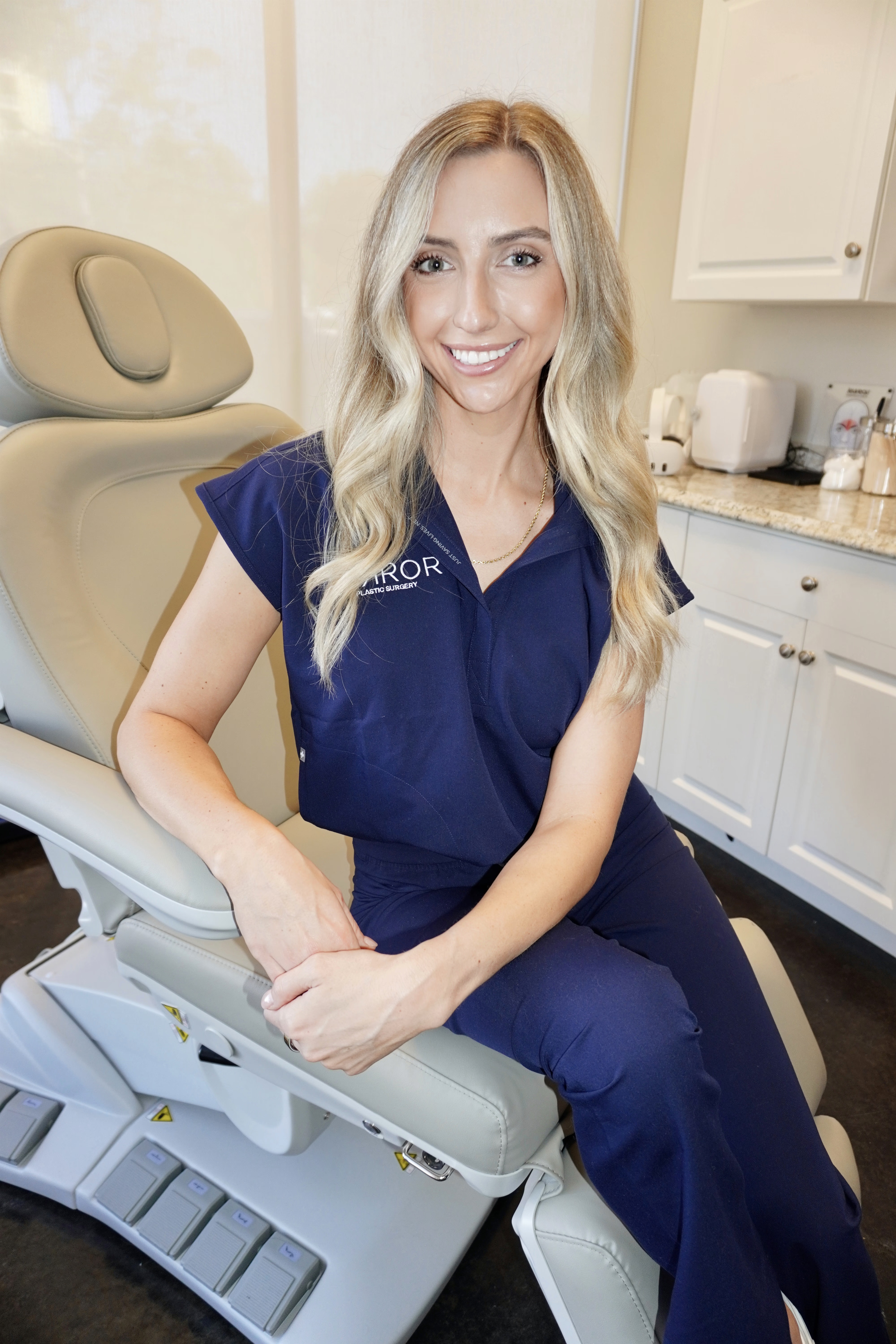
Ellie also spent part of her career at a high-end Boston medical spa, which gave her strong insight into aesthetic goals and skin physiology. That dual perspective, combining clinical rigor and aesthetic literacy, means each peptide protocol reflects both your lab data and your real-world wellness priorities. When a service or product is not warranted, she explains why and recommends against it. That level of honesty anchors Mirror’s concierge model.
Start your lab-guided evaluation with Ellie to receive a protocol tailored to your health profile.
Key Terms for GH-Peptide Therapy
- Sermorelin: A synthetic analog of the first 29 residues of human GHRH. It received FDA approval in 1997 for pediatric GH deficiency and was commercially withdrawn in 2008 for reasons unrelated to safety or efficacy. Licensed 503A compounding pharmacies can still provide Sermorelin with a valid prescription.
- Ipamorelin: A selective ghrelin-receptor agonist. In February 2026, HHS Secretary Robert F. Kennedy Jr. announced plans to reclassify Ipamorelin and other peptides from the FDA’s Category 2 list to Category 1, but no formal FDA reclassification had occurred as of mid-2026 and legal compounding access remained unavailable. This reclassification plan does not equal FDA drug approval.
- Endogenous GH stimulation: A process where secretagogue peptides prompt the pituitary to release your own GH while preserving the body’s feedback loop, instead of bypassing it with synthetic hormone.
- IGF-1 (Insulin-like Growth Factor 1): The main lab marker used to track GH-axis activity. Providers typically measure IGF-1 at 6 weeks after starting therapy, after any dose change, and every 6 months during maintenance.
- Baseline lab panel: The pre-treatment bloodwork used to confirm candidacy and set monitoring benchmarks. This panel guides both safety and dosing decisions.
Your Clinical Pathway at a Supervised Practice
A medically supervised GH-peptide program follows a clear sequence. Mirror Plastic Surgery’s Ellie-led pathway reflects current monitoring standards and emphasizes safety at each step.
- Initial consultation (30–60 minutes): Ellie reviews your full medical history, current symptoms, and goals, then determines whether lab testing is appropriate.
- Baseline lab panel: Core pre-treatment labs include IGF-1, fasting glucose, fasting insulin, HbA1c, a comprehensive metabolic panel, a full lipid panel, thyroid function tests (TSH, Free T3, Free T4), and a complete blood count. Sex hormone panels and morning cortisol are added when clinically indicated.
- Protocol design: Ellie selects the peptide, administration route, and timing based on your lab results and clinical picture. She avoids one-size-fits-all templates.
- Administration training: You receive clear reconstitution and self-injection instructions, often supported by video demonstrations. Ellie remains reachable by direct text for questions.
- Early follow-up labs: A follow-up lab draw at 6–8 weeks repeats IGF-1, fasting glucose, and HbA1c. A 20%–40% rise in IGF-1 above baseline usually confirms a therapeutic response.1
- Ongoing monitoring: IGF-1 is kept between the mean and upper limit of the age-adjusted normal range. Levels above the upper limit trigger a dose reduction.
2026 Shifts in GH-Peptide Regulation and Safety Evidence
In February 2026, HHS Secretary Robert F. Kennedy Jr. announced plans to reclassify approximately 14 previously restricted peptides, including Ipamorelin, from the FDA’s Category 2 list to Category 1. As of mid-2026, the FDA had not completed formal reclassification, and legal compounding access remained unavailable. These evolving rules raise the bar for provider accountability. Clinicians must track 503A and 503B regulations, FDA category status, and state pharmacy guidance, because access can change quickly for specific peptides.
These regulatory shifts make provider accountability more critical than ever. A 2026 narrative review in Frontiers in Endocrinology reinforces this point by identifying uncertain product purity in unregulated supply chains and limited long-term safety data as major concerns. The same review notes a theoretical oncologic risk from sustained GH–IGF-1 pathway activation, which further supports sourcing from named 503A pharmacies with batch testing.
What Separates High-Quality GH-Peptide Programs
Five core factors help you distinguish a clinically sound GH-peptide program from a risky one.
- Medical supervision: A licensed advanced-practice clinician or physician should directly oversee your protocol, rather than relying on a questionnaire that auto-generates prescriptions.
- Sourcing standards: Peptides should come from licensed 503A or 503B compounding pharmacies with documented batch testing for purity and potency.
- Lab frequency: Monitoring every 3 months during the first year, then every 6 months once labs stabilize, aligns with current guidance.
- Outcome variability: Results differ based on genetics, lifestyle, and baseline GH-axis status. A quality provider sets individualized benchmarks instead of promising identical outcomes for everyone.
- Maintenance planning: Benefits fade when therapy stops. Responsible programs include a long-term maintenance plan and an honest discussion of what discontinuation means.
Risks Linked to Unregulated or High-Volume Providers
A clinician who prescribes GH secretagogues without checking IGF-1 signals a major red flag and may be selling a product instead of practicing medicine. Without a baseline IGF-1, you and your provider cannot confirm whether the protocol works or whether IGF-1 has climbed above a safe physiologic range.
Online peptide retailers present a compounding risk because they often lack dose standardization and rely on unregulated supply chains with uncertain product purity. High-volume clinic models create a different but equally serious problem. When a provider manages hundreds of patients with minimal individual contact, they cannot deliver the follow-up frequency that current monitoring guidance requires. Both models share a fundamental flaw, since neither can replace the direct, ongoing clinician relationship that safe GH-peptide therapy demands.
7-Question Checklist for Vetting a GH-Peptide Provider
You can use the following questions to screen any GH-peptide provider before you commit to a program.
- Does the provider order a baseline IGF-1, fasting glucose, HbA1c, CMP, lipid panel, thyroid panel, and CBC before starting therapy?
- Are peptides sourced from a licensed 503A or 503B compounding pharmacy with batch-testing documentation?
- Is a licensed clinician, not an algorithm, directly reviewing your labs and designing your protocol?
- Is a follow-up IGF-1 draw scheduled at 6–8 weeks to confirm a therapeutic response?
- Does the provider target IGF-1 within the age-adjusted normal range rather than simply trying to maximize it?
- Is ongoing monitoring scheduled at least every 3–6 months throughout the first year?
- Does the provider explain realistic timelines, outcome variability, and maintenance needs before you begin?
How Mirror’s Diagnostic Rigor and Concierge Access Compare
The following table shows how Mirror Plastic Surgery’s diagnostic rigor and oversight model differ from online retailers and high-volume platforms. It highlights why comprehensive baseline labs and direct clinician access matter for safe peptide therapy.
| Program Type | Baseline Diagnostics | Oversight Level | Concierge Access |
|---|---|---|---|
| Online retailer / no prescription | None, with uncertain product purity and no dose standardization | None | None |
| High-volume telehealth platform | Variable, often with limited baseline labs and inconsistent IGF-1 monitoring | Limited, usually automated or based on a brief video consult | Ticket-based or chatbot support |
| Mirror Plastic Surgery (Ellie-led) | Comprehensive: IGF-1, fasting glucose, fasting insulin, HbA1c, CMP, lipid panel, thyroid panel, CBC, plus sex hormones and cortisol when indicated | Direct FNP-BC oversight of every protocol, with follow-up labs at 6–8 weeks and then every 3 months in year one | Direct text access to Ellie, scheduled telemedicine, and concierge-level follow-up |
Experience the concierge difference by scheduling your consultation with Ellie to see how structured diagnostics and direct access elevate your care.
Frequently Asked Questions
Are Sermorelin and Ipamorelin FDA-approved?
Sermorelin previously held FDA approval for pediatric growth hormone deficiency under the brand Geref but was commercially withdrawn in 2008 for reasons unrelated to safety or efficacy. Ipamorelin has never held FDA approval in any jurisdiction. As noted earlier, HHS announced plans to reclassify Ipamorelin in February 2026, though formal FDA action remained pending as of mid-2026, and reclassification is not the same as FDA drug approval. At Mirror Plastic Surgery, all peptides come from licensed compounding pharmacies with documented batch testing, and every protocol begins only after a thorough clinical evaluation.
Who is a good candidate for GH-peptide therapy?
Adults who experience persistent fatigue, slower exercise recovery, body-composition changes, or impaired sleep quality may qualify. Candidacy is confirmed through baseline lab work rather than symptoms alone. A low-normal or below-range IGF-1 in a symptomatic adult often supports further evaluation. Contraindications include active malignancy, certain pituitary conditions, uncontrolled diabetes, and other factors that Ellie screens for during the initial consultation and lab review. This evaluation process is designed to identify both who will benefit and who should not proceed.
How long does it take to see results?
As discussed earlier, sleep and recovery improvements typically appear within 2–4 weeks, while body-composition changes emerge at 8–12 weeks1, coinciding with the first meaningful rise in IGF-1 above baseline. Results vary by individual based on genetics, lifestyle, baseline GH-axis status, and adherence to the protocol.1 Mirror Plastic Surgery sets personalized benchmarks at the outset so that progress is measured against your own baseline rather than a generic standard.
What happens if I stop therapy?
Benefits gradually diminish when therapy stops, similar to pausing any consistent health regimen.1 Over time, the GH axis returns to its pre-treatment state. For patients who achieve meaningful gains in energy, recovery, or body composition, Ellie often recommends a structured maintenance protocol to help sustain those outcomes.1 She reviews long-term maintenance expectations during the initial consultation so you can make a fully informed decision before starting.
How does Mirror Plastic Surgery ensure peptide quality?
Mirror Plastic Surgery sources all peptides exclusively from licensed 503A compounding pharmacies that perform rigorous batch testing for purity, potency, and sterility. This approach contrasts sharply with unregulated online sources, where product content, concentration, and contamination status remain unknown. Every prescription is issued under Ellie’s direct clinical oversight after a comprehensive lab review, and ongoing monitoring confirms that the protocol continues to perform within safe physiologic parameters.
Making an Informed, Individualized Decision
Growth-hormone peptide therapy is not a one-size-fits-all intervention, which is precisely why its safety and effectiveness depend on the quality of the diagnostic process that precedes it and the monitoring that follows. Monitoring remains a core requirement, not an optional add-on.
Mirror Plastic Surgery’s Ellie-led model is built around that principle. Every patient receives a comprehensive baseline lab panel, a personalized protocol grounded in those results, and direct ongoing access to the clinician who designed it. The practice avoids automated prescriptions, skipped diagnostics, and high-volume shortcuts. For Tampa-area adults who want GH-peptide therapy handled correctly, this standard of care clearly separates a genuinely supervised program from the alternatives.
Find out if peptide therapy is right for you by scheduling a consultation with Ellie to explore whether Sermorelin, Ipamorelin, or a personalized peptide stack aligns with your goals.
1 Results may vary from person to person. Editorial content, before and after images, and patient testimonials do not constitute a guarantee of specific results.
Peptide therapy is intended for wellness and optimization purposes and is not prescribed to diagnose, treat, cure, or prevent disease unless specifically stated. Many peptides are not FDA-approved and may be used off-label. Some have limited long-term safety data, with a potential for unknown risks, complications, or desensitization with prolonged use.