Written by: Ellie Pranckevicius, FNP-BC, Aesthetic Nurse Practitioner & Aesthetic Injector | Facial Restoration & Regenerative Injectable Specialist, Mirror Plastic Surgery
Key Takeaways
- Buying peptides online exposes you to toxic contamination, incorrect dosing, and no medical oversight, while supervised therapy provides lab monitoring and pharmacy-grade compounds.
- Independent testing shows many online peptides contain bacterial endotoxins and extremely low purity despite “99% purity” labels, which makes them unsafe for human use.
- Supervised programs use baseline labs, personalized dosing, and ongoing monitoring to catch adverse effects early and adjust protocols safely.
- A three-tier safety framework helps you distinguish FDA-approved peptides, properly compounded prescriptions, and dangerous unregulated research chemicals sold online.
- Patients seeking safe, personalized peptide therapy can schedule a consultation with the clinical team at Mirror Plastic Surgery to discuss their options.
Why People Buy Peptides Online (And the Hidden Costs)
Many people turn to online peptide vendors for lower upfront prices, convenience, privacy, and the appeal of self-directed “biohacking.” These sites are easy to access, and their prices often look far lower than supervised programs.
Those prices do not reflect the risk inside every unverified vial. The gray market for non-legitimate peptides is estimated at $7 billion to $10 billion, and it operates outside safety regulations. The apparent savings can turn into major financial and physical costs when contamination, ineffective dosing, or serious adverse events occur.
The Real Risks of Unregulated Peptides: What the Data Shows
No Quality Control or Third-Party Testing
Most peptides sold online are not FDA-approved and are marketed as “research chemicals” to sidestep regulatory oversight. A 2024 peer-reviewed market surveillance study in the Journal of Medical Internet Research (Ashraf et al.) purchased semaglutide from six illegal online pharmacies and found that products labeled “99% purity” measured only 14.37%, 8.97%, and 7.7% actual purity. The authors classified these products as “substandard, falsified, and counterfeit medical products.”
Independent testing by Finnrick Analytics of about 9,900 consumer-submitted research-grade peptide samples found that 22% failed basic quality checks for identity, purity, or quantity. These failures point to a systemic problem across the unregulated market.
A vendor-provided Certificate of Analysis (COA) rarely protects you. Gray-market COAs are often fabricated or reused, and most report only HPLC purity, which does not confirm molecular identity or detect bacterial endotoxin or heavy metals. A high HPLC purity figure can appear on paper while dangerous contamination remains in the vial.
Dangerous Contamination and Potency Errors
The 2024 Ashraf et al. study found bacterial endotoxin contamination in every tested semaglutide sample purchased from unregulated online sellers. Endotoxins can cause fever, severe inflammatory reactions, and systemic illness.
Potency errors add another layer of danger. Leeder Analytical, an Australian chemical testing lab, tested 18 samples of counterfeit retatrutide in 2026 and found that only one matched its label claim. About 30% had higher concentrations, about 30% had lower concentrations, and one vial contained none of the peptide at all. One vial contained 190% of its labeled dose. The analytical chemist reported that the peptide typically made up only about 10% of vial contents, leaving roughly 90% unaccounted for and potentially toxic.
Incorrect Dosing and Administration
Most non-approved peptides lack validated human dose-finding studies, so commonly used doses are extrapolated from animal work or community reports. Without medical guidance, users may misreconstitute, misdose, or inject incorrectly. Unit-confusion errors in reconstitution can cause 5–10x overdoses.
Peptides such as BPC-157 and TB-500 are not FDA-approved for human use. No completed human clinical trials for BPC-157 appear in ClinicalTrials.gov or FDA databases as of May 2026, and all published efficacy and safety data come from animal studies.
Lack of Medical Screening and Monitoring
Online sellers do not assess your medical history, current medications, or pre-existing conditions. Prescribing peptides without baseline labs is comparable to prescribing blood pressure medication without checking blood pressure.
A person with a family history of medullary thyroid carcinoma should never take a GLP-1 agonist without screening. Wegovy carries a boxed warning about thyroid C-cell tumor risk and is contraindicated in patients with that history. Health Canada’s public advisory notes that unauthorized peptide use can cause hormonal and blood sugar imbalance, liver or kidney damage, blood clots, and growth of cancerous tumors.
The Three-Tier Safety Framework for Peptide Sources
A simple three-tier framework makes it easier to evaluate any peptide source. Every product falls into one of these categories:
- Tier 1 — FDA-Approved Peptides: These compounds meet the highest safety standard and have undergone rigorous clinical trials for efficacy and safety. Semaglutide, for example, is FDA-approved under three brand names, Ozempic, Rybelsus, and Wegovy, each for specific indications. Use is limited to approved indications.
- Tier 2 — Compounded Peptides Under Medical Supervision: Licensed 503A or 503B compounding pharmacies prepare these products under USP <797> sterile compounding standards and perform batch testing. These peptides are not FDA-approved for individual use, yet they are quality-controlled and dispensed under a valid prescription. Provider selection still matters because labs, sourcing transparency, and monitoring protocols vary.
- Tier 3 — Unregulated Research Peptides: These products are sold online without oversight and typically labeled “For Research Use Only.” Research-grade peptides are not required to undergo sterility testing, endotoxin testing, identity verification, potency validation, or stability studies. This gray market carries the highest risk.
Supervised therapy operates in Tier 2. Safety within this tier depends on the quality of the provider and the pharmacy.
What Supervised Peptide Therapy Actually Involves
Comprehensive Medical Evaluation and Lab Testing
A legitimate supervised program starts with a detailed review of medical history, current medications, family history, and health goals. A comprehensive baseline panel for peptide therapy typically includes a CMP, CBC, HbA1c, fasting insulin, IGF-1, lipid panel, thyroid panel, liver function tests, inflammatory markers (CRP, ESR), and kidney function (eGFR).
These labs identify contraindications before therapy begins. They also establish a baseline for monitoring your response over time.
Personalized Protocol Design
A qualified provider designs a custom protocol based on your lab results, health history, and goals. This approach replaces one-size-fits-all templates with tailored plans.
At Mirror Plastic Surgery, protocols match specific goals. The Glow Stack (GHK-CU, BPC-157, TB-500) targets systemic inflammation and skin health.1 GLP-3R supports weight management and NAD supports energy and cellular anti-aging.1 Selank offers anxiety relief while avoiding the dependency risks associated with benzodiazepines.1
Quality-Assured Peptides from Licensed Pharmacies
Supervised programs source peptides from licensed compounding pharmacies that perform third-party batch testing for purity, sterility, and endotoxins. A legitimate COA for an injectable peptide includes HPLC purity at or above 98%, mass spectrometry confirmation of molecular weight, sterility testing (USP 71), and endotoxin testing (LAL method, USP 85).
Online sellers often provide generic, undated, or recycled COAs that do not offer meaningful quality assurance.
Ongoing Monitoring and Concierge Support
Responsible peptide therapy management includes follow-up labs and a provider consultation at 6–8 weeks after starting therapy, then every 3–6 months. Regular monitoring catches adverse effects early and supports protocol adjustments based on real lab data.
Direct, ongoing access to a provider, rather than an automated chatbot, defines genuine concierge care. Book an appointment with Ellie to see how Mirror Plastic Surgery’s supervised approach protects your health at every step.
Red Flags: How to Spot an Unsafe Online Seller or Clinic
Specific warning signs often reveal an unsafe peptide source or provider:
- No requirement for a prescription or a real medical consultation
- Products labeled “For Research Use Only” or “Not for Human Consumption” while implying medical benefits
- Claims that peptides are “100% safe,” “miracle cures,” or guaranteed to produce specific results
- No verifiable physical address or contact information, and many gray-market vendors list addresses that do not exist
- No batch-specific Certificate of Analysis from an accredited, named third-party laboratory
- Prices far below the market rate for licensed compounding pharmacies
- No questions about medical history, current medications, or pre-existing conditions
- Cryptocurrency-only payment or lack of standard payment processing
- “Supervised” programs that rely only on an online questionnaire with no real-time provider interaction
Questions to Ask Before Starting Peptide Therapy
Ask these questions before you commit to any peptide provider:
- Are you a licensed medical professional (MD, DO, NP, or PA) with verifiable credentials?
- What baseline lab tests will you run before starting my protocol?
- Where do you source your peptides, and can you provide batch-specific third-party testing results showing identity, purity, sterility, and endotoxin levels?
- How will you personalize my protocol based on my labs and health history?
- What does your ongoing monitoring and follow-up process look like?
- What are the potential side effects, and how do you manage them?
- How quickly can I reach you if I have questions or concerns between appointments?
Comparison: Online Peptides vs. Supervised Therapy
| Feature | Buying Online (DIY) | Supervised Therapy at Mirror Plastic Surgery |
|---|---|---|
| Source | Unregulated websites; products sold as “research chemicals” outside FDA oversight | Licensed 503A/503B compounding pharmacies with documented sourcing and traceability |
| Purity & Testing | No batch testing; documented endotoxin contamination in every tested sample in the 2024 Ashraf et al. study, with major purity failures despite “99% purity” labels | Third-party tested per USP <797> for purity, sterility, and endotoxins; batch-specific COAs with verifiable lot numbers |
| Dosing | Self-administered guesswork; unit-confusion errors can cause 5–10x overdoses. Independent testing found vials at roughly half to nearly double their labeled dose. | Precise, personalized dosing calculated by a board-certified provider based on individual labs, body weight, and health status |
| Medical Oversight | No screening for contraindications, drug interactions, or pre-existing conditions | Comprehensive medical evaluation, baseline labs, 30–60 minute consultations, follow-up labs at 6–8 weeks and every 3–6 months, and 24/7 direct provider access |
About Mirror Plastic Surgery’s Peptide Care Team
Mirror Plastic Surgery is a concierge aesthetic medicine and plastic surgery practice in St. Petersburg, FL, built around personalized, unhurried care. Peptide therapy at Mirror is led by Ellie Pranckevicius, FNP-BC, a board-certified Family Nurse Practitioner with a strong background in critical care and aesthetics.
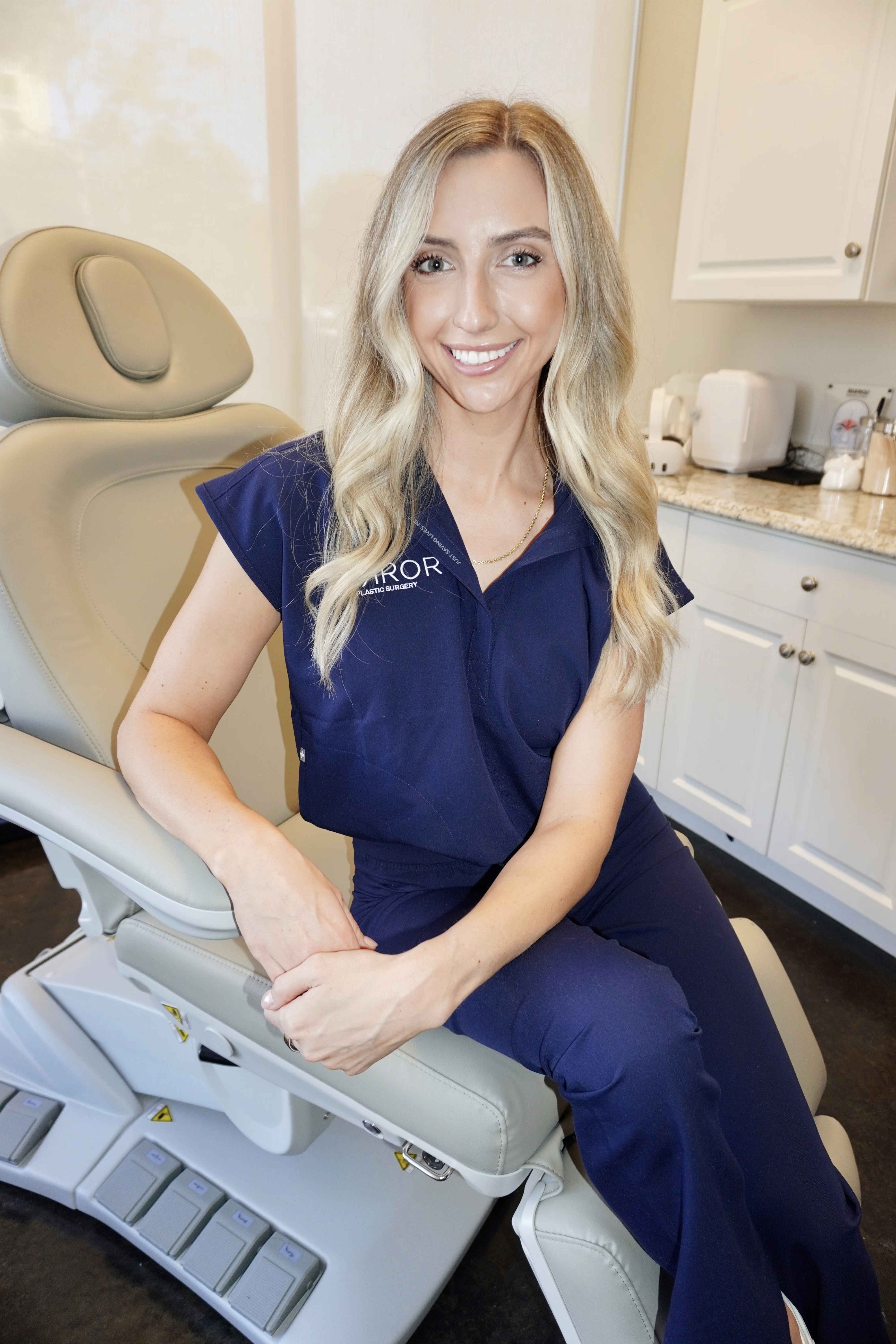
Ellie earned her Bachelor’s in Health Science from Boston University on the premedical track, completed an aesthetics licensure program, and obtained both her Bachelor’s and Master’s in Nursing from the University of South Florida. She spent four years in the Neuroscience ICU at Tampa General Hospital, where she developed deep expertise in physiology, metabolic health, and complex patient management.
Her approach blends that clinical foundation with esthetician training from a high-end medical spa in Boston. This dual perspective helps her connect aesthetic goals with the clinical science required to reach them safely. Ellie often advises patients to delay or skip services that are not yet necessary, and she prioritizes long-term outcomes over short-term revenue.
Every peptide therapy patient at Mirror receives a 30–60 minute consultation, comprehensive lab analysis, a custom protocol, pharmacy-grade peptides with batch testing, and 24/7 direct text access to Ellie. Services are available in person in Tampa/St. Petersburg and remotely across the United States, including Hawaii and Alaska. When clinically appropriate, Ellie collaborates with Dr. Akash Chandawarkar, MD, a Harvard-educated physician and Johns Hopkins-trained plastic surgeon.
Book an appointment with Ellie to start a safe, personalized peptide plan.
Frequently Asked Questions
What are the biggest risks of buying peptides online?
Major risks include lack of quality control, dangerous contamination with bacteria or endotoxins, and potentially heavy metals. Independent testing has documented wildly inaccurate dosing, with some vials containing roughly half to nearly double their labeled strength. A vendor’s Certificate of Analysis offers limited protection because it can be fabricated, reused across batches, or limited to HPLC purity data that does not detect endotoxins, heavy metals, or microbial contamination. Without a provider reviewing your medical history and medications, you have no safety net if something goes wrong.
Is supervised peptide therapy safe?
Every medical treatment carries some risk, yet supervised therapy significantly reduces the risks associated with peptide use.1 Safety comes from comprehensive medical evaluation before any protocol begins, baseline and follow-up laboratory testing, and the use of quality-assured peptides from licensed compounding pharmacies that perform third-party batch testing. Ongoing monitoring by a qualified practitioner allows for dose adjustments and rapid response to side effects. This model is fundamentally different from self-injecting an unverified vial purchased online.
Are compounded peptides FDA-approved?
Compounded drugs are not FDA-approved for safety, effectiveness, or quality. Peptides compounded by licensed 503A or 503B pharmacies are prepared under strict sterile compounding standards (USP <797>), fall under state and federal oversight, and must be dispensed with a valid prescription from a licensed provider. This framework contrasts sharply with unregulated “research” peptides sold online, which are not required to undergo sterility testing, endotoxin testing, identity verification, or potency validation. Regulatory status continues to evolve; for example, an FDA advisory committee voted in July 2026 to recommend several peptides, including BPC-157, for the 503A Bulks List, and formal rulemaking must still occur before legal compounding can proceed.
How do I know if a peptide clinic is legitimate?
A legitimate clinic requires a prescription, performs a thorough medical evaluation with baseline lab work, and sources from licensed compounding pharmacies. It also provides batch-specific Certificates of Analysis that show identity, purity, sterility, and endotoxin results. The supervising provider should be a named, verifiable MD, DO, NP, or PA, not a vague “clinical team.” There should be a clear follow-up and monitoring protocol with defined lab retest intervals. Be cautious with any clinic that skips labs, sells peptides directly without a pharmacy intermediary, uses one-size-fits-all protocols, or cannot explain current FDA and state pharmacy board guidance for the compounds it prescribes.
Can peptides interact with my current medications?
Peptides can interact with medications and existing conditions. This reality makes a comprehensive medical evaluation essential before starting any protocol. A qualified provider reviews your medications and supplements for potential interactions before prescribing. For example, GLP-1 receptor agonists affect blood sugar regulation and can interact with diabetes medications, and immune-modulating peptides may be inappropriate for certain autoimmune conditions. At Mirror Plastic Surgery, Ellie reviews each patient’s full medical history and lab results before designing any protocol and remains available for ongoing questions throughout therapy.
Invest in Your Safety, Not Just a Vial
The online peptide market functions as a documented “buyer beware” landscape. Independent testing has confirmed contamination in every sample in some studies and potency errors ranging from roughly half to nearly double the labeled dose, along with severe purity failures on products advertised at 99%. These outcomes come from peer-reviewed research and independent laboratory analysis, not from theoretical models.
Supervised peptide therapy offers a safer path. You work with a qualified provider, use verified pharmacy-grade compounds, complete baseline and follow-up labs, and follow a personalized protocol built around your actual physiology. The choice centers on verification, including whether the compound has been tested, the dose tailored to you, and a clinician monitoring your response.
Your health is your most valuable asset. Book an appointment with Ellie today and experience the difference of truly supervised, personalized peptide therapy.
1 Results may vary from person to person. Editorial content, before and after images, and patient testimonials do not constitute a guarantee of specific results.
Peptide therapy is intended for wellness and optimization purposes and is not prescribed to diagnose, treat, cure, or prevent disease unless specifically stated. Many peptides are not FDA-approved and may be used off-label. Some have limited long-term safety data, with a potential for unknown risks, complications, or desensitization with prolonged use.