
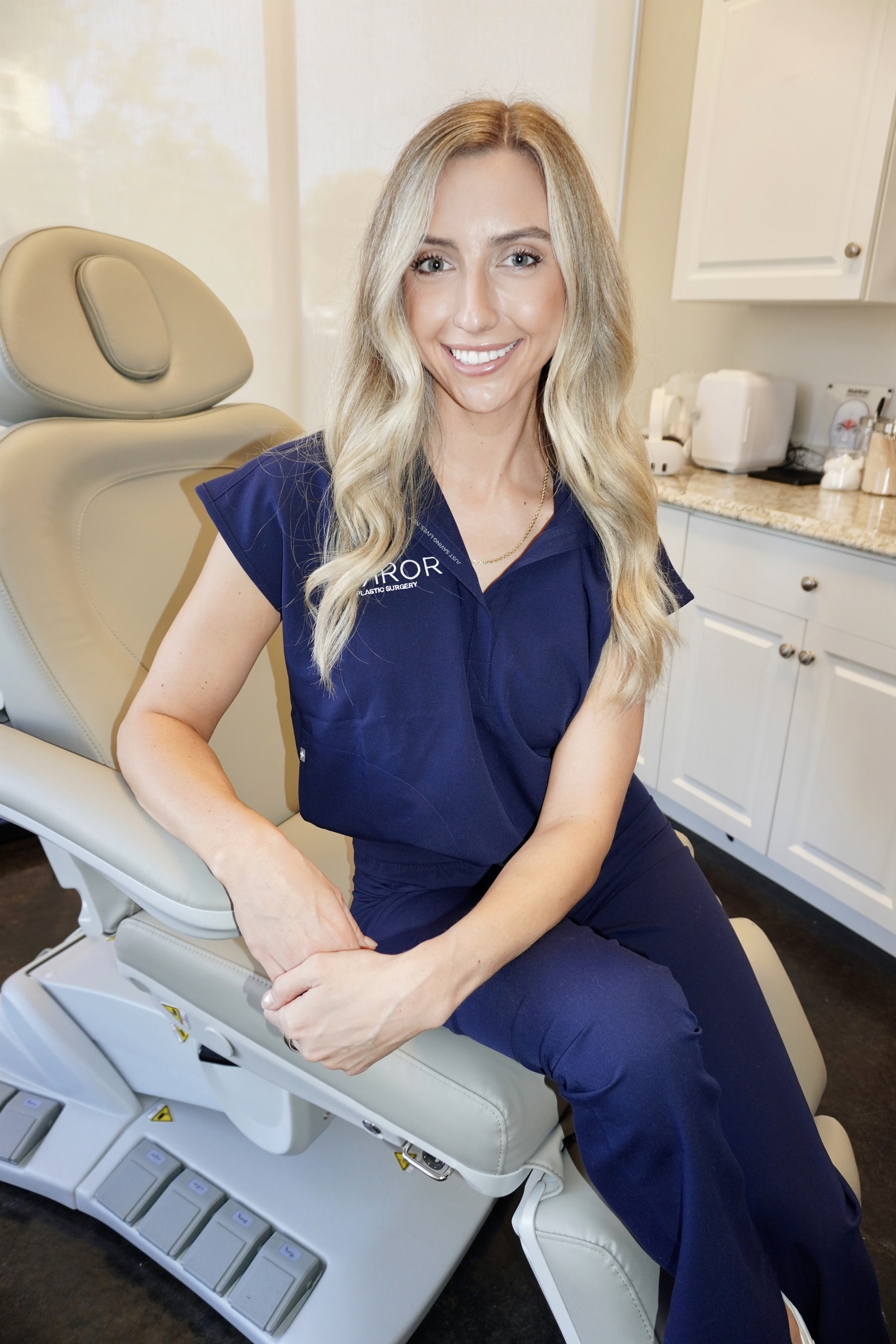
Written by: Ellie Pranckevicius, FNP-BC, Aesthetic Nurse Practitioner & Aesthetic Injector | Facial Restoration & Regenerative Injectable Specialist, Mirror Plastic Surgery
Key Takeaways
- Growth hormone peptide therapy uses compounds like CJC-1295, ipamorelin, and sermorelin to stimulate the body’s own growth hormone release. This can support improved body composition, faster recovery, and better sleep.1
- Unlike synthetic HGH, these peptides work within the body’s natural regulatory feedback, which makes extreme hormone levels and related side effects less likely when a clinician doses them carefully.1
- Common risks include water retention, insulin resistance, and hormonal imbalances. The greatest dangers usually come from unregulated online sourcing and lack of medical oversight.
- Medical supervision with lab testing, personalized protocols, and ongoing monitoring helps protect your safety, improve results, and ensure proper sourcing of peptides.
- To explore whether growth hormone peptide therapy fits your goals, schedule a consultation with the experienced team at Mirror Plastic Surgery.
How Growth Hormone Peptides Work in Your Body
Growth hormone peptides, also called growth hormone secretagogues (GHS) or growth hormone–releasing peptides (GHRPs), are short amino acid chains that tell the pituitary gland to release more of your own growth hormone. They work upstream of the hormone itself. These compounds signal the body to produce more of what it already makes instead of relying on injected synthetic GH.
The most commonly used growth hormone peptides include:
- CJC-1295: A GHRH analog that, in its DAC-conjugated form, has a plasma half-life of 5.8 to 8.1 days, which produces sustained GH elevation. Most products labeled “CJC-1295” online are actually the non-DAC version (Mod GRF 1-29), which has a half-life of roughly 30 minutes and a very different pharmacological profile.
- Ipamorelin: A selective ghrelin-receptor agonist known for its specificity and relatively low side-effect profile. It stimulates GH release without significantly elevating cortisol or prolactin, unlike older GHRPs such as GHRP-2 or GHRP-6.
- Sermorelin: A truncated GHRH analog that contains the first 29 amino acids of human GHRH. It was previously FDA-approved under the brand name Geref for pediatric and diagnostic indications but was withdrawn for commercial rather than safety reasons.
These peptides differ from synthetic human growth hormone (somatropin). Prescription HGH delivers the hormone directly and bypasses the pituitary’s natural regulatory feedback. Growth hormone peptides act within the body’s existing physiological ceiling, which creates a more natural pattern of release but still carries risk.
Potential Benefits of Growth Hormone Peptide Therapy
Growth hormone peptide therapy appeals to many patients because it addresses real age-related hormone changes. Growth hormone secretion declines approximately 14% per decade after age 30. This decline contributes to lower lean body mass, more visceral fat, reduced bone density, and slower recovery, often called somatopause. By stimulating the pituitary to release more GH, these peptides may support:1
- Improved body composition: A 2008 systematic review in the Annals of Internal Medicine found that GH administration increased lean body mass by an average of 2.1 kg in healthy adults, although this did not translate into strength gains.
- Enhanced recovery: Growth hormone supports tissue repair and collagen synthesis. Patients may notice faster healing from workouts, injuries, or surgical stress.1
- Better sleep quality: Patients often report deeper sleep and more consistent sleep onset within the first 2–4 weeks of therapy, likely because stronger endogenous GH pulses both support and depend on slow-wave sleep.1
- Increased energy and vitality: Many patients describe reduced fatigue and better stamina, which often relates to improved sleep and metabolic function.1
- Anti-aging effects: Some patients notice improved skin elasticity and collagen production, consistent with GH’s role in cellular repair.1
However, results vary significantly by individual. Age, baseline hormone levels, diet, lifestyle, and the specific peptide protocol all influence outcomes. At Mirror Plastic Surgery, some patients notice early improvements within the first week, especially in sleep and recovery. Meaningful changes in body composition usually require 3–6 months of consistent, personalized therapy.1
Ellie Pranckevicius, FNP-BC, sets clear expectations: “Peptides are not a one-size-fits-all solution. A thorough evaluation, including lab work, is essential to tailor a protocol that is safe and effective for each individual.”
Schedule your peptide therapy consultation to see whether growth hormone peptide therapy aligns with your health goals.
Risks and Side Effects of Growth Hormone Peptide Therapy
While the potential benefits are compelling, growth hormone peptide therapy carries real risks. Clinicians infer much of the side effect profile from growth hormone research and limited data on specific peptides. The most commonly reported risks include:
- Water retention and edema: A 2007 systematic review pooling data from 18 studies found soft tissue edema in 50% of GH-treated participants versus 8% on placebo.
- Carpal tunnel syndrome: Nerve compression from soft tissue swelling occurred in 19% of GH-treated participants in the same review, compared to 1% on placebo.
- Insulin resistance and blood sugar changes: Clinical studies of GH secretagogues have shown transient increases in insulin resistance, elevations in fasting plasma glucose, and reduced peripheral insulin sensitivity, especially in people with existing metabolic risk.
- Hormonal imbalances: Some GHRPs, particularly GHRP-2 and GHRP-6, can elevate cortisol and prolactin. Ipamorelin is more selective and does not meaningfully raise cortisol or prolactin at standard doses.
- Joint and muscle pain: Arthralgias and myalgias tend to be dose-dependent and usually resolve when therapy stops.
- Theoretical cancer risk: Elevated GH/IGF-1 signaling has been associated with cell proliferation. Researchers have not proven a causal link in humans, yet the concern remains biologically plausible and calls for caution in patients with active malignancy or a history of cancer.
Beyond these physiological side effects, the bigger risk often comes from unregulated sourcing. The FDA has documented serious adverse events associated with CJC-1295, including increased heart rate and systemic vasodilatory reactions, and has placed it on the Category 2 bulk drug substances list. Many serious events linked to growth hormone peptides arise from the unregulated market, where products may contain contaminants, incorrect dosages, or no active ingredient.
Ellie Pranckevicius, FNP-BC, explains it clearly: “The risk isn’t the peptide itself, it’s the source. When you buy online without supervision, you have no idea what you’re actually injecting.”
Most side effects are dose-dependent and reversible. The risk profile improves significantly when a medical team supervises therapy, uses appropriate dosing, and sources peptides from reputable providers with batch testing.
Growth Hormone Peptides vs. Prescription HGH
The core difference between growth hormone peptides and prescription recombinant human growth hormone (rhGH, or somatropin) lies in where each therapy acts. Prescription HGH bypasses the pituitary entirely, while peptides work within the body’s existing feedback loop. Here is how that difference appears in practice.
Prescription HGH (somatropin):
- Delivers the hormone directly and bypasses the pituitary entirely
- FDA-approved only for specific conditions such as growth hormone deficiency, HIV-related wasting, and short bowel syndrome; off-label distribution for anti-aging is a federal felony under 21 U.S.C. § 333(e)
- Suppresses the body’s own GH production through negative feedback and can produce supraphysiological GH levels, which increases side-effect burden
Growth hormone peptides (CJC-1295, ipamorelin, sermorelin):
- Stimulate the pituitary to release the body’s own GH in a pulsatile pattern
- Not FDA-approved (except tesamorelin for HIV-associated lipodystrophy)
- Work within the body’s physiological ceiling, which makes extreme GH levels less likely
- Preserve the body’s natural feedback mechanisms
- Generally associated with a lower side-effect profile at therapeutic doses
A 2026 narrative review in the Open Journal of Clinical Diagnostics concluded that current evidence has not shown growth hormone secretagogues to outperform conventional rhGH for efficacy or long-term outcomes. For adults with age-related GH decline, where the pituitary still produces GH but needs stimulation, peptides can offer a more physiological approach. Both options require medical oversight, and a qualified provider should guide the choice.
Safety, Regulation, and the Role of Medical Supervision
Growth hormone peptides sit in a regulatory gray area. CJC-1295, ipamorelin, and several related peptides appear on the FDA’s Category 2 bulk drug substances list, which means compounders cannot legally use them under Section 503A while the FDA continues its review. They are not controlled substances, yet they also are not approved for human consumption.
When people purchase peptides online without a prescription, they cannot reliably verify three key factors:
- Purity: Whether the product contains contaminants
- Potency: Whether it contains the stated dose
- Identity: Whether it is even the peptide advertised
HHS Secretary Robert F. Kennedy Jr. highlighted this concern: “With the gray market you have no idea if you’re getting a good product. And a lot of this stuff that we’ve looked at is just very, very substandard.”
Mirror Plastic Surgery’s program removes much of this uncertainty. Our peptide therapy service, led by Ellie Pranckevicius, FNP-BC, includes in-depth consultations that review medical history and goals, comprehensive lab panels to assess hormone levels and contraindications, peptides sourced from reputable providers with rigorous batch testing, and ongoing concierge support with 24/7 access via text. Our team educates you on what you are taking, why you are taking it, and what to watch for throughout treatment.
Start with a medically supervised evaluation in St. Petersburg, FL, or through remote care across the United States.
How to Use Growth Hormone Peptides Safely
Given the importance of medical supervision, the safest path to growth hormone peptide therapy follows a structured, clinician-guided process. A responsible protocol usually includes these steps:
- Schedule a comprehensive consultation. A qualified provider reviews your medical history, current medications, and specific health goals before recommending any protocol. At Mirror Plastic Surgery, consultations with Ellie typically last 30–60 minutes.
- Complete baseline lab testing. Recommended labs include IGF-1, fasting glucose, HbA1c, lipid panel, and thyroid function. These tests establish your starting point and help identify contraindications.
- Receive a personalized protocol. Your provider specifies which peptides to use, the doses, and the administration schedule. This plan reflects your individual physiology rather than a generic template.
- Follow up and monitor. Monitoring labs at 6–12 weeks and ongoing check-ins allow your provider to adjust dosing and catch side effects early.
Mirror Plastic Surgery supplies detailed instructions, video demonstrations for self-administration, and ongoing support via text or telemedicine. Remote consultations are available nationwide.
Common Misconceptions About Growth Hormone Peptides
“Peptides are steroids.”
Steroids are synthetic hormones that replace or supplement the body’s own production. Peptides act as signaling molecules that stimulate the body to produce more of its own hormones through different mechanisms.
“All peptides are the same.”
Different peptides target different receptors and create different effects. CJC-1295 stimulates the GHRH receptor, while ipamorelin stimulates the ghrelin receptor. Clinicians often combine them because they work together effectively, yet they are not interchangeable.
“Peptides are a quick fix.”
Growth hormone peptide therapy requires consistency and time. Initial improvements in sleep or recovery may appear within weeks, but meaningful changes in body composition typically take 3–6 months. Patients should view this as a long-term strategy rather than a shortcut.
“Buying peptides online is safe if the reviews are good.”
Online reviews cannot confirm product purity, potency, or identity. Most online “CJC-1295” vials are actually CJC-1295 without DAC, which has a half-life of roughly 30 minutes instead of the 6 to 8 days described in clinical studies. This difference changes dosing logic completely. The safest way to ensure quality is to work with a licensed provider who uses reputable, batch-tested suppliers.
Frequently Asked Questions
Is it safe to take growth hormone peptides?
Growth hormone peptides can be relatively safe when a medical professional supervises treatment, uses proper dosing, and sources high-quality products. Most side effects, including water retention, joint stiffness, and mild blood sugar changes, are dose-dependent and reversible. These compounds are not FDA-approved for most indications, and long-term safety data remains limited. The main danger comes from unregulated sourcing and unsupervised use, where purity and dosing accuracy remain unknown. A thorough medical evaluation with baseline lab work forms the essential first step before starting any protocol.
What are the most common side effects of growth hormone peptide therapy?
The most frequent side effects include water retention and peripheral edema, joint pain, muscle aches, carpal tunnel-pattern tingling or numbness, and transient changes in fasting blood glucose. These effects mirror what clinicians see with growth hormone administration more broadly and tend to increase at higher doses. Ipamorelin is considered one of the cleaner options in its class because it does not significantly elevate cortisol or prolactin, unlike older peptides such as GHRP-2 or GHRP-6. As discussed in the risks section, regular lab monitoring helps your provider detect and address these effects early.
How long does it take to see results from growth hormone peptide therapy?
Initial improvements in sleep quality and recovery often appear within one to four weeks of starting therapy.1 As noted earlier, changes in body composition typically require three to six months of consistent, properly dosed therapy.1 Results vary based on age, baseline hormone levels, diet, exercise habits, and the specific peptide protocol.1 Patients should view peptide therapy as a long-term strategy rather than a rapid transformation tool.
What is the difference between growth hormone peptides and prescription HGH?
Prescription recombinant human growth hormone (somatropin) delivers the hormone directly into circulation and bypasses the pituitary and natural feedback mechanisms. Over time, exogenous HGH can suppress the body’s own GH production. Growth hormone peptides work upstream and signal the pituitary to release the body’s own GH in a pulsatile, physiologically regulated pattern. This pattern keeps GH within the body’s natural ceiling more often, which makes extreme levels and related side effects less common. Prescription HGH is legally restricted to a narrow set of FDA-approved indications, and distributing it for anti-aging purposes is a federal felony. Peptides fall into a different regulatory category, although most are also not FDA-approved.
Will I lose the benefits if I stop taking growth hormone peptides?
The benefits of peptide therapy fade once therapy stops. If the underlying issue, such as the age-related GH decline mentioned earlier, no longer receives treatment, symptoms usually return over time. This pattern resembles what happens when someone stops a consistent exercise program and gradually loses progress. Many patients move to a lower-dose maintenance protocol after an initial treatment phase to sustain gains. Your provider can recommend an appropriate long-term plan based on your labs and clinical response.
Conclusion: Choosing a Safe Path for Peptide Therapy
Growth hormone peptide therapy can support better recovery, deeper sleep, and improved body composition when used thoughtfully. As the sections above show, the difference between a safe, effective experience and a dangerous one comes down to three factors: supervision, sourcing, and personalization. Supervision connects back to the safety and how-to sections, sourcing reflects the unregulated market risks discussed earlier, and personalization builds on the need for tailored protocols described throughout.
At Mirror Plastic Surgery, patients receive honest information and medically rigorous care. Our peptide therapy program, led by Ellie Pranckevicius, FNP-BC, combines in-depth consultations, comprehensive lab panels, quality sourcing from batch-tested suppliers, and ongoing concierge support. The team focuses on education, careful assessment, and individualized protocols instead of one-size-fits-all promises.
If you are considering growth hormone peptide therapy, start with a conversation with a qualified provider who can evaluate your physiology, goals, and health history.
Contact Ellie to discuss your options by calling 727-361-6515 or emailing hello@mirrorplasticsurgery.com. Remote consultations are available across the United States.
1 Results may vary from person to person. Editorial content, before and after images, and patient testimonials do not constitute a guarantee of specific results.
Peptide therapy is intended for wellness and optimization purposes and is not prescribed to diagnose, treat, cure, or prevent disease unless specifically stated. Many peptides are not FDA-approved and may be used off-label. Some have limited long-term safety data, with a potential for unknown risks, complications, or desensitization with prolonged use.