
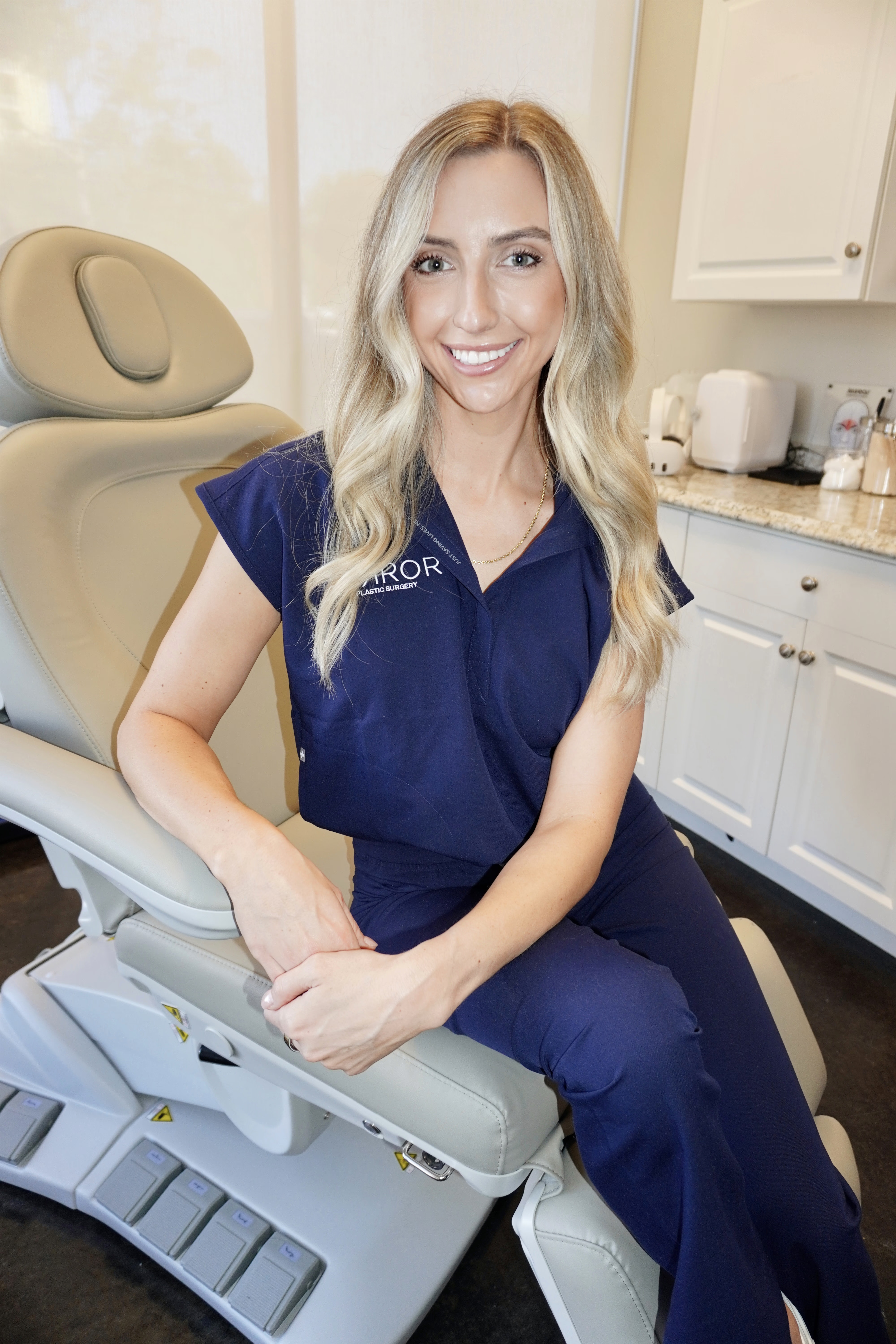
Written by: Ellie Pranckevicius, FNP-BC, Aesthetic Nurse Practitioner & Aesthetic Injector | Facial Restoration & Regenerative Injectable Specialist, Mirror Plastic Surgery
Key Takeaways
- A personalized treatment plan is a written document that connects your anatomy, medical history, and goals to specific treatments with defined products, zones, and timelines.
- Full-face assessment views the face as an interconnected system, which helps prevent asymmetry and the overdone look that often follows single-area injectables.
- Concierge practices like Mirror Plastic Surgery reserve extended time for consultation, including intake, anatomical mapping, candidacy review, written plan creation, treatment, and follow-up education.
- Objective provider evaluation covers credentials, anatomical expertise, safety protocols, supplier neutrality, realistic outcome discussions, and maintenance education.
- Book a consultation with Ellie at Mirror Plastic Surgery to experience an unhurried, anatomy-first assessment tailored to your goals.
How Personalized Treatment Plans Work in Aesthetic Medicine
A personalized treatment plan in aesthetic medicine is a written, provider-authored document that connects your specific anatomy, medical history, and long-term goals to a sequenced set of treatments with defined products, zones, and timelines. It functions as a medical roadmap, not a menu of popular services. Documentation for every aesthetic consultation must include a signed intake form, treatment-specific informed consent, provider assessment notes on anatomy and relevant medical factors, contraindications identified and how they were addressed, a treatment plan with product, zone, and staged timeline, the decision made with clinical rationale, photographs if taken, and a follow-up plan.
Personalization also means the plan may recommend against treatment. The purpose of a medical spa consultation is to determine whether the concern can be improved, which mechanism is causing it, and whether available options are worth pursuing. Legitimate outcomes include recommending a different approach or deciding against treatment.
Full-Face Assessment vs. One-Area Injectables in Tampa
A full-face assessment evaluates the face as an interconnected system rather than a collection of isolated concerns. A thorough assessment examines facial structure, muscle movement, and how different areas of the face relate to each other instead of evaluating areas in isolation.
Single-area injectable treatments that address only the lips or only the forehead can create asymmetry or an unbalanced appearance when surrounding anatomy is ignored. At Mirror Plastic Surgery, Ellie Pranckevicius prioritizes restoring inherent facial characteristics before considering volume augmentation. This approach supports a seamless transition between the upper, middle, and lower facial regions and helps avoid the common “overdone” appearance that results from isolated injections.
Step-by-Step Treatment-Planning Process at Mirror Plastic Surgery
A typical first med spa consultation for non-surgical injectable treatments lasts 30 to 60 minutes and follows a structured flow. At a concierge practice, that window expands to allow a more detailed assessment. The process at Mirror Plastic Surgery follows these phases:
- Consultation and intake: The visit begins with a review of medical history, medications, allergies, prior procedures, and the emotional drivers behind the visit in open dialogue.
- Anatomical mapping: The provider examines skin quality, volume distribution, asymmetries, muscle movement, and vascular landmarks at rest and in animation.
- Candidacy review: Absolute contraindications such as pregnancy, relative contraindications such as anticoagulant therapy, and precautions such as history of autoimmune disorders or prior permanent fillers are identified and addressed.
- Plan creation: A written, sequenced treatment plan is created with specific products, zones, and a staged timeline.
- Treatment: Procedures take place only after informed consent is documented and all questions are answered in clear language.
- Follow-up: Maintenance schedules and at-home care are explained so you understand how to sustain results long-term.
Current Standards for Neuromodulators, Biostimulatory Fillers, and Skin Tightening
Combination treatment protocols such as micro-dosed neuromodulator plus bioremodeler, cheek filler, and PDO threads staged across several visits are replacing single-modality treatments and support comprehensive, anatomy-driven plans. Rapid facial volume changes associated with GLP-1 medications are also increasing demand for individualized mid-face volumization protocols tailored to each patient’s post-weight-loss anatomy. Given these evolving and more complex treatment options, understanding how to evaluate whether a provider can deliver truly personalized care becomes essential.
Objective Considerations When Evaluating Providers
When assessing any Tampa med spa, evaluate providers across several connected dimensions that together reveal whether a practice prioritizes patient safety and outcomes over volume:
- Credentials: In Florida, when a physician’s primary practice location differs from an aesthetic med spa, the supervising physician must be a dermatologist or plastic surgeon only if the mid-level practitioner’s primary activity at the med spa is dermatologic or aesthetic services. Verify license status through the Federation of State Medical Boards’ DocInfo database. This establishes baseline competency.
- Anatomical expertise: The injecting provider should demonstrate knowledge of surface and subdermal anatomy, vascular landmarks, and muscle interplay, not just product familiarity. Credentials alone do not guarantee the spatial reasoning required for safe injection.
- Safety protocols: Med spas should maintain written treatment SOPs, informed consents, intake forms, OSHA forms, safety plans, and documented ongoing staff training as part of a living compliance program. Even skilled providers need systematic safeguards.
- Supplier neutrality: Providers tied to a single product line cannot always select the most appropriate product for a patient’s specific anatomy and goals. Neutral product selection supports unbiased recommendations.
- Realistic outcomes: As established earlier, quality providers apply the same clinical judgment that determines whether treatment should proceed at all, not just which treatment to recommend.
- Maintenance education: A quality provider explains longevity, maintenance intervals, and at-home care before the first treatment. This demonstrates commitment beyond the initial visit.
Risks, Limitations, and Trade-Offs of Non-Surgical Injectables
A systematic review found that adverse events after injectable treatments were predominantly mild and transient.1 Serious complications remain rare but possible, and their likelihood decreases when providers conduct thorough anatomical assessments and identify vascular landmarks before injecting.1
Misconceptions About Instant Results and Long-Term Care
Ellie Pranckevicius approaches aesthetics the way dentistry approaches oral health. Professional treatments deliver results, and lasting outcomes depend on understanding and consistent maintenance. Rather than simply recommending a procedure, she explains the physiology of the skin in relatable terms so patients understand why a treatment is being performed and how to maximize results between visits.
High-Volume Mills vs. Limited-Volume Concierge Med Spa Models in Tampa
The structural difference between high-volume practices and limited-volume concierge models directly affects the depth of assessment, the quality of the treatment plan, and the safety of the outcome.
High-volume practices prioritize throughput. Consultations are shorter, providers see more patients per day, and recommendations are more likely to follow a standardized menu than a patient-specific anatomical finding. As Ran Chen, Founder of AestheticMedGuide, states, “The aesthetic consultation is the highest-risk 30 minutes in a med spa.” Compressing that window further increases risk.
Mirror Plastic Surgery limits non-surgical appointments to support a slower pace and deeper evaluation. The following checklist highlights red flags in any consultation:
- The provider skips a full-face assessment and moves directly to treatment recommendations
- Same-day treatment is pressured rather than offered as a convenient option for appropriate cases
- Artificial urgency or expiring discounts are attached to an elective medical decision
- No on-site or supervising physician is available for medical-grade procedures
- Product recommendations are vague rather than specifying exact brands and zones
- Medical history, medications, and prior procedures are not reviewed before treatment
- The provider cannot describe how many times they have performed the recommended treatment
What Mirror Plastic Surgery Refuses to Do
Mirror Plastic Surgery operates as a supplier-neutral practice. Ellie Pranckevicius selects products based on individual patient anatomy, skin quality, age, and goals, not on vendor relationships or volume commitments. She often advises patients that an expensive service is not yet necessary for them, which builds long-term trust rather than short-term revenue.
Ellie’s clinical background reinforces this standard. Before joining Mirror Plastic Surgery, she spent four years in the Neuroscience ICU at Tampa General Hospital, where clinical judgment, physiological precision, and patient safety were non-negotiable. That foundation shapes every injectable assessment she conducts. Her dual training as a licensed esthetician and Family Nurse Practitioner (FNP-BC) provides a comprehensive understanding of both surface skin physiology and subdermal anatomy that is uncommon in aesthetic practice.
The practice’s medical oversight comes from Dr. Akash Chandawarkar, a Harvard-educated physician, Johns Hopkins-trained plastic surgeon, and fellowship-trained aesthetic surgeon at Manhattan Eye Ear & Throat Hospital. When non-surgical care intersects with surgical candidacy, that expertise is available within the same practice.
Frequently Asked Questions
Who is a good candidate for an anatomy-based injectable plan?
Most adults in good general health who have realistic expectations about non-surgical outcomes are potential candidates. The assessment process evaluates skin quality, volume distribution, muscle movement, vascular anatomy, and medical history to determine suitability. Candidacy is confirmed during the consultation, not before it. Certain conditions, including pregnancy, active skin infections, and specific autoimmune disorders, may modify or preclude treatment. A thorough medical history review is essential before any recommendation is made.
How long do results typically last and what affects longevity?
Longevity varies by product type, treatment area, individual metabolism, lifestyle, and the volume used. Neuromodulators generally last three to six months.1 Biostimulatory fillers such as Radiesse stimulate collagen production and can produce results that persist beyond a year in appropriate candidates.1 Energy-based tightening treatments create gradual improvement over several months as collagen remodeling occurs.1 Maintenance intervals are discussed during the initial consultation so patients can plan realistically.
What safety protocols should every med spa follow?
Every med spa performing injectable or energy-based treatments should maintain written clinical SOPs, device-specific informed consents, adverse-event logs, and documented staff training records. Infection control protocols must include hand hygiene, single-use device policies, and proper sterilization of reusable instruments. Supply chain verification for injectables, particularly botulinum toxin products, is a patient safety requirement given documented cases of counterfeit products. Florida law requires supervising physicians for APRNs and PAs to be licensed under Chapter 458 or 459, F.S., but does not require them to be board-certified or board-eligible in dermatology or plastic surgery.
How often is maintenance required?
Maintenance frequency depends on the treatments in the plan, the patient’s anatomy, and their aesthetic goals. Neuromodulators typically require maintenance every three to six months. Biostimulatory fillers may require touch-ups annually or less frequently. Energy-based tightening protocols vary by device and indication. Ellie explains maintenance schedules during the initial consultation so patients understand the long-term commitment before beginning any treatment. Stopping treatment does not worsen the original concern; it simply allows natural aging to continue from where it was paused.
Can a single-area treatment ever be appropriate?
Single-area treatment can be appropriate when the full-face assessment confirms that one isolated concern exists without meaningful impact on surrounding anatomy, or when a patient is beginning a staged plan and the first phase addresses one zone. The key distinction is that this conclusion must follow a complete assessment, not replace it. A provider who recommends a single-area treatment without examining the full face has not conducted a personalized assessment; they have conducted a transaction.
What should I bring to my first consultation?
Bring a complete list of current medications, supplements, and any known allergies. Include details of all prior injectable treatments, with approximate dates, products used, and the provider’s name if known, because prior filler material can persist longer than marketed and must be considered for safe planning. Photos of yourself from five to ten years ago help contextualize natural facial changes. Prepare a list of your primary concerns and any questions you want answered. The consultation is a medical appointment, and the more information you bring, the more precise the assessment will be.
Making an Informed Decision About Your Aesthetic Care
Selecting a med spa in Tampa is a medical decision. The criteria that matter most, including provider credentials, consultation depth, anatomical expertise, safety infrastructure, and supplier neutrality, are not always visible in marketing materials. They become clear in the consultation room.
A practice that invests in a detailed initial assessment, produces a written anatomy-based plan, declines to recommend treatments that are not yet appropriate for you, and maintains transparent communication throughout your care operates at a different standard than one focused on volume. That standard is what Mirror Plastic Surgery was built to deliver.
Disclaimer: Results may vary from person to person. Editorial content, before and after images, and patient testimonials do not constitute a guarantee of specific results.
1 Results may vary from person to person. Editorial content, before and after images, and patient testimonials do not constitute a guarantee of specific results.