Written by: Dr. Akash Chandawarkar, Board Certified Plastic Surgeon, Mirror Plastic Surgery
Key Takeaways for Buccal Fat Removal Recovery
- Buccal fat removal follows a predictable four-phase recovery arc, with swelling peaking early and then gradually resolving over weeks.
- The intraoral approach leaves no external scarring, and most patients see visible improvements within a few months as contour stabilizes.1
- Swelling reflects acute edema, soft tissue remodeling, and scar maturation. Smoking, high salt intake, or poor head elevation can slow this process.
- Conservative fat removal in carefully selected patients supports stable, natural long-term results, while aggressive removal can increase the risk of hollowing with age.1
- At Mirror Plastic Surgery, Dr. Akash’s concierge model provides personalized recovery support. Schedule your consultation to receive a recovery plan tailored to your anatomy and goals.
Four-Phase Buccal Fat Removal Recovery Timeline
| Phase | Activity & Diet | Oral Hygiene Protocol | Red-Flag Symptoms |
|---|---|---|---|
| Days 1–3, Initial Swelling |
Rest with your head elevated on two pillows above heart level. Stick to liquids and very soft foods such as smoothies, yogurt, lukewarm soup, scrambled eggs, and mashed potato. Avoid vigorous activity, bending, and heavy lifting. Use cool compresses for 30 minutes on and 30 minutes off during the early period. Avoid straws, alcohol, and smoking. Skip rinsing for the first 24 hours. From day 2, use a warm saltwater rinse (1 tsp salt per 250 ml water, 30 seconds, 4–5 times daily) after meals and before bed. If prescribed, use antiseptic or chlorhexidine mouthwash twice daily and do not swallow it. Watch for fever above 38 °C (100.4 °F), rapidly increasing or one-sided swelling, pus or foul taste from the incision, or pain that worsens instead of improving. Swelling usually begins to subside during this time. Light desk or computer work is often possible by days 5–7. Continue a soft-solid diet with foods like pasta, fish, and cooked vegetables. Walking is encouraged, but avoid gym workouts and cardio. Continue saltwater rinses 4–5 times daily. Dissolvable sutures usually fall out on their own around day 7, so do not pull on them. Brush teeth gently and avoid direct contact with the incision sites. Contact your surgeon for persistent severe pain that medication does not relieve, cheek numbness that is not improving, progressive bleeding or bruising, or extreme tenderness or redness. Swelling continues to improve during this period. Most patients return to a normal diet and gentle exercise at week 2. A first glimpse of the new cheek contour often appears in three-quarter photos by week 4.1 Cheeks may still feel firm or tight inside. Transition from any prescribed mouthwash to saltwater rinses as directed. Resume normal brushing. Avoid smoking and alcohol for at least 4 weeks after surgery. Asymmetric swelling that does not self-correct by weeks 3–4 warrants a call to the surgical team. Swelling that improves and then suddenly worsens requires urgent review. Most patients resume full normal activity. Results continue to refine as cheek tissue redistributes and internal scar tissue softens over time.1 Follow your usual oral hygiene routine. Schedule follow-up photos at 3 months and again at 6 months under the same lighting and angles as your pre-operative images for accurate before-and-after comparison. Discuss any new asymmetry, firmness, or discomfort that develops after the 3-month mark at a follow-up appointment. How Long Buccal Fat Removal Swelling Typically LastsSwelling after buccal fat removal reflects three overlapping biological processes. The first is acute edema from tissue fluid accumulation, which peaks early after surgery and remains prominent during the first 1–2 weeks. A 2025 systematic review and meta-analysis published in the Journal of Cranio-Maxillo-Facial Surgery (PubMed 39809616), pooling 12 studies and 308 patients, found edema was the most common complication at 38.4%. This rate reflects a consistent inflammatory response to intraoral dissection, not a sign that something has gone wrong. The second process is soft tissue remodeling, where remaining cheek tissue redistributes into the space left by the fat pad. This shift unfolds over several weeks. The third process is scar tissue maturation, during which internal firmness gradually softens over the following months. Because these processes overlap, the most obvious swelling usually improves over the first few weeks, while finer contour changes continue for additional time. Smoking, high salt intake, poor head elevation during week 1, and combining buccal fat removal with rhinoplasty or chin surgery can extend overall facial swelling. 1 Week After Buccal Fat Removal: What to ExpectThe end of week 1 marks a key transition from acute recovery to gradual refinement. Most patients are managing well at home and starting to feel more like themselves. The checklist below highlights the main markers and actions for this stage.
Buccal Fat Removal and Aging: How Results Hold UpMany informed patients worry that buccal fat removal might age the face over time. The buccal fat pad is a discrete deep facial fat compartment that does not regenerate once surgically reduced. Facial fat also declines naturally with age, especially through the 40s and 50s. The valid concern is that surgical reduction could compound this natural loss and create a gaunt or hollow look later in life that is difficult to reverse. Published plastic surgery literature, including Rohrich RJ, Stuzin JM, et al. (Plastic and Reconstructive Surgery, 2021), identifies premature aging and midface distortion as documented long-term risks when too much buccal fat is removed. Conservative removal changes that risk profile. Published surgical series with long-term follow-up show that conservative resection in well-selected patients supports stable, satisfying long-term results, while more aggressive resection can cause visible hollowing in some patients over time. Dr. Akash’s approach at Mirror Plastic Surgery reflects this evidence. Candidacy assessment includes evaluation of malar bone structure, skin thickness, soft tissue envelope, family history of facial volume loss, and current facial fat distribution. The procedure is not offered to patients who are already thin-faced, under 25, or showing early cheek hollowing, because the risk-benefit balance does not favor surgery. For the right candidate with true lower-cheek fullness, good skin tone, and realistic goals, lower-cheek fullness usually remains reduced while the face ages in a natural way. 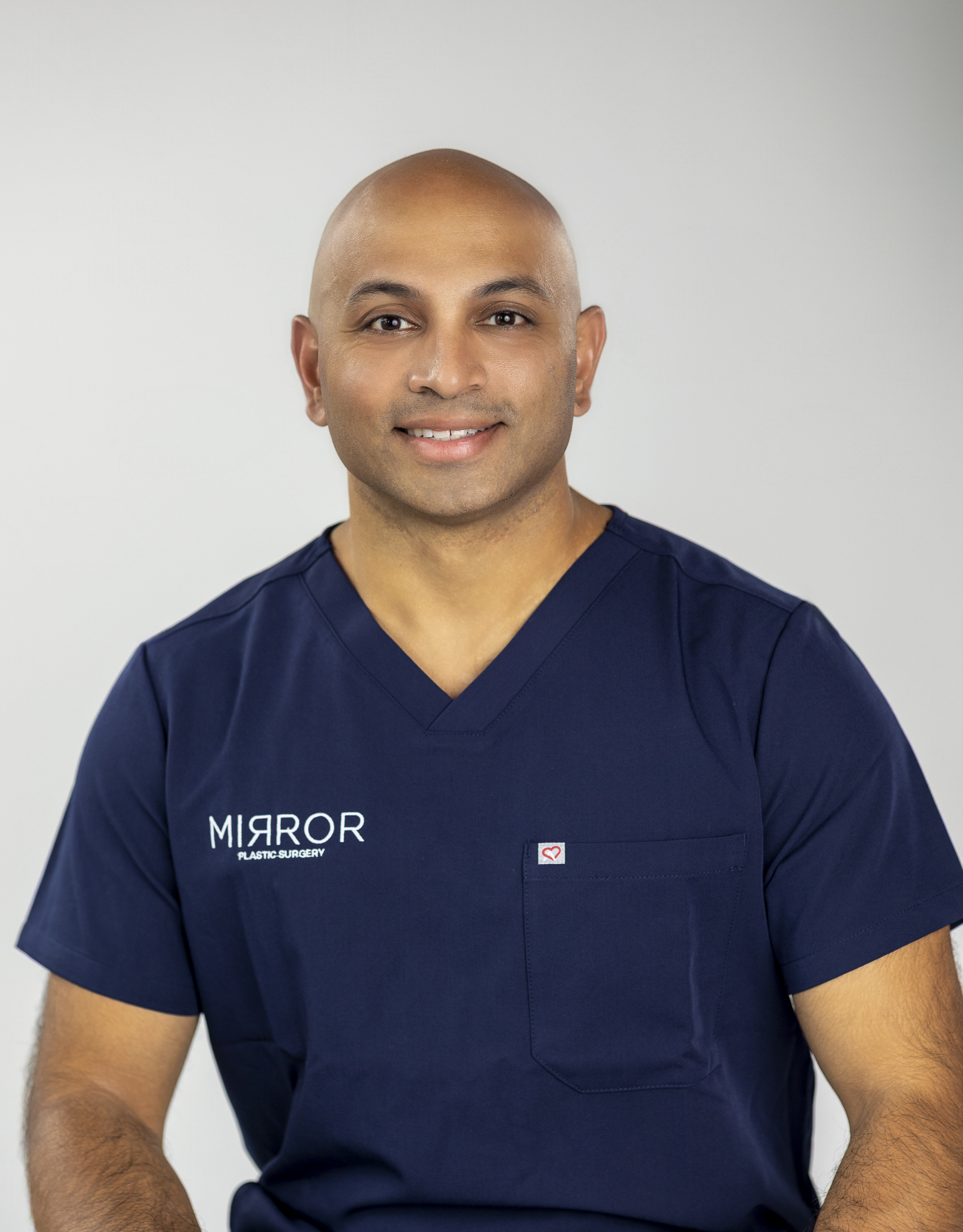 Practical Recovery Checklists for Home CareThe following checklists bring together the protocols most relevant to Tampa and St. Petersburg patients recovering at home. Soft-Food Progression
Oral Hygiene Protocol
Follow-Up Appointments at Mirror Plastic Surgery
Mirror Plastic Surgery’s concierge model limits the practice to one to two surgeries per day, and consultations can run up to an hour. This structure keeps Dr. Akash and his team available between appointments instead of routing patients through a call center. Tampa and St. Petersburg patients have direct access to the surgical team throughout recovery, which matches the level of support this procedure deserves. Discuss your candidacy and recovery plan with Dr. Akash. He will assess whether buccal fat removal suits your facial anatomy and outline a conservative, safety-first recovery approach for your specific situation. Frequently Asked Questions About Buccal Fat Removal RecoveryWho is an ideal candidate for buccal fat removal?Ideal candidates are adults aged 25–40 with genuinely full lower cheeks, completed facial maturation, a thick soft tissue envelope, strong malar bone structure, and a family history of preserved facial volume into later life. Patients who are already thin-faced, under 25, over 40 with early volume loss, or who have weak cheekbones are generally poor candidates because the risk of long-term hollowing outweighs the aesthetic benefit. At Mirror Plastic Surgery, Dr. Akash performs a comprehensive top-to-bottom facial assessment during an hour-long consultation, including evaluation of bone structure, fat distribution, skin quality, and aging patterns, before recommending the procedure. Safety and function come before aesthetics in every case. What are the most common complications, and how serious are they?The systematic review mentioned earlier reported an overall complication prevalence of 25%. The most common issues were edema at 38.4%, trismus (limited jaw opening) at 30.1%, pain beyond normal recovery at 19.4%, and facial asymmetry at 11.7%. Serious complications such as facial nerve paralysis, infection, and hematoma remain rare. The authors concluded that buccal fat removal can be considered safe when performed with detailed knowledge of anatomical landmarks, while still recommending caution. At Mirror Plastic Surgery, Dr. Akash’s Johns Hopkins plastic surgery residency and MEETH aesthetic fellowship support the anatomical precision that helps minimize these risks. His board certification by the American Board of Plastic Surgery also ensures hospital privileges are available if a rare complication requires escalated care. Is the result permanent, and will it look natural as I age?The buccal fat pad does not regenerate after surgical removal, so the reduction is permanent.1 As discussed earlier, the outcome depends heavily on patient selection and how much fat is removed. For well-chosen candidates with true lower-cheek fullness and good skin tone, the refined contour typically remains stable and natural-looking through later decades.1 Over-resection or surgery on an already lean face can compound age-related volume loss and may require fat grafting to correct. Dr. Akash focuses on conservative removal, anatomical preservation, and clear pre-operative counseling so patients understand what the procedure can and cannot achieve over time. The goal is a result that looks like you, simply more refined, at every decade. When can I return to work and exercise after buccal fat removal?Most patients return to light desk work within 5–7 days. People in roles that require significant talking, physical exertion, or public-facing interaction often wait until days 10–14, when external swelling is easier to manage. Walking is encouraged throughout the first week. Light cardio and stretching usually become appropriate after day 7. Full normal exercise typically resumes after day 14, while contact sports and high-impact activities remain off-limits for 4 weeks. These timelines assume consistent use of the full recovery protocol, including head elevation, soft diet, oral hygiene, and avoiding smoking and alcohol. Recovery can take longer if protocols are not followed or if buccal fat removal is combined with other facial procedures. What does Mirror Plastic Surgery’s concierge recovery support include?Mirror Plastic Surgery limits itself to one to two surgeries per day, so Dr. Akash and his team are not managing the recovery of ten patients at once. Every patient receives an hour-long initial consultation, a personalized recovery protocol matched to their anatomy and lifestyle, direct access to the surgical team between appointments, and structured follow-up at week 1, weeks 6–8, month 3, and month 6. Dr. Akash brings Harvard-MIT, Johns Hopkins, MEETH, and Stanford Biodesign training to every case. That depth of training shapes the surgical precision that influences how predictably and smoothly recovery unfolds. Start with a surgeon-led consultation at Mirror Plastic Surgery in St. Petersburg, FL, and receive an evidence-based recovery plan built around your anatomy, your goals, and your timeline. |
1 Results may vary from person to person. Editorial content, before and after images, and patient testimonials do not constitute a guarantee of specific results.