
Written by: Ellie Pranckevicius, FNP-BC, Aesthetic Nurse Practitioner & Aesthetic Injector | Facial Restoration & Regenerative Injectable Specialist, Mirror Plastic Surgery
Key Takeaways for Choosing a Safe Med Spa
- Medical spas operate under physician oversight, yet 36 states, including Florida, lack strict enforcement. Patients must verify safety before any treatment.
- Confirm an active, board-certified medical director and licensed practitioners (MD, DO, ARNP, PA, or RN) for all injectables and peptide therapies. Never accept treatment from estheticians or unlicensed staff.
- Require batch-specific Certificates of Analysis from independent ISO/IEC 17025 labs and verify that peptides come from 503B FDA-registered or PCAB-accredited compounding pharmacies to protect purity and safety.
- Insist on a 30–60 minute consultation with baseline labs, contraindication screening, written protocols, and 24/7 direct access to your provider for any adverse reactions.
- Schedule your comprehensive safety-first consultation today at Mirror Plastic Surgery to receive concierge-level peptide and aesthetic care under documented medical-director oversight.
Eight Safety-First Steps for Choosing a Medical Spa
These eight steps work as a same-day verification checklist. You can complete each step by phone, online search, or direct questions before booking.
-
Confirm an active, qualified medical director with a Florida Board of Medicine license. Florida med spas must operate under a physician (MD or DO) licensed under Chapter 458 or 459 who actively creates and signs treatment protocols, reviews charts, and remains available for emergencies, not merely a name on a certificate.
- Search the physician’s name on the Florida Department of Health MQA license lookup to confirm an active, unrestricted license.
- Ask whether the director is board-certified in dermatology or plastic surgery. Many med spa medical directors lack specialty training, and on-site presence is not guaranteed despite legal responsibility for every treatment.
- Confirm the director is not a “paper director.” Florida regulators target sham arrangements where a physician signs agreements and collects fees without substantive involvement.
- Verify the facility holds an AHCA Health Care Clinic registration unless a narrow exemption applies.
Verify who performs your treatment and confirm their specific credentials. In Florida, only physicians, ARNPs under a physician protocol, PAs under physician delegation, and RNs under a physician order may administer injectables. Estheticians and unlicensed staff may not legally inject.
- Ask for the injector’s or clinician’s full name and license type, then verify it on the Florida DOH MQA portal.
- Confirm a good-faith exam by a physician, ARNP, or PA precedes any treatment. A standing order does not substitute for an individualized assessment.
- Ask how many times the provider has performed the specific procedure you are considering.
Inspect facility cleanliness and confirm emergency protocols are in place. Medical spas must maintain emergency protocols, use single-use needles, follow sterile technique, and ensure proper disposal of medical waste.
- Observe whether treatment rooms are clean, organized, and separated from retail areas.
- Ask staff directly what they do if a patient has an adverse reaction during treatment.
- Confirm the facility maintains infection control policies and biohazard waste disposal agreements as required by AHCA.
Review peptide sourcing and request batch-specific documentation. A legitimate peptide provider must source from an accredited licensed compounding pharmacy, provide oversight by a licensed prescriber, and supply independent third-party documentation of purity.
- Request a batch-specific Certificate of Analysis (COA) from an ISO/IEC 17025-accredited independent laboratory showing purity ≥98% via HPLC, sterility, endotoxin levels, and a traceable lot number.
- Confirm the pharmacy is a 503B FDA-registered outsourcing facility or a PCAB-accredited 503A pharmacy.
- Walk away if no COA is available or if the COA comes from the manufacturer’s own internal lab rather than an independent third party.
- The FDA issued multiple warning letters in 2024–2025 to GLP-1 compounders and online sellers of peptide products for marketing unapproved and misbranded drugs. Verify the pharmacy has no active warning letters.
Evaluate the depth of the consultation and lab-review process. A responsible peptide therapy consultation must include a full medical history review, contraindication screening, baseline labs, and a written dosing protocol with defined follow-up checkpoints.
- Ask whether baseline bloodwork is ordered before treatment begins, not after.
- Confirm the provider screens for contraindications relevant to the specific peptide. For example, active malignancy or uncontrolled diabetes for growth hormone secretagogues.
- Expect a consultation lasting at least 30–60 minutes for peptide protocols; shorter sessions rarely allow for individualized assessment.
Watch for pressure sales tactics and discount-driven marketing as disqualifying red flags. A safe medical office allows time for questions and reflection without rushing or pressure during consultations.
- Decline any facility that uses time-limited pricing pressure during the consultation. Urgency tactics often appear alongside other cost-cutting measures.
- Treat dramatically below-market pricing as a signal of compromised sourcing or unqualified staff, since legitimate peptide therapy and medical-grade injectables carry baseline costs that cannot be discounted without sacrificing quality or supervision.
- Avoid facilities that are unwilling to disclose the specific device, filler, or medication being used.
Confirm 24/7 direct access to your practitioner. Peptide protocols and injectable treatments can produce delayed reactions, so access to a knowledgeable provider outside business hours functions as a core safety feature, not a luxury.
- Ask specifically whether you can reach your treating provider, not a general call center, by text or phone after hours.
- Med spas with limited or irregular business hours may indicate a “pop-up” operation focused on investor returns rather than patient outcomes.
- Confirm the provider offers telemedicine follow-up for ongoing monitoring and refill management.
Ask about post-treatment support and long-term maintenance protocols. A quality med spa follows up with patients after treatment and refers patients to other specialists when a concern falls outside the provider’s scope.
- Ask whether follow-up labs are scheduled at defined intervals. For GH secretagogues, follow-up bloodwork including IGF-1 and fasting glucose should occur at 6–8 weeks and periodically thereafter.
- Confirm the facility provides written reconstitution and self-administration instructions, ideally with video demonstrations.
- Ask what happens to your care if the treating provider is unavailable. A documented escalation pathway signals a strong institutional safety culture.
Schedule your safety-first consultation to verify credentials, review sourcing documentation, and complete every step on this checklist before any protocol begins.
How Mirror Plastic Surgery Meets These Safety Standards
The verification framework above represents the baseline for safe peptide and aesthetic care. At Mirror Plastic Surgery, these standards are met through the clinical leadership of Ellie Pranckevicius, FNP-BC, whose background shows how comprehensive oversight works in daily practice.
Meet Ellie Pranckevicius, FNP-BC
Ellie Pranckevicius is a board-certified Family Nurse Practitioner and the lead practitioner for peptide therapies and non-surgical aesthetics at Mirror Plastic Surgery in St. Petersburg, Florida. She holds a Master’s in Nursing from the University of South Florida and spent four years in the Neuroscience ICU at Tampa General Hospital, building the critical-care physiology foundation that informs her approach to metabolic health and recovery. Ellie began her career at a high-end medical spa in Boston after completing a formal aesthetics licensure program, giving her a dual command of skin physiology and advanced clinical science that is rare in the field. Her peptide practice is supported by the medical directorship of Dr. Akash Chandawarkar, a Harvard-educated, Johns Hopkins-trained plastic surgeon with fellowship training at Manhattan Eye Ear & Throat Hospital, ensuring every protocol benefits from robust physician oversight.
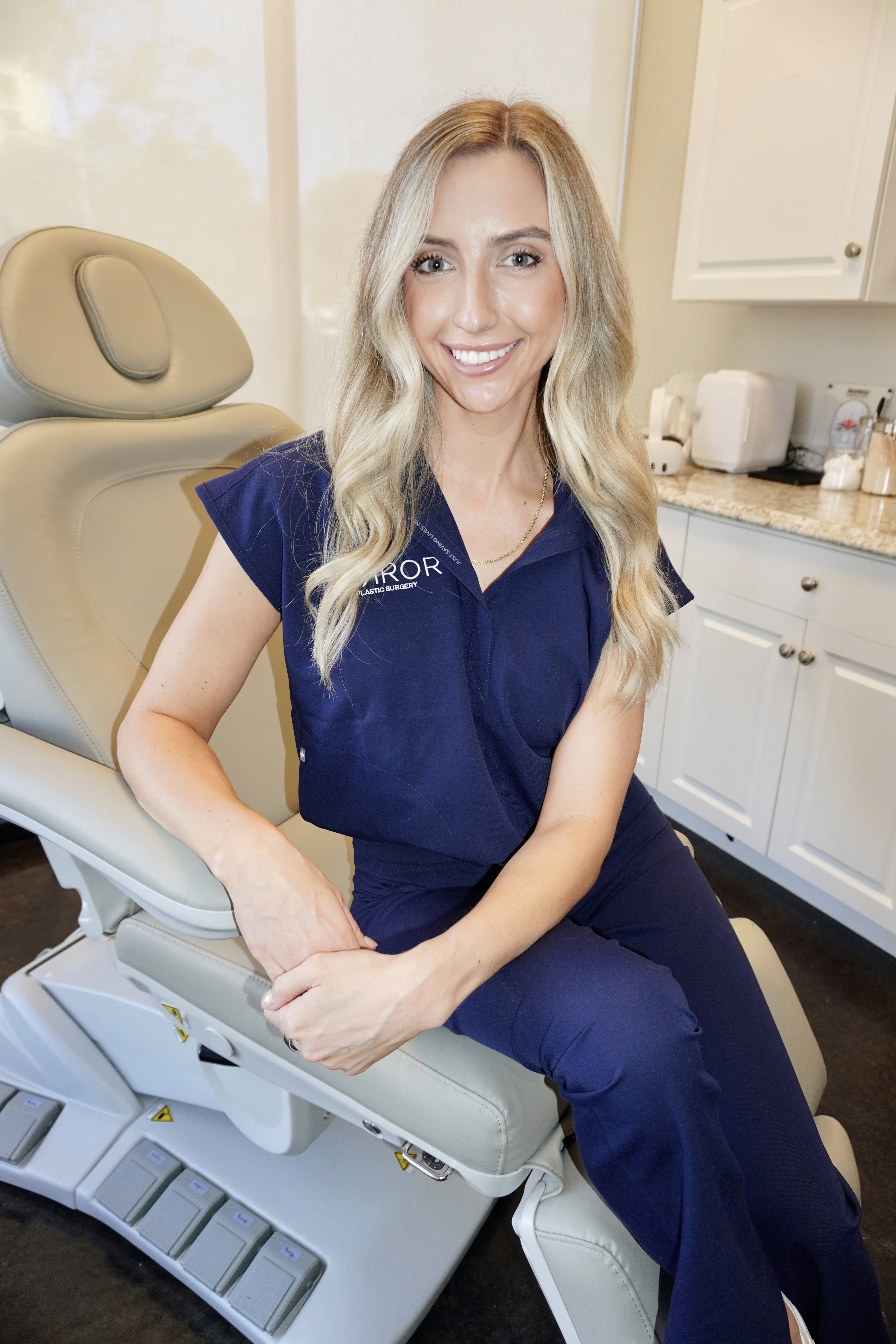
Ellie Pranckevicius, FNP-BC Begin your physician-supervised protocol with a comprehensive consultation that includes credential verification and direct practitioner access.
Peptide Therapy Vetting: Five Questions to Ask Before Starting
These questions help you uncover how any clinic handles peptide sourcing, dosing, supervision, and follow-up, which separates clinical-grade care from unregulated online purchasing.
- What compounding pharmacy supplies your peptides, and can I see their current FDA registration or PCAB accreditation? A provider who cannot name the pharmacy or produce documentation is sourcing from an unverifiable supply chain.
- Can I receive a batch-specific Certificate of Analysis for the peptide I will be prescribed? The COA must meet the ISO/IEC 17025 standard described in step 4, with all elements matching the vial you receive.
- What baseline labs do you order before initiating this protocol, and when are follow-up labs scheduled? Responsible providers order labs before treatment begins and define follow-up intervals in writing.
- What contraindications would prevent me from using this peptide, and how do you screen for them? A provider who cannot answer this question has not conducted individualized risk assessment.
- Who do I contact if I experience a side effect at 11 p.m. on a Saturday, and how quickly will I receive a response? The answer should name a specific licensed provider, not a general inbox or answering service.
Common Med Spa Questions and Quick Answers
How to tell if a med spa is good? Confirm an active, named medical director with a verifiable Florida license, licensed practitioners performing all clinical procedures, independent batch-tested peptide sourcing, and a documented post-treatment follow-up protocol. Positive referrals, willingness to answer credential questions, and the absence of high-pressure sales tactics are green flags.
What should you not do before a medspa appointment? Do not skip disclosing your full medication list, supplement use, and relevant medical history. Do not proceed without a documented good-faith exam by a licensed provider. Do not accept treatment from a facility that cannot name its medical director, produce sourcing documentation for peptides, or explain its emergency protocol.
Key Safety Considerations for Peptide Therapy
Individual results from peptide therapies vary significantly based on genetics, baseline health status, lifestyle, and the specific protocol used.1 A personalized approach, including lab analysis, offers the most reliable way to match a peptide stack to an individual’s physiology. Many therapeutic peptides are not FDA-regulated products; most exist under Sections 503A or 503B of the Federal Food, Drug, and Cosmetic Act, which permits licensed compounding pharmacies to prepare customized medications under state board oversight. This regulatory status makes sourcing verification and physician oversight more important, not less. Ongoing lab monitoring is the standard of care for any protocol involving metabolic, hormonal, or immune-modulating peptides, and patients should expect and insist on defined follow-up intervals as part of their treatment agreement.
Frequently Asked Questions
Are peptides approved by the FDA?
Many peptides used in clinical wellness settings are not FDA-approved drugs. They are compounded under Sections 503A or 503B of the Federal Food, Drug, and Cosmetic Act, which authorizes licensed compounding pharmacies to prepare customized medications under state board oversight. The primary risk comes from obtaining them from unregulated sources without medical supervision, proper dosing, or quality-verified compounding. At Mirror Plastic Surgery, every peptide is sourced from reputable compounding pharmacies with batch testing, and all protocols are initiated only after an in-depth consultation that may include lab panels.
What are the risks of using peptides without medical supervision?
Unsupervised peptide use carries several documented risks: unverified product purity, incorrect dosing, absence of contraindication screening, and no escalation pathway if an adverse reaction occurs. A significant share of “research-grade” peptide products sold online fail purity benchmarks or contain unlisted contaminants. Without baseline labs, a provider cannot identify pre-existing conditions, such as active malignancy, uncontrolled diabetes, or organ transplant history, that would contraindicate specific peptides. Medical supervision at Mirror Plastic Surgery includes a full medical history review, lab analysis, a written protocol, and 24/7 direct access to Ellie Pranckevicius for ongoing support.
What should I expect during a peptide consultation at Mirror Plastic Surgery?
A consultation with Ellie Pranckevicius follows the 30–60 minute standard outlined earlier, covering your full medical history, current medications and supplements, health goals, and any relevant symptoms. For weight management or inflammatory conditions, in-depth lab panels, including thyroid, liver, kidney, diabetes markers, and hormone panels, are reviewed or ordered before any protocol begins. Based on this assessment, a custom peptide stack is designed for your specific physiology. You receive written dosing instructions, reconstitution guidance, often with video demonstrations, and direct text access to Ellie throughout your protocol.
Will I need to take peptides indefinitely to maintain results?
Peptide therapy functions similarly to other health maintenance regimens, so discontinuing treatment typically allows the underlying condition to return toward its baseline state. For example, inflammatory conditions managed with BPC-157 or TB500 will likely re-escalate once the peptide is stopped.1 Maintenance protocols are designed to sustain the improvements achieved during active treatment.1 Ellie works with each patient to determine the appropriate duration and maintenance schedule based on lab results, symptom response, and long-term health goals.
Can peptide therapy complement a surgical procedure?
Peptide therapy can complement surgical care when used appropriately.1 Post-surgical peptide protocols are a defined service at Mirror Plastic Surgery. Peptides such as BPC-157 and TB500 target systemic inflammation and soft tissue repair, which can support recovery following aesthetic or reconstructive procedures.1 When appropriate, Ellie’s peptide protocols are coordinated with Dr. Akash Chandawarkar’s surgical care, ensuring the patient’s recovery plan is managed by a team with both critical-care and surgical expertise. This integrated approach is one of the structural advantages of a practice that offers both surgical and non-surgical services under documented medical-director oversight.
Summary: Putting Safety First When Choosing a Med Spa
Selecting a medical spa for peptide or aesthetic care works best as a risk-management process that verifies medical-director credentials, practitioner licenses, facility compliance, peptide sourcing documentation, and post-treatment support before any protocol begins. Patients who complete this verification process are positioned to make informed decisions that prioritize safety, efficacy, and long-term outcomes.
Start your documented safety evaluation at Mirror Plastic Surgery in St. Petersburg, Florida, with a consultation that covers sourcing verification, credential review, and personalized protocol design.
1 Results may vary from person to person. Editorial content, before and after images, and patient testimonials do not constitute a guarantee of specific results.
Peptide therapy is intended for wellness and optimization purposes and is not prescribed to diagnose, treat, cure, or prevent disease unless specifically stated. Many peptides are not FDA-approved and may be used off-label. Some have limited long-term safety data, with a potential for unknown risks, complications, or desensitization with prolonged use.