
Written by: Dr. Akash Chandawarkar, Board Certified Plastic Surgeon, Mirror Plastic Surgery | Last updated: July 23, 2026
Key Takeaways for Cheek Fat Grafting
- Cheek augmentation fat grafting uses your own fat to restore midface volume lost with age, creating natural, long-lasting fullness without implants or synthetic fillers.
- Results depend heavily on surgeon expertise, precise multilayer injection technique, and realistic expectations about how much fat will survive.1
- Good candidates have adequate donor fat and stable weight, do not smoke, and accept that a staged touch-up may be needed.
- Compared with cheek implants and dermal fillers, fat grafting offers soft, natural volume and long durability but involves surgery and recovery.
- Begin your evidence-based evaluation with Dr. Akash at Mirror Plastic Surgery for a personalized anatomical assessment and treatment plan.
The Mirror Plastic Surgery Care Model for Cheek Fat Grafting
Mirror Plastic Surgery follows a clear hierarchy: safety first, function second, and aesthetics third. Every cheek augmentation recommendation starts with a detailed anatomical assessment, not a preselected procedure. Consultations can last up to an hour and cover facial anatomy, skin quality, donor-site options, and long-term goals before any surgical plan is finalized.
The practice limits the schedule to one or two surgeries per day so the full team can focus on each patient before, during, and after surgery. High-volume centers may perform five to ten surgeries daily, which can dilute attention. For a procedure where technique precision directly affects fat survival, this slower pace supports safer, more consistent outcomes.
Schedule your hour-long consultation to experience Mirror Plastic Surgery’s individualized care model firsthand.
Surgeon Expertise in Facial Fat Grafting
Cheek augmentation fat grafting outcomes depend strongly on the surgeon’s training, anatomical knowledge, and familiarity with current processing techniques. The American Board of Plastic Surgery (ABPS) is the board recognized by the American Board of Medical Specialties for plastic surgery. It requires either six years of integrated training or three years of plastic surgery training after prerequisite general surgery, plus comprehensive written and oral examinations.
Dr. Akash is board certified by the ABPS and trained at Harvard Medical School, graduating cum laude. He completed a seven-year integrated plastic and reconstructive surgery residency at Johns Hopkins University and an aesthetic surgery fellowship at the Manhattan Eye, Ear and Throat Hospital (MEETH). He also completed the Stanford University Biodesign Innovation Fellowship, which trains physicians to identify unmet clinical needs and develop new solutions.
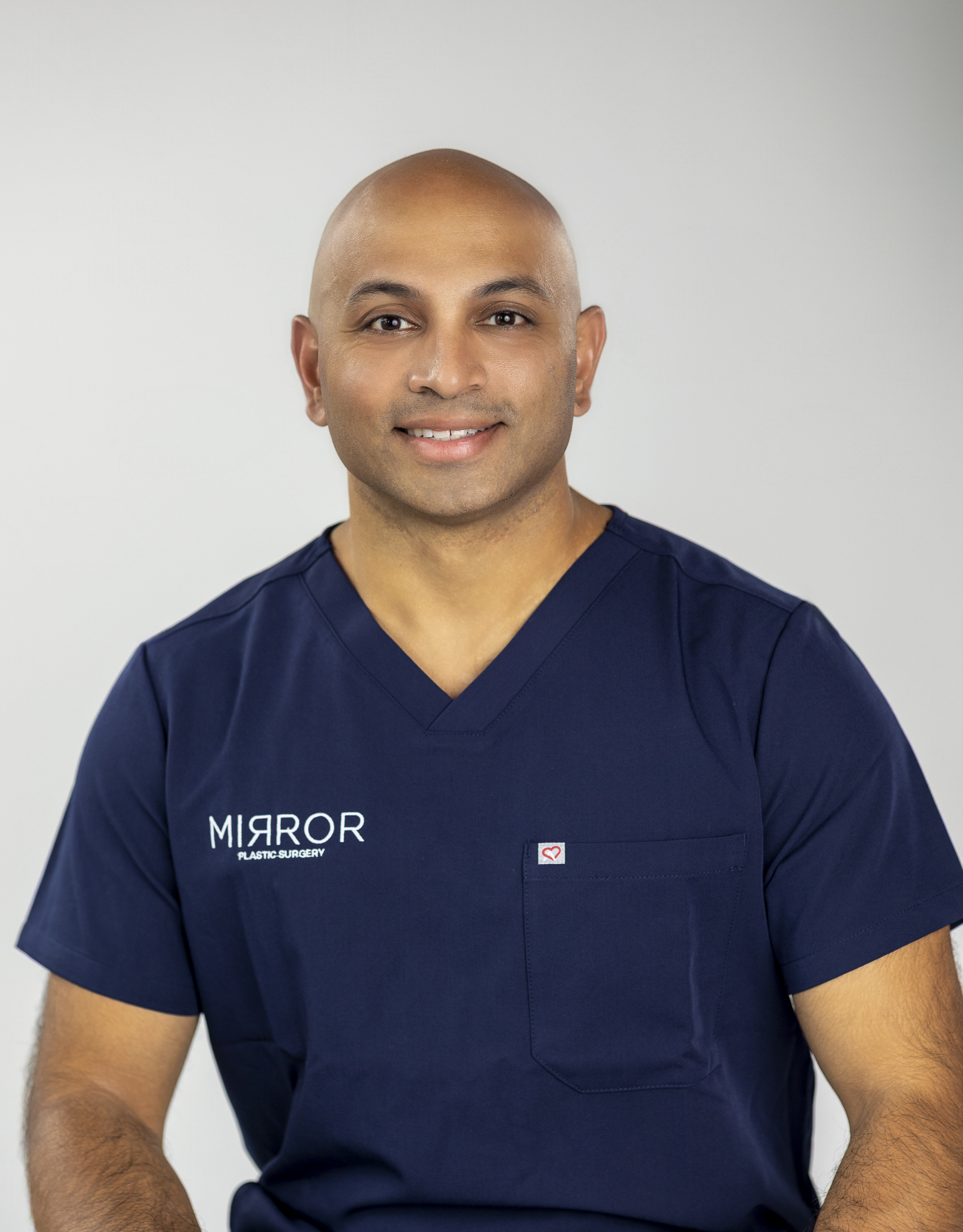
Newsweek has named Dr. Akash to America’s Best Plastic Surgeons list for two consecutive years. He serves on the Next Generation Editorial Board of the Aesthetic Surgery Journal and has testified before the FDA on implant safety. Academic roles such as peer-reviewed publications and invited teaching at national society courses demonstrate ongoing engagement with evolving techniques and safety standards. These credentials help patients judge a surgeon’s expertise in a technically demanding procedure like facial fat grafting.
To fully interpret these qualifications and follow the technical discussions that occur during consultation, patients benefit from knowing the core terms used in fat grafting research and surgeon explanations.
Key Terms in Facial Fat Grafting
The following terms appear frequently in both provider communications and published research on facial fat grafting:
- Fat survival / graft retention: The percentage of transferred fat volume that persists at a defined follow-up point. Published studies report a wide range of survival rates depending on site and follow-up duration, with the midface often performing toward the higher end of that range.1
- Stromal vascular fraction (SVF): A mixed cell population isolated from fat that includes adipose-derived stem cells (ADSCs), endothelial progenitors, and pericytes. Enriching fat grafts with ADSCs can improve survival rates and may reduce the need for repeat procedures.
- Overfill ratio: The deliberate injection of a volume greater than the desired final result to offset expected resorption. Surgeons may overfill to account for this loss, although very dense packing increases the risk of fat necrosis and oil cysts.
- Donor-site selection: The anatomical area from which fat is harvested. The inner thigh and lower abdomen are common donor sites because they often yield fat with good cell viability when collected with gentle technique.
- Microdroplet injection: Injection of approximately 0.1 mL per pass placed in multiple tissue planes creates a lattice of tiny fat threads that improves plasmatic imbibition and neovascularization. This pattern maximizes the surface area available for new capillaries to grow into the graft.
How Cheek Fat Transfer Is Performed Today
Modern facial fat grafting has moved beyond simple reinjection of centrifuged fat. Surgeons now use site-specific, multilayer protocols that match differently processed fat products to the needs of each tissue layer. Deeper layers receive more structural fat for support, while superficial layers may receive more refined fat to enhance skin quality.
Research shows that SVF-enriched grafts can provide better fat retention than conventional grafting. Demand for autologous volume restoration continues to grow as patients look for natural-feeling results without permanent foreign-body implants.
Decision Factors for Cheek Fat Grafting Candidates
Candidacy for cheek augmentation fat grafting depends on several anatomical and lifestyle variables. The following factors shape an individualized evaluation:
- Volume of midface loss: Patients with moderate to significant malar deflation often benefit most from fat grafting. Mild volume loss may be managed effectively with fillers alone.
- Donor-site availability: Adequate subcutaneous fat at the abdomen, flanks, or inner thigh is needed for harvest. Very lean patients may not have enough donor volume for meaningful cheek augmentation.
- Smoking status and wound healing: Facial fat grafting may not be appropriate for individuals who actively smoke, are planning significant weight loss, or have conditions that impair wound healing. These factors can reduce graft survival and increase complication risk.
- Retention expectations: Only a portion of the injected fat develops a permanent blood supply. The body reabsorbs the remaining fat over three to six months, so the final result looks smaller than the early post-procedure appearance. Patients who want larger changes may need a second session to reach their goals.
- Recovery timeline: Most patients experience bruising and swelling for 7 to 14 days. Final results are usually assessed at 6 to 12 months, once volume and contour have stabilized.
- Weight stability: Grafted fat is metabolically live tissue that responds to significant weight gain or loss after the procedure. Patients planning major weight changes should discuss timing with their surgeon so the grafted fat can be placed when weight is relatively stable.
- Revision planning: Many patients achieve their goals with a single session. Some need a second session because of partial fat resorption, and in select cases a staged plan is discussed from the beginning.
Comparing Cheek Augmentation Approaches
Three primary approaches restore cheek volume: autologous fat grafting, surgical implants, and injectable fillers. Each option has a different balance of invasiveness, longevity, and maintenance needs. The table below compares these approaches on factors that most affect day-to-day experience and long-term commitment.
| Approach | Invasiveness | Longevity | Maintenance |
|---|---|---|---|
| Fat Grafting | Surgical (harvest and injection), general or IV sedation, dual-site recovery | Long-term retention of transferred fat varies, surviving fat is permanent1 | A second session may be needed at 6–12 months, no ongoing repeat treatments once stable |
| Cheek Implants | Surgical, intraoral or lower-eyelid incision, foreign body placement over bone | Lifelong fixed volume, no biological resorption | No repeat treatments, complications can occur and removal requires surgery |
| Dermal Fillers (HA / Sculptra) | Non-surgical injection, minimal downtime | HA fillers last 9–18 months while Sculptra results typically last 2–2.5 years after a full treatment series1 | Approximately 2–10 repeat visits over 5 years, HA fillers dissolvable with hyaluronidase |
Fat grafting works well for patients who want diffuse, soft, natural-feeling volume with long-term durability and no permanent foreign material. Implants are more often chosen for areas that need defined skeletal projection, while fat grafting suits diffuse volume restoration where a soft, blended transition is preferred. Fillers remain a good choice for mild volume loss or for patients who prefer reversibility and no surgical recovery.
Common Misconceptions and Realistic Limitations
Several misconceptions about cheek fat transfer can create unrealistic expectations if they are not addressed clearly.
Immediate results reflect final outcomes. Early swelling and overfill make the cheeks look fuller than the final result during the first several weeks. A 2025 five-year follow-up study confirmed durable volume and satisfaction at long-term follow-up. The stabilization process still takes three to six months, and surgeons usually make final assessments at six to twelve months.
All fat survives permanently. Published resorption rates for autologous fat grafts range from 20% to as high as 90% depending on technique and setting. This wide range reflects differences in harvesting trauma, processing method, injection technique, and patient biology. No surgeon can promise a single exact retention number for every patient.
Any injector can perform facial fat grafting safely. A 2024 systematic review identifies overall complication rates as low in experienced hands, with complication risk concentrating in under-experienced injectors and high-risk facial zones. The midface has complex vascular anatomy, so safe fat grafting requires detailed knowledge of injection planes and careful cannula technique.
Discuss your options with Dr. Akash to determine whether fat grafting, fillers, or implants best match your anatomy and realistic retention expectations.
Frequently Asked Questions
How long do the results of cheek augmentation fat grafting last?
Fat that successfully establishes a blood supply after transfer behaves like native fat and is considered permanent.1 Not all transferred fat survives the early integration phase, so the final retained volume is lower than the injected volume. Published data shows variable long-term retention, with the cheeks and midface often performing toward the higher end of reported ranges because of the region’s rich blood supply.1 Volume usually stabilizes between three and six months, and surgeons typically perform formal assessments at six to twelve months. The weight-stability considerations discussed earlier apply throughout the life of the graft, since the transferred fat remains metabolically active.
What is the recovery timeline after cheek fat grafting?
Recovery involves two areas: the donor site, usually the abdomen or inner thigh, and the cheeks. Most patients notice bruising and swelling at both sites during the first week. Visible cheek bruising usually resolves within 10 to 14 days, although mild swelling can last several weeks. Surgeons often restrict strenuous activity for two to four weeks, and compression garments may be recommended at the donor site.
Patients should avoid sun exposure and direct pressure on the cheeks during early healing. Because Mirror Plastic Surgery performs only one to two surgeries per day, post-operative monitoring and follow-up communication are built into the care model rather than handled in a high-volume setting.
How do I evaluate whether a surgeon is qualified to perform facial fat grafting?
Start by verifying board certification through the American Board of Medical Specialties website. The ABPS requirements described earlier ensure that certified surgeons have completed rigorous training and examinations. Beyond board certification, look for fellowship training in aesthetic or facial surgery, which signals focused advanced training.
Review the surgeon’s published work, society memberships, and hospital privileges, since hospital credentialing adds an independent verification step. Ask how many facial fat grafting procedures the surgeon performs each year, and request before-and-after photos of patients with similar anatomy. Confirm that the facility is accredited by AAAASF, AAAHC, or The Joint Commission.
What are the most common risks and complications of cheek fat transfer?
The most common side effects are bruising and swelling at both donor and recipient sites, which usually resolve on their own. Less common complications include contour irregularities, uneven fat survival, palpable nodules, and undercorrection that may need a touch-up session. Overcorrection that requires steroid injection or small-volume liposuction occurs less often.
Fat necrosis and lipogranuloma formation are possible but uncommon in experienced hands. The most serious documented risk is intravascular injection causing fat embolism, which is rare and reported more often in the glabellar and temple regions. The cheeks and midface carry lower risk than periorbital areas because the tissue is thicker and better vascularized. Choosing a board-certified plastic surgeon in an accredited facility significantly lowers the chance of serious complications.
Can cheek fat grafting be combined with other facial procedures?
Surgeons frequently combine fat grafting with facelift, blepharoplasty, or brow lift procedures. Volume restoration and tissue repositioning address different aspects of facial aging, so pairing them can create more complete rejuvenation. Combining procedures also increases total surgical time and physiologic stress, which can raise complication risk.
Mirror Plastic Surgery generally advises against stacking too many procedures in a single session. During a comprehensive consultation, Dr. Akash evaluates which combination, if any, makes sense based on anatomy, health status, and recovery capacity, with safety taking priority over efficiency.
Next Steps in Evaluating Cheek Augmentation Options
Cheek augmentation fat grafting has a solid evidence base supporting its role in midface volume restoration. Reported retention rates often fall in the 40 to 70 percent range, and experienced surgeons show low complication profiles with the potential for permanent results.1 At the same time, variable fat survival, the need for realistic expectations, and the technical demands of multilayer injection make surgeon selection and individualized planning crucial.
Evaluating a provider should include verification of ABPS board certification, review of fellowship training and surgical volume, confirmation of accredited facility use, and a consultation structure that allows enough time for anatomical education and honest discussion of limitations. Patients in the Tampa Bay area who want this level of rigor will find it at Mirror Plastic Surgery.
Begin your evidence-based evaluation at Mirror Plastic Surgery in St. Petersburg, FL.
1 Results may vary from person to person. Editorial content, before and after images, and patient testimonials do not constitute a guarantee of specific results.