
Written by: Ellie Pranckevicius, FNP-BC, Aesthetic Nurse Practitioner & Aesthetic Injector | Facial Restoration & Regenerative Injectable Specialist, Mirror Plastic Surgery | Last updated: July 4, 2026
Key Takeaways for Botox Patients in Tampa Bay
- Florida law requires active state licensure and a documented physician collaborative agreement for legal Botox administration. Estheticians and medical assistants are not authorized to inject.
- Hands-on anatomical training that covers facial musculature, danger zones, and complication management directly affects safety and natural-looking results.1
- A thorough full-face consultation that evaluates muscle patterns, symmetry, and treatment history consistently outperforms rushed, template-based appointments common in high-volume clinics.
- Board-certified plastic surgeons and FNP-BCs practicing in plastic surgery settings offer strong escalation pathways and surgical backup for managing complications.
- Patients seeking safe, natural Botox results in Tampa Bay can schedule a personalized consultation with Ellie at Mirror Plastic Surgery to review credentials and receive an anatomy-first treatment plan.
Licensing and Training Requirements for Tampa Bay Botox Injectors
In Florida, legal authority to administer Botox comes from a state-issued professional license, not from a training certificate. Florida ARNPs must hold a written collaborative practice agreement with a supervising physician that specifically names the physician and authorizes neuromodulator administration under Florida Statute 464.012, while PAs operate under Florida Statute 458.347. Verbal or informal arrangements do not meet legal requirements.
Licensed estheticians and medical assistants cannot legally inject Botox in Florida. A supervising physician does not need to be physically present during injections but must remain available by phone or electronic communication and provide documented oversight.
Beyond verifying that an injector holds the proper license and collaborative agreement, patients should also evaluate the quality of their training. Professional society credentials from organizations such as the American Academy of Facial Esthetics (AAFE) and the American Society for Aesthetic Plastic Surgery (ASAPS) carry more weight than simple course-completion certificates. The standard of care requires documented training in facial anatomy, injection techniques, patient assessment, and complication management. Hands-on training with live patient models is the gold standard, because online-only courses cannot develop the tactile skills, muscle memory, or clinical judgment required for independent practice.
When evaluating any Tampa Bay injector, start by confirming active Florida licensure and a documented physician collaborative agreement, which establish legal authority. Next, verify hands-on anatomical training, which supports technical competence and safety. Finally, confirm malpractice insurance that explicitly covers aesthetic injectables, so you are protected if complications occur.
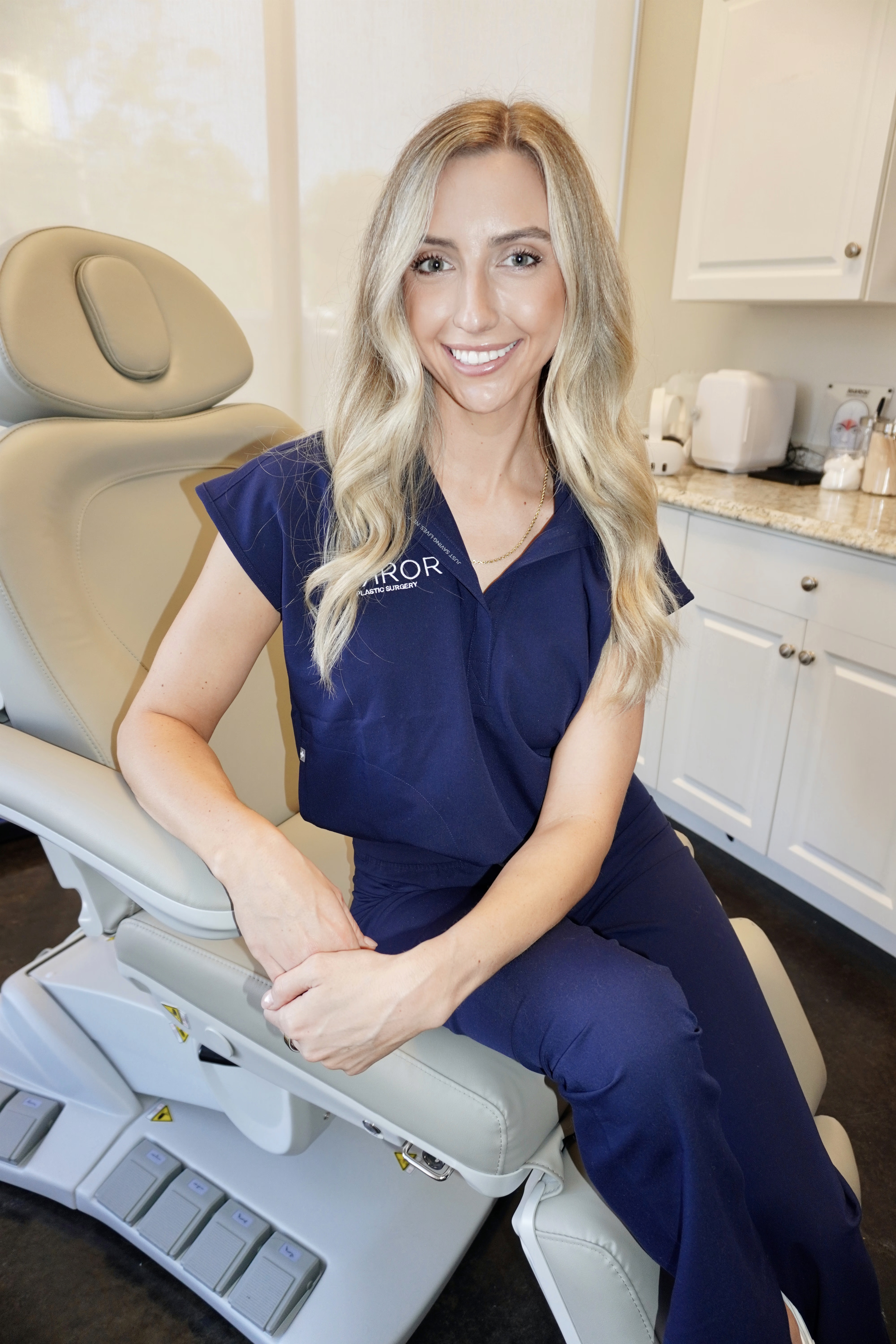
How to Identify a Reputable Botox Injector in Tampa Bay
A reputable injector’s process begins before the first injection. The consultation should include a full-face assessment that evaluates muscle movement patterns, facial symmetry, volume distribution, and skin quality, not just the isolated area a patient mentions. Dosing for neuromodulators is determined by muscle strength and movement patterns, treatment area size, desired level of relaxation, and the patient’s cosmetic treatment history, not a universal conversion formula.
Anatomical knowledge directly influences safety outcomes. Botox danger zones contain sensitive muscles, major blood vessels, and delicate nerves, and incorrect injection in these zones can cause the neurotoxin to spread to unintended muscles, resulting in complications including a crooked smile, speech difficulties, or challenges with eating. Specific technical standards matter. In the forehead, injectors must stay at least 1.5 to 2 centimeters above the orbital rim to avoid eyebrow droop. In the glabella, injection should occur at least one centimeter above the orbital rim to help prevent ptosis.
The most common complication in glabellar botulinum toxin treatment is blepharoptosis, with an estimated frequency of 1–5%, per the NIH review in PMC7874868. The risk differential between experienced and novice injectors concentrates in these anatomical danger zones, which makes documented training and procedural volume meaningful selection criteria.
Because complications can occur even with experienced injectors, follow-up care becomes an equally important indicator of practice quality. High-volume clinics often lack individualized patient relationships and follow-up care, leaving patients to manage complications independently. A reputable provider schedules follow-up appointments, tracks muscle response over time, and adjusts dosing based on your individual pattern.
Comparing Botox Injectors and Dermatologists in Tampa
The comparison between injector types in Tampa Bay starts with each provider’s primary training scope. Dermatologists are medical doctors who specialize in diagnosing and treating skin, hair, and nail conditions, with cosmetic scope focused on skin and surrounding tissues. The American Board of Plastic Surgery requires a minimum of 3 years of Plastic Surgery Training for Independent programs and 6 years for Integrated programs, which provides extensive training in both surgical and non-surgical procedures.
In non-surgical aesthetics, the quality of physician oversight, including active responsibility for protocols, provider credentialing, adverse-event management, and escalation pathways, matters more for patient safety than the specific degree held by the injector. An FNP-BC operating within a plastic surgery practice, under the medical direction of a board-certified plastic surgeon, benefits from the same escalation infrastructure as a physician-led dermatology clinic, with the added advantage of surgical backup for complications that require structural intervention.
Current Botox Trends and Patient Expectations in 2026
The global botulinum toxin market was valued at USD 10.2 billion in 2025, and Botox remains the most popular minimally invasive cosmetic procedure in the United States, with over 7.4 million treatments performed annually.
The dominant patient preference in 2025–2026 is for natural-looking results that preserve facial expressions rather than the frozen or overdone appearance associated with earlier eras of cosmetic injectables. Many experienced injectors now use a “less is more” philosophy, applying lower doses distributed more delicately across strategic facial points and tailoring placement to individual anatomy instead of standardized templates.
Baby Botox, also called micro-dosing, uses 30–50% lower doses than standard treatments to soften lines while preserving natural movement and is the fastest-growing entry point for patients in their late 20s and early 30s seeking preventative treatment. The frozen look reflects dosing and technique errors, not an inherent property of the product. Skilled injectors create results where observers notice that the patient appears well-rested, not that they received injections.1
Key Factors When Choosing Your Injector
Patients who have experienced rushed 15-minute appointments, asymmetry after treatment, or results that looked “done” rather than refreshed often share a common root cause: insufficient pre-treatment assessment. High-volume medspas and chain locations typically assign patients to whichever injector is available, which leads to different aesthetic eyes, techniques, and approaches to dosing and placement at each visit.
The criteria that most reliably predict safe, natural outcomes start with legal authority, including active Florida licensure and a documented physician collaborative agreement. That legal foundation should be supported by verifiable hands-on anatomical training that covers facial musculature, nerve pathways, vascular anatomy, and danger zones. Technical competence alone is not enough, so the injector also needs to allow consultation time for a full-face assessment rather than isolated-area treatment. When complications arise, a clear management protocol with escalation pathways protects patient safety. Long-term results then depend on a maintenance plan that tracks individual muscle response over time instead of applying a fixed protocol at every visit.
Injector expertise and individualized treatment planning determine neuromodulator outcomes more than the choice between specific products. A provider who selects product based on your anatomy, treatment history, and goals, rather than a single-brand contract, offers a structural advantage in achieving consistent results.
Common Misconceptions About Botox Injectors
High appointment volume does not automatically equal expertise. A provider who completes 25 appointments per day using a standardized template accumulates repetitions, not nuanced anatomical judgment. High-volume “mill” practices may lack depth in patient assessment and follow-up care, while concierge providers prioritize thorough assessment, individualized dosing strategies, and long-term relationship building.
A second persistent misconception is that all neuromodulators perform identically and are interchangeable at a fixed ratio. The individualized dosing approach described earlier, based on muscle strength, movement patterns, and treatment history, applies across all neuromodulator products. No universal conversion ratio exists. Botox, Dysport, Xeomin, Daxxify, and Jeuveau each have distinct molecular profiles that affect diffusion radius and duration, and a qualified injector selects among them based on clinical indication rather than availability or habit.
A third misconception is that a training certificate confers legal authority. There is no single federally mandated Botox certification in the United States; as discussed earlier, authority comes from state licensure and collaborative agreements, not training certificates alone. Certificates document education. The license, the collaborative agreement, and the documented training together form the legal and clinical foundation.
High-Volume Clinics Compared to Boutique Anatomy-First Practices
High-volume aesthetic clinics structure care around treating 15–25 patients per day, supported by custom EMR systems designed to minimize charting time. This model prioritizes throughput, so assessment depth, product selection flexibility, and follow-up continuity often become secondary to operational efficiency.
Boutique, anatomy-first practices invert that priority structure. Concierge-style providers maintain continuity by tracking how a patient’s muscles respond to Botox or Dysport, where the patient naturally compensates or overexpresses, and the patient’s full treatment history, especially with filler. A full-face assessment on every new patient helps ensure any treatment fits the face as a whole rather than addressing isolated concerns.
The practical difference for patients includes individualized dosing, product selection based on anatomy rather than inventory, follow-up appointments that adjust the plan based on observed response, and a single consistent provider who accumulates knowledge of your specific facial dynamics over time.1 Follow-up care is a critical part of aesthetic medicine, and that support is often missing when treatments occur in high-volume settings.
Experience the anatomy-first difference and request your full-face assessment with Ellie today.
Credential Checklist for Tampa Bay Botox Providers
The table below compares provider types available in the Tampa Bay market across four objective dimensions. All data points come from Florida scope-of-practice statutes and training standards cited throughout this article.
| Provider Type | Florida Legal Authority | Anatomical Training Depth | Complication Escalation Pathway |
|---|---|---|---|
| Board-Certified Plastic Surgeon (MD/DO) | Independent prescribing and injection authority, no collaborative agreement required | Minimum 6-year residency covering surgical and non-surgical facial anatomy | Full surgical and medical escalation, operating-room access |
| Board-Certified Dermatologist (MD/DO) | Independent prescribing and injection authority, cosmetic scope requires additional fellowship training | Cutaneous anatomy primary, cosmetic injectable depth varies by fellowship | Medical escalation, surgical referral required for structural complications |
| FNP-BC in Plastic Surgery Practice (e.g., Ellie Pranckevicius, Mirror Plastic Surgery) | Florida nurse practitioner license with physician oversight in plastic surgery practice | 600-hour esthetics licensure, Neuroscience ICU clinical background, MSN from University of South Florida, and hands-on anatomical training covering muscles, nerve pathways, vascular anatomy, and danger zones | Direct escalation to on-site board-certified plastic surgeon (Harvard/Johns Hopkins/MEETH-trained), full surgical backup available |
| ARNP in Standalone Medspa | Florida Statute 464.012 ARNP licensure with written physician collaborative agreement required | Varies by program, hands-on live-model training is gold standard but not universally required | Dependent on medical director availability and practice protocols, surgical escalation requires external referral |
Frequently Asked Questions
Am I a good candidate for Botox in Tampa Bay?
Most adults in good general health who have dynamic facial lines, meaning wrinkles caused by muscle movement rather than static skin laxity, are candidates for neuromodulator treatment. Contraindications include pregnancy, breastfeeding, certain neuromuscular disorders, and active infection at the injection site. A thorough consultation that reviews your medical history, current medications, and facial anatomy is the appropriate starting point for determining candidacy. Ellie conducts a full-face assessment at every new patient consultation to evaluate whether neuromodulators, dermal fillers, or a combination approach best addresses your specific anatomy and goals.
How long do Botox results last, and what affects duration?
Most patients see results lasting three to four months for standard dosing, with Daxxify, a newer neuromodulator available at Mirror Plastic Surgery, demonstrating longer duration in clinical use.1 Individual factors including muscle mass, metabolism, treatment area, and dosing strategy all influence how long results persist. Patients who receive consistent maintenance treatments over time often find that muscle activity gradually diminishes, which can extend the interval between appointments.1 Ellie tracks each patient’s response history to refine dosing and timing recommendations at every follow-up.
What is the difference between Botox, Dysport, Xeomin, Daxxify, and Jeuveau?
All five are FDA-approved botulinum toxin type A products that temporarily relax targeted facial muscles, but they differ in molecular structure, onset speed, diffusion radius, and duration. Dysport tends to have a faster onset and slightly wider diffusion, which can make it well-suited for larger treatment areas. Xeomin is a “naked” neurotoxin without accessory proteins, which some patients prefer for repeat treatments. Daxxify uses a peptide-based formulation that extends duration. Jeuveau is a newer entrant positioned similarly to Botox. The selection among these products should be based on your anatomy, treatment area, and history, not brand preference or clinic inventory. Ellie remains product-neutral and selects based on clinical indication.
What should I expect during recovery after Botox?
Botox injections involve minimal downtime, and most patients return to normal activities immediately. Minor redness, swelling, or pinpoint bruising at injection sites typically resolves within 24 to 48 hours. Patients are generally advised to avoid lying flat, strenuous exercise, and facial massage for four hours after treatment. Full results are typically visible within seven to fourteen days. Ellie schedules follow-up appointments to assess results and address any asymmetry or dosing adjustments before the next treatment cycle.
How is Mirror Plastic Surgery different from a high-volume medspa?
Mirror Plastic Surgery operates on a concierge medicine model that emphasizes time, assessment depth, and continuity. Initial consultations extend up to an hour and include a top-to-bottom facial assessment that evaluates emotional drivers, anatomical findings, and long-term goals before any treatment is recommended. Ellie prioritizes restoration of inherent facial characteristics before considering volume augmentation, which helps prevent the overdone appearance that results from isolated, single-area injections. The practice is supplier-neutral, so product selection is based on your anatomy rather than a brand contract. All non-surgical treatments are backed by the surgical expertise of Dr. Akash Chandawarkar, a Harvard-educated, Johns Hopkins-trained, fellowship-trained plastic surgeon, which provides a direct escalation pathway that standalone medspas typically cannot offer.
Next Steps for Botox Treatment at Mirror Plastic Surgery
Selecting the best board-certified Botox injector in Tampa Bay requires evaluating Florida licensure, documented anatomical training, consultation depth, product neutrality, and complication management infrastructure, not marketing claims or appointment volume. Ellie Pranckevicius, FNP-BC, brings a documented combination of 600-hour esthetics licensure, four years of Neuroscience ICU clinical experience at Tampa General Hospital, and FNP-BC credentialing from the University of South Florida, all practiced within a plastic surgery setting under the medical direction of a fellowship-trained plastic surgeon. That combination of credentials, clinical background, and institutional support forms the structural basis for safe, natural, anatomy-first neuromodulator outcomes.
Book your consultation with Ellie at Mirror Plastic Surgery, located at 780 4th Ave S, St. Petersburg, FL 33701. Call or text 727-361-6515, or email hello@mirrorplasticsurgery.com to schedule your full-face assessment.
Disclaimer: Results may vary from person to person. Editorial content, before and after images, and patient testimonials do not constitute a guarantee of specific results.
1 Results may vary from person to person. Editorial content, before and after images, and patient testimonials do not constitute a guarantee of specific results.