

Written by: Dr. Akash Chandawarkar, Board Certified Plastic Surgeon, Mirror Plastic Surgery | Last updated: September 9, 2026
Key Takeaways
- Nasolabial folds form from midface volume loss, ligament laxity, and repetitive muscle movement, rather than simple surface wrinkles.
- A cheek-first structural approach restores support before any direct fold injection. This strategy produces more natural results and reduces total product needed.1
- Board-certified plastic surgeons bring the anatomical expertise required to minimize vascular risks and avoid the overfilled “pillow face” look.
- Both hyaluronic acid and biostimulatory fillers can be effective. Product choice depends on fold severity, skin quality, and the need for reversibility.
- Schedule a personalized consultation at Mirror Plastic Surgery to receive an anatomy-first treatment plan from Dr. Chandawarkar.
Why Nasolabial Folds Form As We Age
The nasolabial fold is not a simple wrinkle. It is the boundary line where cheek tissue ends and the upper lip begins, and it deepens with age due to three converging structural changes:
- Deflation of deep midface fat pads. Starting around age 25, collagen production drops roughly 1% per year, and the fat compartments that give the midface its youthful projection begin to shrink and descend.
- Stretching of retaining ligaments and bone resorption. Bone volume loss in the upper jaw and eye socket rim, combined with ligament laxity, allows overlying soft tissue to sag downward. That tissue then drapes over the fixed muscular boundary of the fold.
- Repetitive muscle movement. Muscle fibers of the levator labii superioris group pass through the orbicularis oris and attach directly into the dermis, anchoring the fold in place even as the tissue above it descends.
Genetics, sun damage, smoking, and significant weight loss can accelerate this process. Folds are graded clinically from Grade 1 (barely visible) to Grade 5 (very deep, hanging fold). That severity grade guides whether midface structural support alone is sufficient or whether direct fold treatment is also warranted.
How Dermal Fillers Improve Nasolabial Folds
Dermal fillers restore volume by attracting water and providing mechanical lift within the tissue plane where they are placed. The immediate correction appears the same day.1 Structural benefit develops over the following weeks as the gel integrates with surrounding tissue.1
The key strategic decision is where to place the filler. A 2026 review in the Journal of Cosmetic Dermatology describes a cheek-first approach that restores midface support before directly filling the crease. The fold often reflects volume loss or structural support failure higher in the face rather than an isolated problem at the crease itself.
When the cheek above the fold has deflated and descended, rebuilding that midface scaffold lifts the overlying skin and softens the fold naturally. This often reduces the amount of product needed directly in the crease.1
The recommended sequence is to restore midface support first, reassess the fold after swelling settles, and then add a conservative amount directly into the crease only if it remains bothersome. Older techniques focused on packing filler directly into the fold. That strategy is the main reason for the puffy, doughy “pillow face” appearance that many patients want to avoid.
Facial aging involves more than volume loss. It includes skeletal remodeling, fat compartment deflation and redistribution, dermal thinning, altered tissue elasticity, and changes in ligament-associated support systems. Applying volumetric logic alone to a structural problem can increase fullness without restoring youthful facial geometry.
At Mirror Plastic Surgery, Dr. Chandawarkar’s whole-face assessment identifies the dominant cause of each patient’s fold before a single unit of product is placed. If you are ready to have your own facial anatomy assessed, schedule a consultation with Ellie to receive a personalized, anatomy-first treatment plan from Dr. Chandawarkar.
Dermal Filler Options For Nasolabial Folds
There is no single “best” filler. The right product depends on fold severity, skin quality, the dominant cause of the fold, and the patient’s goals. The FDA-approved options fall into three main categories:
| Filler Category | Examples | How It Works | Typical Longevity |
|---|---|---|---|
| Calcium Hydroxylapatite (CaHA) | Radiesse, Radiesse+ | Immediate lift from gel carrier, plus collagen stimulation as microspheres dissolve | Often cited as 12–18 months, with approximately 14–15 months in active facial tissues and potentially up to 18–24 months in more static locations1 |
| Poly-L-Lactic Acid (PLLA) | Sculptra | Collagen stimulation over time; results build gradually across multiple sessions | Up to 25 months1 |
Biostimulators have complementary and overlapping roles and provide delayed collagen-mediated tissue remodeling. The practical question is which anatomical and biological problem is dominant for a given patient.
A 2026 multicenter randomized trial comparing PLLA and HA in 208 adults found that correction rates were statistically similar at 4 and 12 weeks, but diverged significantly by 24 weeks onward. PLLA maintained a 55.56% effective correction rate at 120 weeks versus 25.00% for HA.1 HA, however, offers the critical safety advantage of reversibility with hyaluronidase. That factor weighs heavily in Dr. Chandawarkar’s treatment planning, particularly near high-risk vascular zones.
Dr. Chandawarkar holds an advisory board position with Merz Aesthetics, the manufacturer of Radiesse, and with Tiger Aesthetics. Mirror Plastic Surgery’s supplier-neutral philosophy means product selection is always driven by patient anatomy and goals, rather than quotas or commissions.
Nasolabial Filler Procedure, Comfort, And Recovery
A typical nasolabial fold filler session at Mirror Plastic Surgery begins with an in-depth facial assessment, not a rushed intake. Dr. Chandawarkar evaluates the whole face, identifies the structural drivers of the fold, and discusses the treatment sequence before any product is opened.
The injection itself involves topical or injected numbing, followed by precise placement using fine needles or blunt-tip cannulas depending on the target plane and vascular risk profile. The most common post-treatment reactions, such as bruising, redness, swelling, tenderness, and firmness, are mild and transient, typically resolving within 30 days1. Most patients return to normal activities the same day.
Standard aftercare includes avoiding strenuous exercise, excessive heat, and firm pressure on the treated area for 24–48 hours. Results are visible immediately for HA fillers.1 Biostimulatory results develop gradually over several weeks as collagen production increases.1
How Much Nasolabial Fold Filler Costs
Every patient at Mirror Plastic Surgery receives a personalized quote during their consultation. The right treatment plan, and therefore the cost, depends entirely on individual anatomy, fold severity, and goals. No two faces are the same, so no two treatment plans should be identical.
The main drivers of cost are provider expertise, product choice, and volume required. Master injectors and board-certified plastic surgeons charge more per syringe than less credentialed providers, and pricing below a certain threshold is a red flag for inexperience or non-genuine product. A cheek-first approach may require more product upfront, but it typically produces more natural, longer-lasting results. It also reduces the cumulative volume needed over time.
The most expensive syringe is not always the most expensive treatment. A filler that costs more per unit but lasts twice as long can cut annual spend significantly. Dr. Chandawarkar’s consultations give patients a clear, honest picture of what they need, what it will cost, and what they can expect, with no upselling and no pressure.
Request a personalized quote with Ellie based on your anatomy and goals.
Risks Of Nasolabial Filler And How To Reduce Them
Common side effects such as bruising, swelling, temporary firmness, and tenderness are well-documented and self-resolving. A 2021 systematic review reported transient lumpiness in up to 43% of cases, tenderness in up to 41%, swelling in up to 34%, and bruising in up to 29%. These effects are expected and manageable.
The rare but serious risk is vascular occlusion. The nasolabial and perinasal zone sits immediately adjacent to the angular artery, the superior labial artery, and the nasal alar arteries. This anatomy makes the area high risk for vascular compromise if filler enters or compresses one of these vessels. Warning signs include sudden skin blanching, a mottled livedo pattern, disproportionate pain, or any visual changes. These signs require immediate intervention.
When vascular occlusion is suspected, management must begin immediately: stop injecting, administer high-dose hyaluronidase for HA fillers, apply warm compresses, and escalate urgently if ischemia does not improve. For HA fillers, hyaluronidase can dissolve the product within minutes. Biostimulatory fillers like Radiesse and Sculptra have no equivalent reversal agent. That reality is a critical factor in product selection near high-risk zones.
Every facial filler zone carries some vascular risk, even when the injection site appears structurally logical. To reduce risk, injectors use conservative aliquots, low-pressure injection, slow delivery, continuous reassessment, and keep hyaluronidase immediately available. This is why choosing a board-certified plastic surgeon with deep anatomical knowledge is the single most effective risk-reduction strategy available. At Mirror Plastic Surgery, hyaluronidase is always on-site, and Dr. Chandawarkar’s surgical training keeps vascular anatomy central to every plan.
Alternatives To Dermal Fillers For Nasolabial Folds
Dermal fillers work well for many patients, yet they are not the only option. Some patients benefit more from treatments that target muscle activity, tissue quality, or skin laxity, depending on the dominant cause of the fold.
- Neuromodulators (Botox, Dysport, Daxxify, etc.). Botulinum toxin cannot be used for nasolabial folds because injecting it into the zygomaticus or levator muscles would weaken upper-lip elevators and cause a flat, asymmetric smile. Neuromodulators still play a valuable supporting role for dynamic lines elsewhere on the face.
- Biostimulatory treatments. Sculptra (PLLA) and Radiesse (CaHA) address volume loss by stimulating the body’s own collagen production. They suit patients with diffuse midface tissue quality deterioration more than those with a small, focal volume deficit.
- Energy-based devices. Radiofrequency, ultrasound, and laser treatments improve skin quality and mild laxity. They have weaker fold-specific evidence and function best as supporting treatments rather than standalone solutions for deep, volume-driven folds.
- Thread lifts. A 2018 systematic review of 12 papers on thread lifting concluded that little or no substantial evidence supporting efficacy and safety had been added over ten years. Threads may help in select cases but are not a primary recommendation for nasolabial fold correction.
- Surgical facelift. Patients with significant skin laxity and structural descent often achieve the most durable improvement with surgery. Dr. Chandawarkar will always communicate clearly when a surgical approach would serve a patient better than non-surgical options.
How To Choose A Provider For Nasolabial Filler
The injector matters more than the product. A highly trained provider using Restylane will outperform an undertrained provider using Juvéderm Voluma, and the same principle applies across every filler category.
Board-certified plastic surgeons bring a surgeon’s understanding of facial anatomy to every injection. They know the precise depth of the facial artery, the course of the angular artery, and the layered architecture of the midface fat compartments. This knowledge does not come from a weekend certification course. It reflects years of surgical training and direct anatomical experience.
A qualified provider conducts a comprehensive whole-face assessment before recommending any treatment. They explain the rationale behind every product and placement decision, keep hyaluronidase on-site, and maintain a clear emergency protocol. They also tell patients what they do not need.
At Mirror Plastic Surgery, Dr. Chandawarkar is known for this kind of honest, anatomy-first guidance. Consultations run up to an hour. The practice performs one to two surgeries per day by design, so every patient receives the full attention of the entire clinical team.
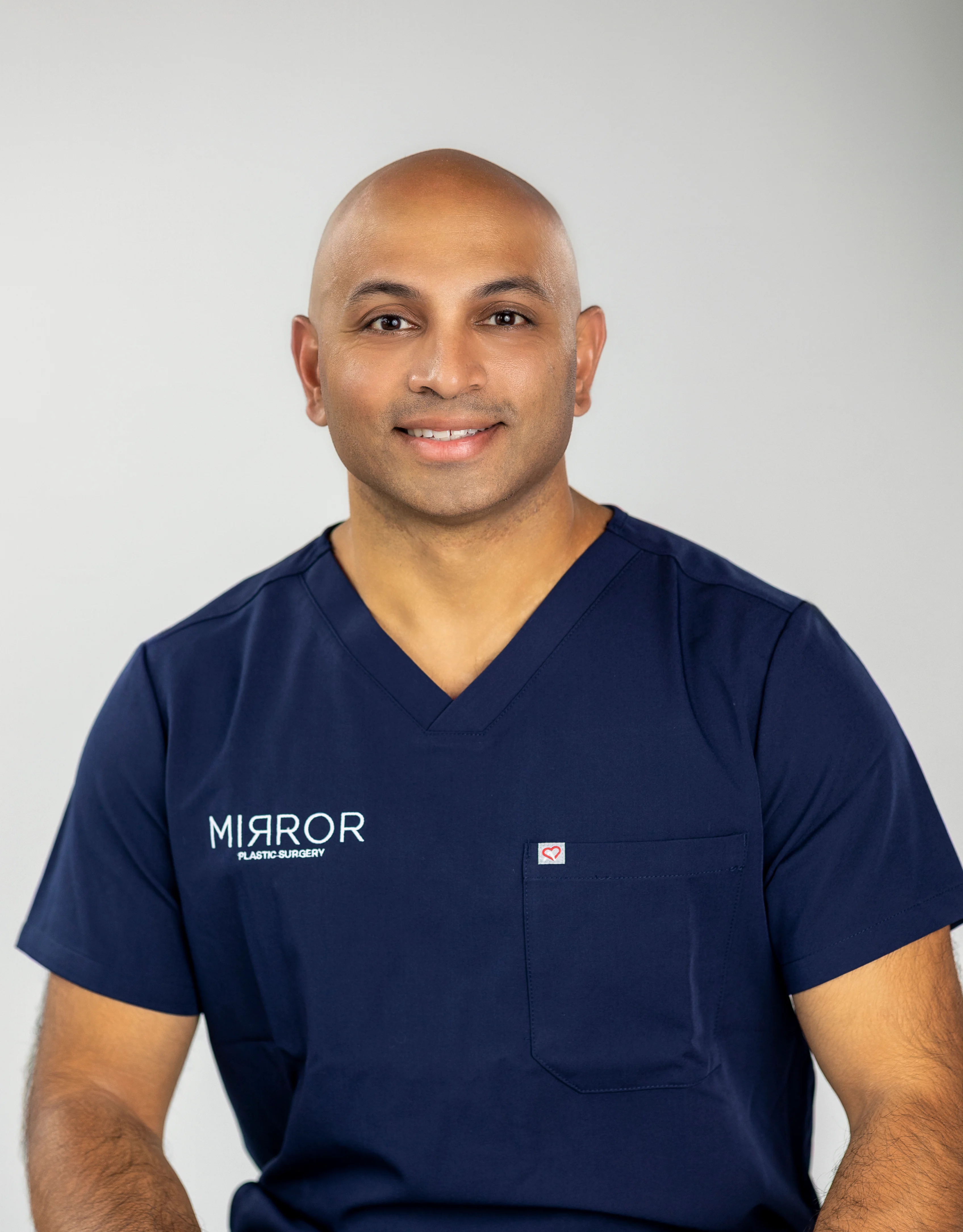
Arrange a consultation with Ellie and experience the difference a board-certified plastic surgeon’s assessment makes.
Frequently Asked Questions
Should You Put Fillers In Nasolabial Folds?
Many patients benefit from filler in this area, but the ideal plan depends on what is driving the fold. Mild folds caused primarily by midface volume loss often respond well to cheek or midface filler alone, without any direct fold injection. Moderate to deep folds typically benefit from a combination approach. Structural support is restored above the fold first, followed by a conservative amount placed directly in the crease if needed.
The goal is to soften the shadow the fold casts and restore a more rested, balanced appearance. The fold itself is a normal facial landmark. A board-certified plastic surgeon can assess which approach fits your specific anatomy.
How Painful Is Nasolabial Filler?
Most patients describe the experience as mild to moderate discomfort rather than significant pain. Modern filler formulations often contain lidocaine, and topical numbing cream is applied before treatment. The injection itself takes only a few minutes per side.
Some patients feel brief pressure or stinging during placement, which resolves immediately. Post-treatment tenderness is common for a day or two and is generally well-tolerated without prescription pain medication.
How Long Do Results Last?
Duration depends on the product used, the depth of placement, individual metabolism, and whether a cheek-first or direct-fold approach was taken. Hyaluronic acid fillers placed in the nasolabial fold typically last 9 to 18 months1, with resilient or high-cross-linked formulations trending toward the longer end.
Biostimulatory options like Sculptra can maintain correction for over two years as collagen production continues after the product itself has been absorbed. Deeper structural placements, such as cheek or midface filler, tend to last longer than superficial fold injections because the midface moves less than highly dynamic areas. Emerging MRI research also suggests that HA filler may persist and expand in tissue longer than previously understood, which reinforces the value of conservative, anatomy-guided dosing.
Can Nasolabial Folds Be Fixed Without Surgery?
Most patients can achieve meaningful improvement without surgery. Dermal fillers, particularly when used with a cheek-first structural strategy, can significantly soften nasolabial folds. Biostimulatory fillers add the benefit of improving underlying tissue quality over time.
Fillers cannot fully replicate the results of a facelift when there is significant skin laxity or structural descent. A thorough consultation with a board-certified plastic surgeon is the most reliable way to determine whether non-surgical treatment will achieve your goals or whether a surgical conversation is appropriate.
What Is “Pillow Face” And How Can You Avoid It?
Pillow face refers to an overfilled, puffy, unnatural appearance that results from placing too much filler, especially when injected too superficially or concentrated directly in the fold instead of distributed across the structural support zones of the face. It almost always reflects a strategy problem rather than a product problem.
The way to avoid pillow face is to work with a provider who uses a whole-face anatomical assessment, prioritizes conservative dosing, and focuses on improved support and natural contour instead of maximal local plumping. At Mirror Plastic Surgery, Dr. Chandawarkar’s philosophy is to restore what is there, rather than add volume for its own sake.
Are There Any Serious Risks?
Serious complications from nasolabial fold filler are rare but real. The most significant is vascular occlusion, which occurs when filler enters or compresses a blood vessel and can cause skin necrosis or, in rare cases, vision loss if filler travels into vessels connected to the eye. The nasolabial zone sits near the angular artery and superior labial artery, so anatomical knowledge is essential.
Choosing a board-certified plastic surgeon, confirming that hyaluronidase is on-site, and knowing the warning signs such as sudden skin blanching, severe pain, or any visual changes are the most important steps a patient can take. Hyaluronic acid fillers carry the additional safety advantage of reversibility, while biostimulatory fillers do not have an equivalent reversal agent.
Conclusion
Dermal fillers are among the most studied and effective non-surgical treatments available for nasolabial folds. Outcomes depend far more on the strategy and the surgeon than on the product in the syringe. A cheek-first, anatomy-driven approach by a board-certified plastic surgeon delivers natural, lasting results and avoids the overfilled appearance that many patients fear.
The right provider will assess the whole face, explain every decision, dose conservatively, and give honest guidance about what you do and do not need.
Schedule Your Consultation At Mirror Plastic Surgery
If you are considering dermal fillers for nasolabial folds, schedule a consultation with Dr. Akash Chandawarkar at Mirror Plastic Surgery in St. Petersburg, FL. Call or text 727-361-6515 or email hello@mirrorplasticsurgery.com to begin your journey toward natural-looking rejuvenation, or book a consultation with Ellie to experience what a surgeon’s eye and an hour of undivided attention can do for your results.
Disclaimer: Results may vary from person to person. Editorial content, before and after images, and patient testimonials do not constitute a guarantee of specific results.
1 Results may vary from person to person. Editorial content, before and after images, and patient testimonials do not constitute a guarantee of specific results.


