
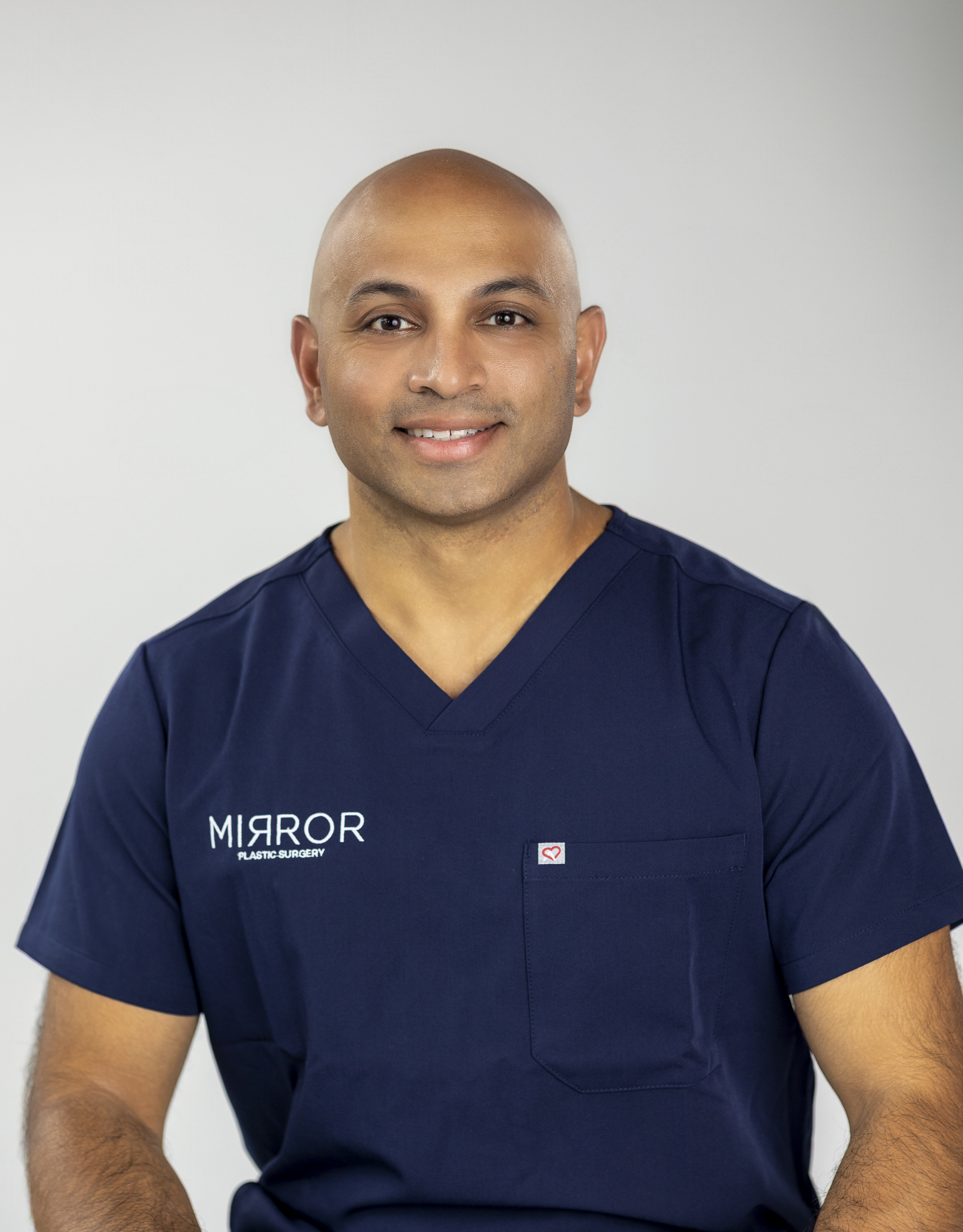
Written by: Dr. Akash Chandawarkar, Board Certified Plastic Surgeon, Mirror Plastic Surgery
Key Takeaways
- The Brazilian Butt Lift has shifted from the highest-mortality cosmetic procedure to a risk level similar to abdominoplasty when surgeons use subcutaneous-only fat placement with ultrasound guidance.
- Modern safety protocols call for fat placement only above the gluteal muscle fascia, use of blunt-tip cannulas, real-time ultrasound, and accredited facilities to reduce complications such as fat embolism.
- Recovery requires strict sitting and positioning rules for six weeks, followed by a gradual return to normal activity, with results settling between months three and six.
- About 60–80% of transferred fat survives long term when patients keep a stable weight; weight changes over 10–15 pounds usually explain volume changes after healing.1
- Choosing a board-certified surgeon who follows low-volume, ultrasound-guided protocols is essential. Schedule your personalized consultation at Mirror Plastic Surgery to review your goals and candidacy.
What Is a Brazilian Butt Lift?
A Brazilian Butt Lift is a body contouring procedure that removes fat from donor areas, typically the abdomen, flanks, or thighs, using liposuction. The fat is processed and then transferred into the buttocks to add volume and reshape contour. Unlike implants, BBL uses the patient’s own living tissue, so the result integrates with the body and responds to weight changes over time. The combination of liposuction and augmentation in one operation makes BBL one of the most comprehensive body contouring procedures available.
Dr. Akash’s Training and Evidence-Based BBL Care
Mirror Plastic Surgery’s lead surgeon, Dr. Akash, has an academic and clinical background that is uncommon in aesthetic surgery. He completed his medical degree through the Harvard-MIT Division of Health Sciences and Technology, graduating from Harvard Medical School with Honors. His surgical training included a seven-year integrated plastic and reconstructive surgery residency at Johns Hopkins University, followed by an aesthetic surgery fellowship at the Manhattan Eye, Ear and Throat Hospital (MEETH), one of the most competitive programs for advanced body contouring and facial surgery. He also completed the Stanford University Biodesign Innovation Fellowship, which trained him to evaluate new technologies with scientific rigor. Dr. Akash has appeared on Newsweek’s America’s Best Plastic Surgeons list for two consecutive years, including 2025, and serves on the Next Generation Editorial Board of the Aesthetic Surgery Journal.
Mirror Plastic Surgery follows a safety-first, function-second, aesthetics-third hierarchy. The practice limits itself to one to two surgeries per day, a deliberate contrast to high-volume clinics that may perform five to ten cases daily. This schedule keeps the team’s focus on each patient before, during, and after surgery. For BBL, this low-volume model aligns with BAAPS 2022 guidelines recommending no more than three gluteal fat grafting cases per surgeon per day to reduce fatigue-related errors.
Book a consultation with Dr. Akash to see whether a BBL matches your anatomy and goals.
Modern BBL Safety and Subcutaneous Injection Technique
The central safety advance in modern BBL is strict subcutaneous-only fat placement. The 2017 ASERF Task Force identified BBL as having the highest mortality rate of any cosmetic procedure, with pulmonary fat embolism from intramuscular injection as the primary cause. A 2019 ASERF follow-up survey showed mortality fell to approximately 1 in 14,921 after widespread adoption of subcutaneous-only technique, an 80% reduction. The 2022 BAAPS Gluteal Fat Grafting Safety Review estimated actual mortality risk from gluteal fat grafting at about 1:15,000 and recommended subcutaneous-only injection with real-time ultrasound guidance, which brings risk in line with abdominoplasty.
The anatomical reasoning is clear. The gluteus maximus contains superior and inferior gluteal veins located about 4.5 to 5 cm from the sacral midline and 6 cm deep from the skin surface, with veins 7 to 13 times larger in diameter than subcutaneous venules. Fat injected into or below the muscle can enter these large vessels and travel to the heart and lungs. A 2024 systematic review in Plastic and Reconstructive Surgery concluded that the risk of clinically significant fat embolism is negligible when fat injection stays in the subcutaneous plane.
Florida has written these standards into law. Florida HB 1471, effective July 2023, legally mandates real-time ultrasound guidance for all BBL procedures performed in the state. Mirror Plastic Surgery uses in-office ultrasound for pre-operative assessment and intraoperative guidance, which meets and exceeds this requirement.
Current evidence-based technique requirements include:
- Fat injected only in the subcutaneous plane above the gluteal muscle fascia, never into or below the muscle
- Blunt-tip cannulas 4 mm or larger in diameter to improve control and reduce vascular penetration risk
- Real-time intraoperative ultrasound with time- and date-stamped video recording kept in the patient’s medical record
- Cannula angle kept upward or parallel to the skin, with injection only while the cannula is moving and without stationary high-pressure boluses
- Procedure performed in an accredited surgical facility with board-certified anesthesia providers
Week-by-Week BBL Recovery: Sitting, Sleeping, and Bathroom Logistics
Sitting directly on the buttocks within the first two weeks after BBL can reduce fat survival by up to 30% by compressing developing blood vessels and causing fat cell death.1 The recovery timeline follows a structured path from complete sitting avoidance in Week 1 to normal activity by Month 3. Each phase balances fat survival with a gradual return to daily function. The table below maps this progression across sitting rules, activity clearance, and compression garment use.
| Phase | Sitting & Positioning | Activity & Work | Compression & Garment |
|---|---|---|---|
| Week 1 | No direct sitting, hover or lean forward for toilet use, sleep on your stomach or side with a body pillow | Short 5–10 minute walks every 2–3 hours from Day 2 to reduce DVT risk, no lifting over 5 pounds | Compression garment 24 hours per day, remove only briefly for showering after 48 hours |
| Weeks 2–3 | Brief sitting 10–15 minutes with a BBL pillow under the thighs starting around Days 8–10, back sleeping remains prohibited | Remote desk work possible with a standing setup, walking increases to 15–20 minute sessions | Wear garment 20–24 hours per day in Weeks 3–4, rear panel adjusted to avoid buttock pressure |
| Weeks 4–8 | Use a BBL pillow for all seated activity, normal sitting without a pillow usually cleared at 6–8 weeks by your surgeon | Light cardio allowed in Weeks 5–8, glute-focused exercises delayed until Weeks 8–12 | Wear compression 12–16 hours per day in Weeks 5–8 |
| Months 3–6 | Resume normal sitting without a cushion, most patients stop using a BBL pillow by Month 3 | Full lower-body training, including squats, usually cleared after 12 weeks with surgeon approval | Compression garments usually discontinued, final contour stabilizes |
Smell and Hygiene Realities After BBL
A mild musty odor from drainage and compression garment use is normal for the first 7–10 days after BBL. This odor comes from serosanguineous fluid draining from liposuction sites, which is a routine part of early healing. Most patients can shower 48 hours after surgery and should keep incision sites clean, with fluid drainage usually stopping after 48–72 hours.
Signs that require immediate medical evaluation include:
- Foul, strong, or unusual odor combined with a fever above 38.5°C
- Spreading redness or warmth around incision sites
- Purulent, pus-like discharge
- Fluid leakage that lasts longer than one week or changes color
Fat Survival and Long-Term Changes With Weight Fluctuation
Peer-reviewed studies report 60–80% fat graft survival after BBL once results stabilize at 3–6 months.1 The remaining 20–40% is reabsorbed in the first 2–3 months, which is why surgeons intentionally transfer 20–30% more volume than the desired final result. By the end of Week 4, about 60–80% of transferred fat has established blood supply, with survival essentially set by Months 3–4.
Once integrated, surviving fat cells act like native tissue. Results documented at 6 months have remained stable for 10 or more years when patients maintain a stable weight.1 In contrast, weight changes above 10–15 pounds are the most common reason BBL results shift after the initial 6-month stability point. A Plastic and Reconstructive Surgery study found that weight fluctuations over 5–10 pounds in the first 6 months after fat grafting can reduce long-term graft volume by 10–20%.1
Factors with the strongest evidence for shaping long-term outcome quality include:
- Weight stability, which is the single strongest predictor
- Surgical technique, including gentle low-pressure harvesting, minimal processing time, and small-volume injection into well-vascularized tissue
- Post-operative compliance with sitting restrictions
- Consistent compression garment use for the full prescribed period
- Smoking cessation before and after surgery
- Appropriate timing of return to resistance exercise
How to Choose a Qualified BBL Surgeon in the Tampa Bay Area
The 2022/2023 Pazmiño and Garcia study on BBL mortality in South Florida examined injection patterns from autopsies but did not report how many deaths occurred in high-volume or budget clinics. Surgeon and facility selection therefore becomes the most consequential decision a patient makes. The criteria below build on each other to help you evaluate a qualified BBL surgeon.
- ABPS Board Certification: The American Board of Plastic Surgery is the only ABMS-recognized board that certifies the full scope of plastic surgery. Verification is available at abplasticsurgery.org, and this credential confirms comprehensive plastic surgery training, although it does not by itself guarantee modern BBL safety practices.
- Ultrasound use: After confirming board certification, confirm that the surgeon uses real-time ultrasound for every BBL. Florida requires real-time ultrasound guidance with documentation for each case, and the operating surgeon should personally handle the probe rather than delegating this step.
- Low daily case volume: Even with ultrasound, surgeon fatigue can affect safety. BAAPS guidelines recommend a maximum of three gluteal fat grafting cases per surgeon per day to reduce fatigue-related errors. Mirror Plastic Surgery performs one to two surgeries per day, which keeps focus on each case.
- Accredited facility: Once you confirm volume limits, review the facility itself. Surgeons performing BBL should operate in AAAASF-accredited facilities with board-certified anesthesiologists to support safe anesthesia and emergency readiness.
- Aesthetic surgery fellowship: Fellowship training in aesthetic surgery, such as MEETH, adds focused body contouring experience beyond general plastic surgery residency. This extra training often improves judgment about safe fat volumes and shaping.
- Transparent consultation: Finally, evaluate how the surgeon communicates. A qualified surgeon shares personal complication rates, ultrasound protocols, and realistic volume expectations. They avoid promising guaranteed outcomes or chasing maximum-volume results at the expense of safety.
Schedule your candidacy assessment with Dr. Akash at Mirror Plastic Surgery’s St. Petersburg office to discuss how you match these criteria and what that means for your plan.
Surgical and Non-Surgical Buttock Augmentation Options
Patients seeking buttock augmentation usually choose among three main pathways. Fat-transfer BBL uses the patient’s own harvested fat, provides a natural feel, and contours donor areas at the same time. Buttock implants carry zero risk of pulmonary fat embolism but have long-term complication rates up to 30%, including implant displacement, capsular contracture, and surgical site infection. Mirror Plastic Surgery also offers AlloClae, a non-traditional fat integration option for buttock augmentation that provides structure and fat integration different from conventional fat transfer or biostimulatory fillers.
Non-surgical options such as biostimulatory fillers can add modest contour and are often suited to patients seeking small, targeted changes or who lack adequate donor fat. These fillers do not match the volume, durability, or body-wide reshaping possible with surgical fat transfer. The most appropriate option depends on the patient’s anatomy, available donor fat, tolerance for implants or foreign materials, and long-term goals, which Dr. Akash reviews during a comprehensive consultation.
Risks and Mitigation Strategies With Modern BBL
Modern protocols have changed the risk profile of BBL. No confirmed BBL death has occurred when fat stayed exclusively in the subcutaneous plane. Some risks still remain, and the list below highlights the most common issues and how surgeons address them.
- Seroma: The most common BBL complication, occurring in about 1–2% of cases. Surgeons manage seromas with compression and needle aspiration when needed.
- Fat necrosis: Occurs when too much fat is grafted without enough blood supply, which can create oil cysts or firm lumps. Surgeons reduce this risk with volume-controlled subcutaneous placement.
- DVT/PE: Mitigated by early walking, sequential compression devices, and preventive anticoagulants for high-risk patients.
- Contour irregularities: Addressed through precise quadrant-by-quadrant volume tracking and experienced cannula technique.
- Infection: Reduced with perioperative intravenous antibiotics, closed-system fat harvesting, and accredited facility standards.
The surgeon performing a BBL in Florida must personally perform both the liposuction and fat transfer steps and may not delegate either to another provider. At Mirror Plastic Surgery, Dr. Akash performs every stage of the procedure himself.
Frequently Asked Questions
Am I a good candidate for a Brazilian Butt Lift?
Ideal candidates are adults at or near a stable, healthy weight with enough donor fat in areas such as the abdomen, flanks, or thighs. Candidates should be non-smokers or willing to avoid nicotine for a set period before and after surgery, have realistic expectations about volume outcomes, and be able to follow sitting and activity restrictions during recovery. Patients with very low body fat may not have enough donor volume for meaningful augmentation and may do better with alternative approaches. A thorough anatomical assessment during consultation confirms candidacy.
How long does BBL recovery actually take, and when can I return to work?
The strictest restrictions apply during the first six weeks. Most patients with desk jobs return to work in 10–14 days using a standing desk or BBL pillow with frequent breaks. Driving usually resumes at 2–3 weeks once patients stop prescription pain medication. Light cardio often starts around Weeks 5–6, and full lower-body resistance training is usually cleared at the 12-week mark. Final contour, often called the “fluffing stage,” develops between Months 3 and 6 as swelling resolves and transferred fat fully integrates. Surgeons typically evaluate results at one year, when swelling and scarring have fully settled.
How permanent are BBL results, and what happens if I gain or lose weight?
As discussed in the fat survival section, the majority of transferred fat, about 60–80%, survives permanently once neovascularization is complete.1 The surviving fat cells behave like native tissue for the rest of the patient’s life. Weight gain causes those cells to expand proportionally, and weight loss causes them to shrink. Surgeons usually advise patients to keep weight within 2–3 kilograms of their post-surgery baseline to preserve results. Large weight changes, especially losses over 20 pounds, can noticeably change volume. With stable weight and a healthy lifestyle, results can last a decade or longer.1
What makes Mirror Plastic Surgery’s approach to BBL different from high-volume clinics?
Mirror Plastic Surgery performs one to two surgeries per day, which keeps Dr. Akash’s full attention and the team’s focus on each patient. This schedule aligns with evidence-based guidelines that recommend no more than three BBL cases per surgeon per day to reduce fatigue-related errors. Dr. Akash personally performs both the liposuction and fat transfer steps, uses real-time intraoperative ultrasound guidance as required by Florida law, and operates in an accredited surgical facility with board-certified anesthesia. Consultations last up to an hour and include a detailed anatomical assessment from head to toe. This model contrasts with high-volume practices where case volume, delegation, and speed can reduce the personalized attention that safe BBL requires.
Is ultrasound guidance required for BBL in Florida, and does Mirror Plastic Surgery use it?
Florida HB 1471, effective July 2023, legally requires real-time ultrasound guidance for every BBL performed in the state. Mirror Plastic Surgery uses in-office ultrasound for both pre-operative anatomical assessment and intraoperative cannula verification. This confirms that fat placement remains exclusively in the subcutaneous plane above the gluteal muscle fascia throughout the procedure. Ultrasound guidance functions as a core safety standard and a legal requirement in Florida.
Making an Informed Decision
A Brazilian Butt Lift that uses subcutaneous-only technique, real-time ultrasound guidance, blunt-tip cannulas, and appropriate volume limits, performed by an ABPS board-certified surgeon in an accredited facility, now carries a risk profile similar to abdominoplasty. Earlier safety concerns reflected technique and setting rather than an unavoidable risk of fat transfer itself. Patients who carefully review surgeon credentials, facility accreditation, daily case volume, and protocol transparency take the step that most strongly shapes their outcome.
Dr. Akash’s Harvard-MIT and Johns Hopkins training, MEETH aesthetic fellowship, Newsweek recognition as one of America’s Best Plastic Surgeons for two consecutive years, and Mirror Plastic Surgery’s concierge, low-volume model together represent the standard of care this procedure requires. Every patient receives an in-depth, anatomy-specific consultation rather than a templated assessment before any surgical plan is created.
Book a consultation with Dr. Akash at Mirror Plastic Surgery in St. Petersburg to receive a personalized, evidence-based evaluation of your candidacy, anatomy, and body contouring options.
1 Results may vary from person to person. Editorial content, before and after images, and patient testimonials do not constitute a guarantee of specific results.