Written by: Ellie Pranckevicius, FNP-BC, Aesthetic Nurse Practitioner & Aesthetic Injector | Facial Restoration & Regenerative Injectable Specialist, Mirror Plastic Surgery
Key Takeaways for Under-Eye Filler at Mirror Plastic Surgery
- Under-eye dermal filler treats hollowing from volume loss in the tear trough. It does not correct pigmentation, fat herniation, skin laxity, or vascular dark circles.1
- Ideal candidates have visible hollowing from volume deficiency, good skin elasticity, mild-to-moderate depth, solid mid-face support, and realistic expectations.
- Patients with pronounced fat-pad herniation, significant skin laxity, malar edema, or pigment-driven dark circles often look worse with filler and should avoid it.
- Careful technique using a cannula, small volumes, and supraperiosteal placement reduces bruising, Tyndall effect, lumps, and rare vascular complications.
- Schedule a consultation with Ellie at Mirror Plastic Surgery for a detailed facial assessment and a clear yes-or-no answer on whether under-eye filler fits your anatomy and goals.
Ideal Tear Trough Filler Candidates: Your Candidacy Checklist
Strong candidacy for under-eye filler comes from a structured anatomical exam, not a mirror check at home. The criteria below, based on published clinical guidelines, outline who typically does well with this treatment.
- Visible tear trough hollow: A defined groove or shadow from volume loss, not pigment or bulging fat. If lifting the cheek or smiling softens the shadow, volume loss is likely the main driver.
- Good skin elasticity: The lower-lid skin passes a snap-back test at the lid margin, showing it can accommodate filler without irregularities.
- Mild to moderate hollowing depth: Patients scoring below 2 on a validated tear-trough severity scale usually suit filler. Higher scores often benefit more from surgical evaluation.
- Adequate mid-face structural support: Marked mid-face volume loss can make isolated tear trough filler look incomplete or highlight a flat cheek.
- Realistic expectations: Filler softens shadows and contour changes. It does not erase every line or all darkness.
- No active infection, pregnancy, or breastfeeding: These factors absolutely rule out treatment, regardless of anatomy.
- No unaddressed blood-thinning medications or systemic conditions that impair healing or increase bleeding risk without medical clearance.
A 2021 systematic review on nonsurgical tear-trough volumization highlights that careful patient selection and conservative volumes drive satisfaction.
Schedule a comprehensive assessment with Ellie so your candidacy is confirmed before any product choice or treatment plan is made.
Who Is Not a Good Match for Under-Eye Fillers
Certain anatomical patterns and medical issues make under-eye filler a poor or unsafe choice. A responsible provider identifies these early and recommends alternatives instead of proceeding anyway.
- Significant fat-pad herniation (true bags): Adding volume next to bulging fat usually exaggerates the bag. Lower blepharoplasty is the more appropriate option.
- Marked skin laxity or crepey texture: Filler does not tighten skin. Very thin, translucent skin increases the risk of visible product and Tyndall effect.
- Malar edema or festoons: Hyaluronic fillers attract water, so injecting into edema-prone tissue worsens fluid buildup and can cause long-lasting puffiness.
- Pigmentation-driven dark circles: Brown discoloration from melanin does not change with filler. Injecting into pigmented or vascular dark circles often creates puffiness without lightening the color.
- Vascular dark circles: Bluish-purple tones from visible vessels reflect skin quality, not volume loss, so filler does not solve them.
- Active skin infection or inflammation around the eyes.
- Autoimmune conditions or bleeding disorders that lack appropriate medical management.
- Recent lower blepharoplasty: Post-surgical anatomy often needs a waiting period and careful review before any filler.
- History of permanent filler in the area: Old permanent products create unpredictable planes and higher complication risk.
Meet with Ellie for an honest suitability review if you are unsure whether any of these red flags apply to you.
What to Expect: Steps, Products, and Longevity of Under-Eye Filler
A precise, low-risk under-eye filler treatment follows a clear sequence that protects both safety and aesthetics.
- Full-face assessment: The injector reviews tear trough depth, skin quality, mid-face volume, fat-pad status, and overall balance before suggesting any product.
- Topical anesthesia: Numbing cream sits on the area for 15–20 minutes. Most fillers also contain lidocaine for added comfort.
- Cannula insertion: A blunt-tipped cannula enters through a single point so product can be placed at the supraperiosteal plane on the orbital rim periosteum, beneath all soft tissue. Safe placement typically occurs 5–7 mm deep on or just above the bone.
- Conservative volume delivery: Each side receives a small, measured amount. Overcorrection remains the most common avoidable aesthetic issue.
- Immediate review: The injector checks symmetry and contour before you leave. Final results are judged at about two weeks, after swelling settles.
Product choice plays a major role in this delicate region. Soft, cohesive fillers with low water attraction, formulated for the periorbital area, help prevent ridging, Tyndall effect, and chronic swelling. Thicker fillers meant for cheeks or jawlines carry more risk, even with accurate placement.
Longevity in the tear trough is usually better than in high-motion zones like lips. Results often last 9–18 months or longer, depending on product type, your metabolism, and injection depth. Deep supraperiosteal placement with a cannula supports longer duration by limiting mechanical stress. This extended wear time lets most patients plan maintenance every 12–18 months. Scheduling a touch-up when roughly 30–40% of product remains usually means less filler per visit and smoother changes over time.
All fillers used under the eyes at Mirror Plastic Surgery are fully reversible. Hyaluronidase can dissolve the product and return the area to its pre-treatment state within about 24–48 hours when needed.
Discuss your product options and maintenance plan with Ellie during a personalized consultation.
Under-Eye Filler Risks and How Mirror Plastic Surgery Reduces Them
The under-eye region carries the highest complication risk among facial filler sites because of thin skin, limited fat, and nearby arteries that connect directly to the eye. Understanding both the risks and the safety protocols helps you make an informed decision.
Common risks and typical management include:
- Bruising and swelling: These are the most frequent effects and usually settle within 1–2 weeks. Avoiding blood thinners, aspirin, NSAIDs, vitamin E, and ginkgo biloba for at least five days before treatment can lessen severity.
- Tyndall effect: This bluish-gray hue comes from filler placed too close to the surface in thin skin. It does not fade on its own but is fully correctable with hyaluronidase. Proper depth and product choice prevent most cases.
- Persistent malar edema: Swelling along the cheek-lid junction can follow filler placement above the malar septum, where lymphatic flow is sensitive. Patients with baseline fluid retention face higher risk and are usually not ideal candidates.
- Lumps and nodules: These can appear when product clumps or sits at the wrong depth. Small volumes, correct plane, and suitable viscosity help prevent them. Hyaluronidase can break down established nodules.
- Vascular occlusion: This is the most serious complication. The inner canthal area has a dense vessel network that connects to the eye. Sudden blanching, sharp or rising pain, mottled or dusky skin, or any vision change signals an emergency that needs immediate hyaluronidase.
- Vision loss: This outcome is rare but documented. Retinal artery occlusion is the most frequently reported vision-threatening filler complication and results from arterial embolization into the ophthalmic system. Retinal tissue can tolerate complete central retinal artery occlusion longer than 15 minutes before permanent damage, so rapid recognition and response are critical.
Evidence-based safety steps used by qualified injectors include:
- Blunt-tipped cannula use instead of sharp needles, rated a Strong Recommendation by the American Society for Dermatologic Surgery for lowering vascular occlusion risk
- Microbolus injections of 0.025 mL or less with gentle plunger pressure and continuous cannula movement
- Conservative total volume, often 0.5–1.0 mL across both sides
- Supraperiosteal placement that stays beneath the main vascular plane
- Immediate access to hyaluronidase on-site and a clear emergency protocol
Ask Ellie to walk you through these safety protocols during your visit so you know exactly how your risk is managed.
Why Mirror Plastic Surgery Starts With a Full-Face Assessment
The under-eye area functions as part of a larger facial system, not as a stand-alone feature. When mid-face volume loss is significant, treating only the tear trough can look incomplete or even highlight a flat cheek. In some cases, restoring cheek support alone softens the tear trough enough that no direct under-eye injection is needed.
Single-zone injections in the periorbital area carry specific risks. The orbicularis oculi muscle, malar fat pad, SOOF, and deep medial cheek fat all interact. Treating one compartment without considering the others can shift shadows, alter support, or create the “overdone” look many patients fear.
A full-face assessment reviews:
- Tear trough type, depth, and main cause, whether volume loss, pigment, or fat herniation
- Lower eyelid skin quality, tone, and elasticity
- Presence and degree of orbital fat herniation
- Mid-face and cheek volume status
- Overall periorbital balance, including brow position and temple volume
- Medical history, including medications, systemic conditions, and prior procedures
This structured approach helps avoid the common scenario where a patient receives under-eye filler at a high-volume clinic, sees short-term improvement, then returns with puffiness or asymmetry because mid-face deficits were never addressed.
Reserve a full-face consultation with Ellie if you want your under-eye concerns evaluated in the context of your entire facial structure.
How to Choose a Tear Trough Injector You Can Trust
The American Society of Plastic Surgeons (ASPS) and American Society for Dermatologic Surgery (ASDS) highlight injector training and product choice as key safety factors for tear-trough filler. Use the criteria below when comparing providers.
- Clear anatomical expertise: Your injector should comfortably explain periorbital vascular anatomy, the supraperiosteal plane, and how they distinguish volume loss from pigment or fat during assessment.
- Routine cannula technique: Sharp needles in the tear trough carry higher risk. A qualified injector relies on blunt-tipped cannulas here as standard practice.
- On-site hyaluronidase and emergency planning: Reversal enzyme must be on hand, not ordered later. Your injector should describe their vascular occlusion response plan without hesitation.
- Supplier-neutral product access: Providers tied to one brand may not have the ideal formulation for your anatomy. Product choice should follow your tissue needs, not inventory limits.
- Willingness to decline treatment: A trustworthy injector says “no” when filler is not appropriate. That boundary reflects clinical integrity.
- Full-face evaluation before treatment: Providers who skip a structured facial review increase the chance of unbalanced or short-lived results.
- Medical credentials and experience: Choosing an experienced, anatomy-focused medical professional such as an MD, DO, NP, or PA lowers risk in this high-stakes area.
Schedule a visit with Ellie to see how an anatomy-first, safety-focused approach feels in person.
Frequently Asked Questions
Is dermal filler good for under eyes?
Dermal filler works well for under-eye hollowing that stems from volume loss in the tear trough. When fat atrophy and bone resorption create a groove beneath the lower lid, filler placed at the supraperiosteal plane can restore contour and soften shadows. A 2021 systematic review on nonsurgical tear-trough filler supports high satisfaction when candidates are chosen carefully and volumes stay conservative. Filler is not suitable when the main issue is pigment, fat-pad herniation, skin laxity, or fluid retention. Accurate diagnosis and precise technique largely determine how natural and flattering the result looks.
What is the downside of under eye fillers?
The under-eye region carries higher complication risk than other facial filler sites because of thin skin, little fat, and vessels that connect to the eye. Common downsides include bruising, swelling that can last up to two weeks, and Tyndall effect, which appears as bluish discoloration from superficial product. More serious risks include persistent malar edema, visible lumps, and rare vascular occlusion that can damage tissue or vision. Most issues are preventable with careful screening, cannula use, small volumes, and supraperiosteal placement. Many complications respond well to hyaluronidase when addressed quickly. For poor candidates, the biggest downside is a heavier, puffier, or darker appearance instead of improvement.
How long do under eye fillers last?
Under-eye filler results often last 9–18 months, and some patients maintain visible improvement for close to two years. The tear trough moves less than areas like the lips, which supports longer duration. Products designed for the periorbital region and placed at the correct depth tend to sit at the higher end of this range. Most patients plan maintenance visits every 12–18 months and benefit from smaller touch-ups rather than full re-treatments.
Can under eye filler fix dark circles?
Under-eye filler can soften dark circles when a structural hollow casts a shadow. Filling that depression smooths the contour and reduces shadowing under many lighting conditions. Filler does not lighten pigment, reduce melanin, or hide visible vessels under thin skin. Pigment-based darkness and vascular show-through need pigment-focused or skin-quality treatments instead. Many people have a mix of hollowing, pigment, and vascular factors, so a clinical exam is essential before choosing any treatment plan.
What happens if under eye filler goes wrong?
Common correctable issues such as Tyndall effect, overfilling, lumps, and asymmetry usually respond well to the hyaluronidase reversal process described earlier. This reversibility is why hyaluronic acid fillers are the only appropriate category for the tear trough. Permanent fillers in this area cannot be safely undone. More serious problems like vascular occlusion require rapid recognition and high-dose hyaluronidase, ideally within a few hours. Sudden blanching, sharp or escalating pain, mottled or dusky skin, or any vision change calls for immediate contact with your injector or emergency care. Choosing a provider who keeps hyaluronidase on-site, follows clear emergency protocols, and uses cannula technique lowers the chance of a severe event.
Schedule Your Under-Eye Assessment at Mirror Plastic Surgery
Mirror Plastic Surgery approaches under-eye filler with a detailed, hour-long facial assessment rather than a quick injection visit. Ellie Pranckevicius, FNP-BC, combines esthetician training, 600 hours of hands-on aesthetics licensure, a Master’s in Nursing from the University of South Florida, and four years of Neuroscience ICU experience at Tampa General Hospital. That clinical foundation shapes every decision she makes, including the choice not to inject when your anatomy does not support a safe, attractive result.
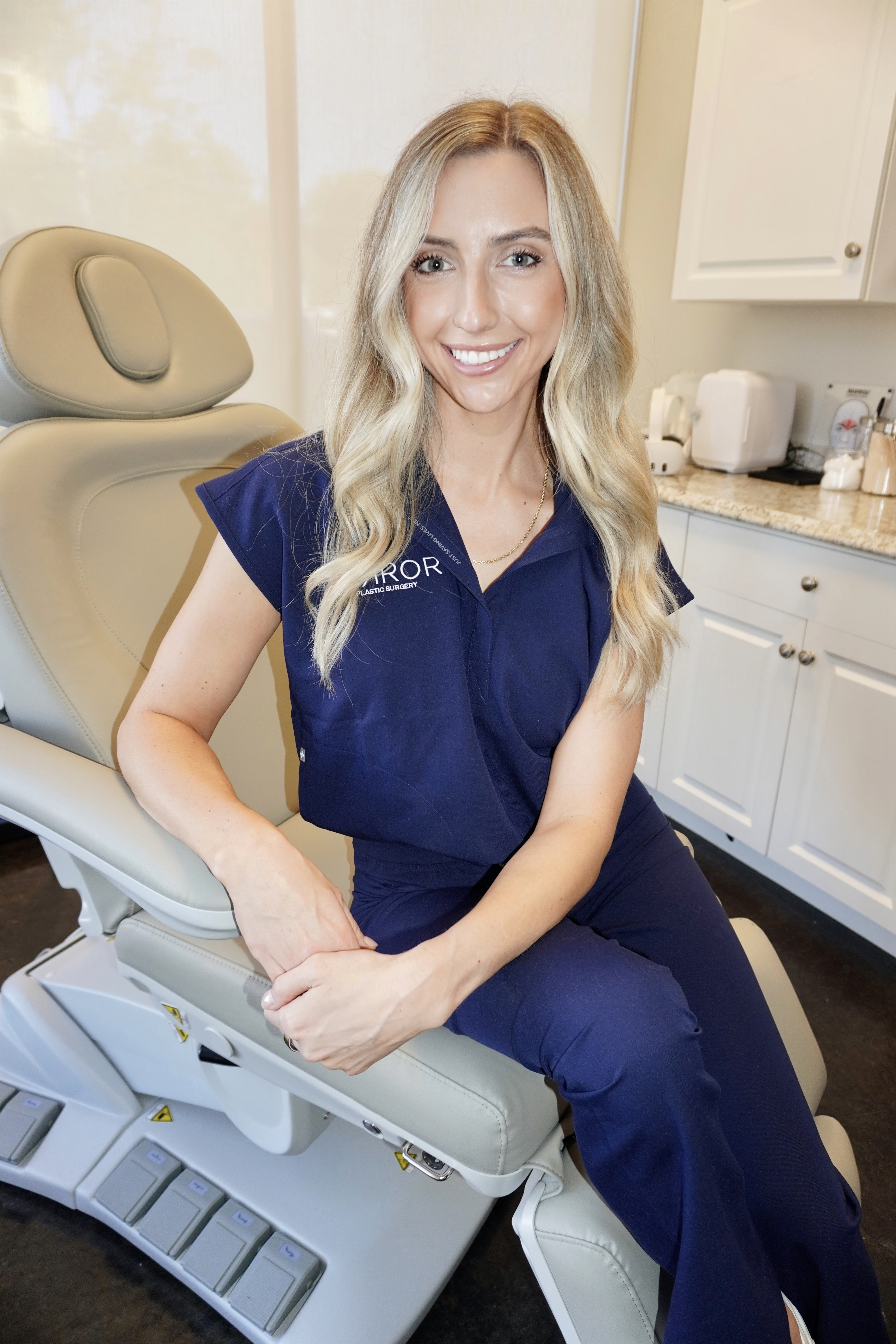
Product selection at Mirror Plastic Surgery follows your anatomy, not brand contracts. The practice remains supplier-neutral, so Ellie can choose from Juvederm, RHA, Restylane, Versa, and other options based on your specific tissue needs. If your under-eye concern would respond better to cheek support, skin-quality treatments, or a surgical consult with Dr. Akash Chandawarkar, she will recommend that path. Direct, honest guidance functions as a core clinical standard, not an extra courtesy.
Residents of Tampa and St. Petersburg who have felt rushed in medspas, developed puffiness after filler, or simply want a clear explanation of what drives their under-eye appearance often find this style of assessment especially helpful.
Book your consultation with Ellie at Mirror Plastic Surgery, 780 4th Ave S, St. Petersburg, FL 33701. You can also call or text 727-361-6515, or email hello@mirrorplasticsurgery.com.
Disclaimer: Results may vary from person to person. Editorial content, before and after images, and patient testimonials do not constitute a guarantee of specific results. This article is intended for educational purposes only and does not constitute medical advice. Consult a qualified medical professional for personalized guidance regarding your specific anatomy, health history, and treatment options.
1 Results may vary from person to person. Editorial content, before and after images, and patient testimonials do not constitute a guarantee of specific results.