
Written by: Ellie Pranckevicius, FNP-BC, Aesthetic Nurse Practitioner & Aesthetic Injector | Facial Restoration & Regenerative Injectable Specialist, Mirror Plastic Surgery
Key Takeaways for Peptide Therapy at Mirror Plastic Surgery
- Peptide therapy has moved from niche biohacking into mainstream wellness medicine, with the global market valued at USD 46.60 billion in 2025 and growing demand for individualized protocols.
- Medically supervised, lab-guided care is essential for safe and effective peptide use, especially for Tampa-area adults managing inflammation, autoimmune conditions, weight, or skin aging.
- At Mirror Plastic Surgery, peptide therapy is led by Ellie Pranckevicius, FNP-BC, who combines critical-care nursing experience with advanced clinical and aesthetic expertise.
- Protocols follow a structured process including comprehensive consultation, lab review, custom stack design, administration guidance, and ongoing 24/7 monitoring to prioritize safety and outcomes.
- Patients seeking personalized, lab-guided peptide therapy can schedule a consultation at Mirror Plastic Surgery to begin a medically supervised protocol tailored to their health goals.
Peptide Therapy for Tampa Residents: What It Is and Why It Matters
Peptides are short chains of amino acids, the same building blocks that form proteins, and they act as biological signaling molecules. They instruct cells to perform specific actions such as repairing tissue, reducing inflammation, supporting metabolism, improving skin elasticity, or regulating sleep and energy. Around 100 peptide-based drugs have been approved by the U.S. Food and Drug Administration since insulin was first used in 1921, including semaglutide and tirzepatide for type 2 diabetes and weight management.
Beyond FDA-approved medications, a growing category of compounded and research-grade peptides, including BPC-157, GHK-Cu, TB-500, Sermorelin, and NAD, is used in clinical wellness settings. These compounds are not FDA-approved for general use, and many newer injectable peptide products marketed for anti-aging, healing, and recovery have not been thoroughly tested or reviewed by the FDA. For Tampa residents seeking these therapies, the quality of medical oversight and sourcing determines whether outcomes are safe and meaningful. This makes the training and judgment of the prescribing clinician central to every peptide decision.
Ellie Pranckevicius, FNP-BC: Critical-Care Expertise Behind Your Peptide Plan
Peptide therapy at Mirror Plastic Surgery is led by Ellie Pranckevicius, FNP-BC, a board-certified Family Nurse Practitioner whose background spans critical-care nursing, aesthetic medicine, and advanced clinical science. Ellie earned her Bachelor’s in Health Science from Boston University on the premedical track, completed a rigorous aesthetics licensure program, and obtained both her Bachelor’s and Master’s in Nursing from the University of South Florida. She spent four years in the Neuroscience ICU at Tampa General Hospital, where she developed deep expertise in physiology, metabolic health, and complex patient recovery.
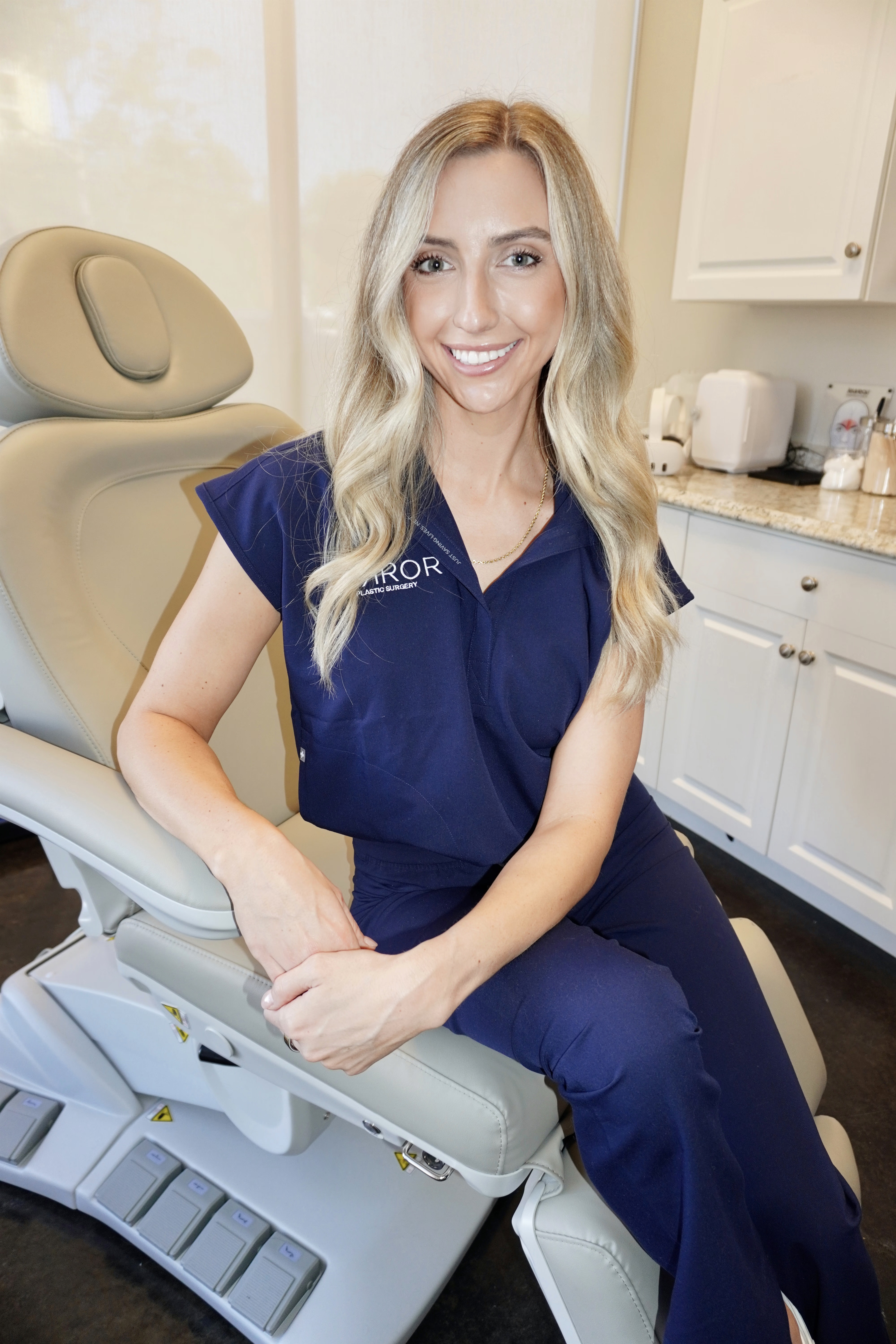
Ellie began her career at a high-end medical spa in Boston and built a strong foundation in skin physiology, aesthetic assessment, and client care. That dual background, esthetician training combined with advanced nursing, gives her a rare ability to understand both the aesthetic goals patients want to achieve and the clinical science required to get there safely. Her approach is rooted in education and transparency. She explains the physiology behind every recommendation in plain language and tells patients when a service or product is not yet necessary for them.
When surgical intervention complements a peptide protocol, Ellie’s work can be supported by Dr. Akash Chandawarkar, MD, a Harvard-educated physician, Johns Hopkins-trained plastic surgeon, and fellowship-trained aesthetic surgeon at Manhattan Eye Ear & Throat Hospital/Lenox Hill Hospital. This collaboration allows patients to pair regenerative support with advanced surgical care when appropriate.
Schedule your consultation with Ellie to see how her ICU training and aesthetic expertise translate into a peptide protocol designed for your specific physiology.
How Peptide Therapy Works: Stacks, Mechanisms, and Matching to Labs
A few core terms help clarify how peptide therapy is applied in clinical practice.
A peptide stack is a combination of two or more peptides selected to address complementary goals at the same time. One example is combining BPC-157 for systemic inflammation with GHK-Cu for collagen production and TB-500 for soft tissue repair. Mirror Plastic Surgery’s Glow Stack uses exactly this combination.
Each peptide operates through a distinct mechanism. BPC-157 promotes tissue repair via activation of VEGFR2 and NO pathways through the Akt-eNOS axis, enhancing angiogenesis and upregulating VEGF and EGR-1 expression. GHK-Cu is a naturally occurring tripeptide-copper complex that stimulates collagen and elastin synthesis, promotes angiogenesis, and modulates approximately 31% of human genes involved in antioxidant defense, DNA repair, and tissue remodeling. Sermorelin is a synthetic 29-amino-acid peptide that binds to GHRH receptors on pituitary somatotroph cells to stimulate endogenous growth hormone synthesis and secretion in a natural pulsatile pattern. This pattern preserves the body’s own feedback mechanisms instead of bypassing them.
These mechanisms are not interchangeable. Selecting the right peptide or stack requires matching the compound’s mechanism of action to a patient’s specific lab findings, health history, and goals. That matching process happens through a structured clinical protocol rather than guesswork.
The Mirror Plastic Surgery Peptide Process: From Intake to Ongoing Support
Mirror Plastic Surgery follows a structured, concierge-level process for every peptide patient.
- Comprehensive consultation (30–60 minutes): Ellie reviews full medical history, current medications, contraindications, and health goals. No protocol begins without this evaluation.
- Lab review: For weight management, inflammatory conditions, or growth hormone-axis peptides, relevant panels are reviewed or ordered, including thyroid (TSH, Free T3, Free T4), comprehensive metabolic panel, hormone panels, fasting insulin, HbA1c, and lipid profile. Baseline labs are drawn within one to two weeks before initiation to establish reference points for efficacy, safety, and dose calibration.
- Custom protocol design: Based on consultation and lab results, Ellie designs an individualized peptide stack and dosing schedule. Protocols are not templated and reflect each patient’s unique physiology.
- Administration guidance: Patients receive detailed instructions for reconstitution and self-administration, often with video demonstrations for clarity and confidence.
- Ongoing monitoring and 24/7 access: Patients have direct text access to Ellie around the clock for questions, refill requests, and protocol adjustments. Follow-up labs are scheduled at defined intervals to track safety markers and efficacy.
The entire process, from consultation through prescription and shipping, can be conducted in person at Mirror Plastic Surgery’s St. Petersburg location or remotely across the United States, including Hawaii and Alaska.
Personalized, Lab-Driven Peptide Trends in 2026
The 2026 peptide landscape is shifting away from one-size-fits-all protocols toward individualized, biomarker-guided care. Peptide therapy is increasingly moving toward individualized protocols based on genetic, metabolic, and lifestyle factors, incorporating pharmacogenomic testing for receptor polymorphisms, continuous glucose monitoring, and inflammatory marker tracking.
The success of GLP-1 medications has reshaped public awareness and changed how patients think about metabolic health. The success of GLP-1 medications has driven millions of patients into metabolic medicine and pulled peptides into the same conversation, accelerating interest in recovery, skin health, cognition, and energy applications beyond weight management. At the same time, the longevity movement is increasing interest in peptides such as NAD+, Epithalon, and MOTS-c for supporting mitochondrial function, cellular repair, and energy metabolism.
Within aesthetic medicine, bioactive peptides are being integrated into clinical treatments alongside injectables, lasers, and microneedling to enhance outcomes at a cellular level, and regenerative peptides are gaining attention for enhancing surgical recovery and tissue regeneration in plastic surgery. As peptide therapy becomes more mainstream, the gap between high-quality clinical programs and unregulated providers continues to widen. Patients now need clear decision criteria to navigate this landscape safely.
How to Choose a Peptide Provider: Sourcing, Oversight, and Expectations
Patients evaluating peptide therapy should assess providers against several connected criteria before committing to a protocol.
Start with sourcing quality, because batch-tested peptides with documented purity form the foundation of safety. The accepted clinical standard for therapeutic peptide purity is ≥98%, confirmed via high-performance liquid chromatography (HPLC), with identity confirmation via mass spectrometry. Mirror Plastic Surgery sources exclusively from reputable providers with documented Certificates of Analysis.
Quality compounds alone are not enough. A legitimate peptide provider must require a valid prescription following a clinical consultation that includes medical history review, contraindication screening, and baseline lab review before issuing the prescription. Licensed medical oversight ensures the right peptide reaches the right patient at the right dose.
Once sourcing and supervision are confirmed, patients can focus on expectations. Results vary by peptide and indication. BPC-157 produces noticeable improvements in specific pain, injury, or inflammatory complaints within one to two weeks for many patients, while Sermorelin results build gradually over two to four weeks for sleep and two to three months for body composition changes.1 Individual response depends on genetics, baseline labs, lifestyle, and the specific protocol used, so no provider can guarantee uniform results across patients.
Most peptide benefits require ongoing use or structured maintenance protocols. Discontinuing therapy typically results in a return toward baseline over time, so patients should understand maintenance needs before starting.
Peptide Risks, Evidence Gaps, and Contraindications
The primary risk in peptide therapy often comes from the source rather than the molecule itself. Third-party analyses of peptides from unregulated sources have documented quality problems including incorrect peptide identity, dosing errors where actual potency ranges from 50 to 200 percent of labeled concentration, bacterial endotoxin contamination, heavy metal contamination, and non-sterile preparations with particulate matter or microbial contamination.
Analyses of semaglutide purchased from unregulated online sellers have found purity levels substantially lower than the claimed 99%. The same quality failures appear across the broader grey market and create avoidable safety risks.
Clinical limitations also matter. For most longevity peptides, long-term randomized evidence on healthspan or lifespan in humans is absent. Most studies on newer injectable peptides for recovery and anti-aging effects are in animal models rather than humans, and there is nothing substantial to show these results would translate to humans. Responsible clinical practice acknowledges these gaps instead of overstating the evidence.
Absolute contraindications exist for specific peptide classes. Active malignancy is a contraindication for GH secretagogues and pro-angiogenic compounds such as BPC-157 and TB-500. GLP-1 agonists are contraindicated in patients with personal or family history of medullary thyroid carcinoma or Multiple Endocrine Neoplasia syndrome type 2. Pregnancy and breastfeeding are contraindications for most peptides. These factors make a thorough medical evaluation before initiating any protocol non-negotiable.
Given the serious risks of unsupervised use, start with a comprehensive safety evaluation that includes contraindication screening and baseline labs before any peptide is prescribed.
Peptide Misconceptions: Beyond Weight Loss and One-Size-Fits-All Claims
Peptide therapy extends far beyond weight loss. GLP-1 receptor agonists such as semaglutide and tirzepatide have produced mean weight loss of 15.0–20.9% at 72 weeks in the SURMOUNT-1 trial1, yet the broader peptide category supports many other clinical goals.
Mirror Plastic Surgery’s offerings address a wide range of needs.
- Inflammation and autoimmune conditions: BPC-157, TB-500, and KPV target systemic and gut inflammation.
- Skin, hair, and nail health: GHK-Cu supports collagen and elastin production, and GHK-Cu levels drop significantly with age, which is why supplementation targets skin repair capacity.
- Energy and cellular health: NAD targets mitochondrial function for increased energy and cellular vitality.
- Anxiety and mood: Selank acts on similar brain pathways as benzodiazepines without the dependency component.
- Sexual wellness: PT-141 (Bremelanotide) is FDA-approved and addresses libido and arousal.
- Post-surgical recovery: Peptide protocols can reduce inflammation and promote healing following surgical procedures.
- Muscle and body composition: Sermorelin and Ipamorelin stimulate endogenous growth hormone production to support lean mass and fitness goals.
Peptides are also not universally effective. Individual response varies significantly based on genetics, baseline labs, lifestyle, and protocol design. A personalized assessment remains the only reliable basis for predicting whether a given peptide or stack is appropriate for a specific patient. After clearing up these misconceptions, many patients still have practical questions, which the following FAQ section addresses directly.
Frequently Asked Questions About Peptide Therapy at Mirror Plastic Surgery
Are peptides FDA-approved?
The answer depends on the specific peptide. The FDA has approved approximately 100 peptide-based medications to date, including insulin, semaglutide, tirzepatide, and PT-141. Many wellness and regenerative peptides, including BPC-157, GHK-Cu (injectable), TB-500, and Sermorelin, are not FDA-approved for general use and are prescribed off-label through licensed compounding pharmacies. The FDA has placed certain peptides on restricted compounding lists due to safety concerns, and the regulatory landscape continues to evolve through 2026 and 2027. At Mirror Plastic Surgery, every peptide protocol begins only after a clinical consultation and lab review, and all products are sourced from providers with documented batch testing and Certificates of Analysis.
What are the risks of using peptides without medical supervision?
Unsupervised peptide use from online or grey-market sources carries significant risks. Products may contain incorrect peptide identity, bacterial endotoxins, heavy metals, residual solvents, or concentrations far outside labeled amounts. Without baseline labs, contraindications such as active malignancy, uncontrolled diabetes, or thyroid disease may go undetected and create serious safety hazards. Dosing errors, in either direction, can produce no response or adverse effects. Medical supervision at Mirror Plastic Surgery includes contraindication screening, baseline and follow-up labs, individualized dosing, and 24/7 direct access to Ellie for ongoing monitoring and adjustment.
Will I lose the benefits if I stop taking peptides?
Yes, most peptide benefits will diminish after you stop treatment. The rate and extent of regression depend on the peptide, the condition being addressed, and how long therapy was maintained. Inflammatory conditions managed with peptides will typically return toward their baseline state once the peptide is stopped. Growth hormone secretagogue benefits, including improved sleep, body composition, and energy, also fade over time without maintenance. Ellie designs protocols with realistic maintenance phases built in, so patients understand what ongoing use looks like before they begin.
How does Mirror Plastic Surgery ensure peptide quality?
Mirror Plastic Surgery sources peptides exclusively from reputable providers who conduct rigorous batch testing. A valid Certificate of Analysis for therapeutic peptides includes identity confirmation via mass spectrometry, HPLC purity testing to a standard of ≥98%, a heavy metals panel, endotoxin testing, and a lot number traceable to the specific batch. The issuing laboratory must be independent of the manufacturer. Patients can request documentation for their specific prescription. This approach contrasts with grey-market products, which frequently fail independent purity testing and carry contamination risks that supervised clinical sourcing avoids.
Can peptide therapy support post-surgical recovery?
Peptides are increasingly recognized in aesthetic and plastic surgery settings for their potential to reduce post-operative inflammation and support tissue healing. BPC-157 and TB-500 are among the compounds discussed for soft tissue repair and recovery. At Mirror Plastic Surgery, post-surgical peptide protocols can complement procedures performed by Dr. Akash Chandawarkar, creating a coordinated care pathway that addresses both the surgical outcome and the recovery process. Ellie designs these protocols in coordination with the surgical team, ensuring the peptide regimen aligns with the patient’s healing timeline and overall health status.
Summary: Deciding Whether Peptides Fit Your Health Plan
Peptide therapy offers meaningful clinical potential for Tampa-area adults managing inflammation, autoimmune conditions, weight, skin aging, energy, and recovery.1 That potential is realized only when therapy rests on accurate lab data, individualized protocol design, quality-verified sourcing, and ongoing medical oversight.
Mirror Plastic Surgery’s approach addresses every element of that foundation. Every patient begins with Ellie’s thorough intake process, which covers medical history, contraindications, and lab review before any protocol is designed. Custom stacks, including the Glow Stack (GHK-Cu, BPC-157, TB-500), GLP-3R compounding, NAD, Sermorelin/Ipamorelin, Selank, and others, are designed around each patient’s unique physiology and goals instead of a generalized template. All peptides are sourced from providers with documented batch testing. Patients receive 24/7 direct text access to Ellie throughout their protocol, and the full service is available remotely across the United States for those outside the St. Petersburg and Tampa area.
The difference between peptide therapy that produces results and peptide therapy that carries unnecessary risk comes down to the quality of the clinical process behind it. Begin your peptide journey with Mirror Plastic Surgery, where every protocol starts with comprehensive labs, medical oversight, and concierge-level access to your practitioner throughout treatment.
1 Results may vary from person to person. Editorial content, before and after images, and patient testimonials do not constitute a guarantee of specific results.
Peptide therapy is intended for wellness and optimization purposes and is not prescribed to diagnose, treat, cure, or prevent disease unless specifically stated. Many peptides are not FDA-approved and may be used off-label. Some have limited long-term safety data, with a potential for unknown risks, complications, or desensitization with prolonged use.