Written by: Ellie Pranckevicius, FNP-BC, Aesthetic Nurse Practitioner & Aesthetic Injector | Facial Restoration & Regenerative Injectable Specialist, Mirror Plastic Surgery
Key Takeaways
- Concierge peptide therapy after surgery uses medically supervised compounds such as BPC-157, TB-500, and GHK-Cu to support tissue repair, reduce inflammation, and promote collagen remodeling under licensed practitioner oversight.1
- These peptides target complementary healing pathways including angiogenesis, stem-cell migration, and anti-inflammatory cytokine reduction, but they remain adjuncts to standard surgical aftercare rather than replacements.1
- Evidence for BPC-157 and TB-500 is primarily preclinical, with limited human data, while GHK-Cu has stronger support in wound-healing and topical applications, so each protocol requires individualized clinical evaluation.
- Safety protocols at Mirror Plastic Surgery include surgeon approval, lab review, batch-tested pharmacy sourcing, and ongoing monitoring to minimize risks and contraindications such as active cancer or pregnancy.
- Patients who want to explore a supervised peptide protocol can schedule a personalized consultation at Mirror Plastic Surgery to determine whether it fits their recovery plan.
Concierge Peptide Therapy in Your Post-Surgical Plan
Concierge peptide therapy integrates targeted amino acid compounds into a patient’s post-operative care under continuous practitioner oversight. BPC-157, TB-500, and GHK-Cu each act on distinct biological pathways involved in tissue repair, inflammation resolution, and collagen remodeling.1 These three peptides influence complementary mechanisms such as blood vessel formation, cellular migration, extracellular matrix repair, and inflammation regulation, which makes them candidates for combined healing protocols under medical supervision. None replace standard surgical aftercare, and all require individualized clinical evaluation before use.
BPC-157 After Surgery
BPC-157 (Body Protective Compound 157) is a synthetic pentadecapeptide derived from a protein fragment found in human gastric juice. Its proposed mechanisms in post-surgical tissue repair include the following actions.
- Upregulation of VEGF (vascular endothelial growth factor) to drive angiogenesis, which directly addresses the poor blood supply that limits tendon and soft-tissue healing
- Modulation of nitric oxide pathways to support tissue perfusion and fibroblast migration
- Promotion of the shift from pro-inflammatory M1 to reparative M2 macrophages, which can reduce scar tissue formation
- Reduction of pro-inflammatory cytokines including IL-6, TNF-alpha, and interferon-gamma, along with decreased COX-2 gene expression
- Support for collagen synthesis and tendon-to-bone healing, with specific findings in animal rotator cuff and Achilles tendon repair models
A 2025 systematic review by Vasireddi et al. in HSS Journal analyzed 36 studies from 1993–2024 and found that in tendon and ligament models, BPC-157 promotes healing via growth factors and improves biomechanical outcomes. The same review identified only one human clinical study on BPC-157 for musculoskeletal use, a small retrospective series of 12 knee pain patients in which 7 reported improvement lasting over 6 months. Most of the evidence remains preclinical.
TB-500 in Post-Surgical Recovery
TB-500 is a synthetic peptide fragment related to thymosin beta-4. Its proposed mechanisms relevant to post-surgical recovery include several repair-focused effects.
- Regulation of actin polymerization to support cell mobility and wound healing
- Promotion of stem cell migration to injury sites and support of angiogenesis
- Minimization of scar tissue formation through organized collagen deposition and reduced myofibroblast activity
All dosing considerations for TB-500 are determined individually during a supervised clinical consultation. Post-surgical peptide protocols using BPC-157 and TB-500 often begin 48–72 hours after surgery to allow initial clotting and the acute inflammatory response to settle. No standardized human dosing protocol has been established through large-scale clinical trials. TB-500 and BPC-157 remain prohibited under WADA rules for tested athletes, so patients who compete in tested sports must disclose this during any pre-protocol evaluation.
BPC-157 and Anesthesia Coordination
No published clinical studies have directly examined pharmacokinetic interactions between BPC-157 and general or regional anesthesia agents in humans. BPC-157’s mechanisms include VEGFR2 phosphorylation that activates PI3K, ERK, and nitric oxide pathways, along with acetylcholine receptor stabilization at neuromuscular junctions. These pathways are theoretically relevant to anesthetic pharmacology, although peer-reviewed human interaction data do not yet exist.
The standard clinical approach at supervised practices is straightforward. The team obtains explicit surgeon approval before initiating any peptide protocol, discloses all compounds to the anesthesia team before surgery, and defers initiation until the acute post-operative window has passed. BPC-157 can counteract corticosteroid-impaired healing in preclinical models, which suggests potential compatibility with post-surgical steroid protocols, but human trials have not confirmed this. Surgeon and anesthesiologist coordination remains non-negotiable before any peptide becomes part of a post-operative plan.
If you are considering peptide therapy as part of your recovery, Schedule a pre-surgical consultation to discuss your surgical history, current medications, and whether a supervised peptide protocol fits your recovery timeline.
Comparing BPC-157, TB-500, and GHK-Cu for Healing
BPC-157, TB-500, and GHK-Cu each address distinct phases and mechanisms of post-surgical healing. A 2025 review (Therapeutic Peptides in Orthopaedics, PMID: 41490200) by Rahman et al. found that these peptides promote angiogenesis, extracellular matrix remodeling, and fibroblast activation relevant to soft-tissue healing.
| Peptide | Primary Proposed Mechanism | Tissue Target | Evidence Level |
|---|---|---|---|
| BPC-157 | VEGF-driven angiogenesis as outlined in the mechanisms above | Tendon, ligament, muscle, gut | Primarily preclinical, with three small uncontrolled human studies totaling 16 patients |
| TB-500 | Actin regulation and stem cell migration that support repair | Soft tissue, muscle, wound | No completed Phase 2 or 3 trials for musculoskeletal injury, with human data limited to dermal and corneal wound healing |
| GHK-Cu | Copper-dependent collagen and elastin synthesis with antioxidant effects | Skin, connective tissue, wound | Strongest human evidence among the three, particularly in topical skincare and wound-healing models |
GHK-Cu reduces inflammatory markers in tissue, lowering levels of TNF-alpha and IL-6, while supporting collagen and elastin production. GHK-Cu also influences expression of human genes, activating repair-related genes while suppressing those linked to inflammation and degeneration. These complementary pathways make the three peptides candidates for combination protocols when clinically indicated and individually evaluated.
Meet Your Practitioner: Ellie Pranckevicius, FNP-BC
Ellie Pranckevicius, FNP-BC, leads peptide therapy and non-surgical aesthetics at Mirror Plastic Surgery. She is a board-certified Family Nurse Practitioner who earned her Bachelor’s in Health Science from Boston University on the premedical track, completed an aesthetics licensure program, and obtained both her Bachelor’s and Master’s in Nursing from the University of South Florida. Her clinical foundation includes four years in the Neuroscience ICU at Tampa General Hospital, where she managed complex patients and developed a deep understanding of physiology, metabolic health, and recovery capacity.
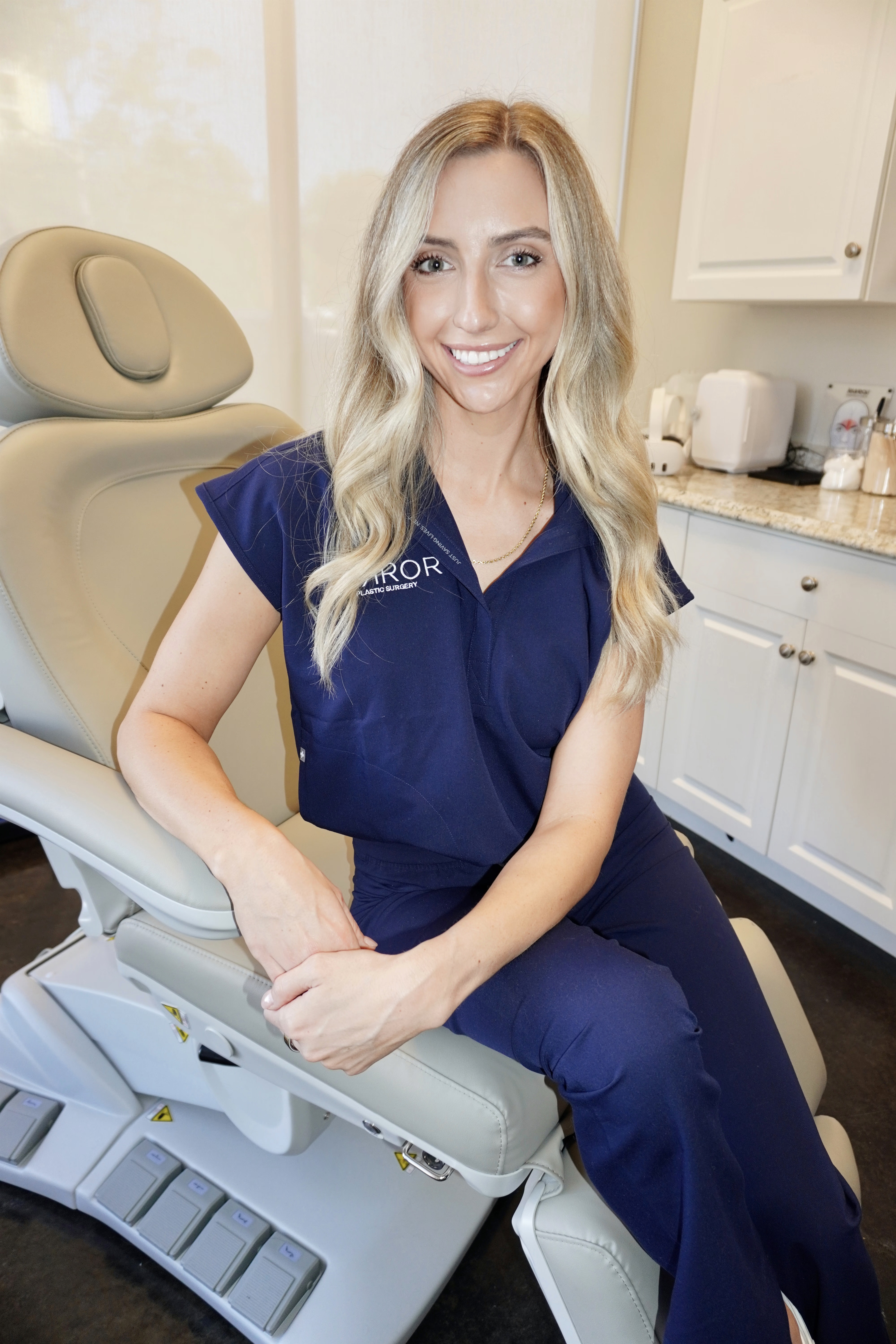
Ellie began her career at a high-end medical spa in Boston and developed expertise in skin physiology and aesthetic assessment before pursuing her nurse practitioner credentials. This dual background, which combines esthetician training with advanced nursing, shapes her approach to peptide protocols. She evaluates the aesthetic goals a patient wants to achieve and the clinical science required to reach them safely. Her practice centers on education and transparency.
Ellie sources peptides exclusively from reputable providers with batch testing and offers direct, ongoing concierge support throughout each patient’s protocol. When surgical coordination is required, Ellie works in conjunction with Dr. Akash Chandawarkar, MD, a Harvard-educated physician, Johns Hopkins-trained plastic surgeon, and fellowship-trained aesthetic surgeon at Manhattan Eye Ear & Throat Hospital.
Start your evaluation with Ellie to begin a comprehensive assessment of your post-surgical recovery goals.
The Clinical Process at Mirror Plastic Surgery
Mirror Plastic Surgery’s concierge peptide process follows a structured sequence that prioritizes safety and individualization.
- Consultation and medical history review: A 30–60 minute session with Ellie establishes your surgical history, current medications, pre-existing conditions, and recovery goals, which provides the foundation for all later decisions.
- Lab panel evaluation: Based on findings from your consultation, relevant panels such as inflammatory markers, metabolic indicators, and hormone levels are reviewed or ordered to create a clinical baseline that informs protocol design.
- Custom protocol development: Using your medical history and lab results, Ellie constructs a personalized peptide stack and dosing schedule tailored to your physiology, surgical procedure, and recovery timeline.
- Surgeon communication: Before any protocol begins, the operating surgeon reviews and must approve the plan, and anesthesia considerations are addressed during this stage.
- Administration guidance: Once the protocol is approved, you receive detailed instructions for reconstitution and subcutaneous self-administration, often with video demonstrations so you can follow the plan safely at home.
- Ongoing monitoring: Throughout the protocol, Ellie remains accessible via direct text communication for questions, adjustments, and refill coordination as your recovery progresses.
The entire process, from consultation through prescription and shipping, can take place in-person at the St. Petersburg clinic or remotely across the United States.
Concierge Oversight Versus Unregulated Sources
Patient interest in peptides for post-surgical recovery has grown substantially, and unverified compounds from online research-chemical vendors have become more common. Independent testing of grey-market peptide samples has found that the actual drug quantity can diverge from the advertised amount and that some samples contained measurable endotoxin.
Mirror Plastic Surgery sources all peptides from licensed 503A compounding pharmacies that supply a certificate of analysis with each batch. Compounded peptide medications such as BPC-157 must be prepared by pharmacies holding appropriate sterile compounding licensure under USP Chapter 797 cleanroom standards, and all require a valid prescription from a licensed healthcare provider naming a specific patient. Concierge oversight also provides the clinical judgment to identify contraindications such as active cancer, pregnancy, or autoimmune conditions, which self-sourcing cannot address.
Decision-Making Considerations for Peptide Use
Several factors help determine whether a supervised peptide protocol is appropriate for a specific post-surgical patient.
- Timing after surgery: As discussed earlier, protocols often begin 48–72 hours after surgery, although exact timing depends on procedure type and surgeon guidance.
- Individual response variability: Results from peptide therapy vary significantly based on genetics, diet, lifestyle, and the specific protocol used, so no outcome is guaranteed.1
- Maintenance protocols: Benefits are generally sustained through continued use, and discontinuation usually results in a gradual return to baseline, similar to stopping any health regimen.1
- Surgeon approval: Explicit approval from the operating surgeon is required before any peptide protocol starts at Mirror Plastic Surgery.
- Athlete status: As noted earlier, these peptides remain WADA-prohibited and require disclosure for tested athletes.
Realistic Risks and Limitations
Patients considering peptide therapy after surgery should understand several key limitations and risks.
- BPC-157 is not FDA-approved and carries a Category 2 bulk drug substance restriction as of 2026 that limits compounding access due to potential enhanced immunogenicity and minimal established purity, efficacy, or safety data.
- FDA career scientists determined there is inadequate evidence to support BPC-157, TB-500, and related peptides for production by compounding pharmacies, citing lacking, flawed, or completely absent information on safety and efficacy in humans.
- Reported side effects of BPC-157 from case reports and practitioner experience include nausea, gastrointestinal discomfort, dizziness, flushing at injection sites, headache, and fatigue.
- Active cancer or recent cancer history is a standard precautionary contraindication for BPC-157 because of its angiogenesis-promoting properties.
- Pregnancy, lactation, and autoimmune conditions are contraindications for BPC-157, TB-500, and related peptides due to insufficient safety data or potential unpredictable immune modulation.
- Much of the literature on BPC-157 and TB-500 remains preclinical, derived from animal or laboratory studies rather than large human clinical trials.
Common Misconceptions About Peptides After Surgery
Patients researching post-surgical peptide use often encounter several recurring misconceptions.
- Peptides are only for weight loss. BPC-157, TB-500, and GHK-Cu are studied for tissue repair, inflammation resolution, and collagen support, which differs from weight-management peptides such as GLP-1 receptor agonists.
- Peptides replace standard surgical aftercare. Supervised peptide protocols function as adjuncts to surgeon-directed post-operative care, wound management, and physical rehabilitation rather than substitutes.
- Stopping peptides causes permanent loss of benefits. Benefits generally diminish after discontinuation, similar to stopping any health regimen, and maintenance protocols are often used to sustain outcomes.
- All peptide sources are equivalent. As noted earlier, independent testing has documented significant quality and contamination issues in grey-market sources, risks that do not apply to licensed compounding pharmacies using batch-tested products.
- Peptides work the same for everyone. Individual response varies based on genetics, surgical procedure, baseline health, and protocol design, so personalized evaluation remains essential.
Get an evidence-informed assessment to determine whether a supervised peptide protocol aligns with your post-surgical recovery plan.
Frequently Asked Questions
Can you take BPC-157 after surgery?
BPC-157 may be considered as a supervised adjunct after surgery, but only after explicit approval from the operating surgeon, a comprehensive medical history review, and evaluation of contraindications such as active cancer, pregnancy, or autoimmune conditions. It does not suit all patients, and no standardized human dosing protocol has been established through large-scale clinical trials. At Mirror Plastic Surgery, BPC-157 is never initiated without a full clinical consultation with Ellie Pranckevicius and direct surgeon coordination.
How long after surgery can I use peptides?
The timing of peptide initiation depends on the type of surgery, the patient’s healing trajectory, and surgeon guidance. A commonly referenced window in supervised clinical practice is 48–72 hours after surgery, which allows initial clotting and the acute inflammatory response to stabilize before introducing adjunct compounds. This window is not universal, and some procedures or patient profiles may require a longer delay. Timing is determined individually during the clinical consultation process at Mirror Plastic Surgery.
Does BPC-157 interact with anesthesia?
No published human studies have directly examined interactions between BPC-157 and anesthetic agents. Because BPC-157 influences nitric oxide pathways and acetylcholine receptor activity, both of which relate to anesthetic pharmacology, full disclosure to the anesthesia team before any procedure is essential. Mirror Plastic Surgery requires that all peptide use be disclosed to and approved by the operating surgeon and anesthesiologist before initiation or continuation around a surgical event.
Are peptides like BPC-157 and TB-500 FDA-approved?
No. BPC-157, TB-500, and GHK-Cu are not FDA-approved for any human therapeutic indication. BPC-157 and TB-500 have faced compounding access restrictions, and the FDA’s Pharmacy Compounding Advisory Committee is scheduled to review their status. When prescribed through a licensed 503A compounding pharmacy under a valid patient-specific prescription, these compounds can be legally accessed under medical supervision. Mirror Plastic Surgery sources exclusively from pharmacies that provide certificates of analysis and meet sterile compounding standards.
What makes concierge peptide oversight different from buying online?
Concierge oversight at Mirror Plastic Surgery includes a comprehensive medical history review, lab panel evaluation, individualized protocol design, surgeon coordination, batch-tested pharmaceutical-grade sourcing, and direct ongoing access to Ellie Pranckevicius throughout the protocol. Online research-chemical vendors provide none of these safeguards. Independent testing of grey-market peptide samples has documented quantity deviations of up to 46 percent from labeled amounts and endotoxin contamination in approximately one in twelve samples, risks that do not apply when compounds are sourced from licensed compounding pharmacies under clinical supervision.
Making an Informed Decision
Concierge peptides after surgery represent a supervised adjunct option for patients whose medical history, surgical procedure, and recovery goals make them appropriate candidates, as determined through individualized clinical evaluation. The evidence base for BPC-157, TB-500, and GHK-Cu in human post-surgical recovery remains promising in preclinical models but limited in large-scale human trials. Regulatory status continues to evolve.
These realities make practitioner-led oversight, batch-tested sourcing, and surgeon coordination the factors that separate a responsible protocol from an unguided one. Any decision to pursue peptide therapy after surgery should be made in direct consultation with a qualified licensed provider who can evaluate your complete clinical picture.
1 Results may vary from person to person. Editorial content, before and after images, and patient testimonials do not constitute a guarantee of specific results.
Peptide therapy is intended for wellness and optimization purposes and is not prescribed to diagnose, treat, cure, or prevent disease unless specifically stated. Many peptides are not FDA-approved and may be used off-label. Some have limited long-term safety data, with a potential for unknown risks, complications, or desensitization with prolonged use.