
Written by: Ellie Pranckevicius, FNP-BC, Aesthetic Nurse Practitioner & Aesthetic Injector | Facial Restoration & Regenerative Injectable Specialist, Mirror Plastic Surgery
Key Takeaways
- GLP-1 peptide purity is the percentage of active compound versus contaminants and directly affects safety and results for weight management.1
- Industry standards recommend at least 99% purity, confirmed by both HPLC and mass spectrometry, plus a complete Certificate of Analysis (CoA) with net peptide content and endotoxin testing.
- Red flags include missing CoAs, no independent lab accreditation, no mass spectrometry confirmation, and no lot-specific batch numbers.
- Medical supervision verifies product quality, reviews lab results, and builds dosing protocols tailored to each patient’s metabolic health.
- Patients who want verified, high-purity GLP-1 peptides and personalized protocols can book a consultation with Mirror Plastic Surgery.
Purity Targets for GLP-1 Peptides Used in Humans
Compounding pharmacies and peptide manufacturers that follow USP compounding standards typically treat at least 99% purity as the target for any peptide used in humans. Lower grades are produced for in-vitro laboratory research only and carry clear warnings against human administration. The table below links purity ranges to appropriate use and relative risk.
| Purity Range | Typical Grade | Appropriate Use | Risk Level for Human Use |
|---|---|---|---|
| ≥99% | Pharmaceutical / USP-aligned | Medically supervised human protocols | Low (when batch-tested and supervised) |
| 95–98% | High-research grade | Advanced in-vivo animal studies | Moderate, impurity profile unknown |
| 85–94% | Standard research grade | In-vitro cell assays only | High, significant contaminant load |
| <85% | Crude / unrefined | Synthesis intermediates; not for use | Very high, unpredictable composition |
These purity thresholds appear in classifications published by GenScript’s Peptide Purity Guidelines. Any vendor selling sub-99% peptides for human weight-management use may be operating outside typical pharmaceutical quality standards.
Why 99% Purity Is the Human-Use Benchmark
At a purity of at least 99% by HPLC, impurities make up less than 1% of total content, which aligns with human-grade expectations. That number only matters when it comes from reliable testing. A purity figure printed on a label without an independently verified Certificate of Analysis (CoA) cannot be trusted. Purity must be confirmed by both HPLC and mass spectrometry to show the amount of active compound and confirm the correct molecular identity.
How to Read a GLP-1 Certificate of Analysis (CoA)
A legitimate CoA for a GLP-1 peptide follows a consistent structure. Check each of the elements below before you accept a product.
- Product name and lot/batch number, which link the document to a specific production run instead of a generic product line.
- HPLC purity result, expressed as a percentage with a chromatogram or peak-area data attached, which should meet the ≥99% threshold discussed earlier.
- Mass spectrometry (MS) result, which confirms that the molecular weight matches the target peptide sequence and rules out substitution or truncation errors.
- Net peptide content, listed as a separate figure from HPLC purity and clearly stated.
- Residual solvent and endotoxin testing, required for any injectable compound under USP <1> and <85> guidelines.
- Testing laboratory name and accreditation, with an independent lab that holds ISO 17025 or equivalent accreditation.
- Expiry or retest date, since peptide stability declines over time and an undated CoA is not current.
A CoA that omits any of these fields is incomplete and should not serve as proof of quality.
HPLC and Mass Spectrometry in Plain Language
High-performance liquid chromatography (HPLC) separates the components of a peptide sample based on how they move through a stationary phase, then measures each peak by UV absorbance. The result is a purity percentage, calculated as the area of the target peptide peak divided by total peak area. HPLC is very sensitive to quantity but cannot confirm molecular identity, so a contaminant with a similar retention time can inflate the apparent purity figure.
Mass spectrometry (MS) ionizes the sample and measures the mass-to-charge ratio of each fragment. This process confirms the exact molecular weight of the compound and verifies that the peptide sequence is correct and not truncated, oxidized, or substituted. Used together, HPLC and MS provide the dual verification standard introduced earlier: quantitative purity from HPLC and qualitative identity confirmation from MS.
Net Peptide Content and Why Your Dose Can Be Off
HPLC purity and net peptide content measure different things, even though people often mix them up. HPLC purity measures the proportion of the active peptide relative to other organic compounds in the sample. Net peptide content accounts for water, salt counterions such as trifluoroacetate or acetate, and residual solvents that add to the total mass of the lyophilized powder but are not active peptide.
A vial labeled “10 mg, 99% purity” may contain only 70–80 mg of actual active peptide per 100 mg of powder once water and salt content are removed from the calculation. GenScript’s peptide purity documentation explains that net peptide content is a separate specification from HPLC purity and must be reported on its own. Dosing calculations based only on stated weight, without net peptide content data, will be systematically inaccurate. Understanding these technical details makes it easier to spot vendors who cut corners and to protect your own dosing accuracy.
Red-Flag Checklist for Low-Quality GLP-1 Sources
- No CoA available, or CoA provided only on request after purchase.
- CoA shows HPLC purity only, with no mass spectrometry confirmation.
- No independent, accredited third-party laboratory named on the CoA.
- Net peptide content not stated separately from HPLC purity.
- No lot or batch number linking the CoA to the specific vial shipped.
- No endotoxin or residual solvent testing results included.
- Purity stated as a range, such as “95–99%,” instead of a specific measured value.
- No licensed medical professional involved in prescribing or dosing guidance.
- Vendor ships internationally without any health screening.
- No reconstitution or administration instructions provided.
Why Medical Supervision Protects Your Safety
Buying GLP-1 peptides from an unregulated online vendor shifts all quality verification to the buyer, which usually requires laboratory tools and scientific training that most people do not have. The risks extend beyond purity and include incorrect dosing, interactions with current medications, and undetected metabolic conditions such as thyroid dysfunction or impaired kidney function. These factors can turn a potentially helpful therapy into a serious health event.
Mirror Plastic Surgery’s concierge peptide program addresses each of these gaps through three integrated safeguards. First, every protocol starts with a 30–60 minute consultation with a board-certified nurse practitioner, including a review of lab panels that cover thyroid, liver, kidney, diabetes markers, and hormone levels. This screening identifies contraindications and metabolic conditions that unregulated vendors cannot detect. Second, peptides come only from suppliers that meet the purity and dual-verification standards outlined earlier, which removes the burden of quality verification from the patient. Third, patients receive 24/7 direct text access for questions, dose adjustments, and refill requests, so monitoring continues well beyond the initial prescription.
The entire program, including consultation, protocol design, and product delivery, is available remotely across all 50 U.S. states, including Hawaii and Alaska. This structure differs from high-volume telemedicine platforms that rely on standardized protocols without individualized lab review or sustained access to a practitioner.
GLP-3R and Next-Generation GLP-Class Analogs
GLP-3R represents a newer generation of GLP-class peptides designed to address limits seen with earlier GLP-1 receptor agonists, including gastrointestinal side effects and muscle loss during rapid weight reduction. Newer formulations in this class often target a broader set of concerns, such as insulin resistance, cardiovascular risk factors, and overall metabolic health, while still supporting weight management. Many patients also experience fewer adverse gastrointestinal events with these compounds.
From a purity-testing standpoint, these newer and more complex analogs still require the same dual verification standard described above, and the net peptide content specification becomes even more critical as molecular weight increases. Mirror Plastic Surgery’s concierge program includes GLP-3R compounding within its weight-management offerings, with protocols tailored to each patient’s metabolic lab profile.
Seven Screening Questions Before You Buy GLP-1 Peptides
Before you commit to any GLP-1 or GLP-class peptide source, use the following questions as a simple screening checklist.
- Can you provide a current CoA with a lot number that matches the specific batch I will receive?
- Does the CoA include both HPLC purity and mass spectrometry identity confirmation?
- Is net peptide content stated separately from HPLC purity?
- Which independent, accredited laboratory performed the testing?
- Are endotoxin and residual solvent results included?
- Is a licensed medical professional reviewing my health history and lab results before prescribing?
- What ongoing support is available if I experience side effects or need a dose adjustment?
A provider who cannot answer all seven questions clearly and promptly is not meeting the standard required for safe human peptide use.
Frequently Asked Questions (FAQ)
Are GLP-1 peptides FDA-approved?
Several GLP-1 receptor agonists hold FDA approval as pharmaceutical drugs for type 2 diabetes and obesity management. Compounded GLP-1 peptides, including those used in concierge wellness programs, are not individually FDA-approved products. They can, however, be prepared by licensed compounding pharmacies that follow applicable state and federal pharmacy regulations. The main safety risk usually comes from unregulated vendors that lack quality controls, not from the peptide class itself. Mirror Plastic Surgery works only with suppliers that provide documented batch testing and purity verification, and every protocol is prescribed and monitored by a board-certified nurse practitioner.
What are the risks of using peptides without medical supervision?
Without supervision, no independent party verifies what the product contains, whether it fits your current medications or health conditions, or how to dose accurately based on net peptide content. This situation can lead to no therapeutic response because of low active content, adverse reactions from contaminants, or serious complications when conditions such as thyroid disease, kidney impairment, or a history of pancreatitis go undetected. Medical supervision adds lab-based screening, verified sourcing, accurate dosing, and ongoing monitoring, which online vendors do not provide.
Will results be the same for everyone on a GLP-1 peptide protocol?
Results vary widely from person to person.1 Genetics, baseline metabolic health, diet, lifestyle, and the specific protocol all influence outcomes.1 Factors such as thyroid function, insulin sensitivity, and gut microbiome composition shape how each individual responds. Mirror Plastic Surgery’s approach starts with comprehensive lab panels instead of a standardized protocol, so a custom stack built around your lab results and health history can produce more meaningful and durable outcomes than a one-size-fits-all prescription.1
What happens if I stop a GLP-1 peptide protocol?
The metabolic and weight-management effects of GLP-1 class peptides usually continue only while treatment continues.1 Stopping treatment often leads to a gradual return toward baseline appetite regulation and metabolic rate.1 This pattern reflects normal physiology of metabolic regulation and does not apply only to peptides. Ellie works with each patient to design a maintenance plan that fits their goals, which may include dose tapering, a transition to a different peptide stack, or structured lifestyle changes to help maintain results.
Can I access Mirror Plastic Surgery’s peptide program if I am not in Florida?
Yes. The full concierge peptide program, including the initial consultation with Ellie, lab panel review, custom protocol design, and product delivery, is available remotely across all 50 U.S. states. Consultations take place via telemedicine, and peptides ship directly to your address. Ongoing support remains available 24/7 through direct text access to Ellie, regardless of your location.
Meet Your Concierge Peptide Practitioner
Our board-certified Family Nurse Practitioner leads peptide therapy and non-surgical aesthetics at Mirror Plastic Surgery. Her clinical background includes four years in the Neuroscience ICU at Tampa General Hospital, where she managed complex patients and developed deep expertise in physiology and metabolic health. That experience directly shapes how she designs peptide protocols.
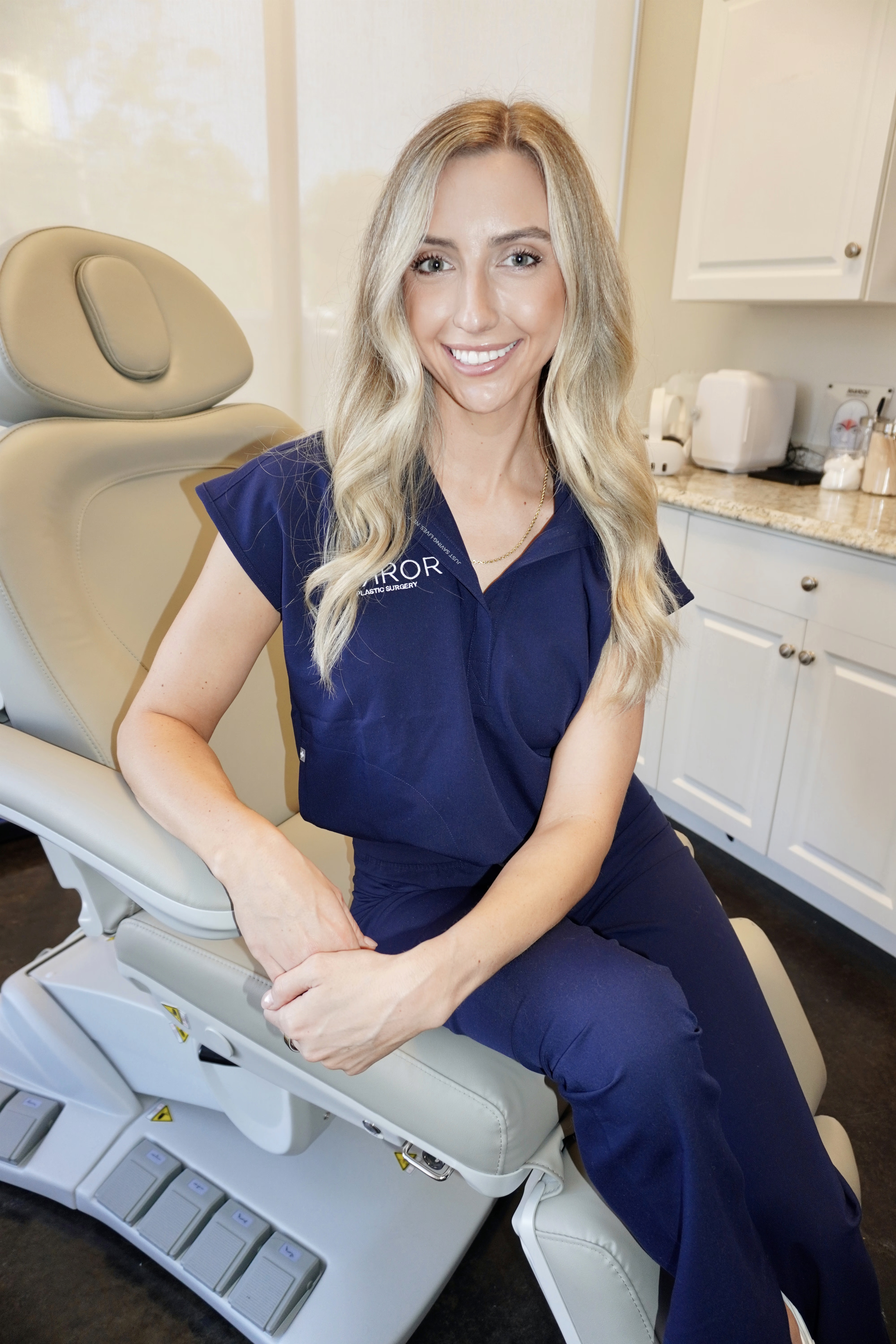
She holds dual training as a licensed esthetician and advanced practice nurse, which allows her to align aesthetic goals with rigorous clinical science. Patients know her for transparent, education-first care, clear explanations of the physiology behind every recommendation, and honest guidance when a therapy is not yet necessary. She also provides direct, ongoing support throughout each patient’s treatment journey.
1 Results may vary from person to person. Editorial content, before and after images, and patient testimonials do not constitute a guarantee of specific results.
Peptide therapy is intended for wellness and optimization purposes and is not prescribed to diagnose, treat, cure, or prevent disease unless specifically stated. Many peptides are not FDA-approved and may be used off-label. Some have limited long-term safety data, with a potential for unknown risks, complications, or desensitization with prolonged use.