
Written by: Ellie Pranckevicius, FNP-BC, Aesthetic Nurse Practitioner & Aesthetic Injector | Facial Restoration & Regenerative Injectable Specialist, Mirror Plastic Surgery
Key Takeaways
- Concierge peptide therapy at Mirror Plastic Surgery provides personalized, medically supervised care with in-depth evaluation, lab work, custom protocols, and ongoing monitoring by a licensed practitioner.
- Practitioner expertise directly shapes safety and outcomes. At Mirror Plastic Surgery, Ellie Pranckevicius, FNP-BC, designs protocols using her neuroscience ICU and aesthetics background to create individualized treatment plans.
- Clear knowledge of key peptides such as BPC-157, GHK-Cu, GLP-3R agonists, NAD, and growth-hormone secretagogues helps patients make informed choices about wellness, recovery, and anti-aging goals.
- Supervised care differs sharply from unregulated online sources by requiring baseline labs, batch-tested 503A pharmacy sourcing, practitioner oversight, and 24/7 support, which reduces risks of contamination or incorrect dosing.
- Schedule your personalized evaluation today at Mirror Plastic Surgery to start a safe, lab-guided peptide therapy plan tailored to your health objectives.
Ellie’s Background and Role in Your Care
Peptide therapy at Mirror Plastic Surgery is led by Ellie Pranckevicius, FNP-BC, a board-certified Family Nurse Practitioner with experience in both advanced clinical medicine and aesthetic care. She earned her Bachelor’s in Health Science from Boston University on the premedical track, completed an aesthetics licensure program, and obtained both her Bachelor’s and Master’s in Nursing from the University of South Florida. Before becoming a nurse practitioner, she built a strong foundation in skin physiology and aesthetic assessment at a high-end medical spa in Boston. She then spent four years in the Neuroscience ICU at Tampa General Hospital, managing complex patients and gaining a deep understanding of physiology, metabolic health, and recovery. This background directly shapes how she designs safe, effective peptide protocols at Mirror Plastic Surgery.
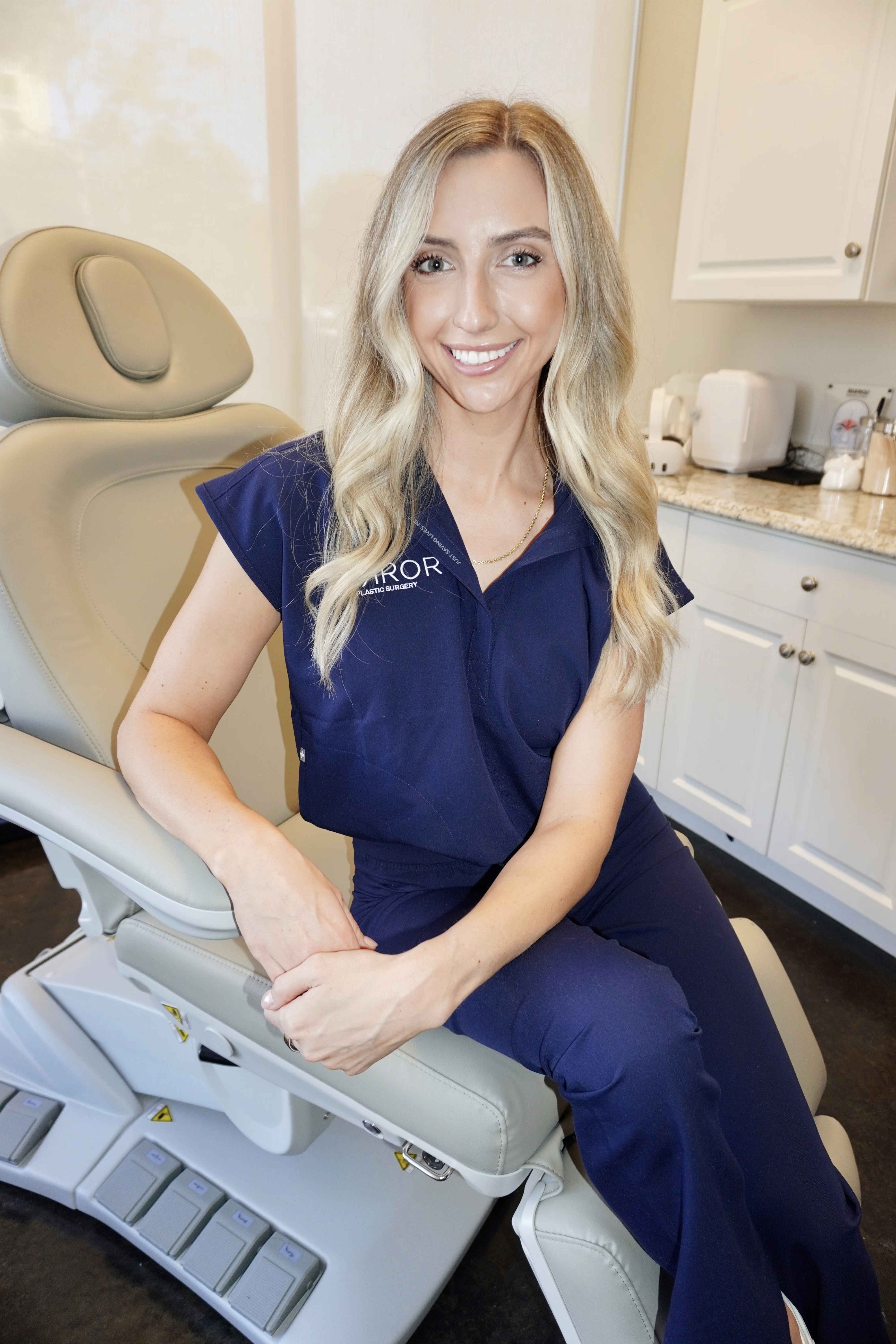
Book an appointment with Ellie to begin a medically supervised peptide evaluation tailored to your health history and goals.
Peptide Terms You Will Hear During Your Visit
Clear familiarity with common peptide terms makes your consultation more productive and supports confident decision-making. The following concepts appear frequently in clinical and consumer discussions.
- Peptides: Short chains of amino acids that act as biological messengers. They signal specific cells or tissues to perform targeted functions such as repair, hormone release, or inflammation modulation.
- Stacking: The practice of combining two or more peptides in a single protocol to address multiple goals at once. An example is the Glow Stack at Mirror Plastic Surgery.
- BPC-157 (Body Protective Compound 157): A synthetic peptide derived from a protein found in human gastric juice. Animal studies have shown effects on granulation tissue formation, angiogenesis, and collagen production, while robust human clinical trial data remains limited.
- GHK-Cu (Copper Peptide): A naturally occurring copper-binding peptide. Plasma levels decline from approximately 200 ng/ml at age 20 to 80 ng/ml by age 60. It is associated with collagen and elastin production, skin health, and hair and nail rejuvenation.
- GLP-3R: A newer-generation compounded peptide in the GLP receptor agonist class. It is reported to have a reduced side-effect profile compared to earlier GLP-1 formulations and to support broader indications including insulin resistance and cardiovascular risk factors.
- NAD (Nicotinamide Adenine Dinucleotide): A coenzyme involved in cellular energy production that targets mitochondrial function and is associated with increased energy and anti-aging applications.
- Selank: A nootropic peptide that acts on brain pathways similar to benzodiazepines but without the dependency component. It is used for anxiety and mood support.
- KPV: A tripeptide used to target gut microbiome inflammation, with potential applications in conditions such as Irritable Bowel Disease.
- Sermorelin/Ipamorelin: Growth hormone-releasing peptides (GHRPs) that stimulate the body’s natural growth hormone production. Growth hormone secretion declines by roughly 14% per decade after the mid-20s, so secretagogue support is a common consideration in longevity protocols.
How Mirror’s Concierge Peptide Process Works
Mirror Plastic Surgery follows a structured clinical workflow that prioritizes safety, personalization, and measurable outcomes. The process unfolds across five clear stages.
- Initial Consultation: You meet one-on-one with Ellie for 30 to 60 minutes. She reviews your full medical history, current medications, lifestyle factors, and specific health and wellness goals.
- Lab Review and Ordering: For weight management, inflammatory conditions, or hormone-related concerns, Ellie reviews existing labs or orders new panels. These may include thyroid, liver, kidney, diabetes markers, and hormone panels, consistent with standard baseline assessments used in supervised peptide programs.
- Custom Protocol Design: Ellie designs a personalized peptide stack based on your consultation and lab results. Examples include the Glow Stack (GHK-Cu, BPC-157, TB-500) for systemic inflammation and skin health, post-surgical recovery protocols that combine anti-inflammatory peptides, and targeted stacks for energy, weight management, or anxiety.
- Administration Guidance: You receive clear instructions for reconstitution and self-administration, often with video demonstrations. This support helps you use your peptides safely and accurately at home.
- Ongoing Monitoring and Support: Ellie offers direct 24/7 text access for questions, side-effect management, and refill requests. Follow-up appointments allow for protocol adjustments based on your response, consistent with the iterative, lab-guided approach used in evidence-based concierge programs.
The entire process, from consultation through prescription and shipping, can take place in person at Mirror Plastic Surgery’s St. Petersburg location or remotely across Florida and the broader United States.
Peptide Use and Regulation in Florida
GLP-1 prescriptions have increased substantially in recent years in the United States. Truveta estimated that as of December 2025, GLP-1 RA prescriptions accounted for more than 7% of all prescriptions nationally. This growth reflects broader consumer interest in peptide-based wellness that now includes post-surgical recovery, anti-aging, inflammation control, and neurological health.
Florida’s regulatory environment adds specific considerations for patients and providers. Florida NPs may prescribe GLP-1s either under a supervisory protocol with a physician or autonomously in primary care settings after meeting state requirements. In April 2026, the FDA removed twelve peptides, including BPC-157, TB-500, GHK-Cu, KPV, and MOTS-c, from § 503A Category 2 and placed them in regulatory limbo pending further review. This evolving landscape makes collaboration with a supervised provider who tracks regulatory changes and uses compliant pharmacies especially valuable.
The difference between supervised concierge care and direct-to-consumer online options becomes critical in this context. Newer injectable peptides sold through the grey market and online sites without FDA oversight carry risks of contamination, unsafe manufacturing, incorrect ingredients, and unknown dosing. The following comparison table shows how Mirror Plastic Surgery’s supervised care contrasts with unregulated online sources.
Supervised vs. Online Peptide Sources: A Comparison
What to Consider Before Starting Peptide Therapy
Several core factors shape whether peptide therapy is appropriate for you and how your outcomes may vary.1 The foundation begins with sourcing standards. Peptide therapy safety depends substantially on sourcing from a licensed U.S. 503A or 503B pharmacy, which is why Mirror Plastic Surgery uses only reputable providers with verified batch testing.
Even with quality sourcing, personalization remains essential. Concierge peptide protocols have no universal dosing charts and must be individualized based on body size, baseline labs, concurrent medications, and treatment goals. This individualization also shapes expected timelines. GLP-1 medications typically produce noticeable appetite reduction in the first 1 to 2 weeks, with measurable changes beginning in weeks 4 to 8 and continuing over 6 to 12 months.1 Tissue repair peptides such as BPC-157 are typically used in shorter cycles of 4 to 12 weeks.1
These timelines matter because many peptide benefits require ongoing use to sustain. Ellie often compares this to a consistent health regimen, noting that discontinuing therapy without a maintenance plan typically leads to a return of the underlying condition. Even with proper sourcing, personalization, and maintenance, outcome variability remains. Genetics, diet, lifestyle, and the specific protocol all influence individual results, so a thorough evaluation is the starting point for realistic expectations.1
Risks, Limits, and Regulatory Challenges
Many peptides used in wellness protocols are not FDA-approved and fall under compounding regulations that remain under active review. Patients should understand several key limitations before beginning therapy.
- Limited human trial data: Peptides including GHK-Cu, BPC-157, and TB-500 that are marketed for anti-aging and tissue repair lack high-quality human clinical trials, with most supporting data coming from cell and animal studies.
- Ongoing use requirement: Most peptide protocols require continued administration to maintain benefits. Some courses are short and finite, while others are longer and iterative, depending on the indication.
- Individual response differences: People do not respond identically to the same protocol. Baseline health status, genetics, and lifestyle all affect outcomes.
- Risks of unsupervised sourcing: There is a theoretical risk that peptides could accelerate the growth of an undiagnosed cancer cell, and other risks may include hormone imbalances or water retention when used without proper screening.
- Regulatory evolution: FDA enforcement actions targeting peptide compounding pharmacies accelerated through 2025 and 2026, so provider awareness of current compliance requirements is essential.
Misconceptions Patients Often Bring Up
Several widespread beliefs about peptide therapy are inaccurate or incomplete and can create unrealistic expectations.
- “Peptides are only for weight loss.” GLP-1 receptor agonists have driven much of the public awareness, yet peptide therapy also addresses systemic inflammation, autoimmune conditions, post-surgical recovery, skin aging, anxiety, energy, sexual wellness, and fertility support.
- “Results are the same for everyone.” Individual response varies significantly based on genetics, baseline health, lifestyle, and the specific protocol.1 A personalized evaluation is necessary to set accurate expectations.
- “Stopping therapy has no consequences.” Ending peptide therapy without a maintenance plan usually leads to a return of the condition being managed. Sustained outcomes generally require an ongoing or maintenance protocol.
- “Online peptides are equivalent to supervised protocols.” Research-chemical peptides sold online as “not for human consumption” carry unknown risks including mislabeling, contamination, under-dosing, or containing entirely different compounds, and they bypass all prescription safeguards.
Book an appointment with Ellie to receive a thorough, lab-informed evaluation before starting any peptide protocol.
FAQ
Are peptides regulated by the FDA in Florida?
Many peptides used in wellness protocols are not FDA-approved for human therapeutic use. FDA-approved peptides such as semaglutide and tirzepatide have established safety profiles from large clinical trials. Compounded peptides are legal only when prepared by licensed 503A or 503B pharmacies under valid patient-specific prescriptions. As of April 2026, twelve commonly used wellness peptides, including BPC-157, TB-500, and GHK-Cu, were removed from FDA § 503A Category 2 and placed in regulatory limbo pending further review. Mirror Plastic Surgery monitors these developments closely and sources only from compliant, batch-tested compounding pharmacies.
What is the difference between supervised peptide therapy and buying peptides online?
Supervised concierge peptide therapy includes a licensed practitioner reviewing your full medical history, ordering baseline labs, screening for contraindications and drug interactions, designing a personalized protocol, and providing ongoing monitoring. Online or grey-market peptides bypass all of these steps. Products sold without medical oversight may be mislabeled, contaminated, incorrectly dosed, or composed of entirely different compounds. The absence of pre-treatment screening also means that conditions that would contraindicate certain peptides, such as cancer history or specific thyroid conditions, may go undetected.
How long does it take to see results from peptide therapy?
Timelines vary by peptide and indication.1 As noted earlier, GLP-1 receptor agonists usually show appetite reduction within the first couple of weeks, with body composition changes emerging over the following months.1 Tissue repair peptides such as BPC-157 are generally used in cycles of four to twelve weeks.1 Anti-aging peptides that target collagen production, such as GHK-Cu, may show gradual improvements over several weeks to months of consistent use.1 Ellie reviews realistic timelines during the initial consultation based on your specific goals and protocol.
Do I need to stay on peptides indefinitely to maintain results?
Protocol duration depends on the peptide and the condition being treated. Some recovery-focused protocols are short and finite. Others, especially those managing chronic inflammation, autoimmune conditions, or metabolic health, require ongoing or maintenance use to sustain benefits. Ellie approaches protocol duration the same way she approaches any health regimen. As discussed in the considerations section, benefits typically require ongoing support to maintain, with the underlying condition gradually returning when therapy is discontinued without a maintenance strategy.1 Every patient’s maintenance needs are evaluated individually based on their response and lab results.
Can peptide therapy be accessed remotely across Florida?
Yes. Mirror Plastic Surgery offers the full concierge peptide therapy process, including consultation, lab review, protocol design, prescription, and shipping, both in person at the St. Petersburg location and remotely across Florida and the broader United States, including Hawaii and Alaska. Ellie provides ongoing support through direct text access and telemedicine appointments so you receive consistent care regardless of your location.
Conclusion
Concierge peptide therapy in Florida delivers the greatest benefit when it rests on thorough evaluation, lab-guided protocol design, quality-assured sourcing, and continuous medical supervision. The evolving regulatory landscape, the variability of individual responses, and the clear safety differences between supervised and unsupervised options all point in the same direction. Informed, personalized care provides the most reliable outcomes.
Mirror Plastic Surgery, led clinically by Ellie Pranckevicius, offers that level of care for patients across the Tampa Bay area and throughout Florida. Book an appointment with Ellie to begin a medically supervised peptide therapy evaluation grounded in lab analysis, clinical expertise, and individualized care.
1 Results may vary from person to person. Editorial content, before and after images, and patient testimonials do not constitute a guarantee of specific results.
Peptide therapy is intended for wellness and optimization purposes and is not prescribed to diagnose, treat, cure, or prevent disease unless specifically stated. Many peptides are not FDA-approved and may be used off-label. Some have limited long-term safety data, with a potential for unknown risks, complications, or desensitization with prolonged use.