
Written by: Ellie Pranckevicius, FNP-BC, Aesthetic Nurse Practitioner & Aesthetic Injector | Facial Restoration & Regenerative Injectable Specialist, Mirror Plastic Surgery
Key Takeaways
- Botox and Xeomin contain the same 150 kDa active neurotoxin but differ in formulation. Botox includes accessory proteins, while Xeomin is purified and protein-free.
- Both products show comparable onset of 3–7 days and duration of about 3–6 months for glabellar lines, with clinical evidence supporting a 1:1 unit conversion ratio.1
- Xeomin carries a lower risk of neutralizing antibody development, which matters for patients with long treatment histories or resistance concerns.1
- Individual factors such as muscle mass, skin quality, and prior treatment response guide product selection and dosing more than brand name alone.
- Schedule a personalized consultation at Mirror Plastic Surgery to determine which neuromodulator best aligns with your anatomy and long-term goals.
Head-to-Head Comparison of Botox and Xeomin
The following table summarizes the key clinical differences between Botox and Xeomin across formulation, timing, and resistance risk, which are the factors that most often guide product choice in practice.
| Metric | Botox (onabotulinumtoxinA) | Xeomin (incobotulinumtoxinA) |
|---|---|---|
| Formulation | Active neurotoxin + accessory complexing proteins | Purified “naked” 150 kDa neurotoxin, no accessory proteins |
| Onset (glabellar lines) | 3–7 days, full effect ~2 weeks | 3–7 days, full effect ~2 weeks |
| Median duration (women, glabellar) | Typically 3 to 6 months | Typically 3 to 6 months |
| Neutralizing antibody risk (cosmetic use) | Low in registration trials, may increase with cumulative dose | 0% treatment resistance in pivotal trials of 2,600+ patients |
Receive a personalized neuromodulator assessment that accounts for your anatomy, treatment history, and long-term goals.
Unit Equivalence for Botox and Xeomin Dosing
For glabellar indications, 20 units of Xeomin and 20 units of Botox are clinically equivalent.1 An LD50 assay study confirmed that Botox and Xeomin can be compared using a 1:1 conversion ratio, which aligns with the fact that both products share the same 150 kDa active neurotoxin. Clinical evidence supports exchanging the two products in continued treatment at a 1:1 ratio.1
Unit equivalence on paper does not replace individualized dosing. Ellie evaluates muscle mass, depth of dynamic lines, and prior treatment response before finalizing any dosing plan. A patient with pronounced masseter hypertrophy or a history of high cumulative doses needs a different dosing conversation than someone presenting for a first treatment. The 1:1 ratio functions as a starting point, not a ceiling.
Manufacturer guidance also states that units of biological activity for Xeomin cannot be formally compared with or converted into units of any other botulinum toxin product. This guidance reinforces the need for clinical judgment from an experienced injector when transitioning between products.
Onset and Duration in Real-World Treatment
Head-to-head trials show that Xeomin and Botox produce comparable time-to-onset and duration of effect for glabellar frown lines.1 Clinical studies indicate that both can show noticeable onset within the first week.1
A separate trial confirmed similar responder rates and high patient satisfaction for both Xeomin and Botox through month four.1
In clinical practice, perceived longevity depends on more than the product itself. Skin quality, depth of subcutaneous tissue, sun damage, and the specific muscle groups treated all influence how long a patient notices their result. Ellie uses a full-face assessment to account for these variables before any product is selected. Two patients receiving the same product and unit count can still report very different experiences.1
Resistance Risk and Long-Term Neuromodulator Use
Immunogenic resistance, which involves neutralizing antibodies that reduce treatment response over time, is a real concern for patients who receive neuromodulators repeatedly over many years. Products containing complexing proteins, including onabotulinumtoxinA (Botox) and abobotulinumtoxinA (Dysport), carry a higher immunogenicity risk than the complexing-protein-free incobotulinumtoxinA (Xeomin).
Cohort studies of patients on long-term botulinum toxin A therapy report neutralizing antibody prevalence after extended treatment. Key risk factors include injection intervals shorter than 12 weeks, doses above approximately 575 Dysport-equivalent units per session, greater cumulative lifetime dose, and switching between products.
Updated meta-analyses presented at ISPRM 2026 suggest a potential for sustained long-term treatment response with incobotulinumtoxinA. Low immunogenicity appears to play a central role in maintaining therapeutic response over time.
For patients who report diminishing results after repeated treatments, Ellie conducts a structured review of treatment history, including frequency, cumulative units, and product used, before recommending any protocol adjustment. Mirror Plastic Surgery maintains a supplier-neutral stance, so product selection is driven by clinical evidence and patient history, not brand relationships or purchasing quotas.
Safety, Contraindications, and Ideal Candidates
Contraindications for both Botox and Xeomin include known hypersensitivity to product components, certain neuromuscular disorders, pregnancy or breastfeeding, and active infection or inflammation at the intended treatment site. Adverse event profiles are broadly similar between the two products in cosmetic indications. Injection-site reactions, transient bruising, and headache represent the most commonly reported events in clinical trials.
Ellie follows a safety-first, function-second, aesthetics-third hierarchy, so contraindication screening and a review of neuromuscular health history come before any dosing discussion. Patients with a personal or family history of neuromuscular conditions receive additional evaluation before treatment is recommended. This process forms the foundation of every appointment.
Ideal candidates for either product are adults with dynamic facial lines who have realistic expectations, no relevant contraindications, and a willingness to follow a maintenance plan. Xeomin is particularly relevant for patients with a longer treatment history who want to limit cumulative immunogenic exposure. Botox remains a well-validated option for first-time patients or those with straightforward anatomical presentations.
Discuss your treatment history and safety profile to determine which neuromodulator is appropriate for your anatomy.
Cost and Long-Term Value for Botox and Xeomin
Each patient at Mirror Plastic Surgery receives a personalized quote during their consultation, because unit requirements vary based on anatomy, muscle mass, and treatment area. Long-term value, however, depends on more than per-unit cost. Anatomical precision reduces the likelihood of asymmetry, over-treatment, and revision appointments.
Mirror Plastic Surgery limits the schedule to one to two procedures per day and dedicates up to an hour per consultation. This model aims to minimize downstream costs, both financial and physical, that can result from imprecise treatment. A meticulous initial assessment often becomes the most cost-effective investment a patient can make in their neuromodulator outcomes.
Frequently Asked Questions
Is 20 units of Xeomin the same as 20 units of Botox?
Yes. As discussed in the Unit Equivalence section, clinical and laboratory evidence supports a 1:1 conversion ratio for glabellar line treatment.1 Ellie may still adjust dosing based on muscle mass, depth of lines, and prior treatment response.
What lasts longer, Xeomin or Botox?
As noted earlier, head-to-head clinical data show comparable duration for both products, typically three to five months for glabellar lines.1 Individual longevity still varies with skin quality, anatomy, sun exposure, and the muscles treated.
Can I switch from Botox to Xeomin, and will I need a different dose?
Switching between Botox and Xeomin is clinically straightforward for most patients, using the 1:1 conversion ratio discussed earlier. Patients who switch because of suspected resistance or diminishing results benefit from a structured review of their treatment history before any new protocol is established.
What is neutralizing antibody resistance, and should I be concerned?
Neutralizing antibodies are immune proteins that can develop in response to repeated botulinum toxin treatments and reduce the effectiveness of later injections. The risk in cosmetic applications is generally low but can increase with extended treatment. Xeomin’s protein-free formulation is associated with a lower immunogenic profile, and pivotal trials reported 0% treatment resistance due to neutralizing antibodies.
Patients with a long treatment history, short injection intervals, or high cumulative doses are the most relevant candidates for a resistance-focused discussion during their consultation.
How does Mirror Plastic Surgery decide which neuromodulator to use?
Product selection at Mirror Plastic Surgery follows a supplier-neutral, evidence-based framework. Ellie begins every appointment with a top-to-bottom anatomical assessment that evaluates emotional drivers, skin quality, muscle anatomy, and long-term goals before any product is discussed.
The choice between Botox, Xeomin, or another neuromodulator depends on the patient’s treatment history, resistance risk, anatomical findings, and clinical evidence, not brand preference or purchasing arrangements. This approach supports safe, durable, and natural-looking results for each patient.
Conclusion: Choosing Between Botox and Xeomin with Confidence
Botox and Xeomin are clinically equivalent in unit potency and show comparable onset and duration outcomes in peer-reviewed head-to-head trials. The main distinction lies in formulation. Xeomin’s protein-free structure carries a lower immunogenic profile, which makes it a strong option for patients with extended treatment histories or documented resistance concerns. For most patients, the injector’s anatomical knowledge, safety framework, and ability to apply clinical evidence matter more than the brand itself.
At Mirror Plastic Surgery, Ellie Pranckevicius, FNP-BC, brings a dual background in esthetics and advanced nursing, including four years in a Neuroscience ICU, to every neuromodulator consultation. Her assessments are unhurried, supplier-neutral, and grounded in the same safety-first hierarchy that guides every procedure at the practice.
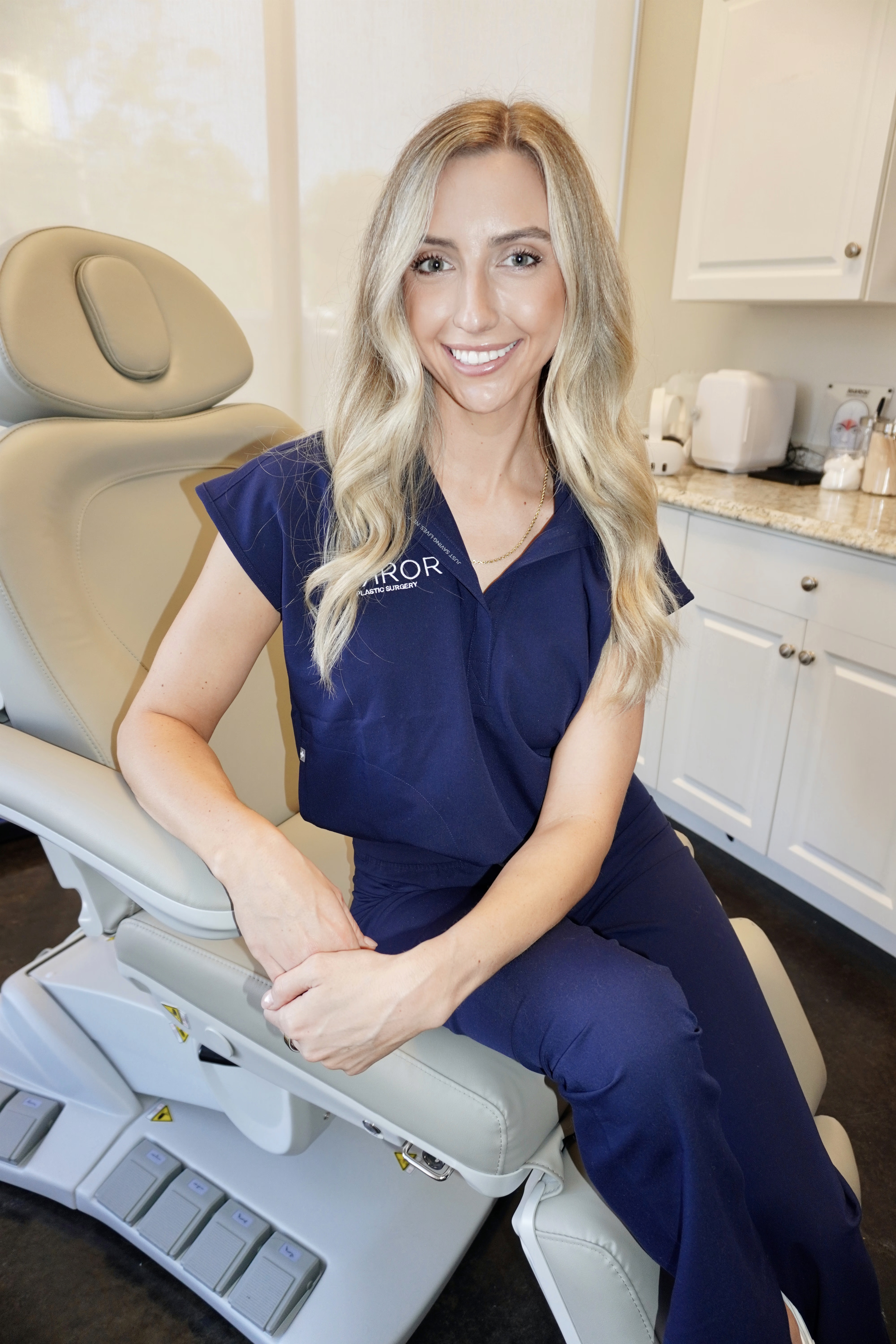
Schedule your evidence-based assessment in St. Petersburg and receive a full-face evaluation that puts your anatomy and long-term well-being first.
Disclaimer: Results may vary from person to person. Editorial content, before and after images, and patient testimonials do not constitute a guarantee of specific results.
1 Results may vary from person to person. Editorial content, before and after images, and patient testimonials do not constitute a guarantee of specific results.