
Written by: Ellie Pranckevicius, FNP-BC, Aesthetic Nurse Practitioner & Aesthetic Injector | Facial Restoration & Regenerative Injectable Specialist, Mirror Plastic Surgery
Key Takeaways for Safer Botox
- Most temporary Botox complications, such as eyelid ptosis, brow asymmetry, and smile distortion, come from specific technique or anatomical errors and usually resolve as the toxin wears off.1
- Issues like the “Spock brow,” forehead heaviness, and masseter over-treatment often follow improper injection placement, excessive dosing, or lack of individualized muscle mapping.1
- Signs of bad Botox include drooping eyelids, uneven brows, frozen expressions, altered smiles, and difficulty chewing, with onset usually occurring within days to weeks after treatment.
- Choosing a qualified injector with hands-on anatomical training, extended consultations, board-certified oversight, and verified FDA-approved product sourcing greatly reduces complication risks.
- At Mirror Plastic Surgery, patients receive thorough, anatomy-focused assessments from Ellie Pranckevicius, FNP-BC, under board-certified oversight to support safe, natural-looking results. Schedule a consultation to discuss your goals.
When Forehead Botox Goes Wrong
The “Spock brow” is one of the most common forehead complaints and creates an unnaturally arched or peaked lateral brow. In a representative case, a patient in her early 40s received forehead injections at a high-volume clinic during a 15-minute appointment. The injector placed units too laterally across the frontalis and did not account for the patient’s existing brow position. The medial frontalis was over-treated and the lateral portion remained active, so the outer brow elevated sharply while the inner brow dropped.
Frontalis and Corrugator: How They Shape Your Brow
The frontalis is the only brow elevator and runs vertically across the forehead before inserting into the skin above the brows. The corrugator supercilii and procerus act as depressors that pull the brow medially and downward. When the medial frontalis is over-treated without balancing the lateral fibers, the lateral brow elevates unopposed. Treating the entire frontalis too aggressively without considering the patient’s resting brow position can cause global brow ptosis, which creates a heavy, hooded appearance. Accurate placement starts with mapping each patient’s unique muscle fiber distribution before any units are injected.
Request a forehead-focused assessment with Ellie before moving forward with neuromodulator treatment.
Real-World Botox Gone Wrong Stories from Reddit
Forum threads across Reddit’s r/PlasticSurgery, r/Botox, and r/SkincareAddiction highlight three dominant complaint themes. Users most often describe upper eyelid ptosis after glabellar or forehead treatment, asymmetric smiles after perioral or masseter injections, and over-treatment of the masseter that creates a “chipmunk” or flattened lower-face appearance. Ptosis appears as the most frequently cited serious concern, with users reporting onset typically 3–14 days after injection.1 Masseter over-treatment complaints often mention difficulty chewing and unintended facial narrowing that changes overall facial harmony.
Why Ptosis, Smile Changes, and Jaw Issues Happen
Eyelid ptosis after glabellar treatment occurs when toxin diffuses through the orbital septum to the levator palpebrae superioris, the muscle that lifts the upper eyelid.1 Diffusion risk increases with high injection volumes, superficial placement, and injection sites positioned too close to the orbital rim. Smile asymmetry after perioral treatment reflects uneven spread to the zygomaticus major or levator labii, muscles that control lip elevation. Masseter over-treatment reduces the bulk of the masseter muscle effectively, but excessive dosing or bilateral asymmetry in placement produces uneven jaw slimming. Each of these errors is preventable with pre-injection muscle mapping and conservative, anatomy-guided dosing.
Meet with Ellie to review your facial anatomy and treatment goals before you commit to injections.
Clear Signs of Bad Botox
- Eyelid or brow drooping, with onset within the first two weeks after treatment, suggests toxin diffusion to the levator palpebrae or over-treatment of the frontalis.
- Asymmetric brow height, visible once swelling resolves, reflects uneven unit distribution across the frontalis.
- Frozen or expressionless forehead, usually apparent by week two, results from excessive dosing that eliminates all frontalis movement.
- Altered smile or lip asymmetry, often starting within the first week, suggests diffusion to perioral elevators.
- Difficulty chewing or jaw fatigue, appearing one to two weeks after masseter injection, indicates over-dosing of the masseter.
- Neck weakness or difficulty swallowing is a rare but serious sign that requires immediate medical evaluation and reflects toxin spread beyond the intended site.
How Toxin Spreads Under the Skin
Botulinum toxin spreads along fascial planes and through loose areolar tissue, so injection depth plays a major role. Superficial intradermal placement limits spread, while deep intramuscular injection near fascial boundaries increases the radius of diffusion. The retro-orbicularis oculi fat (ROOF) pad and the preseptal space create pathways that allow toxin to migrate from the glabellar region toward the levator palpebrae. Understanding these planes and respecting safe distance margins from the orbital rim separates anatomy-trained injectors from those who rely on generic dosing templates.
Schedule an evaluation with Ellie if you notice any of these changes after a recent treatment.
What to Do After a Botched Botox Treatment
Contact your injector immediately if you notice ptosis, asymmetry, or any difficulty swallowing or breathing. Document the onset date, the clinic, and the product name if you know it. Prompt follow-up allows the provider to determine whether the complication is technique-related or product-related. This distinction matters in Florida, where the CDC has documented an increase in hospitalizations linked to counterfeit or unapproved botulinum toxin products administered in non-healthcare settings. If the product source is unknown or the provider cannot show documentation from an authorized distributor, report the incident to the FDA at 800-551-3989 or through the FDA MedWatch program.
| Complication | Typical Onset | Expected Resolution | Recommended Action |
|---|---|---|---|
| Eyelid ptosis | 3–14 days after treatment | over 6 weeks1 | Contact injector; apraclonidine eye drops may be prescribed by a physician |
| Brow asymmetry | within the first few weeks | as the toxin wears off | Follow up for possible corrective micro-dosing |
| Smile distortion | within the first week | typically resolves in 3–4 months as the effects wear off1 | Avoid additional perioral treatment; monitor and follow up |
| Forehead heaviness | shortly after the initial injections | usually settles in 3–5 weeks and resolves completely within 3 months1 | Follow up; conservative corrective dosing may be appropriate |
| Difficulty swallowing/breathing | Hours to days | Requires medical evaluation | Seek emergency care immediately |
Arrange a post-treatment consultation with Ellie if you feel uneasy about a prior injection outcome.
How Often Botox Goes Wrong
Board-certified physicians who follow American Academy of Dermatology standards maintain low serious complication rates when they administer FDA-approved botulinum toxin products. Minor, transient complications such as bruising, mild asymmetry, and localized headache occur more often but usually resolve without intervention. Complication rates rise substantially with unlicensed providers, counterfeit products, and online-only trained injectors who lack hands-on anatomical education.
Technique Choices That Increase or Decrease Risk
Best-practice training standards require hands-on instruction covering facial anatomy and muscle physiology, botulinum toxin pharmacology, injection techniques, patient assessment protocols, and complication recognition and management. Practitioners who complete only online coursework lack the muscle memory and live-patient experience needed to adapt to anatomical variation. Competency in Botox administration requires dedicated education in facial anatomy, injection technique, and complication management beyond mere professional licensure. The variables most predictive of complications include injection depth, unit volume per site, distance from anatomical danger zones, and the injector’s ability to assess individual muscle strength before treatment.
How to Choose a Safe Botox Injector
Provider selection has a direct impact on your risk profile, so use the following checklist as a structured vetting tool.
- Extended consultation time forms the foundation of safe treatment. A thorough injector may spend up to an hour on a top-to-bottom anatomical assessment before recommending any product or dosage, rather than a 10–15 minute visit.
- Board-certified oversight supports that assessment. Non-physician injectors should practice under the supervision of a board-certified plastic surgeon or physician with documented aesthetic training.
- Supplier-neutral product selection should follow a detailed assessment. The injector chooses the FDA-approved neuromodulator that fits your anatomy and goals instead of a product tied to a sales quota.
- Documented product sourcing confirms that the chosen product is authentic. The CDC recommends asking whether botulinum toxin products were purchased from an authorized source of FDA-approved product and watching the provider draw from a labeled vial. Reputable clinics can show documentation from authorized distributors.
- Extended post-procedure support ensures you are not left on your own. Access to follow-up by call, text, or email, rather than a voicemail box, is a basic standard for managing post-treatment concerns.
- Hands-on training credentials round out the safety picture. Strong programs require live-patient experience and ongoing continuing education in aesthetics.
Florida-specific counterfeit warning: In Florida’s high-volume medical spa market, verifying that your provider uses only the six FDA-approved brands, Botox®, Daxxify®, Dysport®, Jeuveau®, Letybo®, and Xeomin®, is especially critical because of documented counterfeit product issues. Warning signs of counterfeit Botox include dosages not produced by the manufacturer such as 150-unit vials, incorrect ingredient names, unusual packaging sizes, and suspiciously low “discount Botox” pricing. Florida’s medical spa market includes many high-volume, low-oversight settings where these risks increase. Verifying product sourcing before any injection is a core patient safety step.
Set up a consultation with Ellie to review your treatment history and confirm that you receive only FDA-approved products from verified sources.
Conclusion: Prevention Starts with Anatomy and Time
The overwhelming majority of Botox complications are temporary and anatomically predictable. Ptosis, brow asymmetry, smile distortion, and forehead heaviness usually trace back to specific technique errors such as incorrect injection depth, excessive unit volume, inadequate pre-treatment muscle mapping, or failure to account for individual anatomical variation. These errors become far less likely when the injector combines hands-on anatomical training, extended consultation time, and access to verified FDA-approved products.
At Mirror Plastic Surgery in St. Petersburg, Ellie Pranckevicius, FNP-BC, applies this anatomical rigor to every neuromodulator consultation. Her hour-long, top-to-bottom assessments evaluate facial muscle strength, resting brow position, diffusion risk zones, and long-term aesthetic goals before any units are placed, all under the board-certified oversight of plastic surgeon Dr. Akash Chandawarkar. Mirror Plastic Surgery remains supplier-neutral, so product selection follows your anatomy and goals rather than distributor incentives.
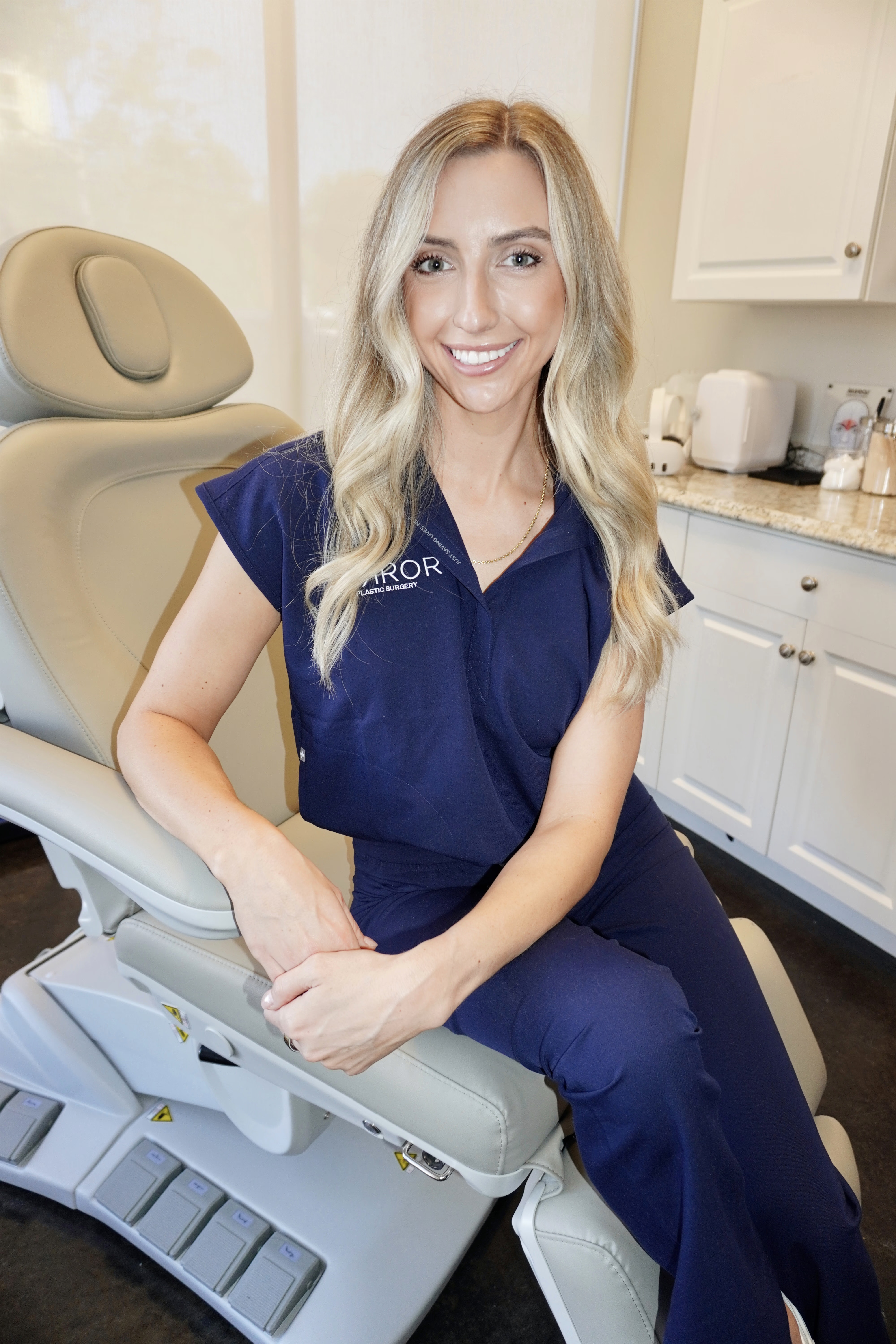
Schedule a consultation with Ellie at Mirror Plastic Surgery and receive the detailed anatomical assessment your treatment deserves.
Frequently Asked Questions
Can bad Botox be reversed or corrected?
Botulinum toxin cannot be chemically reversed the way hyaluronic acid fillers can be dissolved with hyaluronidase. Most temporary complications, including ptosis, brow asymmetry, and smile changes, resolve on their own as the toxin metabolizes over 6–12 weeks. In some cases, a qualified injector can place small corrective doses in adjacent muscles to rebalance the face. For eyelid ptosis specifically, a physician may prescribe apraclonidine eye drops, which stimulate Müller’s muscle to partially elevate the lid while the toxin wears off. The most effective correction remains prevention, and a thorough pre-treatment anatomical assessment significantly reduces the likelihood of these outcomes.
How do I know if my Botox provider is qualified in Florida?
In Florida, nurse practitioners, physician assistants, and physicians are among the licensed professionals authorized to administer botulinum toxin, yet you still need to confirm real-world competency. You can verify a provider’s active license through the Florida Department of Health’s online lookup tool. Beyond licensure, look for documented hands-on training in facial anatomy and injection technique, board-certified physician oversight for non-physician injectors, and a practice that offers extended consultations instead of rapid-turnover appointments. Ask to see the product vial before treatment and request documentation confirming that it came from an authorized distributor of an FDA-approved product.
What questions should I ask before getting Botox?
Arrive with a short list of direct questions. Ask which FDA-approved product the provider will use and request to see the vial and sourcing documentation. Clarify how long the consultation will take and whether your full facial anatomy will be assessed before any dosage is recommended. Ask about training background, physician oversight, and the clinic’s protocol if you experience a complication after you leave. Finally, ask how the provider determines the number of units appropriate for your specific muscle strength and anatomy. Clear, pressure-free answers signal the transparency and clinical depth that define a safety-first practice.
How long does Botox last, and what affects its duration?
FDA-approved botulinum toxin products typically last 3–6 months for most patients, although individual variation is significant.1 Duration depends on the specific product used, the muscle group treated, the number of units placed, the patient’s metabolic rate, and whether the patient has received regular treatments over time.1 Daxxify, for example, is formulated with a peptide excipient that may extend its effect. Consistent treatment at appropriate intervals can train muscles to respond with less force over time and may allow for lower maintenance doses. An injector who understands these variables can design a long-term treatment plan instead of repeating a fixed protocol at every visit.
Is Botox safe if I have had complications before?
A prior complication does not automatically rule out future neuromodulator treatment, but it does call for a more detailed pre-treatment evaluation. The injector should review the prior treatment record, including product used, units placed, injection sites, and timing of the complication, to identify the likely anatomical cause. If the prior complication involved a counterfeit or unverified product, the first priority is confirming that only FDA-approved products from authorized distributors will be used going forward. If the complication was technique-related, a revised injection map based on your specific muscle anatomy can significantly reduce recurrence risk. Patients with a history of complications benefit most from extended, anatomy-focused consultations that prioritize careful assessment before any treatment.
Disclaimer: Results may vary from person to person. Editorial content, before and after images, and patient testimonials do not constitute a guarantee of specific results.
The information in this article is for educational purposes only and does not constitute medical advice. Individual results vary. Consult a qualified healthcare provider for personalized recommendations.
1 Results may vary from person to person. Editorial content, before and after images, and patient testimonials do not constitute a guarantee of specific results.