
Written by: Ellie Pranckevicius, FNP-BC, Aesthetic Nurse Practitioner & Aesthetic Injector | Facial Restoration & Regenerative Injectable Specialist, Mirror Plastic Surgery
Key Takeaways
- Sermorelin and ipamorelin are growth hormone secretagogues that stimulate the body’s own GH release rather than introducing exogenous hormone.
- As of 2026, sermorelin remains legally compoundable under clinician prescription, while ipamorelin’s status depends on the July 2026 FDA advisory committee review.
- A true concierge program accounts for regulatory realities, uses batch-tested sourcing from regulated pharmacies, and provides ongoing lab-guided oversight.
- Patients can expect structured steps including consultation, personalized dosing, self-administration training, and 24/7 practitioner access for safety and results.
- Schedule your personalized consultation at Mirror Plastic Surgery to begin with comprehensive lab review and protocol design.
Inside Mirror’s Concierge Sermorelin + Ipamorelin Process
Mirror Plastic Surgery’s concierge program follows a structured five-step process that prioritizes safety, personalization, and continuous oversight. This framework gives each patient medical-grade peptides with documented purity, dosing tailored to their labs, and direct access to a practitioner throughout treatment, which are rarely present with unregulated online peptide sources.
- Consultation and lab screening. Ellie Pranckevicius, FNP-BC, conducts a 30–60 minute intake that covers medical history, current medications, and health goals. Baseline labs, including IGF-1, a metabolic panel, hormonal markers, and glucose, are reviewed or ordered before any protocol begins.
- Personalized protocol design. The team builds a dosing schedule around each patient’s physiology and goals. Clinicians commonly prescribe subcutaneous injections at bedtime to match the body’s natural nocturnal GH surge, with some protocols adding a morning dose when appropriate.
- Batch-tested sourcing. Peptides come only from regulated compounding pharmacies that provide Certificates of Analysis. These documents confirm the correct compound, accurate concentration, and absence of harmful contaminants, a critical distinction from unverified online peptide suppliers where industry testing shows up to 40% of products contain incorrect compounds, wrong concentrations, or dangerous contaminants (with 15-20% having harmful contaminants).
- Self-administration training. Patients receive clear reconstitution and injection instructions, often with video demonstrations. This support helps them administer therapy safely and confidently at home.
- Ongoing 24/7 oversight. Ellie is available via direct text message around the clock for questions, symptom tracking, and refill requests. Physician-supervised protocols recommend reassessment at 6–8 weeks and then quarterly, using IGF-1 response and metabolic markers.
Regulatory transparency. Sermorelin is legally compoundable by regulated pharmacies with a prescription. Ipamorelin has been removed from the FDA’s Category 2 restricted compounding list and is scheduled for review at the July 2026 Pharmacy Compounding Advisory Committee meeting to determine whether it may be reclassified for legal compounding under Section 503A. Mirror Plastic Surgery explains this status clearly and structures protocols around current law.
Maintenance protocols. Most supervised programs evaluate treatment at 3–6 month intervals and adjust dosing based on IGF-1 trends, symptom changes, and metabolic markers such as fasting glucose and HbA1c. Many published studies on GHRH analogs have evaluated treatment periods lasting several months.
Result variability. Outcomes differ between individuals based on age, baseline hormone levels, nutrition, sleep, exercise habits, and protocol adherence. No two patients follow an identical trajectory, which is why individualized, lab-guided dosing remains central to the program.
Schedule your consultation with Ellie to begin with a comprehensive lab review and personalized protocol design.
What Sermorelin Does for Men
Sermorelin acetate is a synthetic 29-amino-acid peptide identical to the first 29 residues of endogenous growth hormone-releasing hormone (GHRH). It binds GHRH receptors on the anterior pituitary to trigger pulsatile GH release while preserving the hypothalamic somatostatin feedback loop. The body keeps its natural brake on GH production, so supraphysiological levels are less likely than with direct HGH injection.
For men with age-related GH decline, restored pulsatile GH secretion raises IGF-1, which supports tissue repair, lean mass maintenance, and metabolic function.1 A 2017 retrospective study of hypogonadal men receiving sermorelin in combination with growth hormone-releasing peptides found serum IGF-1 rose approximately 50% over several months.1
GHRH administration in controlled studies has been shown to increase slow-wave sleep in healthy men1. This finding matters for men whose poor sleep quality contributes to impaired recovery and body composition changes. Clinical trials of tesamorelin have shown visceral adipose tissue reduction at 26 weeks, sustained through 52 weeks, without significant glucose perturbation.1
Men over 35 with declining energy, reduced exercise recovery, unfavorable body composition changes despite consistent training, or confirmed low IGF-1 are strong candidates for evaluation. Lab screening before initiation is essential because it establishes baseline values, reveals contraindications, and guides safe dosing for this higher-risk group.
Risks and Downsides of Ipamorelin
Common side effects of ipamorelin include mild injection-site irritation, headache (typically early in treatment), temporary flushing or warmth after injection, and mild changes in appetite. These effects are usually transient and dose-dependent.
Ipamorelin’s main clinical advantage over earlier growth hormone secretagogues is its selectivity. The Raun et al. 1998 study in the European Journal of Endocrinology demonstrated that ipamorelin produced no significant elevation of cortisol or prolactin. However, the 2026 Frontiers in Endocrinology narrative review notes that adverse effects across the GH-axis peptide class can include prolactin or cortisol elevations, appetite changes, dysglycemia, and fluid retention, which reinforces the need for medical oversight when these agents are used off-label.
Contraindications include active malignancy or personal history of cancer, diabetes mellitus or clinically significant insulin resistance, active intracranial lesions or history of pituitary tumor, pregnancy or breastfeeding, known hypersensitivity to the peptide, and untreated hypothyroidism, which can interfere with the effects of sermorelin. Thyroid screening is therefore a standard component of pre-treatment labs.
The regulatory uncertainty around ipamorelin, described in the legal status section below, is itself a practical downside that medically supervised programs must explain clearly.
Legal Status of Sermorelin and Ipamorelin in 2026
Sermorelin is legally available for compounding in the United States as of 2026 and has an established legal pathway under clinician prescribing and regulated pharmacy rules. Sermorelin, a GHRH analog previously approved by the FDA under the brand name Geref for pediatric growth hormone deficiency, was commercially withdrawn in 2008 for non-safety reasons rather than efficacy or safety concerns, and it has remained legally compoundable since.
Ipamorelin’s status is more complex. As of April 2026, ipamorelin has been removed from the FDA’s Category 2 restricted compounding list and is scheduled for review at the July 2026 Pharmacy Compounding Advisory Committee meeting. Even if ipamorelin is reclassified from Category 2 to Category 1 following the July 2026 meeting, it would remain unapproved by the FDA with no validated indications or standardized dosing, and would only become eligible for prescription-based compounding by regulated pharmacies.
The practical implication is straightforward. Clinicians can legally prescribe and compound sermorelin today, while legal compounding access to ipamorelin depends on the July 2026 regulatory outcome. Mirror Plastic Surgery structures protocols to reflect current law and updates patients as the regulatory landscape evolves.
Sermorelin + Ipamorelin Before and After: What Patients Report
Patients using combined sermorelin-ipamorelin therapy typically report improved sleep quality and onset within weeks 1–4, deeper restorative sleep and noticeable workout recovery by weeks 4–8, visible body-composition changes and increased muscle tone by weeks 8–12, and continued lean-mass gains plus metabolic improvements over months 3–6.1
Outcome variability is influenced by treatment dosage and protocol, age, baseline hormone levels, lifestyle habits including nutrition, exercise, sleep, and stress, and treatment adherence; younger patients often respond faster due to superior pituitary function.
As noted earlier, IGF-1 elevation begins within weeks, but measurable changes in body composition, sleep quality, and recovery are generally reported at 3–6 months, with stronger responses in individuals who have lower baseline IGF-1.1 Patients with higher baseline IGF-1 or those who do not address lifestyle factors concurrently tend to see more modest results.
Realistic expectations are central to Ellie’s intake process. Before-and-after outcomes are individual, not guaranteed, and are best evaluated against each patient’s own baseline labs and symptom profile rather than generalized claims.
How to Access Sermorelin Through Mirror Plastic Surgery
The path through Mirror Plastic Surgery’s concierge model starts with a consultation, available in person at the St. Petersburg, Florida office or remotely across the United States, including Hawaii and Alaska. During that visit, Ellie reviews medical history, current medications, and health goals, then orders or reviews relevant lab panels. She designs a personalized protocol based on those results.
Peptides are dispensed through regulated compounding pharmacies that provide batch testing documentation and ship directly to the patient. Reconstitution and self-injection training come with clear instructions and video support. Ongoing access to Ellie via direct text keeps questions answered and protocols adjusted as needed.
This pathway contrasts with purchasing from online retailers, where grey-market sources carry a risk of contamination and lack monitoring or legal protections.
Book an appointment with Ellie to start the process remotely or in person.
What to Expect When You Stop Sermorelin or Ipamorelin
When sermorelin or ipamorelin therapy stops, the stimulatory signal to the pituitary ends and endogenous GH secretion returns to its pre-treatment baseline. Symptoms that were managed by the therapy, such as reduced energy, slower recovery, and unfavorable body composition, often return over time.1 Some clinicians prefer cycling strategies, with periods on and off, based on clinical judgment rather than established evidence of tachyphylaxis.
In a 1992 study, IGF-1 levels in elderly subjects increased following sermorelin treatment, suggesting some residual effect in the short term.1 Sustained benefits, however, require continued use within a maintenance protocol. Ellie monitors IGF-1, symptom changes, and metabolic markers at regular intervals to determine whether a patient should continue, cycle, or taper based on their individual response.
Meet Your Practitioner: Ellie Pranckevicius, FNP-BC
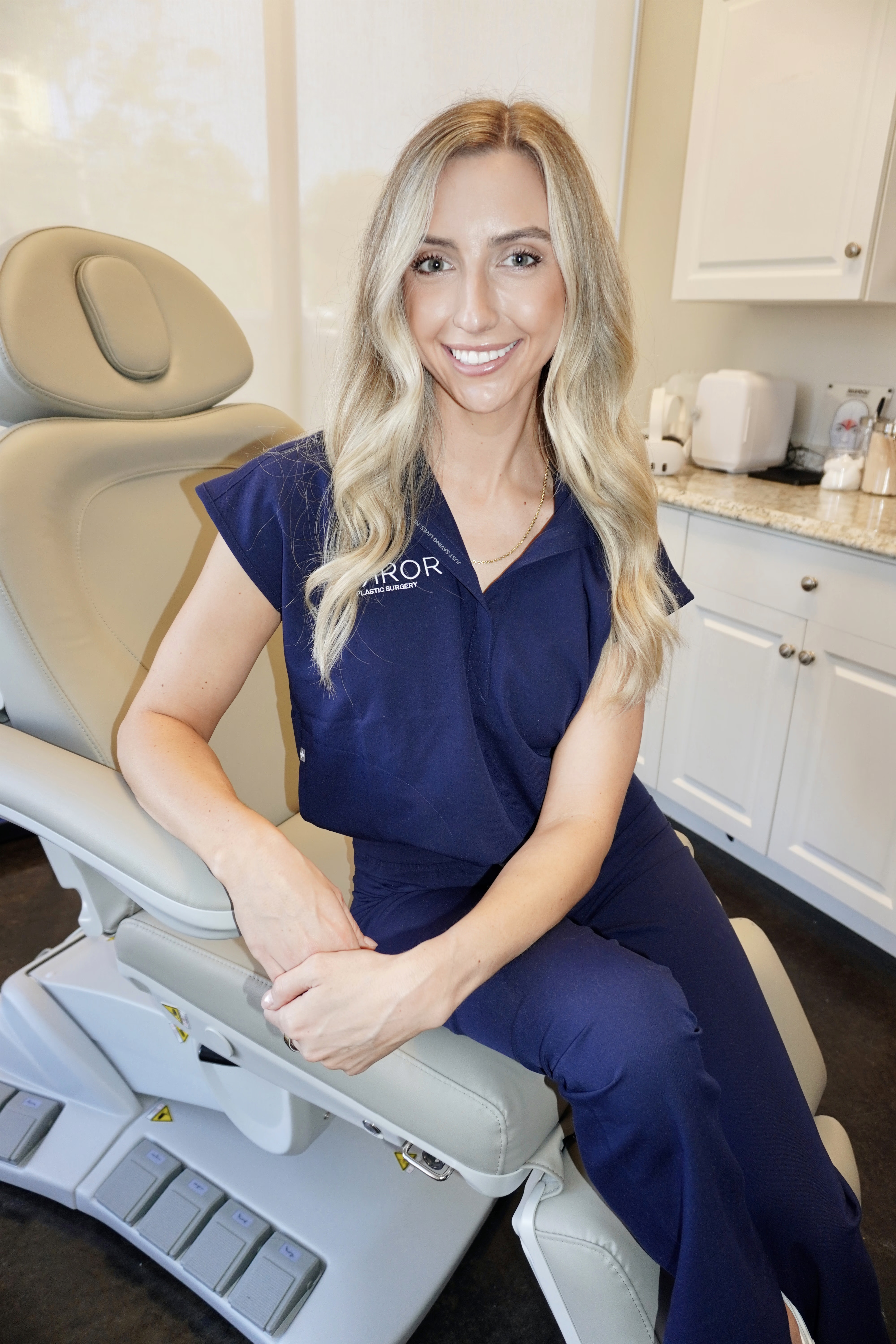
Ellie Pranckevicius is a board-certified Family Nurse Practitioner and the lead practitioner for peptide therapies at Mirror Plastic Surgery. She holds a Bachelor’s in Health Science from Boston University, completed an aesthetics licensure program, and earned both her Bachelor’s and Master’s in Nursing from the University of South Florida.
Her clinical foundation includes four years in the Neuroscience ICU at Tampa General Hospital, where she managed complex patients and developed a deep command of physiology, metabolic health, and recovery. Ellie began her career at a high-end medical spa in Boston, which gives her a dual perspective that blends aesthetic assessment with advanced clinical science.
She is available to patients via direct text, 24 hours a day, and often tells clients when a service or product is not yet necessary for them. Her focus stays on long-term outcomes rather than short-term revenue.
Frequently Asked Questions
Is sermorelin safe for long-term use?
Sermorelin is generally considered well-suited for extended use because its mechanism supports ongoing pituitary function rather than suppressing it. It stimulates the body’s own pulsatile GH release and preserves the somatostatin feedback loop, so supraphysiological GH levels are less likely than with direct HGH replacement.
Long-term safety in healthy aging adults remains an active research area. Periodic lab monitoring, including IGF-1, fasting glucose, and HbA1c, is therefore a standard part of any responsible protocol. Contraindications such as active malignancy, untreated hypothyroidism, or significant insulin resistance must be ruled out before initiation and reassessed at regular intervals.
Who is a good candidate for sermorelin therapy?
Adults over 35 with symptoms consistent with age-related GH decline, such as reduced energy, slower exercise recovery, unfavorable body composition changes despite consistent lifestyle habits, or poor sleep quality, are primary candidates for evaluation. Confirmed low or declining IGF-1 on lab testing strengthens candidacy.
Individuals with active cancer, untreated pituitary disorders, significant insulin resistance, or who are pregnant or breastfeeding are not appropriate candidates. A comprehensive intake consultation with lab review remains the only reliable way to determine individual suitability.
Can I access Mirror Plastic Surgery’s peptide program if I do not live in Florida?
Yes. The entire process, from initial consultation through protocol design, pharmacy dispensing, and ongoing support, can occur remotely across the United States, including Hawaii and Alaska. Consultations take place via telemedicine, labs can be ordered through national draw sites, and peptides ship directly to the patient.
Ellie remains accessible via direct text throughout the program, regardless of the patient’s location.
What lab work is required before starting sermorelin therapy?
Standard pre-treatment labs include IGF-1, a comprehensive metabolic panel, hormonal markers, thyroid function, and fasting glucose. Additional panels may be ordered based on the patient’s history and goals.
These results guide protocol design and establish the baseline used to measure progress at follow-up intervals. Patients who arrive with recent lab work can have those results reviewed during the initial consultation. If labs are not available, Ellie orders them before any protocol begins.
What distinguishes Mirror Plastic Surgery’s program from a general telemedicine peptide clinic?
The primary distinctions are depth of oversight, practitioner access, and sourcing transparency. Mirror Plastic Surgery limits patient volume to preserve the quality of each clinical relationship, a concierge philosophy that extends to peptide therapy.
Ellie conducts comprehensive intake consultations, reviews or orders full lab panels, designs individualized protocols, and remains available via direct text 24 hours a day. Peptides come from regulated compounding pharmacies with documented batch testing. This approach contrasts with higher-volume platforms that may offer standardized protocols without individualized lab review or ongoing practitioner access.
Conclusion: A Concierge Path to Regulated Peptide Therapy
Sermorelin and ipamorelin therapy sits at the intersection of endocrinology, regulatory compliance, and individualized medicine. Sermorelin’s legal compounding status, combined with ipamorelin’s pending July 2026 reclassification review, means the regulatory landscape requires active monitoring rather than assumptions.
Realistic timelines, batch-tested sourcing, baseline lab screening, and continuous practitioner access form the core of a program that aims for safe, meaningful results. Mirror Plastic Surgery’s Florida-based concierge model, led by Ellie Pranckevicius, is built around those components, with remote access available to patients across the United States.
Book an appointment with Ellie to receive a comprehensive lab review, a personalized protocol, and direct practitioner access from day one.
Disclaimer: Sermorelin is legally compoundable in the United States with a valid prescription from a licensed provider. Ipamorelin was removed from the FDA’s Category 2 restricted compounding list effective April 2026, with a scheduled advisory committee review in July 2026; its legal compounding status is subject to change. Results from growth hormone secretagogue therapy vary significantly between individuals based on age, baseline hormone levels, lifestyle factors, and protocol adherence. No outcomes are guaranteed. All peptide therapies at Mirror Plastic Surgery are provided under the supervision of a licensed practitioner following individualized medical evaluation. This content is for educational purposes and does not constitute medical advice.
1 Results may vary from person to person. Editorial content, before and after images, and patient testimonials do not constitute a guarantee of specific results.
Peptide therapy is intended for wellness and optimization purposes and is not prescribed to diagnose, treat, cure, or prevent disease unless specifically stated. Many peptides are not FDA-approved and may be used off-label. Some have limited long-term safety data, with a potential for unknown risks, complications, or desensitization with prolonged use.