BBL Surgery Procedure: Step-by-Step Guide for Patients
Content
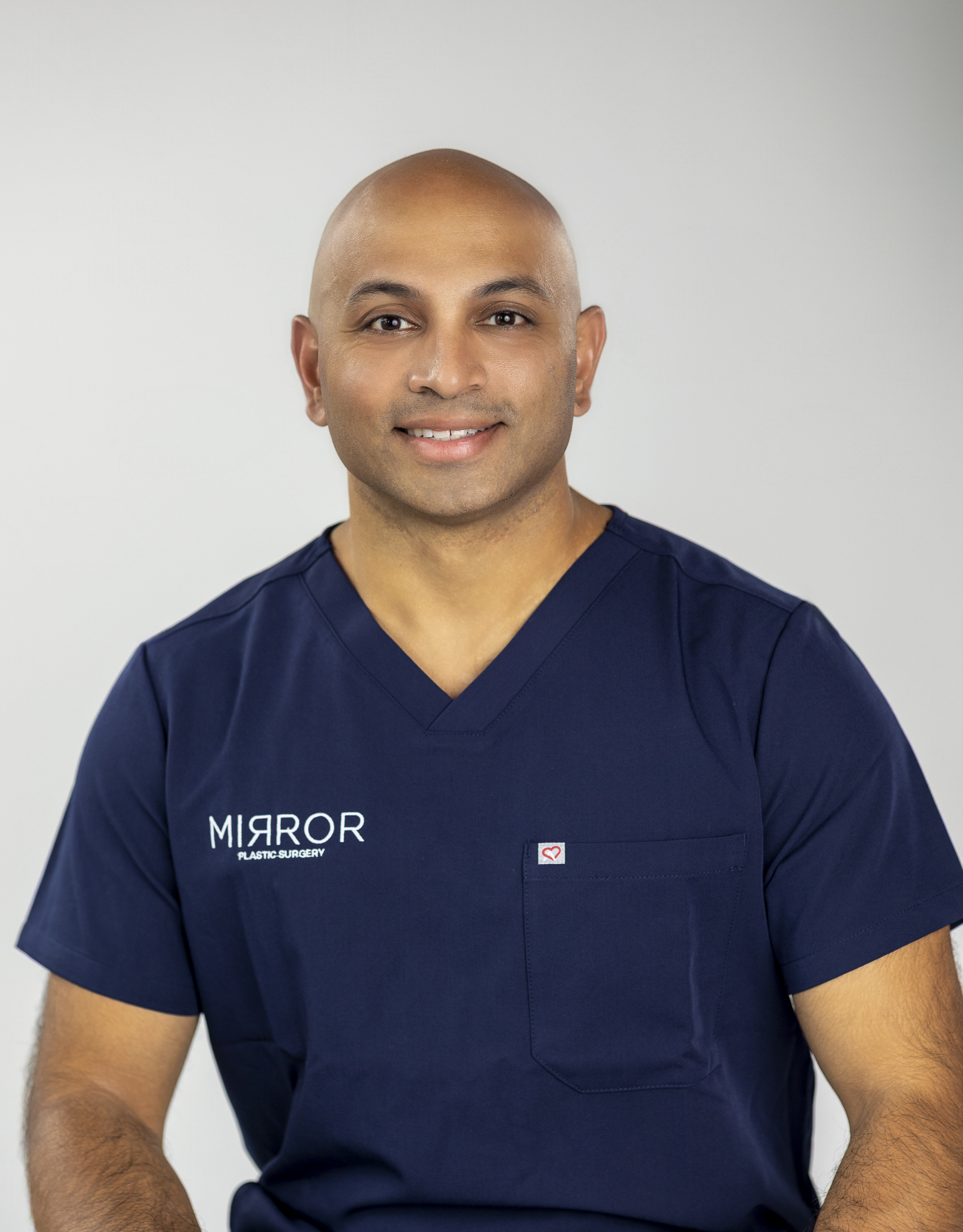
Written by: Dr. Akash Chandawarkar, Board Certified Plastic Surgeon, Mirror Plastic Surgery
Key Takeaways
A Brazilian Butt Lift (BBL) uses liposuction to remove, purify, and precisely inject your own fat into the buttocks for natural volume and shape without implants.
The procedure follows eight clear stages, from consultation and safety testing through fat harvesting, subcutaneous-only injection with ultrasound guidance, and structured recovery, usually completed in two to four hours.
Key safety measures include accredited facilities, board-certified anesthesiologists, and real-time ultrasound to keep all fat in the subcutaneous layer, which dramatically lowers the risk of fat embolism.
Patients follow a strict recovery plan: no direct sitting for two weeks, use of a BBL pillow, compression garments, lymphatic drainage, and gradual return to activity, with final results visible at three to six months.
Choosing a board-certified plastic surgeon with elite training and a low-volume practice is critical; schedule your personalized consultation at Mirror Plastic Surgery to review your goals and safety plan in detail.
Step-by-Step Overview of the BBL Process
The complete BBL sequence includes eight stages: pre-operative consultation and testing, anesthesia and operating-room setup, fat harvesting, fat processing, fat injection, immediate post-operative care, structured recovery, and long-term follow-up.
Total operating-room time usually ranges from two to four hours, depending on the volume of fat removed and the number of donor sites. Most patients feel the most discomfort in the first few days after surgery, then notice steady improvement over the following weeks.
Pre-Operative Consultation and Safety Testing at Mirror Plastic Surgery
A thorough consultation creates the foundation for a safe, predictable outcome. At Mirror Plastic Surgery, Dr. Akash dedicates up to a full hour to each new patient. That visit covers a complete anatomical assessment, a review of medical history, and a direct discussion of realistic goals and limitations.
These pre-operative steps work together to confirm your anatomy, rule out medical risks, and verify that the surgical setting meets national safety standards:
Ultrasound-assisted marking to map donor sites and measure subcutaneous fat depth before the day of surgery.
Medical clearance including laboratory work, cardiac evaluation when indicated, and a full medication review.
Facility verification, since BBL procedures must take place in facilities accredited by the Joint Commission, AAASF, or AAAHC to meet standards for cleanliness, safety, equipment, and emergency readiness.
Anesthesia planning, following ASPS, ISAPS, and ASERF BBL Task Force guidance that a board-certified anesthesiologist should administer anesthesia for all gluteal fat grafting procedures.
BBL takes place under general anesthesia. The patient lies prone, or face-down, on the operating table, which professional societies recommend because it gives safe access to both donor and recipient sites. The procedure must occur in an accredited facility with appropriate emergency equipment and protocols. A board-certified physician anesthesiologist monitors the patient continuously throughout surgery.
Fat Harvesting and Careful Processing
Common donor sites include the abdomen, flanks, lower back, and inner thighs. The team selects these areas based on each patient’s anatomy and aesthetic goals. Fat is removed using gentle, low-pressure liposuction with small 3 mm cannulas, which helps limit trauma to the fat cells. Surgeons usually harvest 500–1,500+ mL of fat from multiple donor sites and plan for volume lost during processing and natural resorption after injection.
The harvested fat cannot go back into the body immediately, because it contains blood, tumescent fluid, and damaged cells that would lower graft survival. Once removed, the fat is purified by centrifugation to separate healthy fat cells from blood, oil, and cellular debris. Only the highest-quality fat layer is prepared for injection.
Subcutaneous-Only Fat Injection for BBL Safety
The safest current BBL method uses subcutaneous-only fat grafting in the fatty layer above the gluteal muscle, combined with intraoperative ultrasound guidance to confirm cannula depth in real time. Fat is delivered in micro-aliquots of 0.1–0.5 mL per pass with a large, blunt-tipped cannula. The surgeon spreads these small amounts across multiple planes within the subcutaneous layer to increase contact with blood supply and support fat survival.
⚠ Safety Protocol: Subcutaneous Placement Only Fat must stay in the subcutaneous layer below the skin and never enter the gluteal muscles. The 2017 ASERF Task Force reported that deep muscle injection carries a much higher risk of fatal and nonfatal pulmonary fat embolism.
The gluteal muscles contain many more blood vessels than the subcutaneous layer, and fat injected into muscle can enter the venous system, travel to the lungs, and cause a fatal pulmonary embolism. The 2022 multi-society Practice Advisory by ASPS, ASAPS, and ISAPS established real-time ultrasound guidance during subcutaneous fat injection as the standard of care for gluteal fat grafting.
Immediate Post-Operative Care After BBL
After surgery, patients move to a monitored recovery area before discharge home. Early care focuses on swelling control, clot prevention, and pain relief.
Key immediate care elements include:
Compression garment (faja), worn 24 hours daily for the first two weeks with a cut-out rear panel, then 20–24 hours in weeks 3–4 and 12–16 hours daily in weeks 5–8.
Manual lymphatic drainage (MLD), recommended to reduce swelling and lower the risk of fibrosis in treated areas.
Early mobility, with patients encouraged to walk 5–10 minutes every 2–3 hours starting on day one to reduce blood clot risk.
Pain management using surgeon-directed oral medications, with pain usually highest in the first 24 hours and then decreasing through the first month.
Recovery Timeline and Sitting Protocol After BBL
The sitting protocol protects newly transferred fat cells during the early vascularization window, when new blood vessels form to nourish the grafted tissue. Direct pressure can collapse these fragile vessels and kill fat cells before they fully integrate.
Weeks 1–2: Avoid direct sitting on the buttocks. Sleep on your stomach or side. Studies indicate that sitting during this period can reduce fat survival by up to 30%.1 Many patients return to desk work around days 10–14 using a standing desk or pressure-off strategy.
Weeks 3–4: Brief sitting of 20–45 minutes with a BBL pillow under the thighs is usually allowed, which keeps direct pressure off the grafted tissue.
Weeks 5–8: Sitting tolerance often increases to 45–60 minutes at a time. Light cardio such as brisk walking and stationary cycling is generally allowed. Most patients resume driving around weeks 2–3 once they no longer need narcotic pain medication.
Month 3+: Most patients return to unrestricted sitting around month three. Glute-focused exercises such as squats and lunges usually remain restricted until 8–12 weeks after surgery.
Is it hard to poop after a BBL? Many patients notice temporary constipation. Narcotic pain medications prescribed in the first week commonly slow bowel movements. Surgeons usually recommend stool softeners, adequate hydration, and a high-fiber diet starting the day of surgery. Most patients return to normal bowel function within 5–7 days as pain medication use decreases.
What is a BBL smell? Some patients notice a mild odor from the small incision sites during the first 1–2 weeks while the body clears residual tumescent fluid and the wounds heal. This mild smell is normal. Any strong, foul, or worsening odor should be reported to your surgeon immediately, because it may signal infection.
Fat Survival, Results, and Touch-Up Expectations
Clinical sources commonly estimate that 60–80% of transferred fat survives long term after a BBL.1 Surgeons usually overcorrect by transferring 20–30% more volume than the desired final result to account for expected resorption.1
Final results are not fully visible until 3–6 months after surgery, once surviving fat cells complete vascularization and the “fluff and drop” phase ends.1 Transferred fat behaves like normal body fat, so significant weight loss after surgery will reduce buttock volume, while weight gain can increase it. Maintaining a stable body weight remains the single most important factor in preserving long-term results.
How to Choose a Qualified BBL Surgeon in Tampa Bay
Surgeon selection is the most consequential safety decision a BBL patient makes. Any licensed physician in the United States can legally perform BBL without plastic surgery board certification, so careful credential checks matter. Key criteria that together form a complete safety profile include:
Board certification by the American Board of Plastic Surgery, which confirms completion of rigorous training and examination.
Elite fellowship training in aesthetic surgery at a recognized institution, which adds advanced specialization in body contouring beyond residency.
Accredited surgical facility with emergency protocols and a board-certified anesthesiologist, which provides the infrastructure that supports safe surgery.
Low procedural volume, since studies have shown that a high percentage of BBL deaths in South Florida occurred at high-volume clinics where throughput often outweighs individualized attention.
Dr. Akash at Mirror Plastic Surgery holds board certification from the American Board of Plastic Surgery, earned his medical degree from Harvard Medical School with Honors through the Harvard-MIT Health Sciences and Technology program, completed a seven-year plastic and reconstructive surgery residency at Johns Hopkins University, and completed an aesthetic surgery fellowship at the Manhattan Eye, Ear and Throat Hospital (MEETH).
He also completed the Stanford University Biodesign Innovation Fellowship and serves on advisory boards for companies that advance surgical technology.
Mirror Plastic Surgery limits its schedule to one to two surgeries per day, which reflects a deliberate, safety-first model that gives every patient the full attention of the entire clinical team before, during, and after surgery.
Most patients feel significant discomfort during the first few days after surgery, then notice steady relief over the following weeks. Pain is managed with surgeon-prescribed oral medications and usually decreases as mobility improves. Discomfort from the liposuction donor sites often feels more intense than from the buttock injection sites.
When can I sit normally after a BBL?
Direct sitting on the buttocks is restricted for the first two weeks to protect newly grafted fat cells. From weeks two through eight, patients use a BBL pillow under the thighs to offload pressure from the buttocks during brief sitting intervals. Most patients return to normal, unrestricted sitting around the three-month mark, once fat cells have fully vascularized and integrated into surrounding tissue.
What is the real risk of fat embolism with a modern BBL?
As detailed in the safety protocol above, the historical mortality rate of about 1 in 3,000 was linked to intramuscular fat injection. The shift to subcutaneous-only injection with ultrasound guidance has dramatically reduced that risk. Choosing a board-certified surgeon who operates in an accredited facility is the most direct way to access these improved safety outcomes.
How much of the transferred fat will survive long term?
As discussed in the recovery section, the commonly cited 60–80% survival range reflects natural resorption during the first three months.1 Surgeons routinely overcorrect volume at the time of surgery to account for fat that the body will naturally reabsorb during this period. Maintaining a stable body weight after surgery remains the most important patient-controlled factor in preserving final results.
What credentials should I verify before choosing a BBL surgeon in Tampa?
Verify board certification by the American Board of Plastic Surgery, completion of a recognized aesthetic surgery fellowship, and that your procedure will take place in a Joint Commission-, AAASF-, or AAAHC-accredited facility with a board-certified anesthesiologist.
Ask whether the surgeon uses subcutaneous-only technique with intraoperative ultrasound guidance, and ask how many BBL procedures they perform per day. A low-volume practice that performs one to two surgeries daily usually offers a very different level of individualized attention than a high-volume clinic.
1 Results may vary from person to person. Editorial content, before and after images, and patient testimonials do not constitute a guarantee of specific results.