
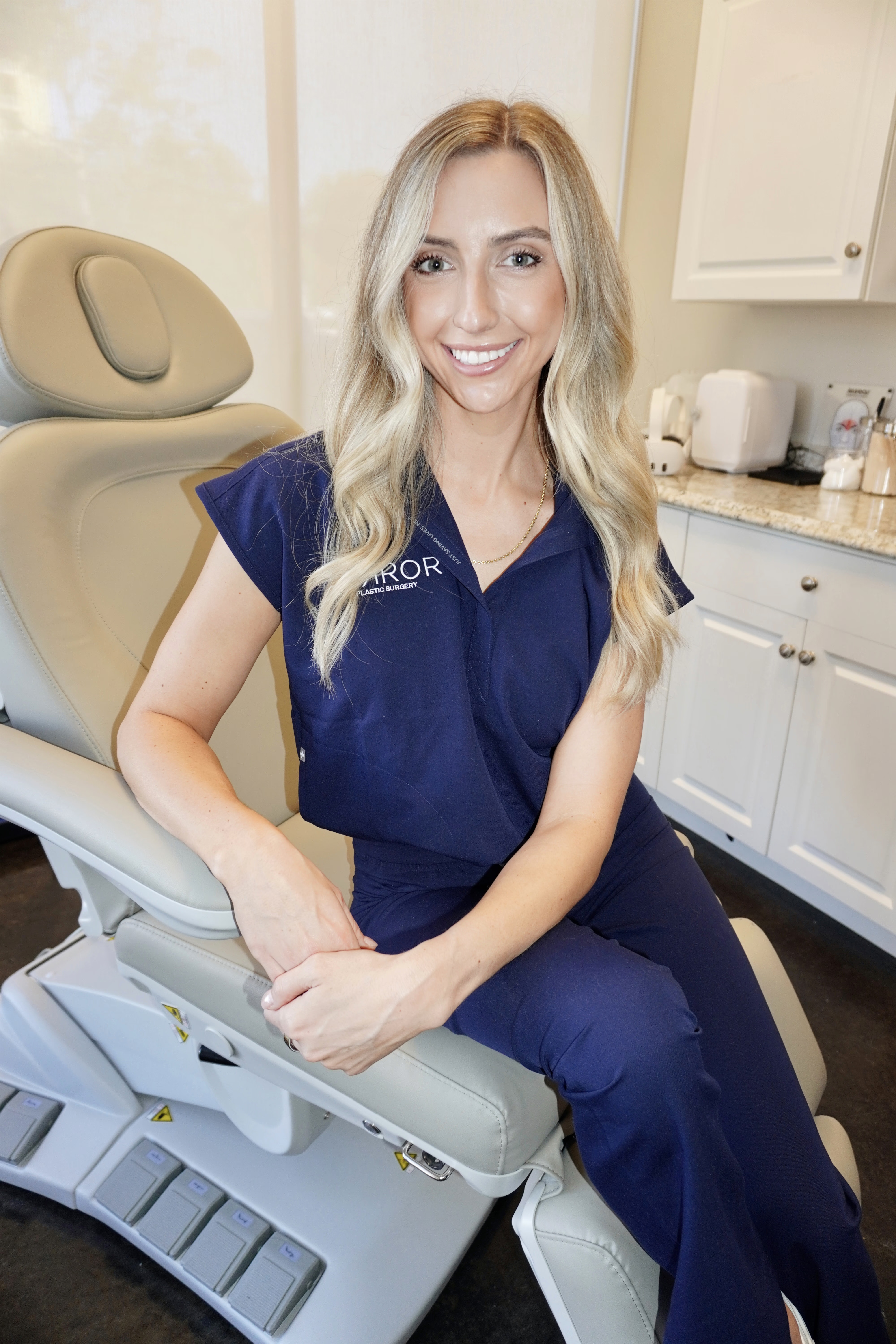
Written by: Ellie Pranckevicius, FNP-BC, Aesthetic Nurse Practitioner & Aesthetic Injector | Facial Restoration & Regenerative Injectable Specialist, Mirror Plastic Surgery
Key Takeaways on BBL Safety and Options
- Traditional Brazilian Butt Lift (BBL) surgery carries significant risk from pulmonary fat embolism when fat enters or lies beneath the gluteal muscle.
- Modern safety protocols such as subcutaneous-only fat placement and real-time ultrasound guidance have substantially reduced BBL mortality rates since 2018.1
- Non-surgical BBL using biostimulatory fillers like Radiesse or alloClae offers a lower-risk alternative by avoiding liposuction, general anesthesia, and intramuscular injection.1
- Choosing a board-certified provider in an accredited facility remains critical, because most historical BBL fatalities occurred at high-volume, non-accredited clinics.
- To explore safer gluteal enhancement options tailored to your anatomy, schedule a personalized consultation with Ellie at Mirror Plastic Surgery.
How BBL Works and Why Safety Varies
Gluteal augmentation includes several distinct approaches: surgical fat transfer (the traditional BBL), implant-based augmentation, and non-surgical injectable techniques using biostimulatory fillers. In everyday use, the term “BBL” usually refers to the surgical procedure in which fat is harvested via liposuction from donor sites such as the abdomen or flanks and then re-injected into the buttocks to add volume and shape.
The central safety concern in surgical BBL is pulmonary fat embolism (PFE), a mechanical blockage of the pulmonary arteries by fat particles that have entered the venous circulation. PFE is a mechanical blockage of the pulmonary veins by fat particles, and when enough fat reaches the lungs, it blocks blood flow and oxygen exchange, which can cause respiratory collapse and death.
The injection plane, meaning where fat is deposited, determines whether PFE risk is present. Intramuscular injection means fat is placed into or below the gluteus maximus muscle, where large-diameter veins reside. Subcutaneous injection means fat is placed in the fatty tissue layer above the muscle fascia, away from those vessels. This distinction is the single most important technical variable in BBL safety.
Biostimulatory fillers such as Radiesse or alloClae are injectable agents used in non-surgical BBL that stimulate the body’s own collagen production. They add volume and improve skin texture without surgery, liposuction, or general anesthesia.1 Determining which method fits your anatomy and goals requires a detailed, in-person evaluation.
Meet with Ellie for a tailored gluteal enhancement plan that aligns with your body and your comfort level with risk.
How Surgical and Non-Surgical BBL Are Planned
Surgical BBL planning starts with a comprehensive consultation that includes medical history review, blood tests, and evaluation of heart and lung health. Patients with significant heart or lung disease, clotting disorders, smoking history who are unwilling to quit, poorly controlled diabetes, or severe obesity are not considered good candidates for BBL because their complication risk is higher. Candidacy review also includes an assessment of available donor fat volume, skin quality, and anatomical proportions.
Technique selection depends on anatomy. Current evidence-based safety standards for BBL include subcutaneous-only fat grafting, intraoperative ultrasound guidance, large blunt-tipped cannulas, controlled injection pressure, appropriate volume selection, prone patient positioning, and procedures performed only in accredited surgical facilities equipped with emergency protocols. Real-time ultrasound guidance, where the surgeon visualizes the cannula tip during injection, now functions as a standard safety requirement rather than an optional upgrade.
Planning for non-surgical BBL with biostimulatory fillers focuses on gluteal shape, skin quality, the presence of hip dips or cellulite, and the patient’s volume goals. Treatment takes place in-office without general anesthesia, and follow-up sessions are scheduled based on individual response and collagen remodeling timelines.
At Mirror Plastic Surgery, Ellie Pranckevicius conducts up to an hour-long assessment before any injectable treatment. She evaluates anatomy, goals, and long-term maintenance needs, not just the immediate request.
How BBL Safety Standards Have Evolved
The trajectory of BBL mortality data over the past decade reflects the direct impact of technique reform. A 2017 ASERF Task Force report found an annual BBL mortality rate of approximately 1 in 3,000, which was substantially higher than that of other cosmetic surgeries.
This alarming finding prompted rapid action from professional societies. Following the 2018 multi-society guidelines mandating subcutaneous-only fat placement, mortality rates decreased in response to these protocol changes. Fat embolism caused by intravascular fat injection remained the primary fatal risk even as overall rates declined.
On the regulatory front, Florida mandated ultrasound guidance for BBL procedures under HB 1471 effective July 2023. The 2022 multi-society advisory from ASPS, ASAPS, and ISAPS recommends the same standard nationwide, along with accredited surgical facilities and limits of three or fewer BBLs per surgeon per day.
In the non-surgical space, biostimulatory fillers such as Radiesse and alloClae have gained traction as volume-enhancement options that bypass the anatomical risks inherent to fat transfer entirely.
What to Look for Before You Commit to Treatment
Provider qualifications are the most consequential variable a patient can control. Patients should select a surgeon certified by the American Board of Plastic Surgery who has specific training and substantial experience performing BBL using modern subcutaneous techniques and who provides transparent data on personal complication rates. Board certification by the American Board of Plastic Surgery (ABPS), the only ABMS-recognized board for plastic surgery, is the primary surgeon qualification for safe BBL performance, and verification is available at abplasticsurgery.org.
A 2023 study of BBL deaths in South Florida found that 92% occurred at high-volume budget clinics located in strip malls. This concentration of fatalities at specific facility types shows that high daily case volumes and non-board-certified providers directly correlate with elevated mortality. These findings explain why facility accreditation, daily case volume limits, and the availability of board-certified anesthesia support are non-negotiable safety criteria.
For non-surgical BBL, the relevant qualifications center on the injector’s anatomical knowledge, clinical training, and experience with biostimulatory agents specifically in the gluteal region. Ellie Pranckevicius, FNP-BC, brings a background in neuroscience ICU nursing, advanced nursing education from the University of South Florida, and specialized aesthetic training. This combination informs both her technical precision and her clinical judgment in recognizing and managing adverse responses.
Arrange a detailed anatomical assessment with Ellie to receive an honest evaluation of your candidacy for non-surgical BBL.
Risks, Limitations, and Tradeoffs You Should Weigh
The precise mechanism of fatal BBL complications is well documented. The gluteus maximus contains the superior and inferior gluteal veins located deep from the skin, and these veins are substantially larger in diameter than subcutaneous venules, which enables large-volume fat entry when injured by a cannula. When a cannula penetrates the muscle and lacerates one of these vessels, fat enters the venous circulation under injection pressure, travels via the inferior vena cava, and lodges in the pulmonary arteries.
Post-mortem examination of fatal BBL pulmonary fat embolisms in Florida data found intramuscular fat deposits in 100% of cases. A 2017 ASERF survey identified a significantly increased risk of fatal and non-fatal fat embolism when fat was injected into or below the gluteal muscles compared with subcutaneous placement only.
Regarding the danger timeline, pulmonary fat embolism after BBL occurs during the procedure or results in death within the first 24 hours following surgery. Blood-clot pulmonary embolism typically occurs 5–10 days post-operatively, with risk remaining elevated for up to a couple of weeks.
Non-surgical BBL with biostimulatory fillers carries a fundamentally different risk profile. There is no liposuction, no general anesthesia, and no cannula entering the muscular plane. Tradeoffs include more modest volume gains compared with large-volume fat transfer, the need for maintenance sessions as collagen remodeling continues over time, and the importance of selecting an injector with deep anatomical knowledge of the gluteal region.
Common Misconceptions That Can Skew Your Risk Perception
Several persistent misconceptions affect how patients evaluate BBL risk.
Misconception: Budget clinics offer the same safety as accredited facilities at lower cost. The South Florida mortality data discussed earlier show the opposite pattern. Facility type and case volume were the strongest predictors of fatal outcomes, not price alone.
Misconception: Ultrasound guidance is optional or cosmetic. Routine ultrasound guidance during fat injection can reduce embolic complications, and Florida law now mandates it for BBL procedures.
Misconception: The danger window extends for weeks after surgery. The most acute risk, pulmonary fat embolism, follows the timeline established earlier: intraoperative or within the first 24 hours, not the extended recovery period many patients fear. Blood-clot embolism risk extends further but resolves within a couple of weeks.
Misconception: Non-surgical BBL carries the same risks as surgical BBL. Non-surgical injectable BBL with biostimulatory fillers does not involve intramuscular cannula placement, liposuction, or general anesthesia. The mechanism that drives surgical BBL mortality, intramuscular fat injection near the gluteal veins, is not present in a properly performed injectable procedure.
Side-by-Side Look at Surgical and Non-Surgical BBL
This comparison addresses purpose, invasiveness, primary risk mechanism, and typical use cases for each approach. Because surgical and non-surgical BBL differ fundamentally in mechanism and scale, direct numerical comparison of outcomes is not appropriate, so the distinctions are explained in prose.
Traditional surgical BBL (intramuscular, blind technique): Fat is harvested via liposuction and injected into the gluteal muscle without imaging guidance. Deep intramuscular fat injection is associated with a 4-fold increase in fatal pulmonary fat embolism and a 6-fold increase in non-fatal PFE compared with subcutaneous-only placement. This technique no longer aligns with multi-society safety guidelines.
Ultrasound-guided subcutaneous-only surgical BBL: Fat is placed exclusively above the gluteal fascia with real-time imaging confirmation. No confirmed BBL deaths have occurred when fat placement remained exclusively in the subcutaneous plane, based on autopsy reviews and post-2019 survey data covering more than 12,000 cases. This approach can achieve large-volume augmentation but requires general anesthesia, liposuction donor sites, significant recovery, and an accredited surgical facility. It remains an invasive procedure with inherent surgical risks beyond embolism.
Non-surgical injectable BBL with biostimulatory fillers (Radiesse, alloClae): Biostimulatory agents are injected into the subcutaneous tissue of the gluteal region to add volume, stimulate collagen, smooth cellulite, and address hip dips. No general anesthesia, no liposuction, and no intramuscular cannula placement are involved. Volume gains are more incremental than large-volume fat transfer. Results develop over weeks as collagen remodeling occurs and require maintenance.1 This approach suits patients seeking meaningful enhancement without surgical risk, those who are not surgical candidates, or those who prefer a staged, lower-risk pathway.
At Mirror Plastic Surgery, Ellie performs non-surgical BBL using biostimulatory fillers tailored to individual anatomy, whether the goal is significant volume, subtle reshaping, hip dip correction, or cellulite reduction.
Discuss your goals with Ellie to see whether non-surgical injectable BBL fits your body and your expectations.
Frequently Asked Questions About BBL Safety
How long after a BBL are you out of danger?
The most critical danger window for pulmonary fat embolism is during the procedure itself and within the first 24 hours after surgery. This is the period when fat particles, if injected into or near the gluteal veins, can travel to the lungs. A secondary risk, blood-clot pulmonary embolism, typically emerges between 5 and 10 days post-operatively and remains elevated for approximately two weeks. Most surgeons consider the major embolic risk period resolved after about two weeks, provided recovery has been uncomplicated. Patients should seek emergency care immediately for sudden shortness of breath, chest pain, rapid heartbeat, severe dizziness, fainting, or leg swelling at any point during recovery.
Is BBL more dangerous than a tummy tuck?
Historically, BBL had a higher mortality rate than many other elective cosmetic surgeries. Following the adoption of subcutaneous-only techniques and ultrasound guidance, the mortality rate has dropped substantially and is now more comparable to that of procedures such as abdominoplasty (tummy tuck). The gap has narrowed significantly with technique reform, but both procedures carry real surgical risk and require board-certified surgeons in accredited facilities.
How can I verify a surgeon’s technique and qualifications before a BBL?
Board certification by the American Board of Plastic Surgery (ABPS), the only ABMS-recognized board for plastic surgery, is the baseline credential. Verification is available at abplasticsurgery.org. Beyond certification, patients should ask specifically whether the surgeon uses real-time intraoperative ultrasound guidance, performs procedures exclusively in accredited facilities, limits daily BBL volume to three or fewer cases, and can provide personal complication rate data. Surgeons who cannot or will not answer these questions directly represent a meaningful risk factor.
What is the difference in risk between surgical and non-surgical BBL?
The primary fatal risk in surgical BBL, pulmonary fat embolism from intramuscular fat injection, is mechanistically absent in a properly performed non-surgical injectable BBL. Non-surgical BBL with biostimulatory fillers such as Radiesse or alloClae does not involve liposuction, general anesthesia, or cannula placement near the gluteal veins. The risk profile of injectable BBL is more similar to other dermal filler procedures, with bruising, swelling, asymmetry, and the rare possibility of vascular occlusion if performed by an injector without adequate anatomical knowledge. Selecting an experienced, anatomy-trained injector is the primary safety variable for non-surgical BBL.
What is the BBL death rate in 2026?
Current data indicate that BBL mortality has decreased with widespread adoption of safer subcutaneous-only injection techniques and ultrasound guidance. No updated large-scale mortality survey has been published beyond earlier figures as of mid-2026, but the trend reflects consistent improvement tied directly to technique discipline and ultrasound guidance adoption.
Conclusion: Choosing the Right Path for Your Body
Surgical BBL mortality stems from a specific anatomical error, injecting fat into or below the gluteus maximus muscle, where large-diameter veins create a direct pathway to the pulmonary circulation. The field’s shift to subcutaneous-only injection with ultrasound guidance has significantly reduced mortality under current best practices. That improvement is real, yet it remains technique- and provider-dependent, not guaranteed by the procedure label alone.
For patients who want gluteal enhancement without surgical risk, non-surgical injectable BBL using biostimulatory fillers offers a meaningfully different risk profile. This option does not involve the anatomical mechanism responsible for surgical BBL fatalities. The tradeoff is incremental rather than dramatic volume change, with results that develop over time and require maintenance.
Informed decision-making in this space depends on understanding the mechanism, not just the statistics. Whether surgical or non-surgical, the provider’s anatomical expertise, technique discipline, and commitment to individualized assessment are the variables that matter most.
Request an anatomy-based consultation with Ellie at Mirror Plastic Surgery in St. Petersburg, Florida, to review your options for gluteal enhancement.
Take the Next Step with Mirror Plastic Surgery
Mirror Plastic Surgery serves patients in the St. Petersburg and Tampa Bay area with a concierge medicine approach that prioritizes safety, function, and aesthetics, in that order. Ellie Pranckevicius is currently welcoming new clients for non-surgical BBL consultations.
Schedule your non-surgical BBL consultation with Ellie
Disclaimer: Results may vary from person to person. Editorial content, before and after images, and patient testimonials do not constitute a guarantee of specific results.
1 Results may vary from person to person. Editorial content, before and after images, and patient testimonials do not constitute a guarantee of specific results.