
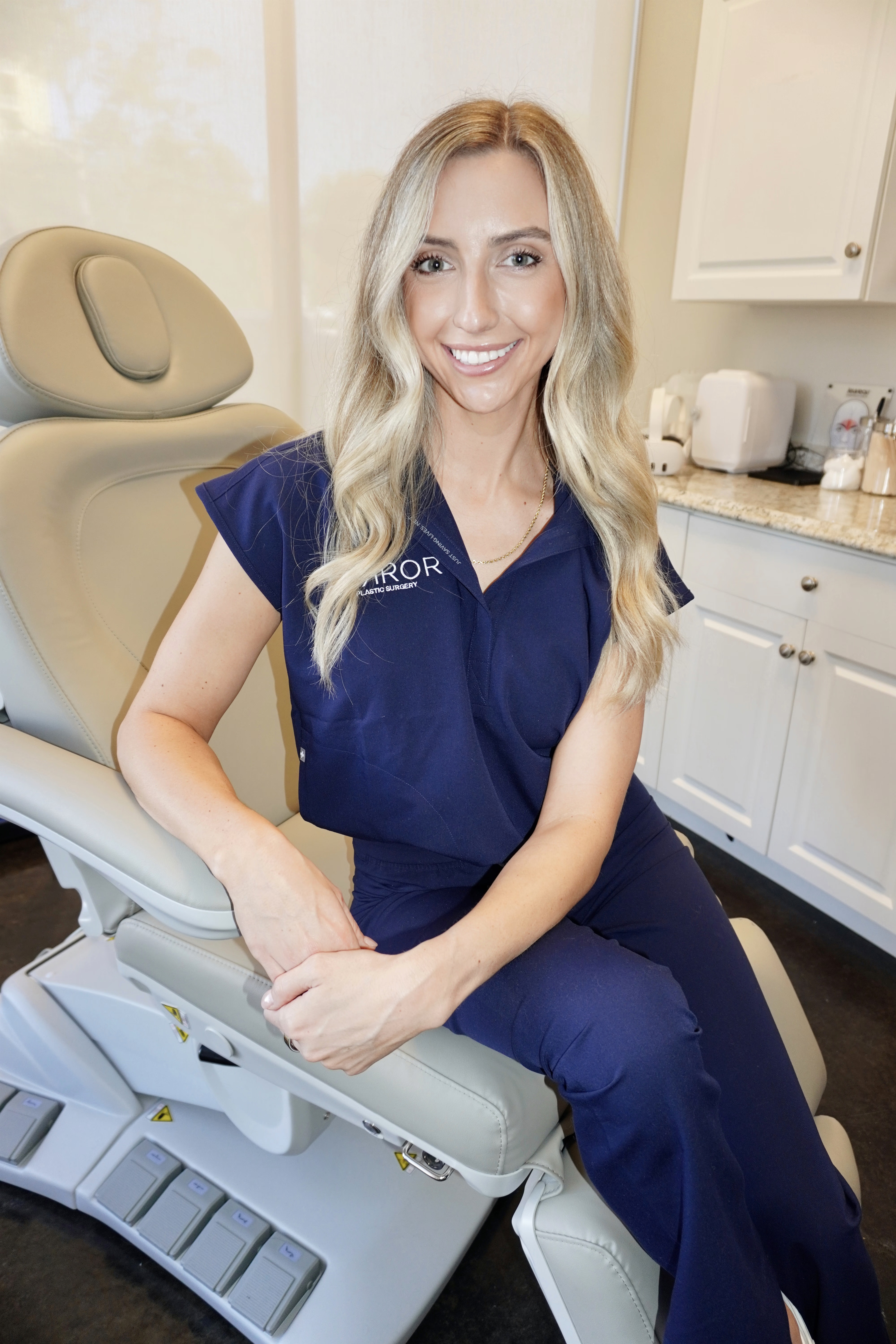
Written by: Ellie Pranckevicius, FNP-BC, Aesthetic Nurse Practitioner & Aesthetic Injector | Facial Restoration & Regenerative Injectable Specialist, Mirror Plastic Surgery
Lip Lift vs Filler: What Matters Most
- A surgical lip lift shortens the philtrum and permanently repositions the upper lip. Lip augmentation adds injectable volume without changing lip position or philtrum length.
- Philtrum length and upper tooth show at rest are the two key anatomical measurements that guide whether surgery or filler makes more sense.
- Lip lift recovery involves one to two weeks of visible downtime and long-lasting results. HA fillers require minimal downtime but need retreatment every 6–12 months.1
- Current 2026 trends favor subtle, natural movement with thinner, FDA-approved HA formulations that preserve expression and allow full reversibility with hyaluronidase.
- Schedule an anatomy-focused consult with Ellie at Mirror Plastic Surgery to learn which approach best fits your lips and goals.
How to Measure Your Own Lip Anatomy
Two simple measurements help clarify candidacy: philtrum length and upper tooth show at rest.
Philtrum length is measured from the base of the columella (the tissue separating the nostrils) straight down to the peak of the Cupid’s bow. An ideal youthful philtrum measures 11–13 mm in women and 13–15 mm in men. Use a flexible ruler or a printed millimeter scale held flat against the skin in natural light with a relaxed, neutral expression.
Upper tooth show at rest is assessed by relaxing the lips completely, with no smile and no tension, and observing how much of the upper central incisors is visible. Ideal maxillary central incisor show at rest is 2 to 3 mm in males and 3 to 4 mm in females.
When philtrum length exceeds the ideal youthful range, age-related elongation has often advanced beyond what injectable volume can correct. Patients with philtrum length ≥22 mm (females) or ≥24 mm (males), thin vermilion, and minimal pink lip show at rest are appropriate candidates for surgical upper lip lift. A typical young adult philtrum measures 11–15 mm; lip lift is indicated for elongated philtrums rather than those already within this youthful range.
Loss of tooth show during speech or smiling also supports surgical candidacy. With age, the cutaneous upper lip elongates and covers more of the upper teeth, the Cupid’s bow flattens, the vermilion loses definition, and the lip becomes thin and deflated. Filler can restore volume in this scenario but cannot shorten the philtrum or recover lost tooth show.
Schedule your measurement session with Ellie for precise in-office measurements and a full facial proportion analysis.
Lip Lift vs Lip Augmentation: Candidacy by Patient Archetype
Once you know your philtrum length and tooth show, you can see how your anatomy maps to common treatment pathways. The table below connects four variables to recommended options, with each data point cited inline.
| Philtrum Length | Tooth Show at Rest | Permanence Preference | Recommended Pathway |
|---|---|---|---|
| Within ideal range (11–13 mm women / 13–15 mm men) | Adequate (2-3 mm males / 3-4 mm females) | Reversible, adjustable | Lip augmentation |
| Elongated (≥22 mm females / ≥24 mm males) | Reduced or absent at rest | Long-lasting structural change | Surgical lip lift |
| Within ideal range | Adequate | Test results before committing | Injectable filler as a reversible trial |
| Elongated, post-healed lip lift | Restored surgically | Additional volume refinement | Combination: healed lip lift + filler |
Patients who already have a full upper lip with good tooth show at rest are not candidates for surgical lip lift. A very short philtrum relative to facial proportions may also contraindicate a lip lift because further shortening can produce an unnatural appearance.
Match your anatomy to the right archetype with Ellie and clarify which pathway fits your lips and preferences.
Recovery Timelines and Maintenance Realities
Surgical lip lift recovery follows a predictable arc. Days 1–3 involve noticeable swelling and bruising, managed with a soft food diet, head elevation, and cold compresses. Week 1 includes suture removal and improving swelling. Weeks 2–4 allow most patients to resume normal activities as the incision fades and lip shape refines. Months 2–6 bring smoother incision healing, improved scar blending, and final settling of results.1
Scars mature and lighten over up to 12 months1, and patients are typically advised to use silicone-based scar treatments and sun protection. A lip lift is a permanent surgical procedure whose results typically last five to ten years for most patients before natural aging may affect appearance, with some enjoying longer-lasting outcomes depending on skin quality, age, and technique.1
Lip augmentation recovery is substantially lighter. Lip fillers involve minimal downtime with swelling, tenderness, and possible bruising that typically peaks in the first 1-2 days and improves within 5-7 days before fully settling in 2-4 weeks1, and leave no scar. HA lip fillers typically last 6–12 months depending on formulation and patient metabolism1, after which retreatment is required to maintain results.
Repeated lip filler injections can create a heavier or overfilled appearance over time, so conservative, anatomy-guided injection volumes at each session protect a natural look.
2026 Filler Trends and Product Evolution
Current lip augmentation trends in 2026 emphasize precision over sheer volume. Injectable fillers are the only major category carrying FDA labeling specifically for lip augmentation in adults aged 21 and over in the United States, making them the safest, most popular, and fully reversible option.
For subtle, natural-looking lip enhancement, injectors commonly recommend thinner, lower-viscosity formulations such as Juvederm Volbella or Restylane Kysse that deliver diffuse volume rather than firm projection. These products integrate with lip tissue because the body already produces this substance naturally, resulting in soft, pliable results that allow natural movement during speech, smiling, and expression.
Non-HA options including PMMA, poly-L-lactic acid, and older collagen fillers are rarely used for lips due to higher risks of lumps, migration, and lack of reversibility. The 2026 standard of care prioritizes products with confirmed lip-specific FDA approval, tissue compatibility, and reversibility via enzyme.
At Mirror Plastic Surgery, Ellie works with a broad portfolio of brands, including Juvederm, Restylane, RHA, and Versa. She selects the specific formulation based on individual lip anatomy, tissue quality, and desired outcome rather than brand preference or supplier incentives.
Risks, Complications, and Reversibility
Surgical lip lift risks include visible scarring at the columella and alar base, asymmetry, over-shortening of the philtrum, altered sensation, and wound healing complications. Patients with a history of hypertrophic or keloid scarring may not be ideal candidates for lip lift surgery because they face increased risk of a raised, visible scar. Active smoking impairs blood flow and healing, so nicotine cessation for several weeks before and after surgery is typically required. A lip lift is not easily reversible once skin has been excised, so precise pre-operative measurement becomes critical.
Injectable lip augmentation risks include bruising, swelling, asymmetry, nodule formation, vascular occlusion, and, with repeated treatments, tissue heaviness or migration. HA fillers can be fully reversed with hyaluronidase enzyme, which provides a meaningful safety advantage over permanent or semi-permanent alternatives. Vascular occlusion, though rare, requires immediate recognition and treatment with hyaluronidase, so injectors must understand vascular anatomy and complication management.
Ellie’s background in the Neuroscience ICU at Tampa General Hospital and her advanced nursing training support her clinical judgment in these higher-stakes scenarios and add an extra layer of safety awareness.
When to Combine Treatments or Consider Surgery
After a fully healed lip lift, hyaluronic acid fillers may still be used to add further plumpness or refine lip shape if desired. This combination approach, with structural repositioning first and volume refinement second, reflects the safety-function-aesthetics hierarchy that guides treatment planning at Mirror Plastic Surgery.
Surgical referral becomes appropriate when philtrum elongation, loss of tooth show, or flattened vermilion anatomy cannot be meaningfully addressed with volume alone. In those cases, Ellie coordinates directly with Dr. Akash Chandawarkar, Mirror’s Harvard-educated, Johns Hopkins-trained plastic surgeon and fellowship-trained aesthetic surgeon. Patients then experience a smooth transition between non-surgical and surgical care within the same practice.
Lip fillers can serve as a temporary way to test plumper lips before committing to a permanent surgical lip lift, with the option to dissolve them if the appearance is unsatisfactory. Mirror’s team uses this staged approach deliberately when a patient’s anatomy sits near the surgical threshold.
How Treatment Planning Works at Mirror Plastic Surgery
Every new patient at Mirror Plastic Surgery starts with a comprehensive top-to-bottom assessment that can extend up to an hour. During this session, Ellie measures philtrum length, evaluates tooth show at rest and in animation, assesses vermilion height and Cupid’s bow definition, and reviews the full facial context across the upper, middle, and lower thirds before making any product recommendation.
Mirror operates as a supplier-neutral practice. Product selection depends entirely on individual anatomy, skin quality, and stated goals, not on brand quotas or commission structures. If a patient does not yet need a particular treatment, Ellie explains that clearly and recommends waiting or alternative options.
When surgical candidacy is identified, Dr. Akash’s involvement is introduced naturally within the same practice, which preserves continuity of care and maintains the same evidence-based philosophy across both surgical and non-surgical pathways.
Experience a full anatomical assessment with Ellie before choosing treatment and move forward with a clear, personalized plan.
Key Considerations Before You Choose Treatment
- Longevity: A lip lift is a permanent surgical procedure whose results typically last five to ten years for most patients before natural aging may affect appearance, with some enjoying longer-lasting outcomes depending on skin quality, age, and technique. HA lip fillers typically last 6–12 months depending on formulation and patient metabolism, so they require ongoing maintenance.
- Reversibility: Filler is dissolvable with hyaluronidase, while a lip lift is not. This difference in reversibility should carry extra weight when your measurements sit near the surgical threshold.
- Cost structure: A lip lift functions as a one-time surgical investment. Filler involves recurring treatment costs over years. The long-term financial comparison depends on maintenance frequency and product choice, which you can review in detail during a personalized consultation.
- Scar risk: A lip lift creates a permanent scar beneath the nose that usually fades over three to six months but may remain more visible in patients with darker skin tones or scarring tendencies. A thorough pre-operative assessment of mouth function, bone structure, oral competence, occlusion, and dentition helps identify patients at higher risk for healing problems that could affect scar quality.
- Aging continues: Natural aging continues after a lip lift, and subtle changes in skin elasticity and collagen may occur over time, though the lip will always remain shorter and more defined than its pre-surgery appearance.1
Frequently Asked Questions
What are the downsides of a lip lift?
A lip lift is a surgical procedure with a permanent outcome, so the consequences of over-shortening the philtrum or creating asymmetry are not easily corrected. The incision beneath the nose produces a scar that typically fades over three to six months with proper care, but patients with a history of keloid or hypertrophic scarring face elevated risk of a visible, raised scar. Recovery involves one to two weeks of noticeable swelling and restricted facial expression, followed by several months of scar maturation. Nicotine use before or after surgery significantly impairs healing. Unlike filler, a lip lift cannot be dissolved if the patient is dissatisfied with the result, so precise pre-operative measurement and careful surgeon selection matter.
What is the lip filler trend in 2026?
The prevailing direction in 2026 favors natural movement over maximum volume. Injectors are choosing thinner, lower-viscosity hyaluronic acid formulations such as Juvederm Volbella and Restylane Kysse that integrate softly with lip tissue and preserve natural expression during speech and smiling. FDA-approved HA products remain the standard of care for lip augmentation in the United States, valued for their tissue compatibility and full reversibility via hyaluronidase. This trend reflects a broader shift away from the overfilled aesthetic of earlier years toward subtle, anatomy-respecting enhancement that complements the patient’s existing lip structure.
How long does recovery take after each option?
Lip lift recovery involves one to two weeks of visible downtime with swelling, bruising, and restricted expression, followed by several months of scar maturation. Most patients return to desk work within five to seven days and resume unrestricted physical activity around four to six weeks after surgery. Silicone-based scar treatment and sun protection are typically recommended for up to twelve months. Lip filler recovery is substantially lighter, and the 5–7 day improvement window described earlier means most patients resume normal activities immediately, with no incision or scar. The trade-off is that filler requires retreatment every 6–12 months to maintain results, while a lip lift provides the five-to-ten-year structural change described earlier.
Which option suits a long upper lip?
A long upper lip, defined by an elongated philtrum beyond the youthful range combined with reduced or absent upper tooth show at rest, usually points toward a surgical lip lift. Filler adds volume to the vermilion but cannot shorten the philtrum or restore lost tooth show. Adding volume to an already elongated upper lip can worsen proportions by making the lip appear heavier without correcting its position. A subnasal (bullhorn) lip lift addresses the structural cause directly by excising a measured strip of skin beneath the nose, elevating the lip and restoring the Cupid’s bow, vermilion height, and resting tooth display. Patients near the measurement threshold benefit from an in-person assessment before committing to either pathway.
Conclusion and Your Next Step
The choice between a lip lift and lip augmentation depends on measured anatomy rather than preference or trend. Philtrum length and upper tooth show at rest are the most reliable indicators of which intervention addresses the true structural issue. When the philtrum sits within the ideal range and volume is the main concern, HA filler with a reversible, FDA-approved formulation usually serves as the appropriate first step. When the philtrum has elongated beyond the surgical threshold and tooth show has diminished, structural repositioning through a lip lift becomes the only option that corrects the underlying cause.
Mirror Plastic Surgery’s approach starts with measurement, not product. Ellie’s hour-long assessment maps your anatomy to the right pathway, whether surgical, non-surgical, or a staged combination, without the pressure of quota-driven recommendations. When surgical candidacy is identified, Dr. Akash’s expertise remains available within the same practice, which supports continuity of care from consultation through recovery.
Start with a consultation at Mirror Plastic Surgery in St. Petersburg and receive an anatomy-first assessment that prioritizes your long-term outcome over any single procedure.
Disclaimer: Results may vary from person to person. Editorial content, before and after images, and patient testimonials do not constitute a guarantee of specific results.
1 Results may vary from person to person. Editorial content, before and after images, and patient testimonials do not constitute a guarantee of specific results.