
Written by: Dr. Akash Chandawarkar, Board Certified Plastic Surgeon, Mirror Plastic Surgery | Last updated: July 16, 2026
Key Takeaways
- A comprehensive hair restoration plan for men works best as a physician-led, multi-year strategy that starts with medical stabilization before any surgery.
- The Norwood scale gives a clear framework for choosing the right sequence and timing of treatments based on your stage of hair loss.
- Medical stabilization with finasteride and minoxidil for at least 12 months is required before considering surgery to support durable results.1
- Regenerative treatments such as microneedling, PRP, and Secretome therapies act as powerful add-ons that strengthen medical therapy in the stimulation and regeneration phases.
- Schedule your personalized Norwood assessment and treatment roadmap with the experts at Mirror Plastic Surgery by booking a consultation today.
How the Norwood Scale Guides Your Treatment Plan
The Norwood-Hamilton Scale classifies male pattern baldness into seven progressive stages. It was first described by James B. Hamilton in 1951 and refined by O’Tar Norwood in 1975 to include the Stage 3 Vertex pattern and a Type A variant characterized by uniform front-to-back recession. The scale now serves as the foundation for every major treatment decision.
The underlying driver of androgenetic alopecia (AGA) is dihydrotestosterone (DHT), produced when 5-alpha-reductase converts testosterone. DHT shrinks genetically susceptible follicles, shortens growth cycles, and typically spares the back and sides of the scalp, the region surgeons call the donor area. The donor area is the finite reservoir of DHT-resistant follicles available for transplantation.
Beyond surgical transplantation, emerging regenerative therapies work by signaling the body’s own repair mechanisms. Secretome refers to the collection of bioactive molecules, including growth factors, cytokines, and extracellular vesicles, secreted by stem cells or other cell types that can signal follicular regeneration without direct cell transplantation. Mirror Plastic Surgery offers hair restoration with Acorn Biolabs Secretome as part of its in-office regenerative menu, which appears in the regeneration phase described below.
Prevalence data underscore why early action matters. Approximately 58% of men aged 30–50 have some degree of androgenetic alopecia. The proportion of men at Norwood 3 or higher increases steadily with age.
The Four-Phase Plan for Norwood 3–5 Hair Loss
The best plan for Norwood 3–5 starts with medical stabilization, not surgery. Norwood Stage 3 offers a key window for intervention where finasteride plus minoxidil combination therapy can maintain hair density effectively.1 At Stage 5, medical therapy alone is unlikely to provide meaningful cosmetic improvement, so surgical planning becomes the primary focus.
Every treatment decision at Mirror Plastic Surgery follows a safety-function-aesthetics hierarchy. The priority is to protect what you have before adding new density, and to add density only when the foundation is stable. The four-phase roadmap below turns that hierarchy into a concrete timeline, showing when each intervention becomes appropriate based on your response to earlier treatments.
| Phase | Focus | Typical Timeline | Key Considerations |
|---|---|---|---|
| 1 — Stabilize | DHT suppression with finasteride or topical finasteride, plus topical or oral minoxidil | Months 1–12 | Minimum 12 months of documented stability required before surgical commitment, with baseline photography at months 0, 6, and 12 |
| 2 — Stimulate | Microneedling, low-level laser therapy (LLLT), adjunctive topical agents | Months 3–18 | Microneedling combined with topical minoxidil produces superior hair growth versus minoxidil alone, and LLLT is FDA-cleared as an adjunct |
| 3 — Regenerate | PRP injections, Secretome or exosome-based injectables (investigational), dutasteride mesotherapy | Months 6–24+ | PRP increases hair density, while exosome therapies remain off-label and require physician oversight |
| 4 — Restore | Surgical hair transplantation (FUE/FUT) with ongoing medical therapy after surgery | Month 12+ after stabilization | Pre-operative densitometry and donor zone mapping required, with lifetime graft supply approximately 4,000–8,000 grafts |
The Norwood decision framework below maps each stage to a primary strategy so you can see how your current pattern shapes the plan.
| Norwood Stage | Primary Strategy | Surgical Candidacy |
|---|---|---|
| 1–2 | Monitor, with finasteride ± minoxidil if progression appears | Generally contraindicated, as the pattern has not yet declared itself |
| 3 (Golden Window) | Finasteride plus minoxidil, with microneedling and PRP added | Appropriate after 12 or more months of stability on medication |
| 3V–4 | Combination medical therapy, with escalation to PRP and LLLT | Strong surgical window, with 2,500–3,500 grafts typical for Stage 4 |
| 5 | Medical stabilization first, followed by multi-session surgical planning | 3,000–4,500 grafts typical, with the frontal zone addressed first |
| 6–7 | Maximize donor preservation with staged procedures | Limited coverage achievable, with body hair sometimes supplementing donor supply |
These stage-specific strategies provide a useful framework, but your exact sequence depends on progression rate, donor density, and response to medical therapy, which require in-person evaluation. Schedule your personalized Norwood assessment and treatment roadmap with Dr. Akash by booking a consultation.
Medication Timing Before You Consider a Transplant
As noted in the stabilization phase above, pre-operative medical optimization requires at least 12 months of consistent therapy, and many surgeons prefer 12–24 months for younger men whose loss is still evolving. This period allows finasteride or dutasteride plus minoxidil to stabilize loss and protect graft value.
Clear clinical triggers for escalation beyond first-line therapy include:
- Inadequate response after 12 months of consistent first-line therapy
- Continued progression despite treatment
- Patient intolerance to first-line agents, which may prompt a switch to topical finasteride or dutasteride
- Advanced baseline loss at Norwood IV or higher at presentation
Men who respond to medical therapy must continue treatment indefinitely, because discontinuation allows DHT levels to return to baseline and causes loss of gained hair within 6–12 months. This represents a long-term commitment rather than optional maintenance.
How Growth Stimulants and Regenerative Injectables Support the Plan
Once medical stabilization is underway, the next step involves identifying which therapies can accelerate or amplify the baseline response. Growth stimulants, microneedling, and regenerative injectables occupy Phases 2 and 3 of the roadmap. They do not replace medical therapy, and instead they strengthen it.
Microneedling creates controlled micro-injuries that activate wound-healing pathways and enhance transdermal delivery of topical agents. The largest randomized controlled trial reviewed in a 2026 systematic narrative synthesis showed that microneedling combined with topical minoxidil produced significantly superior hair outcomes compared with minoxidil alone, supporting its role as a core element of staged care. Monthly sessions are typical, with added benefit when combined with PRP or finasteride.
Low-Level Laser Therapy (LLLT) is FDA-cleared as an adjunct for pattern baldness. A 12-month prospective trial published in January 2026 found that home-use LLLT produced a 25% increase in hair density and a 15% increase in shaft thickness, with high adherence and no reported adverse events.1
Platelet-Rich Plasma (PRP) remains the most evidence-supported regenerative injectable. A 2026 systematic narrative synthesis identified PRP as having the most consistent evidence among non-surgical options, supported by multiple randomized controlled trials using objective trichoscopic endpoints. Standard protocols involve three to four monthly sessions followed by maintenance every four to six months.
Secretome and exosome-based therapies represent the frontier of regenerative hair medicine. A 2024 meta-analysis of stem cell–derived conditioned media found increases in hair density and thickness.1 However, dosing is frequently described in volumetric rather than particle-based metrics, which limits standardization and comparison between studies. These therapies work best under direct physician supervision with clear disclosure of their investigational status.
When Surgical Hair Restoration Becomes the Right Move
Surgery becomes appropriate when hair loss has remained stable for at least 12 consecutive months on medical therapy, the patient is at least 25 years old, and a thorough donor-area assessment confirms adequate graft supply. The five-measurement donor assessment protocol, which evaluates follicular unit density, hair caliber, scalp laxity, miniaturization percentage, and multi-directional growth patterns, must be performed in person to achieve 90–95% accuracy in lifetime graft budgeting.
Graft budgeting functions as a lifetime exercise rather than a single-procedure calculation. The general guideline for donor area management is to extract no more than 45% of follicles over a patient’s lifetime to avoid visible thinning. A skilled surgeon plans hairline design and graft allocation for the probable final Norwood stage, not only the current one.
Post-operative medical therapy remains essential. Transplanted hair undergoes shock shedding at 2–4 weeks, begins regrowing at 3–4 months, and reaches final density at 12–18 months, and patients require ongoing finasteride and minoxidil after surgery to protect native hair. Exosome therapy is increasingly used as a post-operative adjunct to support graft survival and healing, although current evidence remains early-stage.
Expert Perspective: Why Dr. Akash’s Training Protects Your Results
Hair restoration functions as a surgical intervention within a living, changing anatomical system. The physician overseeing a comprehensive plan must understand scalp vascularity, follicular unit architecture, donor zone boundaries, and the long-term trajectory of androgenetic alopecia at the same time.
Dr. Akash at Mirror Plastic Surgery brings a training background that is singular in the Tampa Bay region. He completed his medical degree through the Harvard-MIT Division of Health Sciences and Technology, his seven-year integrated plastic and reconstructive surgery residency at Johns Hopkins University, and a specialized aesthetic surgery fellowship at the Manhattan Eye, Ear and Throat Hospital (MEETH). He also completed the Stanford University Biodesign Innovation Fellowship, which trained him to evaluate emerging technologies, including regenerative injectables, with the same rigor applied to surgical techniques. Dr. Akash has been named in America’s Best Plastic Surgeons 2025 by Newsweek for two consecutive years.
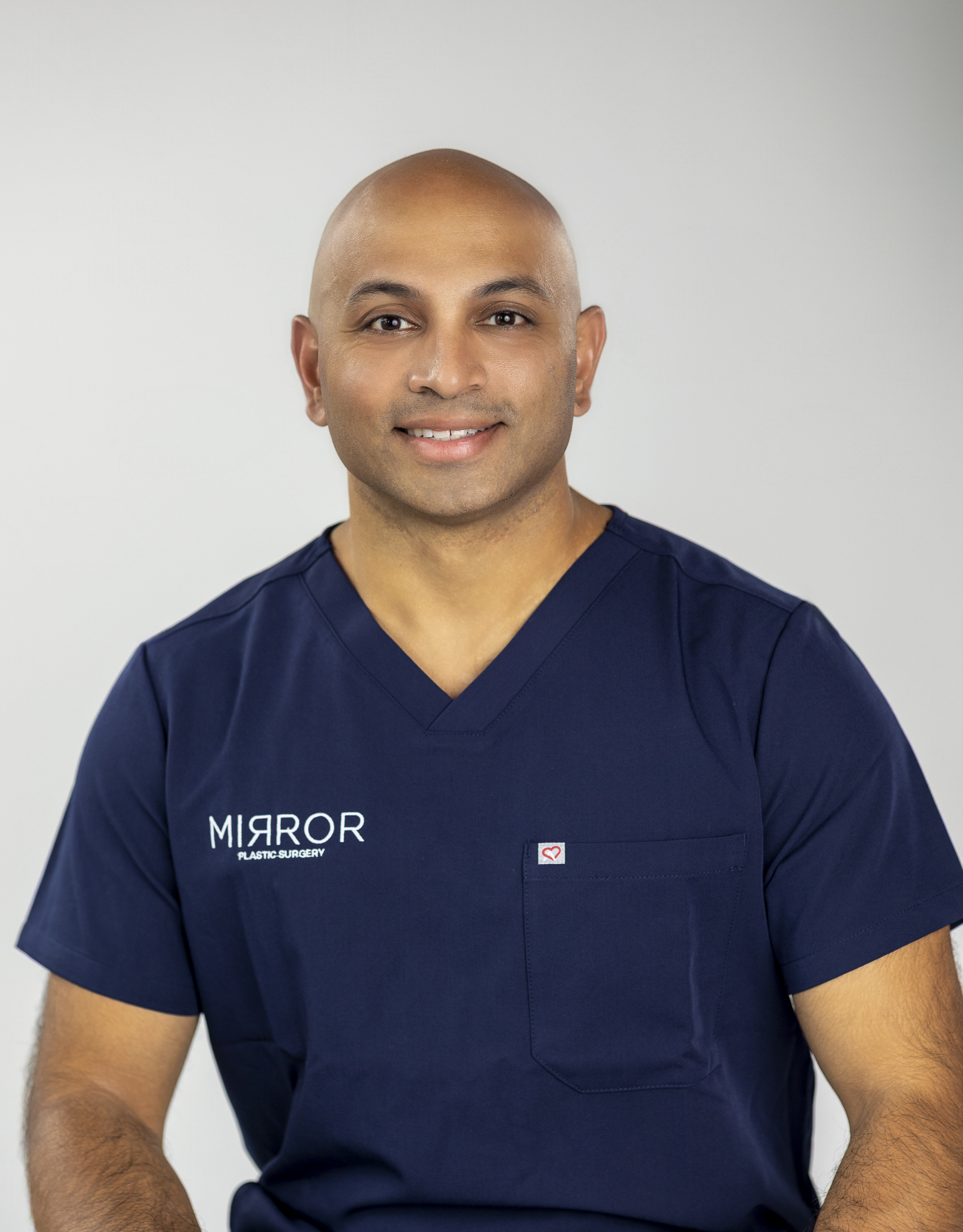
This depth of anatomical training shapes every element of a hair restoration plan at Mirror Plastic Surgery. It guides the initial evaluation, the sequencing of medical and regenerative therapies, the donor-area assessment, and the long-term oversight that protects the investment in every graft.
Have your scalp evaluated by a board-certified plastic surgeon with fellowship-level aesthetic training by scheduling a consultation with Dr. Akash.
Risks, Limitations, and Red Flags to Watch For
The most persistent misconception in hair restoration claims that one treatment fixes everything. No single medication, injectable, or procedure halts androgenetic alopecia permanently without ongoing maintenance. Neither minoxidil nor finasteride restores all lost hair or reverses total baldness, and both require indefinite daily use because discontinuation leads to resumption of the balding process.
Side-effect awareness forms a key part of informed consent. Sexual side effects from finasteride can occur in a small percentage of users and often resolve after discontinuation. The labeling for finasteride notes possible decreased libido, depression, and other potential risks. Topical finasteride offers a lower systemic absorption profile for patients who feel concerned about oral dosing.
Red flags that warrant caution when evaluating any hair restoration provider include:
- Consultations shorter than 30 minutes with no scalp examination or trichoscopy, which prevents proper assessment of miniaturization patterns, donor density, or progression rate
- Surgical recommendations made before 12 months of medical stabilization have been attempted, suggesting that procedure volume may be prioritized over graft longevity
- Exosome or stem-cell therapies marketed as FDA-approved, even though no such approval exists as of 2026, indicating either lack of knowledge or intentional misrepresentation
- Hairline designs that ignore future progression or donor limitations, which can deplete donor reserves and create unnatural contrast as native hair continues to thin
- High-volume clinic models performing five or more procedures per day without individualized planning, making it difficult to deliver the precision and long-term oversight that durable results require
A 2026 review in Frontiers in Pharmacology notes that personalized approaches based on genetic prediction of success, including pharmacogenetic markers and polygenic scores, are increasingly relevant for optimizing long-term restoration plans in androgenetic alopecia. This level of individualization requires a physician who allocates time to understand each patient’s biology rather than relying on a standardized kit.
Frequently Asked Questions
Am I a candidate for hair restoration treatment if I am in my 30s at Norwood 3?
Men in their 30s at Norwood 3 often qualify as strong candidates for medical hair restoration and, after stabilization, for surgical planning. Norwood 3 is widely considered an important window for intervention because the donor area usually sits at peak density, the area requiring coverage remains manageable, and finasteride plus minoxidil can be effective at this stage. A physician evaluation should include trichoscopy to assess miniaturization, standardized baseline photography, and a discussion of progression rate before any treatment begins. Surgery does not become appropriate until at least 12 months of documented stability on medical therapy have been achieved.
How long does it take to see results from finasteride and minoxidil?
Visible results from topical minoxidil typically appear at 3–6 months, while finasteride requires 6–12 months because of the length of the hair growth cycle.1 The combination of both agents produces greater hair count improvements than either drug alone, with peak results from finasteride appearing between 12 and 24 months of consistent use.1 Treatment response should be assessed with standardized photography at baseline, 6 months, and 12 months. Both medications require indefinite use to maintain results, and stopping either leads to resumed hair loss within 6–12 months.
What is the difference between PRP and Secretome or exosome therapies?
PRP, or platelet-rich plasma, is processed from a patient’s own blood draw to concentrate growth factors and currently stands as the most evidence-supported regenerative injectable for androgenetic alopecia, with multiple randomized controlled trials demonstrating increases in hair density. Secretome and exosome-based therapies use bioactive molecules derived from stem cells or other cell sources to signal follicular regeneration. Early clinical data appear encouraging, and one 2024 meta-analysis reported a mean increase in hair density and thickness with stem cell–derived conditioned media, but no exosome product has received FDA approval for any indication as of 2026. These therapies work best under direct physician supervision with clear disclosure of their investigational status. Mirror Plastic Surgery offers Acorn Biolabs Secretome as part of its in-office regenerative menu.
How many grafts will I need, and can I run out?
Graft requirements depend on current Norwood stage, projected final stage, scalp dimensions, and donor density. Approximate ranges include 1,500–2,200 grafts for Norwood 3, 2,500–3,500 for Norwood 4, and 3,000–4,500 for Norwood 5. The average donor area supports roughly 6,000–8,000 extractable grafts over a lifetime when respecting the 45% safe extraction limit. Because a single session averaging approximately 2,347 grafts can consume 40–60% of a conservative lifetime donor budget, every procedure must be planned with future sessions and future progression in mind. A thorough in-person donor assessment using trichoscopy and densitometry is required before any surgical commitment.
What happens after a hair transplant, and do I still need medications?
Yes. Transplanted follicles are DHT-resistant and permanent, but the native hair surrounding them is not. Without ongoing finasteride and minoxidil, native hair continues to miniaturize and fall, eventually creating visible contrast between transplanted zones and thinning areas. Continuing medical therapy after surgery protects non-transplanted hair, reduces the total grafts required across a patient’s lifetime, and may delay or prevent the need for additional procedures. Transplanted hair undergoes shock shedding at 2–4 weeks, begins regrowing at 3–4 months, and reaches final density at 12–18 months. Structured monitoring at 3, 6, 9, and 12-month intervals provides the data needed for informed long-term planning.
Conclusion: Building a Long-Term Hair Restoration Roadmap
A comprehensive hair restoration plan for men at Norwood 3–5 works best as a physician-led, multi-year strategy built on four sequential phases. You stabilize loss with DHT inhibitors and minoxidil, stimulate follicular activity with microneedling and LLLT, regenerate with evidence-supported injectables such as PRP, and restore density surgically only after the pattern has declared itself and the donor area has been rigorously assessed. Every phase follows the safety-function-aesthetics hierarchy, which protects existing hair before adding new density and adds density only when the anatomical foundation supports a durable result.
One-size-fits-all kits, rushed consultations, and high-volume clinics cannot deliver this level of individualized oversight. A board-certified plastic surgeon with deep anatomical training and a concierge approach to long-term care can provide that level of planning and follow-through.
Ready to build your evidence-based restoration plan? Book a consultation with Dr. Akash at Mirror Plastic Surgery in St. Petersburg, Florida, and receive a stage-specific, evidence-based hair restoration roadmap built around your anatomy, your timeline, and your long-term goals.
1 Results may vary from person to person. Editorial content, before and after images, and patient testimonials do not constitute a guarantee of specific results.