
Written by: Ellie Pranckevicius, FNP-BC, Aesthetic Nurse Practitioner & Aesthetic Injector | Facial Restoration & Regenerative Injectable Specialist, Mirror Plastic Surgery | Last updated: July 9, 2026
Key Takeaways for Masseter Botox at Mirror Plastic Surgery
- Masseter Botox reduces muscle size and strength by placing botulinum toxin directly into the masseter, usually 40–60 total units split between both sides.
- Results build gradually. Initial relaxation starts in 7–10 days, visible slimming appears over 2–8 weeks, and peak effects develop over the following months.1
- Ideal candidates have enlarged masseter muscles from clenching or grinding. Patients whose jaw width comes mainly from bone see limited cosmetic change.
- Most side effects are mild and temporary, such as jaw fatigue or bruising. An experienced injector using precise technique helps reduce risks like asymmetry or smile changes.
- Schedule your personalized consultation at Mirror Plastic Surgery to see whether masseter Botox fits your anatomy and goals.
How the Masseter Muscle Works and When Botox Makes Sense
The masseter is a thick, rectangular chewing muscle that originates from the zygomatic arch and inserts along the angle and ramus of the mandible. It drives biting and grinding and is much stronger than the forehead or frown muscles. This strength explains why masseter Botox usually requires higher doses than other facial areas. Masseter hypertrophy can come from genetics or habits such as bruxism, jaw clenching, asymmetric chewing, or frequent gum chewing.
Botox primarily reduces muscle volume rather than changing bone structure. This is why patients whose jaw width comes mostly from bone instead of muscle hypertrophy see limited benefit and may need different treatments.
Appropriate candidates generally share these characteristics:
- Visibly enlarged masseter muscles confirmed by palpation during clenching
- A broad or square lower face caused by muscle bulk rather than skeletal structure
- Jaw clenching, bruxism, jaw pain, or TMJ-related facial tension
- Realistic expectations for gradual, non-surgical jawline refinement
Masseter Botox is not appropriate for:
- Individuals who are pregnant or breastfeeding
- Those with neuromuscular disorders such as myasthenia gravis or Lambert-Eaton syndrome
- Patients with a skin infection at the injection site or a known allergy to botulinum toxin
- Individuals whose jaw width is primarily structural (bone-based) rather than muscular
Standard Dosing Ranges and Injection Technique for Masseter Botox
Dosing is calibrated to relax the masseter enough to create change without affecting normal chewing or speech. Men often need higher doses because they usually have more muscle mass. Patients with very bulky masseters may also require higher doses for noticeable slimming. The injections into the masseter muscle take less than 1 minute with a fine needle placed directly into the muscle after the provider evaluates jaw strength and marks precise injection points.
| Goal | Units per Side | Notes |
|---|---|---|
| Subtle slimming (small or average muscle) | 20–25 units | Common starting point for first-time patients with mild hypertrophy |
| Moderate slimming (average or strong muscle) | 25–35 units | Most frequent range for cosmetic jaw contouring |
| Significant slimming (large or bulky muscle) | 25–50 units | Men or patients with pronounced hypertrophy may need doses at the higher end of this range |
| Mild to moderate bruxism or TMJ relief | 25–30 units | Functional relief with minimal cosmetic change |
| Severe bruxism or TMJ | 20 to 50 units | Most TMJ treatments fall in this range, with higher doses such as 100 MU per side reported for severe bruxism |
Realistic Timeline and Maintenance for Jaw Slimming Results
Results appear gradually as the masseter atrophies in response to reduced neural stimulation. The progression below reflects typical experience.1
- Days 7–10: Initial muscle relaxation begins, and jaw tension and clenching often ease first.
- Weeks 2–3: Functional improvements such as reduced grinding and jaw fatigue become noticeable.
- Weeks 4–6: Cosmetic jaw slimming becomes more visible as muscle volume decreases.
- Week 6 and beyond: Maximum slimming typically appears over the following months as the muscle continues to adapt.1
Results usually last several months before muscle activity gradually returns. With consistent maintenance, some patients extend the interval between sessions as the masseter becomes less overactive over time.1
Side Effects and Practical Ways to Reduce Risk
Most side effects are mild, short-lived, and closely tied to injector technique and dosing accuracy. Incidence depends heavily on injector experience, precision of placement, appropriate dosing, patient anatomy, and health history.
Common side effects include:
- Temporary jaw weakness or fatigue when chewing tough foods, usually resolving within one to two weeks
- Mild bruising, swelling, or soreness at the injection site, clearing within a few days
- Temporary mild headache or flu-like symptoms
- Dry mouth, generally mild and temporary
Rare but more serious effects include:
- Crooked smile or slight drooling if Botox affects nearby muscles, almost always linked to injector inexperience
- Facial sagging in patients with low skin elasticity due to reduced muscle support
- Dysphagia (difficulty swallowing) if neurotoxin spreads to neck muscles, which requires immediate medical attention
Precise technique involves marking the masseter to stay within the muscle bulk and keeping a safe distance from the risorius to avoid diffusion that could affect the smile. Choosing an injector with deep anatomical knowledge remains the most effective way to reduce risk.
Who Makes a Strong Candidate for Masseter Botox
Candidacy requires a thorough in-person consultation that reviews jaw anatomy, masseter bulk and strength, full medical history, and whether goals are therapeutic, aesthetic, or both. Patients with over-developed masseter muscles from grinding, clenching, or chewing habits, or a broad jawline confirmed as muscle-based, are usually the clearest candidates.
Risk reduction also depends on understanding how bone structure and facial fat distribution may affect skin appearance once muscle bulk decreases. This is especially relevant for patients with lower skin elasticity and requires more than a brief or rushed appointment.
How to Choose an Injector for Masseter Botox
Deep, detailed knowledge of facial anatomy is the most critical qualification for safe masseter Botox outcomes. Patients can ask prospective injectors about their specific training in masseter anatomy, how they individualize dosing, and how they assess muscle size and strength before treatment.
At Mirror Plastic Surgery in St. Petersburg, masseter Botox is performed by Ellie Pranckevicius, FNP-BC, an Aesthetic Nurse Practitioner with four years of Neuroscience ICU experience at Tampa General Hospital, 600 hours of hands-on aesthetics training, and advanced nursing education from the University of South Florida. Her combined background in esthetics and clinical nursing supports precise understanding of both surface and subdermal anatomy, which directly affects placement accuracy for masseter treatments.
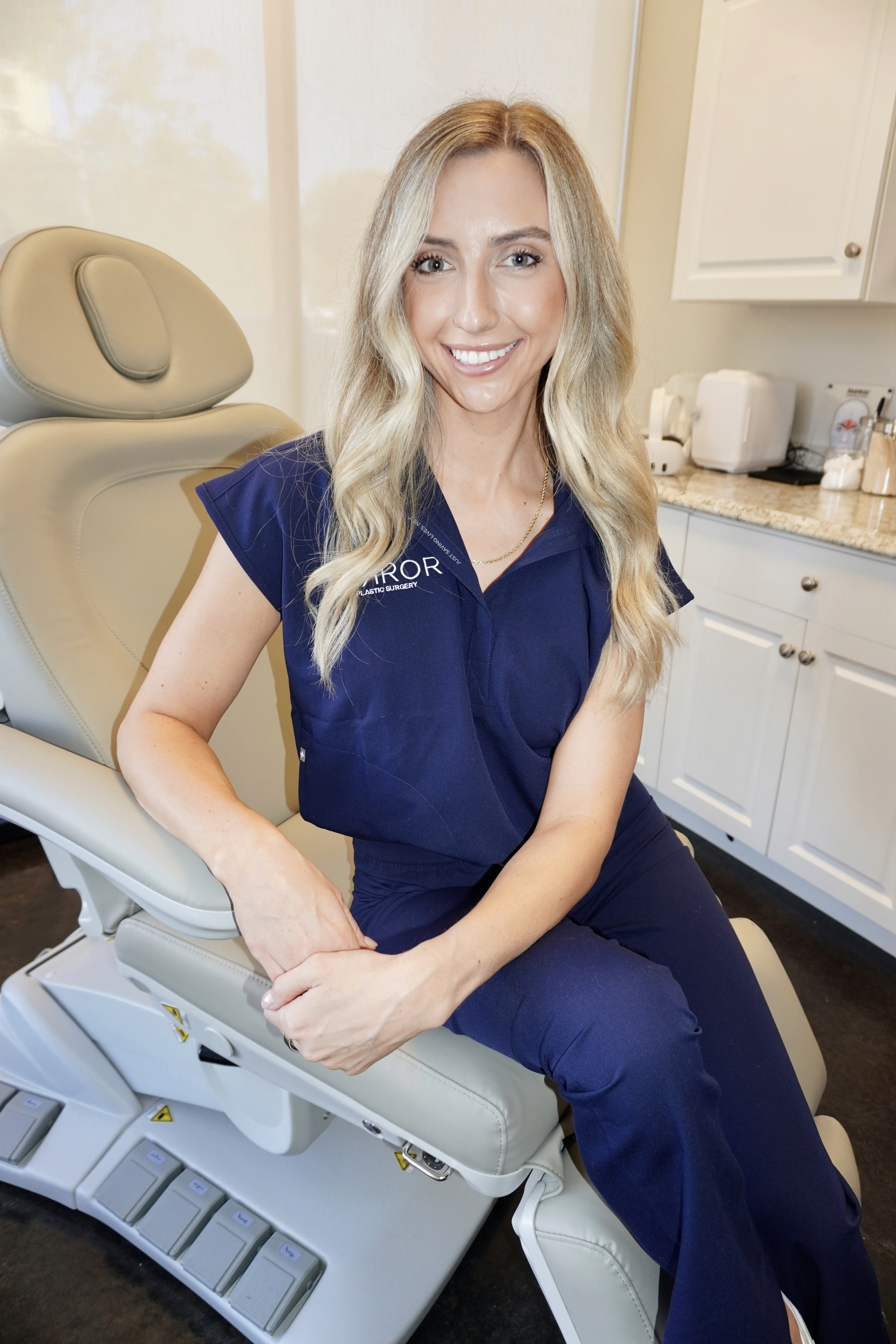
Ellie’s consultations at Mirror Plastic Surgery can last up to an hour. This time allows for a detailed assessment of muscle size, jaw strength, facial structure, and patient goals before any plan is proposed. This approach contrasts with high-volume settings where assessment time is short and dosing decisions are less individualized.
High-Volume Clinics vs Personalized Masseter Botox Care
The care model used for masseter Botox strongly influences outcomes. The comparison below highlights key differences between high-volume and concierge-style care.
| Aspect | High-Volume Model | Personalized Concierge Model |
|---|---|---|
| Consultation time | Brief, with limited time for anatomical assessment | Up to one hour, with a comprehensive evaluation of muscle size, strength, and patient goals |
| Dosing philosophy | Standardized or protocol-driven ranges applied broadly | Individualized dosing based on palpated muscle bulk, strength, and functional goals |
| Injection technique | Rapid placement with limited anatomical mapping | Precise marking to stay within muscle bulk and maintain safe distance from nearby expression muscles |
| Follow-up focus | Transactional, with the next appointment scheduled at checkout | Emphasis on long-term function and natural results, with maintenance intervals adjusted as the muscle adapts |
| Risk management | Relies on standard protocols with less flexibility for individual anatomy | Safety and function prioritized before aesthetics, with the provider available for post-treatment concerns |
Only providers with deep expertise in facial anatomy and individualized dosing should perform masseter Botox to lower the risk of diffusion to adjacent muscles or longer-term complications. A personalized model better supports both function and natural-looking results over repeated treatment cycles.
Frequently Asked Questions
Is there a downside to masseter Botox?
Masseter Botox has a favorable safety profile with an experienced injector, yet it still carries potential drawbacks. Temporary jaw fatigue when eating tough or chewy foods is the most common effect and usually resolves within one to two weeks. Rare complications, including asymmetry, a crooked smile, or unwanted diffusion to nearby muscles, are almost always linked to injector inexperience or imprecise placement. Patients with lower skin elasticity should discuss possible facial sagging with their provider before treatment, since reduced muscle bulk can change skin support. A thorough in-person assessment remains the most reliable way to identify individual risk factors in advance.
Will my masseters grow back after Botox?
Masseter Botox produces temporary results, so the muscle gradually regains activity. As the botulinum toxin metabolizes over the timeframe described above, neural signaling to the muscle returns and the masseter recovers strength. Without maintenance, the muscle eventually returns to its pre-treatment size. Many patients who complete several treatment cycles notice that the masseter becomes less overactive, which can allow longer gaps between sessions and lower maintenance doses.1 The process stays fully reversible, and stopping treatment lets the muscle return to its original state without permanent structural change.
Is 40 units of Botox a lot for the masseter?
Forty total units, or 20 units per side, sit at the lower end of the standard dosing range and often work well as a starting point for patients with small to average masseter muscles who want subtle slimming. This dose is not considered excessive. The masseter is one of the strongest facial muscles and often needs more Botox than areas such as the forehead or crow’s feet. Patients with larger or more active masseters, or those seeking more dramatic slimming or relief from severe bruxism, may need 25–40 or more units per side for meaningful change. Appropriate dosing is always based on palpating the muscle during clenching and aligning the dose with the patient’s goals, not on a single fixed number for everyone.
How long does it take to see results from masseter Botox?
The result timeline follows the stages outlined in the earlier section. Most patients first notice reduced jaw tension and clenching as the muscle relaxes, then see visible slimming as the masseter atrophies with decreased activity. Full cosmetic change develops over the following months as the muscle continues to adapt. Individual factors such as muscle size, metabolism, and dosing influence exactly when each stage becomes noticeable.1
Does masseter Botox affect chewing or facial expressions?
Correctly performed masseter Botox does not impair normal chewing or facial expression. The goal is controlled relaxation of the masseter, not complete paralysis. Other chewing muscles continue to support biting and chewing throughout treatment. Some patients notice temporary fatigue when eating very hard or chewy foods in the first one to two weeks, and this usually improves as surrounding muscles adapt. Effects on facial expression, such as a crooked smile, are rare and occur only when Botox diffuses to adjacent muscles, a risk that drops significantly with precise technique and an injector who understands facial anatomy in depth.
Making an Informed Decision About Masseter Botox
Masseter Botox offers a well-documented, non-surgical option for patients with confirmed muscle hypertrophy who want jaw slimming, TMJ symptom relief, or both. Clear understanding of the anatomy involved, the dosing range discussed earlier, the staged result timeline, and the factors that affect side effect risk helps patients decide with confidence. The most influential factor in any masseter Botox treatment is the injector’s anatomical knowledge and commitment to a careful, unhurried assessment before placing a single unit.
At Mirror Plastic Surgery in St. Petersburg, Florida, Ellie Pranckevicius combines neuroscience clinical experience with advanced aesthetic training in a practice that consistently places safety and function before aesthetics.
Disclaimer: Results may vary from person to person. Editorial content, before and after images, and patient testimonials do not constitute a guarantee of specific results.
1 Results may vary from person to person. Editorial content, before and after images, and patient testimonials do not constitute a guarantee of specific results.