
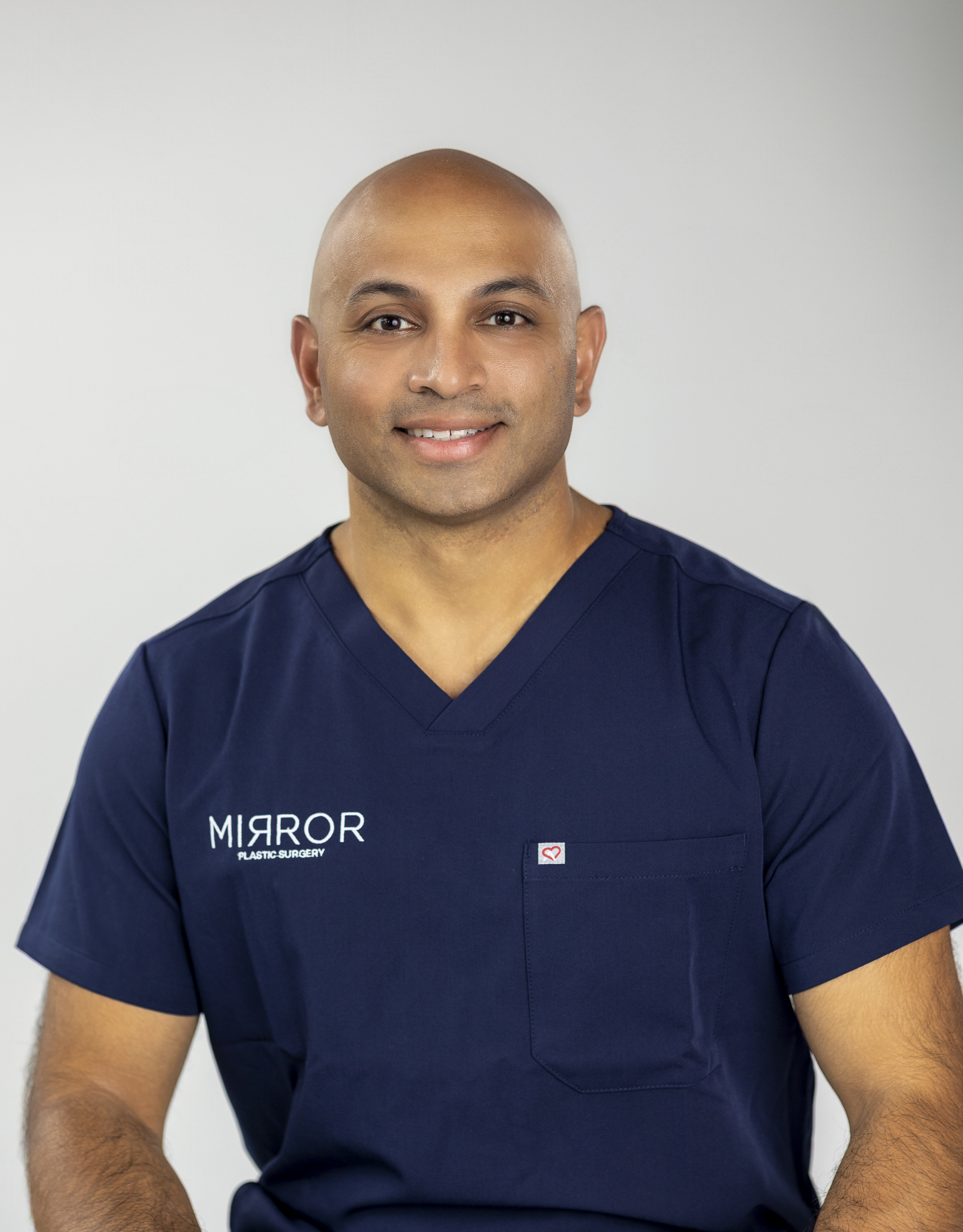
Written by: Dr. Akash Chandawarkar, Board Certified Plastic Surgeon, Mirror Plastic Surgery | Last updated: July 13, 2026
Key Takeaways on Tampa Tummy Tuck Costs
- Many Tampa tummy tuck quotes leave out key expenses such as anesthesia, facility fees, garments, and follow-up care.
- A legitimate all-in quote includes surgeon fees, board-certified anesthesiologist charges, accredited facility costs, labs, compression garments, medications, and post-operative visits.
- 2026 Tampa market data shows full abdominoplasty all-in totals typically range from $6,000 to $15,000, with quotes below $7,500 usually excluding essential services.
- Mini, full, and extended tummy tucks differ in scope, complexity, cost, and recovery time, so pricing varies accordingly.
- Patients receive a transparent, itemized tummy tuck cost estimate at Mirror Plastic Surgery that reflects their anatomy and goals.
What “All-In Cost” Really Covers for Tampa Patients
An all-in tummy tuck cost includes every charge from pre-operative workup through the final follow-up visit. A quote that lists only the surgeon fee is not an all-in quote. A credible all-in estimate must include every item below.
- Surgeon fee
- Board-certified physician anesthesiologist fee
- Accredited surgical facility or operating room fee
- Pre-operative laboratory tests and clearance
- Compression garments
- Post-operative follow-up visits during the recovery period
- Prescription medications (some practices bundle these, others bill separately)
Missing components in a written quote almost always show up later as separate invoices after surgery. Transparent tummy tuck pricing covers surgeon fees, anesthesia fees, surgical facility fees, post-operative garments and supplies, and follow-up appointments during the recovery period.
Schedule your consultation to get a complete breakdown of every cost component discussed above.
Average Tummy Tuck Cost in Tampa Florida Including Fees: 2026 Breakdown
The table below reflects Tampa market data for a standard full abdominoplasty. It does not represent Mirror Plastic Surgery pricing.
| Fee Component | Low End | High End | Notes |
|---|---|---|---|
| Surgeon fee | $5,500 | $8,500 | Typically 55–65% of total bill |
| Anesthesiologist fee | $800 | $1,200 | Board-certified physician anesthesiologist |
| Facility / OR fee | $1,000 | $2,000 | Accredited surgical facility |
| Ancillary (labs, garments, Rx) | $200 | $500 | Pre-op labs $200–$500, garments $100–$300 |
| Estimated all-in total | $6,000 | $15,000 | 2026 Tampa market range, full abdominoplasty |
Quotes below $7,500 for a full tummy tuck in Tampa typically exclude one or more critical components such as anesthesia, facility fees, or follow-up care. The American Society of Plastic Surgeons reports a national average surgeon fee of $8,174 for abdominoplasty, a figure that excludes anesthesia, facility, labs, garments, and follow-up visits entirely.
Mini, Full, and Extended Tummy Tucks: How Scope Affects Cost
Procedure type is the single largest variable in all-in tummy tuck pricing. Mini, full, and extended abdominoplasty differ in surgical scope, incision length, and whether muscle repair is performed.
Mini tummy tucks in Tampa address only the lower abdomen below the navel without umbilical transposition or full rectus muscle repair. This limited scope shortens operating time and lowers anesthesia and facility fees, but patients with diastasis recti or upper abdominal laxity do not receive full correction. Mirror Plastic Surgery focuses on restoring the entire abdominal musculature from chest to pubic area because partial lower-only repairs can leave a visible bulge above the treated zone.
This comprehensive approach is reflected in full abdominoplasty pricing. Full abdominoplasty all-in totals in Tampa range from $6,000 to $15,000 and include umbilical transposition, full fascial plication, and skin excision from hip to hip. This variant is most common for post-pregnancy or post-weight-loss patients who have both skin laxity and muscle separation.
Extended tummy tuck costs in Tampa average about $11,000 to $13,500 all-in for 2025 per Tampa market data. The higher range reflects added complexity, since the incision extends onto the flanks to remove excess skin beyond the standard hip-to-hip zone. Tummy tuck with added liposuction costs $12,000 to $25,000 per procedure pricing guides.
Insurance Realities After C-Section or Weight Loss
Given these cost ranges, many Tampa patients ask whether insurance will cover any portion of abdominal surgery after pregnancy or major weight loss. Blue Cross Blue Shield of Florida classifies abdominoplasty, including mini or modified abdominoplasty, as cosmetic and generally non-covered, regardless of C-section history, pregnancy, or significant weight loss. Diastasis recti repair performed during abdominoplasty does not change this classification under BCBSFL.
A separate procedure, panniculectomy, removes a hanging skin apron without the full muscle repair and skin redistribution of abdominoplasty. This operation may qualify for coverage under narrow medical necessity criteria. BCBSFL covers panniculectomy as medically necessary when all of the following criteria are met: the panniculus reaches Grade 2 or higher, there is documented recurrent chronic skin condition unresponsive to three months of medical therapy, and functional impairment such as difficulty with ambulation is present.
For post-bariatric patients, BCBSFL requires the member to be at least 18 months post-operative or have documented stable weight for at least three months for post-bariatric panniculectomy coverage. Panniculectomy is not always covered by health insurance because it is mostly a cosmetic procedure; coverage may apply when performed for a medical reason such as hernia repair, and patients should verify benefits with their insurer before surgery.
Recovery Timeline and Pain Expectations After Tummy Tuck
Recovery from a full abdominoplasty follows a predictable pattern, although muscle repair extent, overall health, and adherence to instructions affect timing.
- Days 1–3: Most patients report moderate to significant discomfort, often rated 5 to 7 on a 10-point scale.1 Drains, if placed, need daily monitoring. Walking is encouraged in short, slightly hunched intervals to protect the repair.
- Week 1–2: Drains are usually removed once output drops below threshold. Compression garments stay on around the clock. Most patients still need prescription pain medication during this period.
- Weeks 3–4: Pain shifts to tightness and fatigue. Light activity resumes, and garments remain in use. Many patients return to desk work.
- Weeks 5–6: Swelling continues to decrease. Most patients resume non-strenuous employment, although core exercises remain restricted.
- Months 3–6: Final contour becomes clearer as residual swelling fades. Scar maturation continues for 12 to 18 months.1
Concurrent liposuction, extended incisions, significant muscle repair, and higher BMI can extend downtime. Most patients wear compression garments for six to eight weeks.
Red Flags in Low-Price Tummy Tuck Quotes
Quotes that fall far below the Tampa market range deserve careful review. Several common tactics create artificially low advertised prices.
- Listing surgeon fee only and labeling it as the full “procedure cost”
- Leaving out the anesthesiologist fee or substituting a CRNA for a board-certified physician anesthesiologist without clear disclosure
- Excluding facility fees by using an unaccredited office suite instead of a certified surgical facility
- Billing pre-operative labs, garments, and follow-up visits as separate items after the patient has committed
- Quoting a mini tummy tuck price for a patient who actually needs a full abdominoplasty, then upgrading at the pre-operative visit
Unbundled lab testing, compression garments, and medications often appear as surprise expenses when practices do not include ancillary costs in the initial quote. Quotes given without an in-person assessment are also less reliable, because a legitimate all-in figure depends on a physical evaluation.
What to Verify in Writing Before Booking Surgery
Written confirmation of key details protects patients from surprise charges and unclear policies. Before signing a surgical agreement, patients should confirm the items below in writing.
- Itemized fee list covering surgeon, anesthesiologist, facility, labs, garments, and follow-up visits, which helps prevent hidden costs after commitment
- Name and credentials of the anesthesia provider (board-certified physician anesthesiologist vs. CRNA), since training level affects safety and pricing
- Accreditation status of the surgical facility (AAAHC, AAAASF, or equivalent), which confirms adherence to safety and emergency standards
- Board certification of the operating surgeon with the American Board of Plastic Surgery, verifying formal training and examination
- Revision policy, including what is covered, for how long, and at what cost to the patient
- Hospital privileges for the operating surgeon in case a complication requires transfer
- Specific triggers for additional charges, such as extended operating time or unexpected complexity
How Mirror’s Concierge Model Impacts Cost Accuracy
Practice model shapes the quality of the pre-operative evaluation, which then shapes quote accuracy and outcomes. High-volume practices that perform five to ten surgeries per day often allow limited consultation time, which increases the risk of underestimating complexity and revising the quote later.
Mirror Plastic Surgery limits surgical volume to one to two cases per day. Initial consultations last up to one hour, and during this visit Dr. Akash performs a detailed anatomical assessment, reviews goals, and explains the reasoning behind each part of the surgical plan. This level of evaluation forms the basis of an accurate all-in estimate, not a marketing number that changes after commitment.
Dr. Akash is a Harvard Medical School graduate (cum laude, Harvard-MIT Health Sciences and Technology program), a Johns Hopkins-trained plastic and reconstructive surgeon, and a fellowship-trained aesthetic surgeon from the Manhattan Eye, Ear and Throat Hospital (MEETH). He holds board certification from the American Board of Plastic Surgery, maintains hospital privileges for management of rare surgical complications, and has been recognized by Newsweek as one of America’s Best Plastic Surgeons for two consecutive years, including 2025. His training at Harvard-MIT, Johns Hopkins, and MEETH guides the evidence-based protocols used for every surgical plan at Mirror Plastic Surgery.
Common Misconceptions About Tummy Tuck Pricing
Misconception: Mini tummy tucks are always cheaper long-term. A mini tummy tuck carries a lower initial all-in cost, but patients who actually need full muscle repair and upper abdominal skin correction often require revision surgery if they receive only a mini procedure. Revision surgery can cost more than the initial operation because of scar tissue and more complex planning. The lower upfront figure does not reflect the cost of fixing an incomplete result.
Misconception: Insurance never covers any portion of abdominal surgery. Abdominoplasty is non-covered under virtually all commercial plans in Florida. Panniculectomy, a distinct and more limited procedure, may qualify for partial coverage when strict medical necessity criteria are met, as outlined in the insurance section above. Patients should request a pre-authorization review before assuming zero coverage for the panniculectomy portion of their case.
Frequently Asked Questions
Who is a good candidate for a full tummy tuck?
Ideal candidates are adults at or near their goal weight with excess abdominal skin, weakened or separated rectus muscles (diastasis recti), or both. Candidates should be non-smokers or willing to stop smoking well before surgery, be in good general health, and not plan future pregnancies. Patients with a BMI significantly above the surgical range may be advised to reach a stable weight first, since higher BMI raises complication risk and can affect the final result.
Does a tummy tuck address diastasis recti?
A full abdominoplasty includes fascial plication, which means suturing the rectus abdominis muscles along the midline to repair diastasis recti. This repair improves core function, reduces lower back strain, and creates a flatter, more athletic abdominal contour that skin removal alone cannot provide.1 A mini tummy tuck that treats only the lower abdomen does not correct diastasis recti above the navel, which is why Mirror Plastic Surgery emphasizes full musculature restoration instead of partial corrections.
How long do tummy tuck results last?
The structural results of a full abdominoplasty, including muscle repair and skin excision, are permanent if the patient maintains a stable weight and avoids future pregnancies.1 Significant weight changes or pregnancy after surgery can stretch the repaired tissue and skin, which may lead to a need for revision. Long-term maintenance through consistent exercise and weight management preserves the outcome most effectively.
What variables cause a tummy tuck quote to increase from the initial estimate?
Several factors push a final all-in cost toward or above the top of the Tampa market range. These include the extent of muscle repair, addition of liposuction, extended incisions for flank correction, longer operating time due to anatomical complexity, and the need for drain placement and management. A thorough in-person pre-operative evaluation, rather than a phone or online quote, is the only reliable way to identify these variables and produce an accurate all-in figure.
Is financing available for tummy tuck surgery?
Most plastic surgery practices, including Mirror Plastic Surgery, partner with third-party medical financing companies that offer payment plans for elective cosmetic procedures. Patients should compare the total financed cost, including interest, with the all-in surgical quote to understand the full financial commitment. Financing does not change the all-in cost of the procedure itself, it simply spreads that cost over time.
Conclusion: Making Sense of Tampa Tummy Tuck Pricing
Average tummy tuck cost in Tampa Florida including fees involves more than a single advertised number. Every component outlined earlier, from surgeon and anesthesia fees to garments and follow-up visits, contributes to the true all-in total. The 2026 Tampa market range for a full abdominoplasty generally falls between $8,000 and $13,000 when all components are included. Quotes below $7,500, the lower end of the ranges discussed above, usually omit at least one critical fee category. Practice model, surgical complexity, and the depth of the pre-operative evaluation determine whether the initial quote reflects the actual cost or whether surprise invoices appear later.
Mirror Plastic Surgery’s concierge model, which includes hour-long evaluations and one to two surgeries per day, is designed to remove that uncertainty. Every surgical plan rests on a detailed anatomical assessment, and every estimate reflects the full scope of care required for a safe, functional, and lasting result. Dr. Akash’s credentials detailed earlier support this careful, evidence-based approach.
Get your transparent, itemized quote, and schedule your consultation today.
1 Results may vary from person to person. Editorial content, before and after images, and patient testimonials do not constitute a guarantee of specific results.