
Written by: Dr. Akash Chandawarkar, Board Certified Plastic Surgeon, Mirror Plastic Surgery | Last updated: June 25, 2026
Key Takeaways
-
BBL candidacy typically falls within a BMI window of 20–30, which balances usable donor fat with manageable surgical risk.
-
Patients with a BMI below 20 or above 30 face higher complication rates and are usually advised to adjust weight before surgery.
-
Active smoking, uncontrolled diabetes, cardiovascular disease, clotting disorders, and recent weight changes are major disqualifying health factors.
-
Comprehensive pre-operative screening, including cardiovascular, metabolic, coagulation, and donor-fat assessments, supports safer outcomes.
-
Schedule your personalized BBL candidacy evaluation at Mirror Plastic Surgery to review your goals and medical history with Dr. Akash.
What BMI Is Best for BBL?
The most favorable BMI range for BBL surgery is 20–25. Patients in this range usually carry enough subcutaneous fat in donor areas, such as the abdomen, flanks, and thighs, to harvest, process, and transfer to the buttocks while keeping metabolic and cardiovascular stress within a safer range.1
A BMI between 25 and 30 is often acceptable when cardiovascular, metabolic, and anesthetic screening are normal. In this range, surgeons pay closer attention to fat distribution, skin laxity, and the patient’s ability to maintain safe positioning during and after surgery.
The CDC adult BMI classification system provides a standard reference for categorizing patients. BMI, however, functions as one data point rather than the sole determinant of candidacy.
What Disqualifies You for a BBL?
Several medical conditions and lifestyle factors can rule out safe BBL candidacy. The following represent the most clinically significant concerns.
-
Active smoking: Nicotine impairs microvascular circulation, reduces fat graft survival, and significantly increases wound-healing complications. Most board-certified surgeons require complete cessation for at least four to six weeks before and after surgery. The National Library of Medicine documents nicotine’s vasoconstrictive effects as a direct contributor to poor surgical outcomes.
-
Uncontrolled diabetes: Elevated blood glucose weakens immune response and tissue perfusion, which raises infection risk and lowers fat graft viability.
-
Active cardiovascular disease: BBL involves prone positioning under general anesthesia for an extended period. This combination places extra demands on cardiac and pulmonary function.
-
Blood clotting disorders: Both hypercoagulable and hypocoagulable states increase the risk of deep vein thrombosis, pulmonary embolism, or uncontrolled intraoperative bleeding.
-
BMI above 30: Obesity correlates with higher rates of fat embolism, anesthesia complications, and wound dehiscence.
-
Recent significant weight fluctuation: Weight instability within the six months before surgery can shorten fat graft longevity and distort final contour results.
-
Certain medications: Blood thinners, immunosuppressants, and some herbal supplements may need to be paused or adjusted under physician guidance before surgery.
Schedule your eligibility assessment with Dr. Akash to determine how these factors apply to your specific case.
What BMI Is Too High for BBL?
As noted in the disqualifying factors, a BMI at or above 30 falls into a risk category that most surgeons consider incompatible with safe BBL surgery. At this level, the American Society of Plastic Surgeons and the broader surgical community recognize a meaningful rise in fat embolism risk, anesthetic complications, and impaired wound healing.
BBL carries a distinct risk profile because fat is injected into a highly vascular region. Elevated BMI often corresponds with greater intramuscular fat, which makes it harder to identify and stay within the safe subcutaneous injection plane.
Surgeons who follow current safety guidelines, including the Aesthetic Society’s updated BBL safety guidelines, focus on subcutaneous-only fat placement to reduce embolic risk. This technique requires precise anatomical control and careful intraoperative monitoring.
Patients with a BMI above 30 usually receive guidance to pursue sustainable weight loss before a surgical evaluation. Crash dieting right before surgery is discouraged because it destabilizes fat stores and reduces graft take.
What Are the Health Factors for BBL Candidacy?
BMI functions as one variable within a broader screening process. The checklist below outlines the core health criteria evaluated during a thorough pre-operative assessment.
-
Weight stability: Body weight should remain stable for at least three to six months. Large shifts after surgery can distort transferred fat and change contour results.
-
Smoking status: Complete nicotine cessation, including vaping and nicotine replacement products, is required for at least four to six weeks before surgery. This timeline supports better circulation and healing.
-
Cardiovascular health: An EKG and cardiology clearance may be requested for patients over 40 or anyone with a cardiac history, which helps confirm that anesthesia and positioning are safe.
-
Metabolic panel: Blood glucose, HbA1c, kidney function, and liver enzymes are checked to confirm that the body can process anesthesia and support healing.
-
Coagulation profile: Clotting factors are reviewed to estimate deep vein thrombosis and bleeding risk.
-
Donor fat assessment: The surgeon evaluates subcutaneous fat volume and distribution across the abdomen, flanks, back, and thighs. Fat quality, including texture, distribution, and any prior liposuction, determines how much viable fat can be harvested and transferred.
-
Skin quality: Significant skin laxity or prior scarring in donor or recipient areas may change candidacy or require a modified surgical plan.
-
Psychological readiness: Patients need realistic expectations about achievable volume, recovery demands, and the lifestyle changes required to maintain results.
Skinny BBL Considerations
A “skinny BBL” describes fat transfer in patients with a BMI between 18.5 and 22 who have limited donor fat. This scenario is technically demanding. The total harvestable fat volume is lower, which limits the degree of augmentation that can be achieved in a single session.1
Surgeons must be very selective about donor-site choice to avoid contour irregularities in areas with minimal fat reserves. Patients considering a skinny BBL should expect more modest volume changes than patients with higher BMI. In some situations, a surgeon may suggest a staged approach or alternative augmentation options.
Clear, realistic expectation-setting before surgery helps patients feel satisfied with their outcome and supports better long-term decision-making.
Why Surgeon Expertise Matters for Candidacy Screening
The accuracy of BBL candidacy screening depends directly on the surgeon’s anatomical knowledge and commitment to evidence-based protocols. A surgeon trained in both reconstructive and aesthetic techniques can better assess whether your anatomy, fat distribution, and health profile support safe fat transfer.
Dr. Akash completed his medical degree through the Harvard-MIT Division of Health Sciences and Technology, followed by a seven-year integrated plastic and reconstructive surgery residency at Johns Hopkins University, and an aesthetic surgery fellowship at the Manhattan Eye, Ear and Throat Hospital.
Building on his recognition in America’s Best Plastic Surgeons 2025 by Newsweek for two consecutive years, Dr. Akash brings academic rigor and clinical precision to candidacy screening.
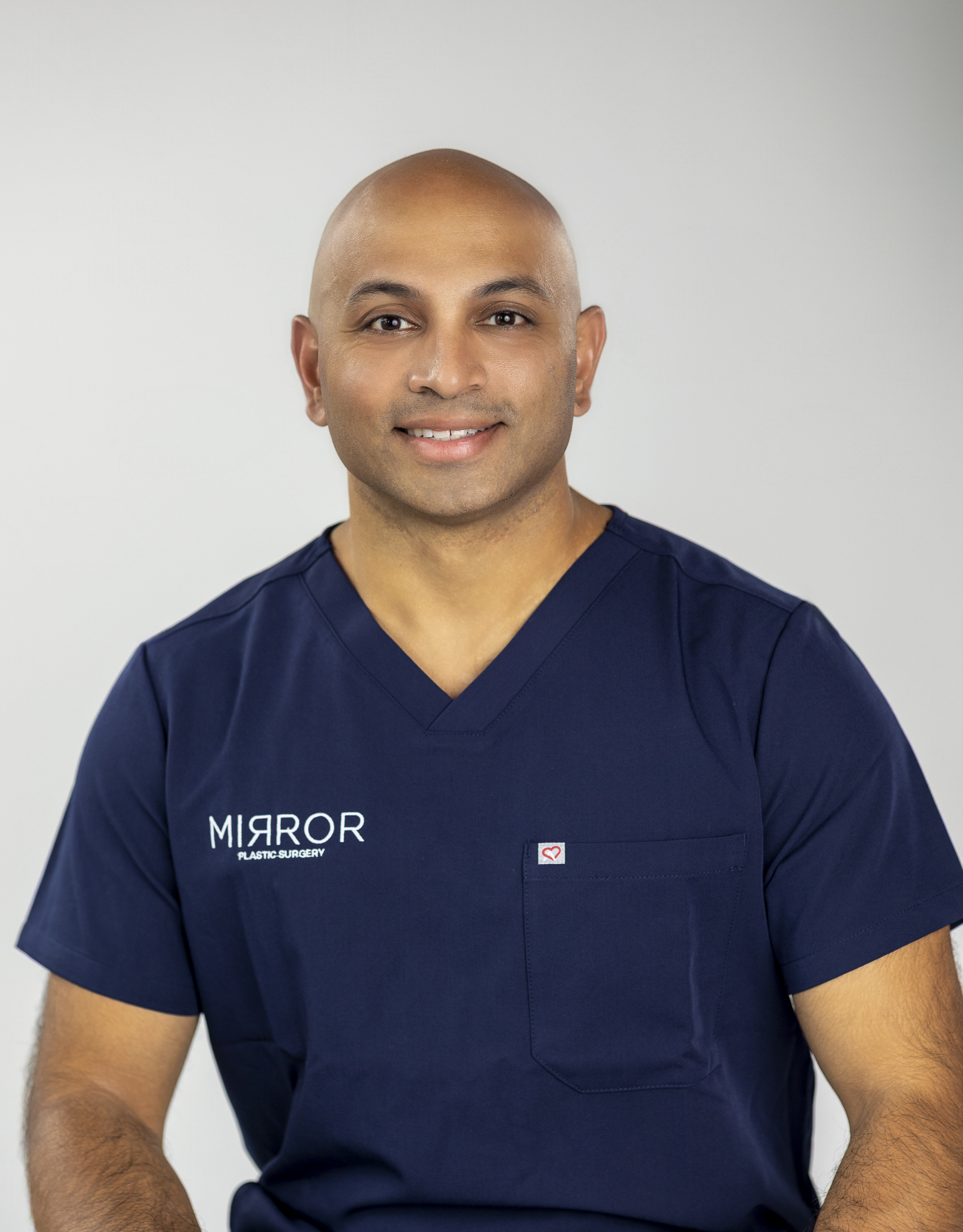
At Mirror Plastic Surgery, pre-operative evaluations are comprehensive and unhurried. The practice performs one to two surgeries per day, a deliberate limit that helps the team focus fully on each patient before, during, and after surgery.
Discuss your candidacy with Dr. Akash, a Johns Hopkins-trained plastic surgeon who provides detailed, evidence-based pre-operative evaluations.
Planning for Your BBL Recovery in Tampa
Once you have been cleared as a candidate and scheduled for surgery, understanding recovery requirements helps you prepare your home and support system. Recovery from BBL surgery involves specific positioning protocols and local support resources.
Patients are usually advised to avoid direct pressure on the buttocks for several weeks after surgery. This guideline means using a BBL pillow for sitting and maintaining careful sleep positioning. Tampa Bay-area patients benefit from proximity to Mirror Plastic Surgery’s St. Petersburg office for follow-up appointments, which are scheduled at regular intervals during the first six weeks.
Lymphatic drainage massage is commonly recommended starting within the first week after surgery to reduce swelling, support fat graft integration, and refine contour. Several licensed massage therapists in the St. Petersburg and Tampa area specialize in post-surgical lymphatic work and can be coordinated as part of the recovery plan.
Compression garments are worn continuously during the first several weeks. Patients should expect limited mobility and arrange help at home during the early recovery period. Many patients return to sedentary work within two to three weeks, while strenuous activity usually remains restricted for six to eight weeks.
Frequently Asked Questions
Can I get a BBL if my BMI is 32?
A BMI of 32 falls in the obese category, which most board-certified surgeons consider too high for safe BBL surgery. The usual recommendation is to reach a BMI below 30 through sustainable weight loss before a formal surgical evaluation. Rapid weight loss right before surgery is discouraged.
How long do I need to stop smoking before a BBL?
As mentioned in the candidacy criteria, the standard requirement is four to six weeks of complete nicotine cessation before surgery, continuing throughout recovery. Nicotine constricts blood vessels, reduces fat graft survival, and significantly increases the risk of wound complications.
What if I don’t have enough donor fat for a BBL?
Patients with limited donor fat may still qualify for a modified or “skinny BBL,” although volume outcomes will be more conservative. In some cases, a surgeon may recommend a staged approach or alternative body contouring options. A detailed donor-site assessment during consultation clarifies what is safely achievable.
Does weight gain or loss after a BBL affect results?
Transferred fat cells behave like native fat cells. They expand with weight gain and shrink with weight loss. Significant weight changes after surgery can alter contour results, so maintaining a stable weight close to your surgery weight offers the best chance of preserving long-term outcomes.1
Is a BBL safe if I have controlled diabetes?
Well-controlled diabetes with a normal HbA1c may not automatically disqualify you, but it requires careful pre-operative evaluation and close coordination with your endocrinologist. Uncontrolled diabetes remains a disqualifying condition because of higher infection risk and impaired healing.
BBL candidacy requires a thorough, individualized clinical assessment rather than a quick online checklist. The BMI window of 20–30, combined with stable weight, non-smoking status, and the absence of major comorbidities, describes the group most likely to achieve safe outcomes and durable results.1
Patients outside these parameters are not always permanently excluded, since many can address modifiable risk factors and return for re-evaluation.
Start your candidacy evaluation at Mirror Plastic Surgery in St. Petersburg, FL, where Dr. Akash provides evidence-based assessments tailored to your anatomy and health history.
1 Results may vary from person to person. Editorial content, before and after images, and patient testimonials do not constitute a guarantee of specific results.