
Written by: Ellie Pranckevicius, FNP-BC, Aesthetic Nurse Practitioner & Aesthetic Injector | Facial Restoration & Regenerative Injectable Specialist, Mirror Plastic Surgery | Last updated: July 9, 2026
Key Takeaways for Chronic Migraine Botox
- Botox (onabotulinumtoxinA) is FDA-approved for chronic migraine prevention in adults with 15 or more headache days per month.
- The standard PREEMPT protocol uses 31 fixed-site injections totaling 155 units, repeated every 12 weeks for consistent results.
- Most commercial insurance plans and Medicare Part B cover treatment when prior authorization documentation is complete.
- Therapeutic dosing can affect facial appearance, and injectors with cosmetic expertise help reduce aesthetic side effects while maintaining efficacy.
- Schedule your eligibility review at Mirror Plastic Surgery to confirm candidacy and design a personalized migraine treatment plan with Ellie.
Are You Eligible? The Chronic Migraine Checklist
Eligibility for Botox migraine treatment follows specific diagnostic and treatment criteria. Patients who meet all of the following are generally considered appropriate candidates:
- Confirmed chronic migraine diagnosis: 15 or more headache days per month, with at least 8 qualifying as migraines
- Prior trial of two or more preventive medications with inadequate response
- Age 18 or older; use in patients under 18 is considered off-label
- No contraindications to botulinum toxin, including neuromuscular disorders or known hypersensitivity
- Migraines that significantly impact work or daily functioning
Documentation typically includes a headache diary, clinical records confirming the diagnostic criteria, and records of prior preventive medication trials. Blue Cross Blue Shield of Florida has specific prior authorization requirements.
What Success Rates Can You Expect from Migraine Botox?
The PREEMPT clinical program provides the most cited efficacy data for Botox in chronic migraine prevention. The PREEMPT trials showed reductions in headache days per month from baseline, with many patients experiencing a 50% or greater reduction in headache days.1
Botox for chronic migraine typically begins to show effects within 1 to 2 weeks after the first treatment cycle, with benefits building over successive cycles.1 PREEMPT trials showed early onset after the initial cycle. Full benefit often takes multiple treatment cycles, so staying on the 12-week schedule is essential.1
Will Insurance Cover Botox for Migraines?
Most commercial insurance plans and Medicare Part B cover Botox for chronic migraine when medical necessity is documented. Prior authorization is almost always required. General documentation requirements include:
- Confirmed chronic migraine diagnosis with headache diary support
- Documented failure of at least two preventive medication classes
- Clinical records showing headache frequency, duration, and functional impact
- For BCBS Florida members, the prescribing provider must be a headache specialist or have consulted with one
For commercially insured patients who do not qualify for government programs, the BOTOX Complete Savings Program reimburses up to $1,400 for the first treatment and $1,000 for each subsequent treatment, with a maximum annual savings of $4,000 across up to 5 treatments.
Get help with your prior authorization. Ellie will review your eligibility documentation and walk you through the approval process before your first treatment.
What Not to Do After Migraine Botox: The 4-Hour Rule and Florida-Specific Guidance
Post-treatment care directly affects both safety and outcomes. Standard post-care restrictions include:
- Avoiding heavy physical activity for 4 hours
- Remaining upright (no lying down) for 4 hours after treatment
- Not rubbing or applying pressure to injection sites
- Avoiding chemicals or hair dye for 24 hours
- Not washing the head, neck, or face for 4 hours
For patients in the Tampa Bay area, Florida’s heat and humidity create unique post-treatment challenges. Elevated skin temperature can accelerate toxin diffusion, which is why you should avoid prolonged sun exposure, saunas, and hot tubs for at least 24 hours. Outdoor workouts, beach activities, and high-intensity exercise also raise core and skin temperature, so reschedule these for at least the following day. If you travel by air shortly after treatment, remain upright and avoid sleeping in positions that compress treated neck or shoulder areas. Avoid rubbing treated areas to minimize the risk of toxin migration.
Common Side Effects: Frequency, Duration, and Aesthetic Impact
Clear expectations about side effects help you weigh benefits against temporary discomfort or cosmetic changes. The following table summarizes the most commonly reported side effects from the PREEMPT clinical trials and FDA prescribing information.
| Side Effect | Frequency | Typical Duration | Aesthetic Impact |
|---|---|---|---|
| Neck pain / stiffness | Common | Days to weeks | None |
| Headache post-injection | 5% (vs. 3% placebo) | Days | None |
| Worsening migraine | 4% (vs. 3% placebo) | Days | None |
| Eyelid or brow droop (ptosis) | Uncommon with refined technique | Temporary | Moderate; visible asymmetry until resolved |
| Injection site soreness / bruising | Common | Days | Minimal; resolves without intervention |
| Facial weakness | Reported in trials | Weeks | Moderate; affects expression symmetry |
Serious adverse events including difficulty swallowing, breathing problems, or signs of toxin spread are uncommon but require immediate medical attention if they occur. Botox is not recommended during pregnancy.
Will Botox Change Your Appearance?
Therapeutic dosing for migraine targets the same muscle groups used in cosmetic neuromodulator treatments, particularly the frontalis, corrugator, and procerus. This overlap means visible changes to forehead movement and brow position are possible. Eyelid and brow droop rates have declined significantly as injection technique has been refined, but the risk is not zero.
An injector with dual therapeutic and cosmetic expertise can distribute the 155-unit dose across the protocol’s fixed sites while accounting for individual facial anatomy. Adjusting depth, angle, and placement helps minimize brow heaviness or forehead flattening. This approach differs from a purely neurological focus that prioritizes headache coverage without considering aesthetic balance. At Mirror Plastic Surgery, Ellie’s background in both advanced nursing and aesthetic injection technique means therapeutic dosing is planned with facial harmony as a concurrent objective, not an afterthought.
Your Treatment Journey: From Consultation to Long-Term Maintenance
Understanding what to expect aesthetically is one part of your decision. You also need a clear picture of the practical timeline from first consultation through long-term maintenance.
A typical patient journey at Mirror Plastic Surgery follows a structured arc:
- Consultation: A comprehensive assessment reviews headache history, prior medication trials, insurance documentation, and facial anatomy. Realistic timelines and aesthetic considerations are discussed in full.
- Treatment day: The session takes 15 to 20 minutes with little to no downtime. The injections are administered across the seven protocol muscle groups.
- Onset: Initial effects begin within 1 to 2 weeks. The first cycle rarely delivers full benefit.1
- Optimization (cycles 2–3): Meaningful improvement typically becomes apparent after multiple treatment cycles, with cumulative benefit building across successive cycles.1
- Maintenance: Injections are repeated every 12 weeks. Follow-up data confirm that patients who continue treatment report fewer headache days over longer periods.1
Map your treatment timeline with Ellie to understand what to expect at each stage of your migraine therapy journey.
Combining Migraine Botox with TMJ and Trapezius Treatment
The PREEMPT protocol already includes the trapezius as one of its seven target muscle groups. Patients who also experience TMJ-related jaw tension or bruxism may benefit from additional neuromodulator dosing in the masseter muscles. This common adjunct requires careful dose management when combined with the standard migraine protocol.
Recent analyses have examined the safety of using Botox for multiple indications simultaneously when total dosage is controlled and treatments occur around the same time. Working with an injector experienced in both therapeutic and cosmetic neuromodulators allows for combined dosing sessions that address migraine prevention, jaw tension, and facial balance within a single coordinated treatment plan. This planning keeps total dose within safe limits and reduces the risk of unintended aesthetic changes.
Choosing an Injector for Migraine Botox in Tampa Bay
Provider selection affects both migraine control and facial appearance. When you evaluate potential injectors, consider the following factors:
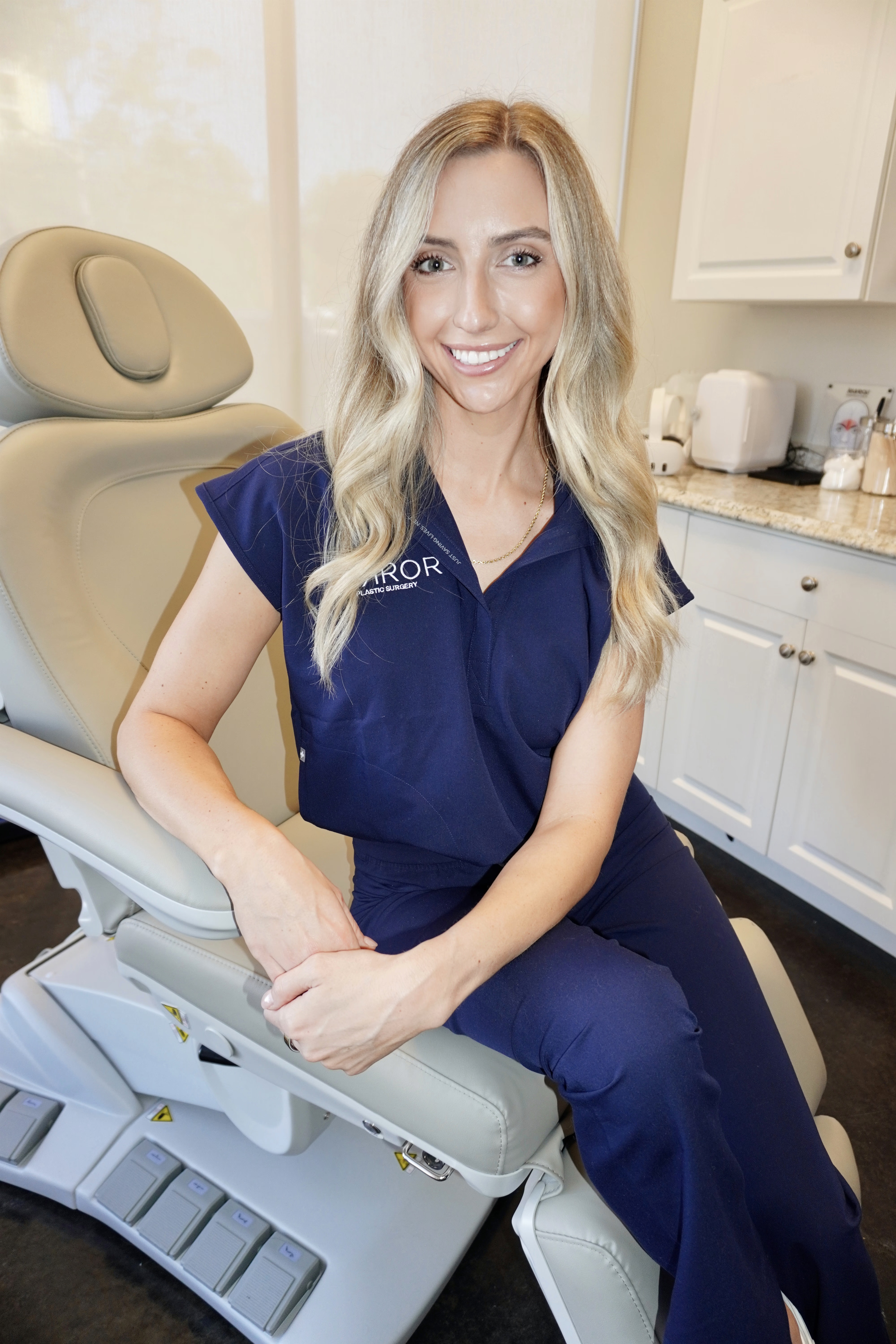
- Board-certified oversight: Treatment should occur within a practice that has physician-level oversight and the infrastructure to manage adverse events.
- Dual therapeutic and cosmetic expertise: An injector who understands both the PREEMPT protocol and facial anatomy can deliver therapeutic dosing without compromising natural expression.
- Unhurried consultation time: Adequate time to review headache history, prior treatments, insurance documentation, and aesthetic goals supports accurate planning.
- Transparent communication: Honest discussion of realistic timelines, side-effect probability, and next steps if the first cycle does not produce sufficient response.
- Experience with combined indications: If TMJ, trapezius tension, or cosmetic neuromodulator goals are also present, the injector should have documented experience managing combined dosing.
Summary: Making an Informed Decision About Migraine Botox
Botox for chronic migraine is an FDA-approved, evidence-supported preventive treatment for adults who meet the 15-headache-day diagnostic threshold and have not responded adequately to at least two prior preventive medications. The standard 31-injection, 155-unit PREEMPT protocol is administered every 12 weeks, with meaningful benefit typically emerging after the second or third cycle. Most commercial insurance plans and Medicare Part B cover the treatment when prior authorization documentation is complete.
Side effects are generally mild and temporary, and refined injection technique helps limit aesthetic impact. Patients in the Tampa Bay area should account for Florida’s climate when following post-care guidelines. Provider selection matters for both therapeutic outcomes and preservation of natural facial appearance across long-term quarterly maintenance.
Plan your migraine and aesthetics consultation at Mirror Plastic Surgery in St. Petersburg to receive a comprehensive assessment, insurance guidance, and a personalized treatment plan that addresses both migraine burden and cosmetic goals.
Frequently Asked Questions
How many Botox treatments are needed before chronic migraine patients see significant relief?
Most patients do not experience the full benefit of Botox for chronic migraine after a single treatment cycle. As noted in the success rates section, initial effects begin within 1 to 2 weeks, but many patients need 2 to 3 cycles before reaching their maximum response.1 This cumulative pattern makes consistency with the 12-week injection schedule critical, because skipping or delaying treatments interrupts the buildup of benefit. At Mirror Plastic Surgery, Ellie tracks headache frequency and functional impact across cycles to assess response and adjust the approach if needed, rather than making premature judgments after a single session.
Does migraine Botox affect facial appearance, and how can that be managed?
Therapeutic Botox for migraine uses the same muscle groups targeted in cosmetic neuromodulator treatments, particularly the forehead, brow area, and neck. This overlap means visible changes to forehead movement, brow position, or neck muscle tone are possible. The most commonly cited aesthetic side effect is eyelid or brow droop, discussed earlier, which occurs infrequently with experienced providers who understand facial anatomy. An injector who understands both the PREEMPT protocol and facial structure can distribute the dose across the fixed injection sites while accounting for individual brow position, muscle mass, and facial balance. This approach reduces the likelihood of a heavy or flattened appearance. At Mirror Plastic Surgery, Ellie’s dual background in aesthetic nursing and advanced injection technique means therapeutic dosing is planned with natural facial harmony as a concurrent objective.
What documentation does a Tampa Bay patient typically need to get insurance to cover Botox for migraines?
Insurance approval for Botox migraine treatment in Florida requires a well-documented prior authorization submission. The core elements typically include a confirmed chronic migraine diagnosis supported by a headache diary showing 15 or more headache days per month, clinical records documenting that at least two preventive medication classes were trialed without adequate relief, and records showing that migraines significantly impact daily functioning. Medicare Part B patients in Florida must meet additional criteria administered through First Coast Service Options, including documentation of headache duration of four or more hours per day. Blue Cross Blue Shield of Florida members face additional requirements including that the prescribing provider is a headache specialist or has consulted with one. Mirror Plastic Surgery’s concierge approach includes working through this documentation process with patients before the first treatment session.
Can Botox for migraines be combined with TMJ or cosmetic Botox in the same session?
Combining migraine Botox with TMJ or cosmetic neuromodulator treatments in the same session is clinically feasible when total dosage is carefully controlled. Recent studies have examined the safety of using Botox for multiple indications simultaneously when treatments occur around the same time and cumulative dose is managed appropriately. The practical benefit of this approach is efficiency, because patients address migraine prevention, jaw tension, and any cosmetic goals in a single coordinated visit rather than multiple separate appointments. The key requirement is an injector experienced in all three applications, who can plan the combined dose without exceeding safe thresholds or creating unintended aesthetic changes. Ellie’s expertise in both therapeutic and cosmetic neuromodulators at Mirror Plastic Surgery makes this kind of integrated planning possible within a single consultation and treatment session.
Is Botox for migraines only available through neurologists, or can other qualified providers administer it?
Botox for chronic migraine can be administered by any licensed provider with appropriate training in the PREEMPT injection protocol, not exclusively by neurologists. However, insurance requirements, particularly for Blue Cross Blue Shield of Florida, specify that the prescribing provider must be a headache specialist or have consulted with one. This structure often means a neurologist confirms the diagnosis and supports the prior authorization, while a qualified advanced practice provider with neuromodulator expertise performs the injections. At Mirror Plastic Surgery, Ellie Pranckevicius, FNP-BC, brings four years of experience in a Neuroscience ICU at Tampa General Hospital and specialized aesthetic injection training, giving her both the clinical foundation to understand the therapeutic rationale and the technical precision to execute the protocol with attention to facial anatomy. The practice operates under the board-certified oversight of Dr. Akash Chandawarkar, a Johns Hopkins-trained plastic surgeon.
Disclaimer: Results may vary from person to person. Editorial content, before and after images, and patient testimonials do not constitute a guarantee of specific results.
1 Results may vary from person to person. Editorial content, before and after images, and patient testimonials do not constitute a guarantee of specific results.