
Written by: Dr. Akash Chandawarkar, Board Certified Plastic Surgeon, Mirror Plastic Surgery | Last updated: July 17, 2026
Key Lip Augmentation Recovery Takeaways
- Lip augmentation healing follows four clear phases. The first two weeks carry the strictest restrictions to protect your results and lower complication risk.
- Swelling peaks at 24 to 48 hours and bruising usually clears within one week.1 Scar maturation continues for up to twelve months and requires steady aftercare.
- During early recovery, you must avoid straws, strenuous exercise, smoking, NSAIDs, and wide mouth movements. These actions place tension on the incision and disrupt healing.
- Final results usually appear between three and four months.1 With consistent scar care and sun protection, scars fade to a fine line over six to twelve months.1
- At Mirror Plastic Surgery, Dr. Akash provides tailored recovery plans and close follow-up care. Schedule your consultation today to review your surgical lip augmentation options.
Four-Phase Lip Augmentation Healing Timeline
The table below outlines the four main recovery phases. Each detail comes from published clinical data and specialist practice guidelines.
| Phase | Key Physical Changes | Activity Status | Scar Status |
|---|---|---|---|
| Days 1–3 | Tightness, peak swelling at 24–48 hours, mild bruising, upper lip numbness | Rest, light walking only | Incision closed, reddish-pink line |
| Week 1 | Bruising and puffiness peak day 1, begin resolving by day 5–7 | Return to desk work in 3–5 days, no strenuous activity | Sutures removed days 5–7 |
| Weeks 2–4 | Swelling significantly decreases, most patients socially comfortable, makeup may be needed | Exercise avoided through week 4–6, driving resumes days 2–3 | Pink, slightly raised, silicone gel begins week 4–6 |
| Months 2–3 | Subtle residual swelling, often worse in the morning | Full unrestricted activity | Shifting from pink toward light tan or flesh tone |
These phases provide a high-level roadmap. The sections below walk through what you can expect in each stage and how to support healing.
Days 1–3: Peak Swelling and Strict Rest
Swelling peaks at 24 to 48 hours and can create an over-elevated look that does not represent your final result.1 Tightness, mild bruising, and temporary upper lip numbness are common. Cold compresses applied for 20 minutes per hour while awake during the first 72 hours help limit swelling and bruising. Light walking from day one supports circulation without raising blood pressure.
Week 1: Bruising Fades and Sutures Come Out
Bruising and puffiness peak the day after surgery and usually improve by days five to seven, with most symptoms gone within a week.1 Non-dissolvable sutures are typically removed between days five and seven. Most patients describe tightness and pressure instead of sharp pain. Desk work usually feels manageable after three to five days.
Weeks 2–4: Social Comfort Returns
Swelling drops noticeably during this phase, and most people feel comfortable at social events, sometimes with concealer over residual bruising. Between weeks three and six, the lip can appear slightly less elevated as edema resolves and the lip settles into its long-term position. Makeup over the incision and silicone gel for scar care are usually allowed starting around two weeks.
Months 2–3: Subtle Swelling and Scar Softening
Mild swelling can linger into months two and three and often looks more noticeable in the morning. Between months two and six, redness fades, firmness softens, the scar flattens, and numbness usually improves with steady scar care. Strict sun protection for at least three months supports smoother scar maturation.
First-Week Restrictions After Lip Lift Surgery
This checklist covers the key “do not” rules for the first seven days after a surgical lip lift or lip implant. Each one protects the incision and supports healthy blood flow.
- Do not use straws. The sucking motion pulls directly on the philtrum incision and must be avoided for the first two weeks.
- Do not eat hard, chewy, or wide-bite foods. Soft foods for the entire first week reduce stretching at the incision while sutures remain. Avoid foods that require wide opening, such as sandwiches or burgers.
- Do not perform strenuous exercise. Running, cycling, resistance training, and HIIT should wait at least two weeks because elevated blood pressure increases swelling and bleeding risk.
- Do not smoke, vape, or use nicotine products. Smoking should stop for at least four to six weeks because it significantly slows wound healing.
- Do not wet, rub, or manipulate the incision site. Limit face washing to gentle patting around the nasal base during the first week.
- Do not take NSAIDs, aspirin, or blood thinners. Avoid ibuprofen, Advil, Naprosyn, aspirin, fish oil, herbal supplements, and certain vitamins for two weeks before and after surgery to lower bruising and bleeding risk.
- Do not make forced facial expressions or wide mouth movements. Limit talking, laughing, and big mouth movements. Avoid forced smiling or stretching the upper lip for the first two weeks to prevent tension on the incision.
Pain Control and Sleep Position After Lip Surgery
Most lip lift patients need only over-the-counter pain relief after day five and mainly feel tightness instead of sharp pain. Prescription pain medication usually covers the first few days comfortably. Arnica and bromelain may be suggested to reduce bruising, and steroids may be used during or after surgery to control swelling. Acetaminophen is preferred for pain relief, while NSAIDs remain off-limits because they raise bleeding risk.
Patients should sleep with their head elevated 30 to 45 degrees and use cold compresses for short intervals during the first 24 to 48 hours to limit swelling. Continue head elevation while sleeping or resting for the full first two weeks so gravity can help fluid drain away from the surgical site. During this period, sleep on your back only, because side or stomach positions place pressure on the incision and can create uneven swelling.
As noted in the initial recovery phase, cold compresses during the first 72 hours should be used for 20 minutes per hour while awake, then replaced with warm compresses for 20 minutes three times daily. Beyond external care, internal habits also affect swelling. Staying well hydrated and limiting salty foods during the first several days reduces fluid retention and supports smoother healing.
Warning Signs of Lip Augmentation Complications
Major complications after a surgical lip lift are rare. Minor issues such as postoperative swelling, bruising, hypertrophic scarring, temporary numbness, hematoma, or mild allergic rash are usually self-limited and fall within the normal range for perioral surgery. Some patients eventually benefit from revision surgery.
For lip implants, potential problems include implant malposition, the need for revision or size adjustment, and infection or implant extrusion. Serious complications remain uncommon.
Contact your surgeon right away if you notice any of the following:
- Increasing pain, swelling, or redness after you had already started to improve
- Yellow discharge, odor, or fever, which can signal infection
- Widening or separation of the incision line
- Darkening or black spots near the incision
- Rapid one-sided swelling or rising pain, which may indicate a hematoma and needs evaluation within hours
- Fever above 100.4°F (38°C), chills, nausea, or vomiting, which suggest a systemic infection
- New difficulty moving part of the face, especially the mouth corner, days after surgery, which requires urgent review for possible facial nerve injury
Most surgical site infections appear within the first 30 days after surgery, with the highest risk in week one. For lip implant patients, infection risk can extend up to one year because the implant remains in place.
When Lip Lift Results and Scars Settle
Most patients feel photo-ready four to eight weeks after lip lift surgery, although the result keeps refining for months as the scar matures. Final lip proportions usually become clear by months three to four once residual swelling has resolved.1 The scar then follows a predictable color and texture progression over the next several months.
Tension at the closure site is the main surgical factor that shapes lip lift scar quality, and tension-free anchoring to deeper structures usually produces finer scars than skin-only closure. Patient factors such as a history of keloids, smoking, and sun exposure on an immature scar also affect the final look. Daily SPF 50 sunscreen from week two onward remains the single most effective step for preventing permanent UV darkening of a healing lip lift scar.
How Mirror Plastic Surgery Supports Safe Lip Recovery
The safety of any surgical lip procedure depends on the surgeon’s training, the facility’s standards, and the number of cases performed each day. At Mirror Plastic Surgery, each of these elements is structured to lower risk and support predictable healing.
Dr. Akash completed a seven-year integrated plastic and reconstructive surgery residency at Johns Hopkins University, followed by an aesthetic surgery fellowship at Manhattan Eye, Ear and Throat Hospital (MEETH). This fellowship represents the highest level of subspecialty training in cosmetic surgery. He earned his medical degree through the Harvard-MIT Division of Health Sciences and Technology, a program focused on physician-scientists working at the intersection of medicine and engineering. He has appeared on Newsweek’s America’s Best Plastic Surgeons list for two consecutive years, including 2025.
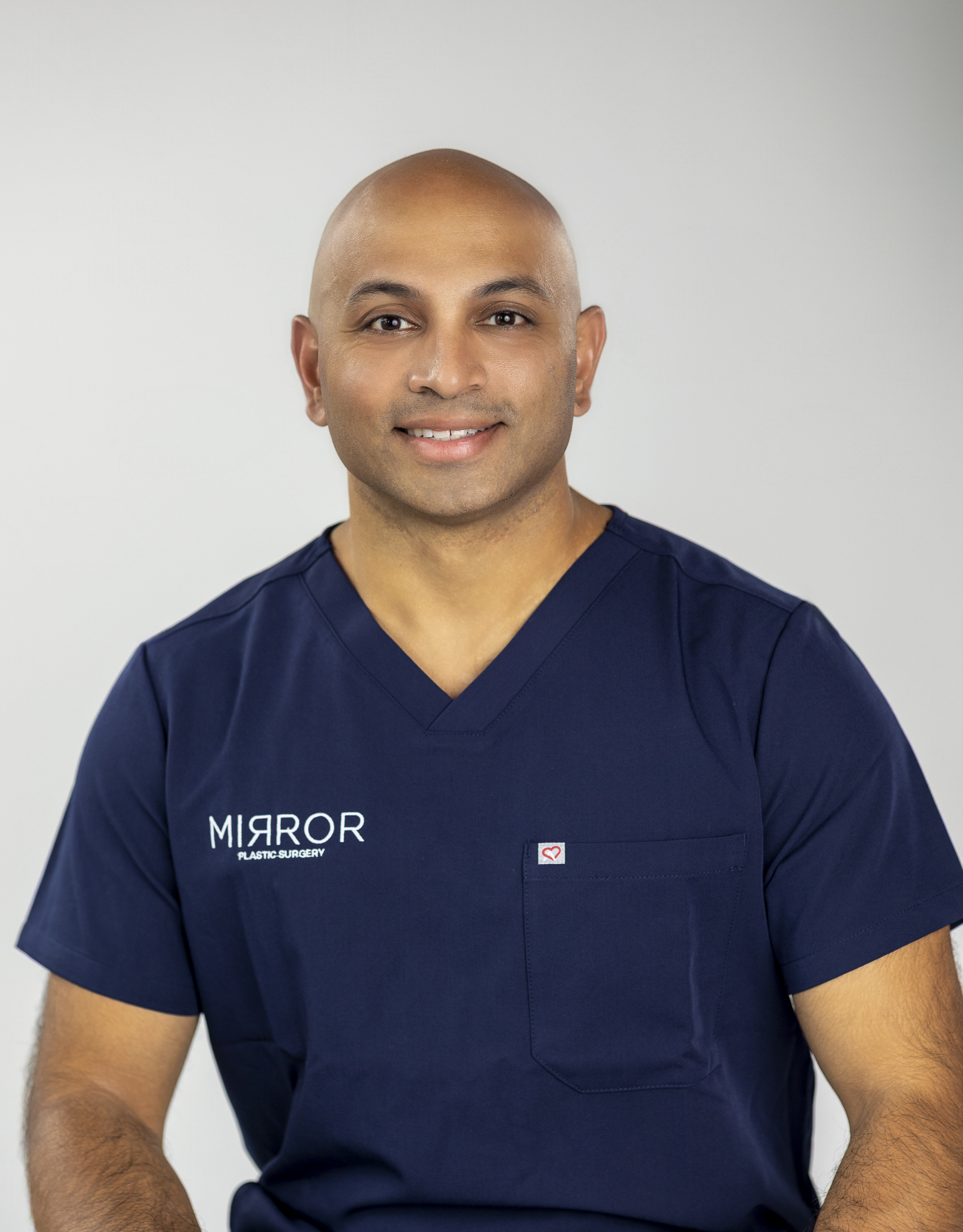
Mirror Plastic Surgery limits surgical volume to one or two cases per day. This schedule allows the team to focus fully on each patient before, during, and after surgery, which high-volume centers performing many cases daily may not match. All procedures take place in accredited surgical facilities with board-certified physician anesthesiologists. Dr. Akash personally manages post-operative follow-up so that any concerns are recognized and treated early.
Extended pre-operative visits, often lasting up to one hour, allow detailed anatomical assessment, clear discussion of the twelve-month scar timeline, and customized restriction planning based on your lifestyle and health history.
Book a consultation with Dr. Akash at Mirror Plastic Surgery’s St. Petersburg office to review surgical lip augmentation options and receive a personalized recovery roadmap.
Frequently Asked Questions
How long does swelling last after a surgical lip lift?
Swelling peaks 24 to 48 hours after surgery and looks most obvious during the first week. It improves significantly by weeks two through four, although mild morning puffiness can continue into months two and three. Deep tissue swelling can take up to six months to fully resolve. The over-elevated look seen in the first 48 hours does not predict your final result and should not guide your judgment of the outcome.
When can I smile normally after lip lift surgery?
Forced smiling, wide mouth movements, and strong facial expressions should stay limited for the first two weeks. These movements place direct tension on the philtrum incision and can widen or disrupt the closure. Light, natural expressions are usually fine after the first few days, but deliberate stretching of the upper lip should wait until sutures are removed and the incision has sealed, typically around days five through seven.
What are the signs of infection after lip augmentation surgery?
Signs of infection include increasing redness, warmth, or swelling at the incision after you had started to improve, yellow, green, or foul-smelling drainage, fever above 100.4°F (38°C), chills, and worsening pain that does not respond to prescribed medication. Darkening or black spots near the incision can indicate poor blood flow and require urgent evaluation. For lip implant patients, infection risk extends up to one year because the implant remains in place. Any of these signs call for same-day contact with your surgeon.
How should I care for the scar after a lip lift?
Scar care usually begins once the incision has fully closed, often seven to fourteen days after surgery. Silicone gel or sheeting used consistently for at least three months helps flatten the scar, reduce redness, and ease itchiness. Daily broad-spectrum SPF 50 from week two onward is essential because UV exposure can permanently darken a fresh scar. Gentle scar massage, when your surgeon approves it, often starts between weeks four and six. Smoking should remain off-limits throughout scar maturation because nicotine reduces blood flow and can create wider, more visible scars. Full scar maturation typically takes six to twelve months and occasionally up to eighteen months.
How does surgical lip lift recovery differ from lip filler recovery?
Lip filler treatments involve no incisions, allow same-day return to normal activities, and cause swelling that usually settles within one to two weeks. Results last six to twelve months and can be reversed with hyaluronidase. Surgical lip lift recovery involves two to four weeks of visible downtime, activity limits for four to six weeks, suture removal around days five to seven, and scar maturation over six to twelve months. The trade-off is permanence, because a lip lift changes the lip structure and does not require ongoing maintenance.
Lip implants cause one to two weeks of noticeable swelling and restricted lip movement, with the final soft contour emerging by weeks four to six. Results remain permanent unless the implant is surgically removed. Patients considering surgical options benefit from a detailed consultation that covers the full recovery commitment before they decide.
Book a consultation with Dr. Akash to choose the lip augmentation approach that best fits your anatomy, goals, and recovery timeline.
1 Results may vary from person to person. Editorial content, before and after images, and patient testimonials do not constitute a guarantee of specific results.