
Written by: Ellie Pranckevicius, FNP-BC, Aesthetic Nurse Practitioner & Aesthetic Injector | Facial Restoration & Regenerative Injectable Specialist, Mirror Plastic Surgery | Last updated: August 11, 2026
What You Will Learn About Bioidentical Hormones
- Most women feel early relief from hot flashes and sleep issues within 2–4 weeks, with full effects by about 12 weeks.1
- FDA-approved bioidentical formulations are preferred over compounded options because dosing is consistent and safety data are stronger.
- Bioidentical hormone therapy does not cause significant weight gain and can improve body composition by reducing visceral fat and preserving lean mass.1
- Duration of therapy is individualized with no fixed stop date. Ongoing monitoring keeps treatment safe and effective.
- Women exploring bioidentical hormone therapy or peptide options for inflammation, energy, or skin aging can schedule a personalized consultation at Mirror Plastic Surgery.
Why Women 40–60 Are Deeply Researching Bioidentical Hormone Therapy
Perimenopause and menopause create a cluster of symptoms, including vasomotor episodes, disrupted sleep, cognitive fog, mood shifts, joint discomfort, and body composition changes. Vasomotor symptoms last an average of 4–7 years after menopause and can persist beyond 10 years in some women, so treatment decisions have long-term impact.
The information landscape feels scattered. Forum stories often conflict with promotional clinic content, and many AI summaries still rely on pre-2024 literature that predates recent FDA label changes and updated society guidelines. Women in this age range usually research carefully and want regulatory context, realistic timelines, and a clear way to evaluate options, not sales language.
This report pulls together 2024–2026 evidence on symptom relief timelines, compounded versus FDA-approved distinctions, side effects, weight outcomes, long-term safety, and peptide research for related concerns such as inflammation, energy, and skin aging.
Who Leads Peptide Therapy at Mirror Plastic Surgery
At Mirror Plastic Surgery in St. Petersburg, Florida, a board-certified Family Nurse Practitioner leads peptide therapy consultations. Her background includes four years in the Neuroscience ICU at Tampa General Hospital, a premedical track at Boston University, and both a Bachelor’s and Master’s in Nursing from the University of South Florida. She also began her career at a high-end medical spa in Boston, which gives her a rare blend of skin physiology expertise and advanced clinical training.
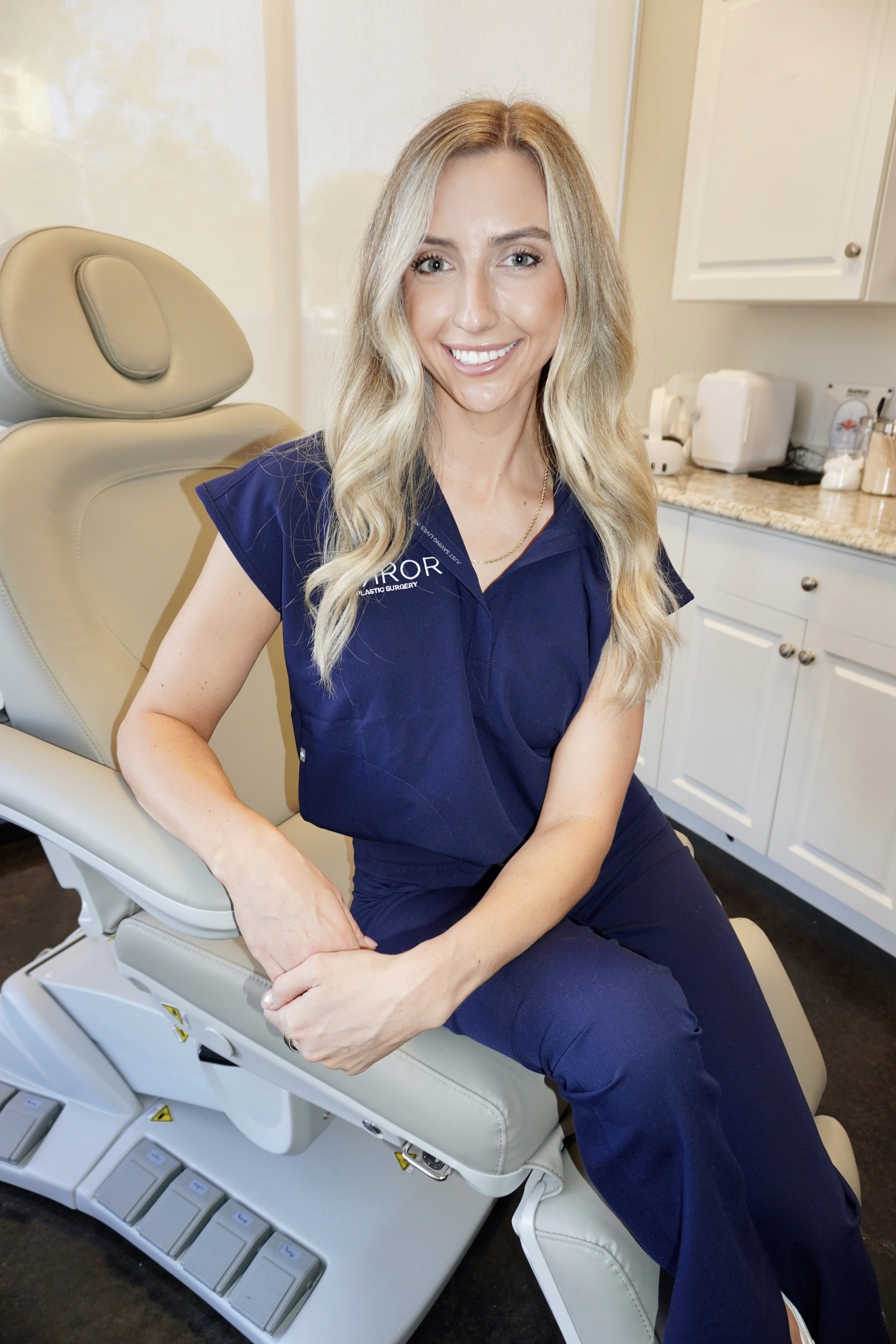
Consultations last 30–60 minutes and usually cover a full medical history, discussion of health goals, and, when appropriate, comprehensive lab panels. These panels may include thyroid, liver, kidney, diabetes markers, and hormone levels. The visit focuses on education. She explains the physiology behind each recommendation in clear language and does not prescribe protocols that are not clinically indicated. For women with overlapping concerns such as inflammation, low energy, or skin aging, she designs personalized peptide stacks based on lab findings rather than generic templates.
Book an appointment to see whether a supervised peptide protocol fits your health goals.
Compounded vs FDA-Approved Bioidentical Hormones: What the Terms Mean
“Bioidentical” refers to hormones that match the structure of hormones produced by the human body, such as estradiol, progesterone, and testosterone. The word does not describe regulatory status. Many FDA-approved products are bioidentical, and many compounded products are also bioidentical. The key clinical difference lies between regulated and unregulated manufacturing, not between “natural” and “synthetic.”
On February 12, 2026, the FDA approved label changes removing boxed warning language about heart disease, breast cancer, and probable dementia from six menopausal hormone therapy products, which represents a major regulatory update that applies only to FDA-approved formulations, not compounded ones. The endometrial cancer boxed warning remains on systemic estrogen-alone products. With this regulatory context in place, the next section reviews how quickly these therapies work and what women can expect from treatment.
Current Evidence on Symptom Relief Timelines and Safety
Most patients using hormone therapy notice symptom improvement within the first few weeks to months. Randomized trials of estradiol patches report 78–97% reductions in vasomotor episodes at 12 weeks.1 Randomized controlled trials also show substantial decreases in hot flashes with low-dose estrogen patches within 12 weeks, which aligns with the timelines described later in this article.
Reviews of menopausal hormone therapy report no statistically significant weight gain with many regimens compared with non-users. A Cochrane review found no evidence that unopposed estrogen or combined estrogen-progestogen therapy changes body weight beyond the usual menopausal pattern.
On safety, the British Menopause Society advises against arbitrary limits on the duration of HRT use and recommends individualized dosage, regimen, and duration. The benefits of hormone therapy outweigh the risks for most healthy symptomatic women younger than 60 years and within 10 years of menopause onset.
How Long It Takes to Feel Bioidentical Hormone Effects
Relief timelines differ by delivery method and symptom type. The list below summarizes current evidence by formulation.
- Transdermal patches and gels: Hot flashes and night sweats usually show first noticeable change in weeks 2–4, with substantial improvement by weeks 6–8 and near-complete relief by week 12, which matches trial data on estradiol patches.1 Vaginal dryness treated with local estrogen often improves by week 2, with more progress in weeks 4–6 and full effect by week 12.
- Oral micronized progesterone: Sleep onset often improves within nights 1–7, with more consistent sleep by week 2 and full effect by week 4.1
- Subdermal pellets: Initial effects usually appear within 2–4 weeks of insertion and reach full therapeutic benefit by weeks 6–8.1
- Injections (testosterone): Noticeable changes often appear within 7–14 days, although peak-and-trough fluctuations can occur unless dosing intervals are shortened to weekly.1
- Mood and cognition: Mood and irritability typically show first change at week 4, with more improvement at week 8 and full effect by weeks 12–16.1 The 2024 long-term WHI follow-up in Annals of Internal Medicine and observational data summarized by NAMS indicate that most women experience measurable gains in mental clarity between weeks 8 and 16.
- Sexual health: Benefits such as heightened libido and lubrication usually appear within 8–12 weeks, while vaginal tissue thickness and elasticity continue improving for up to 3 months.1
Lab levels should be rechecked at 6–8 weeks to confirm a therapeutic range and guide dose changes. Week 4 serves as the earliest fair checkpoint for judging whether a regimen is working.
Early Signs That Hormone Therapy Is Working
Improved sleep continuity, fewer vasomotor symptoms, and less emotional reactivity are the earliest common signs of bioidentical HRT effectiveness, usually appearing in weeks 2–4.1 Women taking progesterone often notice better sleep within days because of its mild sedative effect, and a 2023 Scientific Reports study found that perimenopausal women reported better sleep quality within 4 weeks.
Additional early indicators include:
- Fewer nighttime awakenings and longer stretches of uninterrupted sleep
- Lower frequency or intensity of hot flashes
- Reduced irritability or emotional volatility
- Mood swings feeling less intense and brain fog beginning to clear within 3–6 weeks, often driven indirectly by better sleep and fewer hot flashes
Later-stage indicators, usually between weeks 8 and 16, include sharper cognition, improved libido, and less joint discomfort. Relief from most joint pain and brain fog tends to peak around 3 months and then remain stable with continued use.
Weight, Body Composition, and Bioidentical Hormones
Bioidentical hormone therapy does not function as a weight-loss treatment. Menopause hormone therapy can improve body composition by slowing total body fat gain, reducing visceral fat, and preserving lean mass, even when total body weight stays similar; it is not prescribed for weight loss or obesity treatment.1
Several findings clarify what women can realistically expect.
- The Women’s HOPE trial, a randomized double-blind placebo-controlled study of 2,673 postmenopausal women, found that lower- and standard-dose conjugated estrogen regimens did not cause more weight gain than placebo.
- A 2018 systematic review reported that combining micronized progesterone with estrogen helped women maintain or slightly lower body weight, and short-term weight gain during progesterone surges usually reflected temporary fluid retention rather than fat gain.
- A Journal of Clinical Endocrinology and Metabolism study found that current users of menopausal hormone therapy carried less deep abdominal fat than non-users.1
- A 2006 meta-analysis of 107 randomized controlled trials linked menopause hormone therapy to a 30% reduction in new-onset type 2 diabetes and reduced insulin resistance.
Women who notice weight changes during HRT, especially in the first six months, are usually seeing fluid shifts or body composition changes rather than true fat gain. If a weight change persists beyond six months, worsens, or feels concerning, tracking notes should be shared with the provider to consider dose or formulation adjustments.
How Long Women Can Safely Stay on Bioidentical Hormones
The Menopause Society states that hormone replacement therapy has no fixed stop date. Duration depends on symptom persistence, risk profile, and ongoing monitoring rather than a preset calendar limit.
Key evidence on duration includes the following points.
- For most healthy women who start HRT before age 60 and within 10 years of their final period, 5–10 years of hormone therapy is considered safe and often beneficial.
- Women’s Health Initiative re-analyses showed no difference in all-cause mortality over 18 years of follow-up, with median use of about 5.6 years for combined therapy and 7.2 years for estrogen-only therapy.
- A 2024 study on menopausal hormone therapy beyond age 65 found that lower-dose, non-oral, and estradiol-based approaches produced more favorable outcomes than higher-dose or oral approaches.
- The British Menopause Society advises against arbitrary limits on HRT duration and recommends individualized decisions.
- About 30–50% of women notice some symptoms return after stopping HRT, which should factor into long-term planning with a clinician.
Risks, Limits, and Regulatory Issues With Hormone Therapy
All hormone therapy carries risks that change with age, dose, duration, route, and personal health history. The list below highlights primary considerations from current evidence.
- Breast cancer: Estrogen therapy may modestly raise breast cancer risk with long-term use beyond five years, with an absolute increase of about 8 extra cases per 10,000 women per year based on WHI data using synthetic hormones. Risk appears lower with bioidentical hormones, especially when micronized progesterone replaces synthetic progestins.
- Venous thromboembolism: Transdermal estrogen carries a lower blood clot risk (relative risk about 1.0) than oral pills (relative risk about 1.9).
- Endometrial cancer: Estrogen without progestogen can thicken the uterine lining over time and raise endometrial cancer risk, so a progestogen is required for women with an intact uterus.
- Compounded pellet-specific risks: ACOG’s clinical consensus notes that once pellets are inserted, hormone levels cannot be adjusted if side effects occur. FDA inspections found records of 4,202 adverse events linked to compounded hormone pellets from one company, none reported to the FDA; events included endometrial and prostate cancers, strokes, heart attacks, deep vein thrombosis, cellulitis, and pellet extrusions.
- Salivary testing: ACOG Clinical Consensus No. 6 (2023, reaffirmed 2026) states that salivary hormone testing does not accurately assess hormone levels and should not guide HRT dosing.
People who should avoid hormone therapy include those with certain hormone-sensitive cancers, a history of blood clots or stroke, active liver disease, or untreated cardiovascular risk factors. Every hormone therapy decision requires individualized clinical evaluation.
Peptide Options for Inflammation, Energy, and Skin Aging
Some women have symptom patterns that extend beyond vasomotor issues, or they prefer to use hormone therapy alongside other tools. In these cases, supervised peptide protocols can address overlapping concerns that often appear in midlife.
Research links mitochondrial dysfunction and chronic inflammation to self-perceived fatigue in older adults. Multiple longitudinal studies connect higher circulating IL-6 levels, a marker of chronic inflammation, with greater functional disability and cognitive decline in older adults. Because these mechanisms differ, they call for targeted interventions. NAD (Nicotinamide Adenine Dinucleotide) peptides focus on mitochondrial function, while anti-inflammatory peptides such as BPC-157 and TB500 target systemic and soft-tissue inflammation.
Skin aging accelerates during the menopausal transition as collagen and elastin decline. GHK-Cu, a copper peptide, supports collagen and elastin production. Mirror Plastic Surgery uses GHK-Cu as part of the Glow Stack, which also includes BPC-157 and TB500 for women seeking systemic anti-inflammatory and skin-health benefits.
For women with stubborn weight concerns despite hormone therapy, Mirror Plastic Surgery offers GLP-3R compounding. This newer peptide resembles GLP-1 but is reported to have fewer gastrointestinal side effects, a lower risk of muscle loss, and broader indications that include insulin resistance and cardiovascular risk factors. Sermorelin and Ipamorelin stimulate natural growth hormone production and may support muscle retention and metabolic health.
All peptide protocols at Mirror Plastic Surgery begin with comprehensive lab analysis and are tailored to individual physiology. Peptides come from suppliers with documented batch testing, and patients receive concierge support throughout treatment.
Summary and Next-Step Guidance
Current evidence offers several clear conclusions for women evaluating bioidentical hormone therapy in 2026.
- Most women notice meaningful symptom relief within 2–4 weeks, with full effect by about 12 weeks. Week 4 serves as the earliest fair evaluation checkpoint.
- FDA-approved bioidentical formulations such as transdermal estradiol and micronized progesterone are recommended over compounded preparations by ACOG, NAMS, the Endocrine Society, and NASEM when an equivalent approved product exists.
- Hormone therapy does not cause clinically significant weight gain for most women. Studies document body composition improvements, including reduced visceral fat, even when scale weight stays stable.
- Duration of use remains individualized. Current guidelines do not support a fixed stop date for appropriately selected women.
- Compounded preparations show documented dose variability, limited long-term safety data, and specific risks, especially with pellets, which should be discussed openly with a clinician.
- Concerns such as inflammation, fatigue, and skin aging have emerging evidence for peptide-based interventions as medically supervised complements or alternatives.
Women navigating these choices benefit from a clinician who combines strong evidence literacy with individualized assessment. Book an appointment at Mirror Plastic Surgery for a personalized, lab-informed review of your options, including supervised peptide protocols for inflammation, energy, weight management, and skin aging.
Frequently Asked Questions
How long does it take to feel the effects of bioidentical hormones?
Timing depends on delivery method and symptom type. Hot flashes and night sweats usually show a first noticeable reduction within 2–4 weeks, with substantial improvement by weeks 6–8 and full effect by week 12. Sleep often improves within the first week when oral micronized progesterone is taken at bedtime because of its mild sedative properties. Mood and cognitive symptoms generally need 4–8 weeks to begin improving and may not reach full effect until weeks 12–16. Sexual health benefits, including better lubrication and less discomfort, typically appear between weeks 8–12. Subdermal pellets usually produce initial effects within 2–4 weeks and reach full benefit by weeks 6–8. Lab levels should be rechecked at 6–8 weeks to confirm a therapeutic range. Week 4 is the earliest fair checkpoint for judging whether a regimen is working.
Will I lose weight on bioidentical hormones?
Bioidentical hormone therapy should not be viewed as a weight-loss treatment. Clinical trials show that hormone therapy does not cause significant weight gain compared with placebo. Some evidence suggests that it can improve body composition by reducing visceral fat and preserving lean mass, even when total weight stays similar. Short-term weight shifts in the first few months usually reflect fluid changes, especially during progesterone-containing regimens. Women who experience persistent weight changes beyond six months should discuss dose or formulation adjustments with their provider. For women whose main concern is weight management, supervised peptide protocols, including newer GLP-3R compounding, offer a medically overseen option with individualized dosing based on labs and health history.
How long can a woman stay on bioidentical hormones?
Guidelines from The Menopause Society, the British Menopause Society, and NAMS do not endorse a fixed stop date for hormone therapy. Duration is set individually based on symptom persistence, risk factors, and yearly reassessment. For most healthy women who start therapy before age 60 or within 10 years of their final menstrual period, 5–10 years is considered safe and often beneficial. Women who start later or have a history of hormone-sensitive cancers, blood clots, stroke, or active liver disease face a different risk-benefit balance and need more tailored guidance. About 30–50% of women notice symptom return after stopping HRT, which should factor into long-term planning. Ongoing monitoring, not automatic discontinuation based on age alone, remains the central principle.
What are the first signs that HRT is working?
The earliest signs of effective bioidentical HRT usually include better sleep continuity, fewer or milder hot flashes, and less emotional reactivity, often within weeks 2–4. Women taking oral micronized progesterone at bedtime frequently notice easier sleep onset within the first week. Reduced irritability and fewer mood swings often appear by week 4. Later signs, typically between weeks 8 and 16, include clearer thinking, higher libido, less vaginal dryness, and reduced joint discomfort. Because response varies by dose, delivery method, and personal physiology, week 4 is the earliest reasonable checkpoint for evaluation. If no improvement appears by weeks 6–8, a dose or formulation change should be discussed with the prescribing clinician.
Medical disclaimer: This article is intended for informational purposes only and does not constitute medical advice, diagnosis, or treatment. Bioidentical hormone therapy and peptide protocols carry real risks and benefits that vary by individual. All treatment decisions should be made in consultation with a licensed healthcare provider who can evaluate your personal health history, current medications, and clinical needs. Mirror Plastic Surgery’s peptide therapies are not FDA-regulated. Outcomes from peptide protocols vary by individual and are not guaranteed. Compounded hormone preparations referenced in this article are not FDA-approved finished drug products. Regulatory information reflects publicly available guidance as of August 2026 and is subject to change.
1 Results may vary from person to person. Editorial content, before and after images, and patient testimonials do not constitute a guarantee of specific results.
Peptide therapy is intended for wellness and optimization purposes and is not prescribed to diagnose, treat, cure, or prevent disease unless specifically stated. Many peptides are not FDA-approved and may be used off-label. Some have limited long-term safety data, with a potential for unknown risks, complications, or desensitization with prolonged use.