
Written by: Ellie Pranckevicius, FNP-BC, Aesthetic Nurse Practitioner & Aesthetic Injector | Facial Restoration & Regenerative Injectable Specialist, Mirror Plastic Surgery | Last updated: August 12, 2026
Key Takeaways
- Avéli is a single-session, minimally invasive procedure that mechanically severs the specific fibrous septa causing individual cellulite dimples on the thighs and buttocks.
- The device’s identify-tension-cut-verify sequence provides real-time confirmation that each targeted band has been fully released, which distinguishes it from area-based subcision methods.
- The CONFFIRM pivotal study showed improvement on the Cellulite Severity Scale and high patient satisfaction at 12 months, though peer-reviewed data beyond one year are not yet available.1
- Treated septa do not regenerate, but new bands can form in untreated areas, and weight fluctuation or aging may affect overall skin appearance over time.1
- Patients seeking a personalized anatomical assessment to determine if Avéli is right for their cellulite pattern can book a consultation at Mirror Plastic Surgery.
How This Information Was Evaluated
The primary evidence base for this report is the CONFFIRM multicenter pivotal study (Stevens WG, et al., Aesthet Surg J, 2022–2023), which followed patients through 12 months after a single Avéli session. A 2024 prospective investigator-initiated study by Barry E. DiBernardo, MD, published in Aesthetic Surgery Journal Open Forum, evaluated a single-session combination of Avéli subcision followed by Renuvion helium plasma radiofrequency with outcomes assessed at follow-up. Peer-reviewed data extending beyond 12 months for Avéli as a standalone treatment are not yet available in the published literature. Any claims of multi-year durability for Avéli specifically should be interpreted with that limitation in mind.
How Avéli Targets the Septa That Cause Cellulite
Cellulite dimpling occurs when fibrous connective tissue bands called septa run vertically between the skin and deeper fascia, tethering the dermis downward while subcutaneous fat pushes upward. This architecture appears predominantly in female anatomy and persists regardless of diet or exercise because it is structural, not metabolic.
Avéli is the only FDA-cleared technology that allows a provider to locate and release the fibrous septa causing cellulite dimples with real-time confirmation that each targeted band has been severed. The device is a handheld probe equipped with three integrated components:
- An LED light at the tip that transilluminates the subcutaneous layer, which allows the provider to visualize exact probe position and depth beneath each marked dimple
- A deployable hook that captures individual septa; gentle tension on the hooked band produces a visible downward pull of the overlying skin, which confirms capture through both visual and tactile feedback
- A manual blade that severs the tensioned band; the provider immediately rechecks the skin surface, and if the dimple persists, additional bands are hooked and cut in the same targeted sequence
By limiting cutting to only the specific septa verified as tethers, Avéli avoids transecting healthy fat and non-tethered connective tissue, which reduces collateral tissue trauma compared with area-based subcision methods. The identify-tension-cut-verify sequence is repeated for each dimple until the treatment area is complete, typically within 45 to 60 minutes.
What the 12-Month Studies Show (and Do Not Show)
The CONFFIRM multicenter pivotal study demonstrated that Avéli reduced the appearance of cellulite for up to one year after a single treatment.1 Patients reported high satisfaction at 12 months, improvement on the Global Aesthetic Improvement Scale, and improvement on the Cellulite Severity Scale at 3 months that remained stable at 12 months.1
Other studies have shown improvement on the Cellulite Severity Scale at 6-month follow-up.1 Side effects in the pivotal study included bruising, temporary soreness, and edema that resolved on their own.
Key limitations of the current evidence include:
- The 12-month follow-up window of the CONFFIRM study does not establish durability beyond one year for Avéli as a standalone treatment
- The 2024 DiBernardo combination study had limited follow-up
- No randomized controlled trial with a sham comparator arm has been published for Avéli
- Individual results depend on the number and anatomy of targeted septa, skin elasticity, and post-procedure lifestyle factors
Recovery Timeline and Typical Side Effects
Common side effects of Avéli reported in the clinical study include mild pain within the first 24 hours, bruising, soreness that resolves within one month, and small areas of palpable firmness that resolve within a couple of months. The following timeline reflects the general pattern observed across published sources:
- Days 1–3: Mild discomfort, bruising, and swelling in the treated area. Most patients resume light daily activities within 24 hours.
- Weeks 1–4: Bruising fades progressively and soreness resolves. Small areas of firmness may be palpable but remain temporary.
- Month 1: Early visible improvement becomes apparent as swelling subsides. Strenuous exercise is typically restricted during this window.
- Months 1–3: Final results are typically visible around one to three months after treatment, with continued smoothing as tissue heals.1
The specific activity restrictions and recovery guidance appropriate for each patient are determined during an individualized in-person assessment.
Who Usually Benefits Most from Avéli
Avéli produces its best results in patients whose cellulite is primarily driven by fibrous septa causing distinct, puckered dimples on the buttocks or thighs, rather than generalized orange-peel texture or skin laxity.1 The following criteria represent general guidance. Only an in-person anatomical assessment can confirm individual suitability.
Characteristics associated with favorable candidacy include:
- Discrete, clearly defined dimples on the posterior or lateral thighs and gluteal region that are most visible when standing
- Good skin elasticity, which enables the skin to rebound and smooth after septa release
- Stable weight at or near goal weight, with a BMI generally at or below 30
- Non-smoking status, as tobacco interferes with healing and increases bleeding risk
- Realistic expectations focused on dimple reduction rather than total surface smoothing, fat reduction, or skin tightening
Characteristics that may indicate Avéli is not appropriate include:
- Significant planned weight loss or current BMI substantially above goal
- Marked skin laxity or prior liposuction in the treatment area
- Active skin infection or open wound in the treatment zone
- Current pregnancy or breastfeeding
- Use of blood-thinning medications that cannot be safely paused
- Cellulite characterized by rolling or wavy fat distribution rather than discrete tethered dimples
How Cellulite Can Change After Treatment
Avéli treats existing cellulite dimples by releasing the fibrous septa that cause them but does not prevent new septa from forming over time or address future changes in skin and underlying fat. Three distinct mechanisms can affect the appearance of cellulite after treatment:
- Treated bands: Once a specific septum is severed, that band does not regrow, so the original dimple should remain released.
- New septa formation: Untreated areas of the thighs and buttocks retain their existing septa, and new tethering bands can develop over time through natural aging and hormonal changes.
- Weight fluctuation: Significant weight gain increases subcutaneous fat volume, which can cause previously unaffected septa to become taut and create new dimples in areas not treated during the original session.
Maintaining a stable weight and an active lifestyle supports long-term outcomes. No lifestyle change, however, stops the biological aging process that affects connective tissue over time.
How to Choose an Avéli Provider
Avéli’s identify-tension-cut-verify sequence requires precise subdermal navigation and real-time anatomical judgment. The quality of outcomes closely tracks the provider’s understanding of subcutaneous anatomy, septal architecture, and tissue planes. Relevant provider qualifications to evaluate include:
- Board certification in plastic surgery or an equivalently rigorous surgical specialty with documented training in minimally invasive body procedures
- Demonstrated experience with subcision techniques and subdermal anatomy
- A consultation process that includes standing assessment and individualized dimple mapping rather than a standardized protocol applied uniformly
- Transparent communication about candidacy, realistic outcomes, and the limitations of published data
At Mirror Plastic Surgery in St. Petersburg, Florida, Avéli is performed within a concierge medicine framework that prioritizes safety first, function second, and aesthetics third. Consultations can extend up to an hour and include a top-to-bottom anatomical assessment to determine whether a patient’s specific dimple pattern is driven by fibrous septa and whether Avéli is the most appropriate intervention for their anatomy and goals. The practice performs only one to two procedures per day, which supports individualized attention throughout the patient journey.
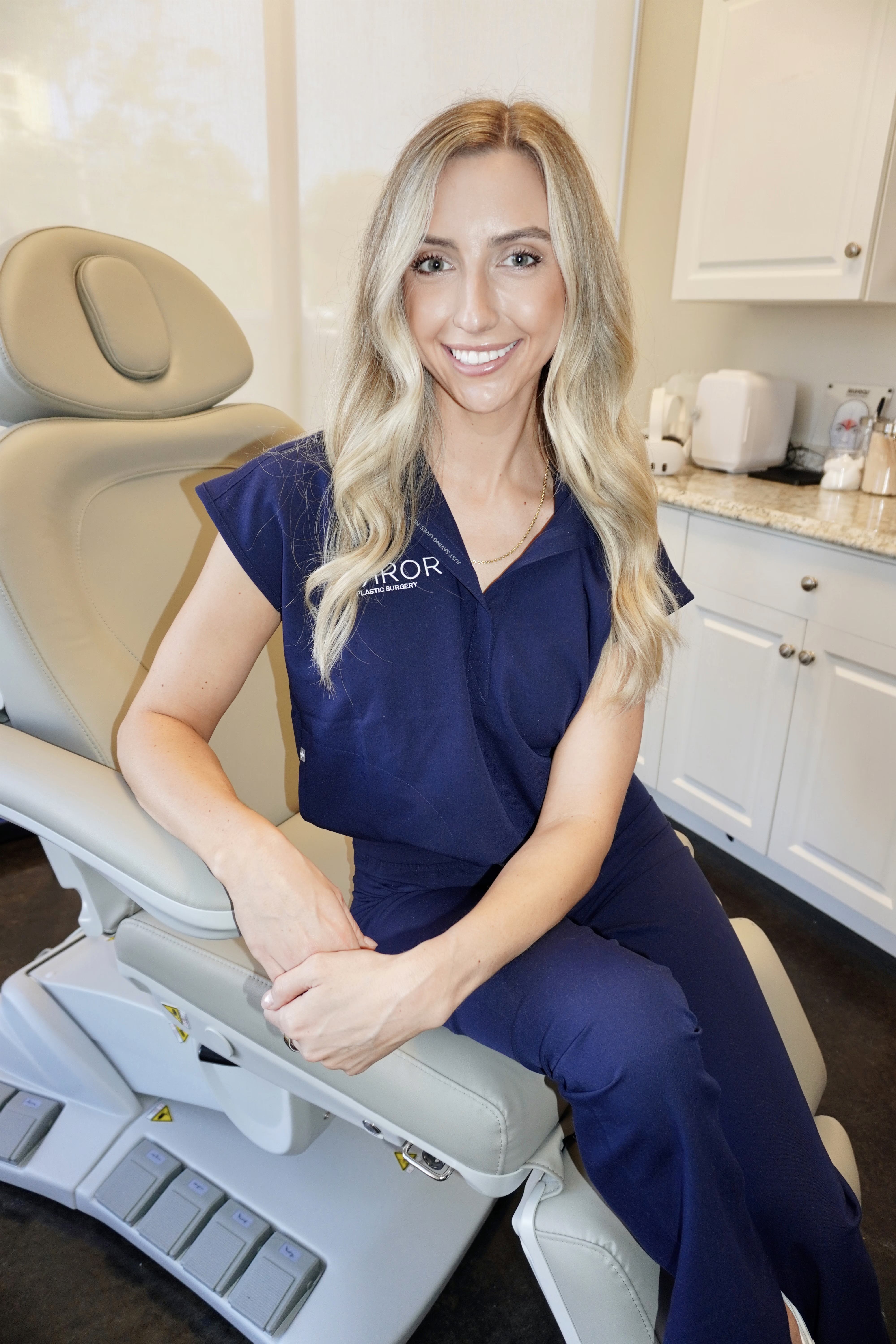
Book a consultation with Ellie to receive a personalized anatomical assessment and determine whether Avéli is the right fit for your specific cellulite pattern.
Avéli vs Cellfina: Mechanism and Durability
Both Avéli and Cellfina are single-session subcision procedures performed under local anesthesia and share the same FDA product code (OUP). The table below compares the two devices on mechanism, single-session capability, and published durability only. Figures without a published source are not included.
Availability of Cellfina may be limited in some areas. Direct head-to-head comparative trials between Avéli and Cellfina have not been published.
Book a consultation with Ellie to discuss which approach aligns with your anatomy, goals, and the current evidence base.
Frequently Asked Questions
Can cellulite come back after Avéli?
Once a specific fibrous septum is severed during an Avéli procedure, that band does not regenerate, so the original dimple should remain released. Avéli does not change the biology of connective tissue aging or prevent the formation of new septa in untreated areas. Significant weight gain after treatment can cause previously unaffected bands to become taut and generate new dimples. Natural hormonal changes and skin thinning associated with aging can also affect the overall appearance of the skin over time. Maintaining a stable weight and an active lifestyle supports the longevity of results, but no procedure stops the ongoing biological processes that influence connective tissue. An in-person assessment at Mirror Plastic Surgery can help clarify realistic expectations based on your specific anatomy and lifestyle.
Is Avéli worth it?
Avéli tends to be most worthwhile for patients whose cellulite is structurally caused by fibrous septa rather than generalized skin laxity or fat distribution. For patients with discrete, tethered dimples on the thighs or buttocks who are at a stable weight with good skin elasticity, the CONFFIRM pivotal study reported high patient satisfaction at 12 months and improvement on the Cellulite Severity Scale that remained stable from 3 months to one year after a single session.1 Topical treatments, massage, and surface-based energy devices do not address the subdermal structural cause of dimpling and have not demonstrated comparable durability in peer-reviewed literature. The value of Avéli is greatest when candidacy is confirmed through a thorough anatomical assessment, expectations are calibrated to dimple reduction rather than total skin transformation, and the procedure is performed by a provider with documented subcision expertise. Mirror Plastic Surgery’s hour-long consultation process is designed to answer exactly these questions before any treatment decision is made.
Does Avéli work on all types of cellulite?
Avéli is specifically indicated for cellulite characterized by discrete, puckered dimples caused by fibrous septa that tether the skin to deeper tissue on the buttocks and thighs. It is not designed to treat rolling or wavy cellulite driven primarily by fat distribution, generalized skin laxity, stretch marks, or cellulite on body areas outside the posterior and lateral thighs and gluteal region. Patients with significant skin laxity or those who have undergone prior liposuction in the treatment area are generally not suitable candidates. Recent studies have explored combining Avéli subcision with Renuvion helium plasma radiofrequency for patients with both dimpling and skin laxity, though this combination approach requires further study in larger populations. The only reliable way to determine whether your specific cellulite pattern is appropriate for Avéli is through a standing assessment and individualized dimple mapping performed by a qualified provider.
Conclusion
Avéli addresses cellulite at its structural source by mechanically transecting the individual fibrous septa that tether skin downward and create visible dimples. Its identify-tension-cut-verify sequence provides real-time confirmation of septal release that sets it apart from surface-based and area-based subcision methods. Current evidence supports improvement on the Cellulite Severity Scale and high patient satisfaction through 12 months after a single session, with longer-term data for Avéli as a standalone treatment still emerging. The most suitable candidates have discrete tethered dimples, stable weight, good skin elasticity, and expectations focused on structural dimple correction rather than full-surface transformation. Provider selection remains critical because Avéli relies on precise subdermal navigation and real-time anatomical judgment.
Book a consultation with Ellie at Mirror Plastic Surgery in St. Petersburg, Florida, for a comprehensive top-to-bottom anatomical assessment to determine whether Avéli is the right structural solution for your cellulite.
Disclaimer: Results may vary from person to person. Editorial content, before and after images, and patient testimonials do not constitute a guarantee of specific results.
1 Results may vary from person to person. Editorial content, before and after images, and patient testimonials do not constitute a guarantee of specific results.