
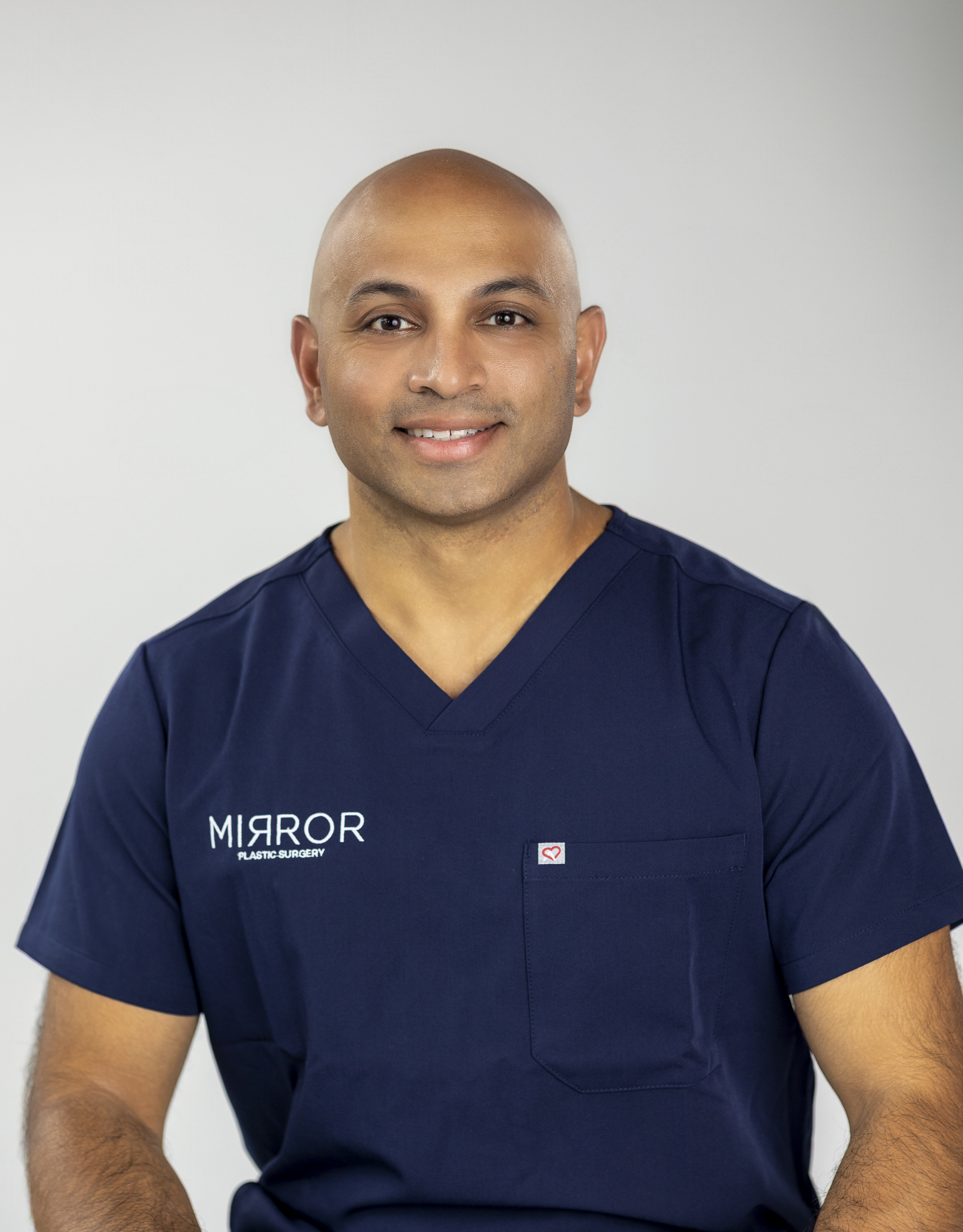
Written by: Dr. Akash Chandawarkar, Board Certified Plastic Surgeon, Mirror Plastic Surgery | Last updated: July 15, 2026
Key Takeaways for Tampa Hair Restoration Costs
- Transparent cost education matters because real hair restoration expenses extend far beyond advertised per-graft prices.
- Tampa patients need to understand how FUE, FUT, PRP, and robotic-assisted procedures differ in cost structure and long-term impact.
- Florida law requires physician supervision for hair transplants, so the level of true surgeon involvement directly affects quality and pricing.
- Long-term maintenance costs, including PRP, medications, and possible revision procedures, can add thousands per year and should be planned upfront.
- Schedule your personalized consultation at Mirror Plastic Surgery for an anatomy-based assessment and transparent treatment plan from Dr. Akash.
Mirror Plastic Surgery’s Care Philosophy in Tampa Bay
Mirror Plastic Surgery follows a clear hierarchy: safety first, function second, and aesthetics third. This order reflects a clinical commitment to plans grounded in anatomy, evidence, and each patient’s unique scalp characteristics, donor supply, and long-term hair-loss pattern.
The practice limits itself to one to two surgeries per day, deliberately rejecting high-volume models that may perform five to ten procedures daily. This constraint supports a concierge approach. Consultations at Mirror Plastic Surgery typically last up to an hour, which allows a true top-to-bottom assessment of hair loss pattern, donor density, scalp laxity, hair caliber, and future progression. These variables determine whether a restoration plan will hold up over decades rather than just months.
Non-surgical treatments at Mirror Plastic Surgery follow the same long-term mindset. The team emphasizes continuity of care and honest communication about what each treatment can and cannot achieve for a specific anatomy and set of goals.
Dr. Akash’s Training and Approach to Hair Restoration
The clinical standard at Mirror Plastic Surgery is shaped by Dr. Akash, a board-certified plastic surgeon certified by the American Board of Plastic Surgery. He completed his medical degree at Harvard Medical School with Honors through the Harvard-MIT Division of Health Sciences and Technology. He then finished a seven-year integrated plastic and reconstructive surgery residency at Johns Hopkins University, one of the most rigorous programs worldwide.
He later completed an aesthetic surgery fellowship at the Manhattan Eye, Ear and Throat Hospital (MEETH), which represents the highest level of cosmetic surgery specialization. He also trained in the Stanford University Biodesign Innovation Fellowship, which prepared him to evaluate and adopt new technologies with clinical rigor rather than marketing enthusiasm.
Newsweek has named Dr. Akash to America’s Best Plastic Surgeons list for two consecutive years. His hair restoration approach reflects the same anatomical precision and evidence-based philosophy that guide every procedure at Mirror Plastic Surgery.
Key Hair Restoration Terms: FUE, FUT, PRP, Grafts, and Robotics
Clear terminology helps patients compare costs and providers with confidence. The following definitions explain the most common hair restoration terms.
- Follicular Unit Extraction (FUE): The surgeon or team extracts individual follicular units one at a time from the donor area using a small punch instrument. No linear incision is made, so there is no linear scar. FUE is more labor-intensive than FUT and usually carries a higher per-graft price.
- Follicular Unit Transplantation (FUT): The surgeon removes a strip of scalp from the donor area, and the team dissects follicular units from that strip. FUT allows high graft yields in a single session and usually costs less per graft than FUE, but it leaves a permanent linear donor scar.
- Grafts: Individual follicular units, each containing one to four hair follicles. Graft count is the main driver of total procedure cost.
- Platelet-Rich Plasma (PRP): A non-surgical treatment that processes a patient’s blood to concentrate growth factors, then injects them into the scalp to stimulate follicular activity. PRP can stand alone for early thinning or support surgical restoration.
- ARTAS Robotic System: An FDA-cleared robotic platform that assists with follicular unit extraction using image-guided technology to identify and harvest grafts. ARTAS usually costs more than manual FUE and has specific candidacy limits.
- Norwood Scale: The standard system for classifying male pattern baldness, from Stage 1 with minimal recession to Stage 7 with extensive loss. Norwood stage strongly influences graft requirements and total cost.
Understanding these terms is essential, but terminology alone does not guarantee quality outcomes. The next step is understanding industry standards for physician involvement and long-term planning.
Industry Standards for Surgeon Involvement and Long-Term Care
One of the most important and least visible cost variables is who actually performs the surgical steps. The International Society of Hair Restoration Surgery (ISHRS) has warned about unlicensed assistants performing surgeries at clinics where patients believe they are receiving physician care. The American Board of Hair Restoration Surgery (ABHRS) standards require that the physician of record create extraction incisions rather than delegating this step to technicians, yet compliance varies widely.
In surgeon-led practices, the surgeon directly assesses donor capacity, designs the hairline, plans graft distribution, and supervises or performs critical surgical steps. This hands-on involvement helps justify higher per-graft pricing at physician-led clinics. Lower-cost models often limit surgeon involvement to brief oversight or remove it for much of the procedure, which reduces costs but increases complication and revision rates.
Long-term maintenance adds another layer of cost that advertised per-graft prices rarely show. Combined maintenance after hair transplant surgery, including prescription medications, PRP injections every six to nine months, low-level laser therapy, and nutritional protocols, often totals about $2,500 to $6,000 per year. Patients who skip post-transplant maintenance frequently need a second procedure within five years.1
Major Decision Factors for Tampa Hair Restoration Patients
Tampa-area patients benefit from weighing several key factors before choosing a technique or provider.
- Candidacy: Donor hair density, scalp laxity, hair texture, hair caliber, and the extent of hair loss determine which techniques make sense and how many grafts can be harvested safely.
- Future hair-loss progression: According to the 2025 ISHRS Practice Census, 95% of first-time surgical patients in 2024 were between ages 20 and 35. Most of these patients face 40 to 50 years of potential progressive hair loss after their first procedure, so a plan that ignores future progression can exhaust donor supply too early.
- Donor preservation: The 2024 ISHRS average first procedure used 2,347 grafts, which consumed about 35 to 40% of a typical lifetime maximum of roughly 4,000 to 8,000 harvestable grafts. Conservative donor management protects options for future procedures.
- Recovery timeline: FUE and FUT differ in recovery duration and activity limits. Florida’s warm, humid climate requires specific aftercare, including avoiding sweating and direct sun exposure for four to six weeks to protect grafts.
- Longevity: Graft survival rates can reach 90 to 95% in well-performed procedures, but published studies show variable overall success (often 61–86% follicle survival or 81% good results) depending on technique and patient factors.1 Transplanted follicles provide permanent results, while non-surgical treatments require ongoing maintenance.1
- Revision risk: Repair and revision hair transplant procedures often cost more than the initial surgery, with repair cases rising to 6.9% of all hair transplants in 2024. Choosing a qualified, physician-led provider from the start is the most reliable way to reduce this risk.
With these decision factors in mind, the following comparison shows how FUE, FUT, PRP, and hybrid approaches differ in cost structure, recovery, and long-term implications.
FUE vs FUT Cost Comparison in Tampa Florida
FUE and FUT differ in technique, scarring, recovery, and per-graft cost. The table below compares these primary surgical options alongside PRP and a hybrid model, using published 2026 data for Florida and the Tampa market. All figures reflect ranges across board-certified providers, and individual quotes vary based on graft count, surgeon credentials, and case complexity.
| Factor | FUE | FUT | PRP (Non-Surgical) | Hybrid (Surgical + PRP Adjunct) |
|---|---|---|---|---|
| Typical Graft Range | 1,500–4,000+ grafts | 2,000–4,000 grafts | N/A (no grafts; targets existing follicles) | FUE/FUT graft range plus 2–3 PRP sessions in year one |
| Typical Tampa-Area Cost Range | $7,000–$14,000 for 2,000–2,500 grafts at board-certified clinics | $7,500–$12,500 for a standard 2,500-graft session, about 20–30% less per graft than FUE | $525–$1,260 per session in Florida, typically 3–4 sessions for the initial series | Surgical base cost plus $500–$1,500 per PRP session |
| Scarring | No linear scar, small circular punch marks that fade | Permanent linear donor scar in 100% of cases, width about 1–5 mm for a single session | None | Depends on surgical technique used |
| Recovery | Faster, most patients return to work within 5–10 days | Longer, linear incision requires suture removal and extra healing time | Minimal downtime, mild scalp sensitivity for 24–48 hours | Follows surgical recovery timeline |
| Key Considerations | Higher per-graft cost, preserves future donor flexibility, no hairstyle limits from scarring | Scar permanently reduces future FUE options in that zone, lower upfront cost | Requires ongoing maintenance, results reverse if stopped1, best for early-stage thinning | A 2024 study found that combining PRP with FUE led to 90% of patients achieving moderate-to-high-density graft survival versus 60% in the FUE-only group1 |
Cost of 3,000 FUE Grafts in Tampa
A 3,000-graft FUE procedure represents a substantial restoration session, usually for Norwood Stage 4–5 hair loss with significant frontal, mid-scalp, or crown thinning. National 2026 averages place 3,000-graft procedures at about $15,000, with a range of $9,000–$24,000 depending on technique, surgeon credentials, and market, as noted earlier.
In the Tampa market, per-graft FUE pricing and total procedure costs typically sit below Miami averages. The final cost of a 3,000-graft case at any physician-led practice depends on several clinical variables that require in-person assessment.
- Donor hair density and the number of grafts that can be harvested safely without overharvesting
- Hair caliber and texture, which influence coverage per graft
- Hairline design complexity and the artistic judgment needed for natural placement
- Whether PRP therapy, post-operative medications, or follow-up visits are bundled or billed separately
- Surgeon credentials and the level of direct physician involvement throughout the procedure
At Mirror Plastic Surgery, every cost discussion starts with a thorough consultation. Accurate quotes require an assessment of scalp anatomy, hair-loss pattern, donor supply, and long-term goals. Personalized quotes are provided after consultation.
PRP Hair Restoration Costs and Non-Surgical Options in Tampa
PRP therapy is the most established non-surgical hair restoration option for Tampa patients. It works best for early androgenic thinning in patients who still have enough follicular activity to respond to growth factor stimulation. PRP hair restoration in Florida averages $1,053–$1,600 per session in 2026 depending on the city, with most providers charging between $525 and $1,260 per session, about 5% above the national average.
Nurse-led or independent clinics usually fall at the lower end of that range, while physician-led practices with higher-quality processing systems and stricter protocols sit at the upper end. PRP for early androgenic thinning is typically delivered as a series of three to four monthly sessions. Patients often notice reduced shedding around three months, visible regrowth at six or more months, and maintenance through periodic booster sessions.1
The long-term cost profile of PRP differs from surgical restoration. A 20-year PRP maintenance plan is projected at $20,000–$30,000, compared with a one-time surgical procedure that, once healed, usually requires no ongoing treatment beyond standard hair care. For surgical candidates, PRP often serves as a useful adjunct rather than a full replacement for surgery.
Mirror Plastic Surgery also offers hair restoration with Acorn Biolabs Secretome, an in-office non-surgical treatment delivered by injection or topical application, as part of its non-surgical hair care options.
ARTAS Robotic Hair Transplant Pricing and Limits
The ARTAS robotic system assists with follicular unit extraction using image-guided technology and carries a meaningful cost premium over manual FUE. In the United States, ARTAS robotic FUE often costs 50–100% more than manual FUE at about $4–$6 per graft. This premium reflects the $300,000–$500,000 purchase or lease cost of the system plus licensing, maintenance, and specialized training.
Candidacy for ARTAS is narrower than for manual FUE. ARTAS is FDA-cleared only for men with black or brown straight hair diagnosed with androgenic alopecia. It excludes women, patients with blonde, gray, white, red, curly, wavy, or Afro-textured hair, and any body hair harvesting. Patients outside these criteria must use manual FUE regardless of their preference for robotics.
Session size creates another limitation. ARTAS usually harvests about 1,500–2,000 grafts per session, while manual FUE can reach up to 5,000 grafts in a single session. Patients needing larger restorations may require multiple ARTAS sessions, which increases total cost and recovery time.
Even when ARTAS performs extraction, implantation remains manual. Hairline design, graft placement angles, and natural density still depend on the surgeon or team. Aesthetic outcomes rely primarily on human artistry rather than automation. The robotic premium makes sense only when a patient’s candidacy fits the system’s technical requirements and a physician who offers both methods recommends it based on clinical judgment.
Common Misconceptions About Tampa Hair Transplant Costs
Several persistent misconceptions push Tampa-area patients toward decisions based on incomplete or misleading information.
- Low advertised per-graft prices reflect the full cost: Hidden costs can raise the total bill by 20–40% beyond the initial per-graft quote. These often include follow-up visits, PRP therapy, medications, and facility or anesthesia fees that were not disclosed upfront.
- All hair transplants are performed by surgeons: Lower upfront costs often signal that patients are paying for technician work instead of surgeon expertise. This invisible difference strongly affects graft survival and complication rates.
- More grafts always mean better results: Overharvesting to maximize graft numbers can permanently thin the donor area and limit future options. Conservative donor management is a sign of quality, not a lack of effort.
- Hair transplants are permanent with no future considerations: Transplanted follicles are permanent, but surrounding native hair continues to thin. A plan that ignores future progression will likely require more procedures and consume donor supply that should have been preserved.
- Revision surgery is straightforward: Corrective or revision hair transplant procedures typically cost 1.5 to 2 times the original price because of compromised donor zones, scar tissue, and the need to manage expectations after a poor outcome.
- Robotic procedures are always superior: The 2024 Zhu et al. split-scalp trial found that ARTAS robotic extraction and expert manual FUE produced statistically equivalent transection rates and patient satisfaction scores in ideal candidates. The robotic premium does not guarantee better results.
Frequently Asked Questions
How is the number of grafts determined for my procedure?
Graft count comes from a clinical assessment of your hair loss pattern, donor hair density, hair caliber, scalp laxity, and desired coverage. The Norwood Scale helps classify male pattern baldness and offers a starting framework, but individual anatomy varies widely. A thorough consultation, not a generic online calculator, is the only reliable way to determine an appropriate graft number. At Mirror Plastic Surgery, Dr. Akash conducts up to an hour-long assessment before making any recommendation.
What factors most influence the total cost of a hair restoration procedure?
Graft count is the largest single cost driver, but several other factors matter. Surgeon credentials and the level of direct physician involvement strongly affect both price and outcomes. Technique choice, including FUE, FUT, or robotic-assisted methods, carries different per-graft rates and session limits. Geographic location influences overhead. Whether PRP therapy, medications, follow-up visits, and anesthesia are bundled or billed separately can add 20–40% to the quoted price. Long-term maintenance costs and the revision risks discussed earlier also form part of the true cost and should be reviewed during consultation.
What is the recovery timeline for FUE versus FUT?
FUE recovery is usually faster. Most patients return to desk work within five to ten days, and grafts anchor fully within about two weeks. Strenuous activity and direct sun exposure should be avoided for four to six weeks, especially in Florida’s warm, humid climate. FUT recovery takes longer because the linear donor incision requires suture removal and extra healing time. Both techniques share a similar growth timeline, with transplanted hairs shedding in the first weeks, new growth starting around three to four months, and full results visible at twelve to eighteen months.1
How do I evaluate whether a provider is qualified to perform hair restoration?
Board certification by the American Board of Plastic Surgery or the American Board of Hair Restoration Surgery (ABHRS) provides a meaningful baseline. ABHRS Diplomate status, held by about 270 surgeons worldwide, signals demonstrated expertise and strict ethical standards. Patients should also ask whether the named surgeon personally performs extraction incisions and recipient site creation or delegates these steps to technicians. A genuine pre-operative consultation should include donor supply assessment, hairline design discussion, future hair-loss planning, and a written individualized plan, not a brief standardized conversation. Clear explanations of what is and is not included in the quote also indicate practice quality.
Is PRP a substitute for surgical hair restoration?
PRP and surgical restoration serve different roles. PRP works best for early androgenic thinning in patients with active follicles and requires ongoing maintenance sessions, since gains usually reverse if treatment stops. Surgical restoration with FUE or FUT moves DHT-resistant follicles from the donor area to thinning zones and provides permanent results that do not require ongoing treatment. For surgical candidates, PRP often functions as an adjunct to surgery, with evidence suggesting improved graft survival when combined with FUE. The right approach depends on your stage of hair loss, donor supply, and long-term goals, which are evaluated during a thorough consultation.
Evaluating Your Options Before Choosing a Tampa Hair Clinic
Comparing hair restoration procedure costs in Tampa means looking beyond the per-graft figure to the full picture. Surgeon credentials, physician involvement, facility standards, long-term maintenance needs, and the realistic risk of revision all influence the true cost, especially when the revision risks discussed earlier are considered.
The most reliable path to a successful outcome is a thorough, unhurried consultation with a board-certified physician who evaluates your anatomy, explains the reasoning behind each recommendation, and provides a transparent, personalized plan rather than a quick quote based only on graft count.
At Mirror Plastic Surgery, Dr. Akash brings Harvard Medical School training, Johns Hopkins surgical residency, and an aesthetic surgery fellowship at MEETH to every hair restoration assessment. Recognized on Newsweek’s America’s Best Plastic Surgeons list for two consecutive years, he applies the same safety-first, evidence-based philosophy to hair restoration that guides every procedure at the practice.
1 Results may vary from person to person. Editorial content, before and after images, and patient testimonials do not constitute a guarantee of specific results.