
Written by: Ellie Pranckevicius, FNP-BC, Aesthetic Nurse Practitioner & Aesthetic Injector | Facial Restoration & Regenerative Injectable Specialist, Mirror Plastic Surgery | Last updated: July 21, 2026
Key Takeaways for Non-Surgical Hip Dip Correction
- Biostimulatory fillers such as Sculptra and Radiesse are the clinical standard for non-surgical hip dip correction because they stimulate your body’s own collagen production rather than simply adding temporary volume.
- Provider expertise and detailed anatomical knowledge drive safe, natural-looking results, since no filler can change your underlying bone structure.
- Most patients need multiple sessions spaced weeks apart, with results building gradually over several months and lasting 12–25 months or longer with maintenance.1
- Realistic expectations matter: fillers soften contours and smooth the hip-to-thigh transition but do not completely erase hip dips or duplicate surgical fat transfer.
- Schedule a personalized consultation at Mirror Plastic Surgery to choose the biostimulatory approach that matches your anatomy, lifestyle, and goals.
Hip Dips, Bone Structure, and Non-Surgical Options
Hip dips are trochanteric depressions formed by the skeletal distance between the iliac crest and the greater trochanter of the femur. Fat distribution, gluteal muscle mass, and genetics influence how visible they are, but the underlying bone geometry stays fixed throughout life. No injectable filler, exercise plan, or non-surgical technique changes skeletal structure. The realistic goal of treatment is contour softening, creating a smoother lateral hip-to-thigh transition rather than completely erasing the indentation.
Non-surgical correction options fall into two broad categories. Biostimulatory fillers stimulate new collagen and adipose tissue over weeks to months. Surgical fat transfer (Brazilian Butt Lift) grafts your own fat in a single operative session. Within the non-surgical category, Radiesse and Sculptra are the clinical gold standards because their collagen-stimulating mechanisms produce results that substantially outlast other injectable options. AlloClae, offered at Mirror Plastic Surgery, extends this biostimulatory approach specifically to the buttocks and hip dip region.
Because each patient’s anatomy and goals differ, choosing between Sculptra, Radiesse, and AlloClae requires an individualized assessment that looks at bone width, fat distribution, and skin quality together.
How Treatment Planning Typically Works at Mirror Plastic Surgery
A thorough consultation begins with a standing assessment of shape, skin quality, and gravitational effect. This standing position reveals how gravity affects the tissues and allows precise marking of treatment areas, maximum projection zone, cannula path, and entry points before any injection begins. Candidacy review also considers skin laxity, depth of the depression, body weight stability, and realistic volume expectations.
The industry has shifted toward biostimulatory agents for the gluteal region, reflecting a broader move to regenerative approaches. Treatment planning accounts for the multi-session reality of biostimulatory fillers. Results build gradually over time, and over-injection in a single session can create an uneven appearance once collagen fully develops. A clinical review on PLLA body applications recommends a step-by-step approach of up to three sessions scheduled 4–6 weeks apart. This spacing allows assessment of natural collagen growth and helps avoid over-correction.
Exclusion criteria receive equal attention. Pronounced skin laxity, significant stretch marks, and active cellulite distribution are contraindications that a qualified provider identifies before proceeding. Patients who fall into these categories may be better served by surgical options or by addressing skin quality first.
Is Sculptra Worth the Money for Hip Dips?
Sculptra (poly-L-lactic acid, PLLA) works by triggering a controlled foreign-body response that stimulates fibroblasts to produce new Type I and Type III collagen. A 2024 systematic review of 11 RCTs concluded that PLLA effects persist for at least 25 months.1 Researchers have also identified a second mechanism: Sculptra stimulates adipogenesis in subcutaneous fat via the NRF2/PPARγ/C/EBPα pathway. This pathway increases adipocyte number without hypertrophy and contributes to the volumetric gains seen in treated areas.
A split-body randomized controlled trial of PLLA for hip dip correction showed an increase in the subcutaneous adipose layer at 9 months on the treated side.1 In a 2022 prospective multicenter trial on Sculptra for buttock contour deformities, both patients and physicians reported high satisfaction with the results.
Typical protocols for Sculptra hip dip correction use 2–4 sessions spaced 4–6 weeks apart with 8–10 vials per session (20–30 total), though deeper or wider dips may need more product.1 Results usually become visible within 6–12 weeks and reach a mature form within 3–6 months after the final session. Many patients consider maintenance every 18–24 months to preserve results.1 Given this longevity and the collagen-building mechanism, Sculptra offers strong value for patients who want durable non-surgical correction and are comfortable with a gradual, multi-session process.
Non-Surgical Filling of Hip Dips Versus Surgery
Non-surgical correction can produce meaningful improvement for the right candidate, but the outcome focuses on contour softening rather than structural transformation. Sculptra-based hip dip correction stimulates your own collagen to add modest projection and smooth the lateral hip-to-thigh transition, but it cannot dramatically reshape skeletal structure or replicate fat grafting effects.
Patients with very prominent bony hip dips and minimal overlying fat can expect partial improvement rather than complete elimination. Collagen stimulation adds volume in the subcutaneous plane above the muscle, which softens the visible indentation. Filling hip dips creates a smoother silhouette from pelvis to thighs and visually shifts the perceived starting point of the legs higher, which can create the illusion of longer legs without making the hips look bulky.
Surgical fat transfer offers greater volumetric capacity and permanent results from surviving fat cells, but it carries higher procedural risk and requires adequate donor fat. For patients who are lean, near their goal weight, and seeking moderate enhancement without surgery, biostimulatory fillers usually represent the most appropriate non-surgical pathway.
Key Safety and Candidacy Considerations
Several factors shape both candidacy and realistic outcomes for non-surgical hip dip correction.
Bone structure limitations: As noted earlier, skeletal geometry sets a biological limit on what any injectable can achieve. Patients with pronounced bony prominences may see only modest improvement even with optimal technique. Clinics that promise to “eliminate” hip dips overstate what injectables can deliver.
Weight stability: Significant fluctuations in body composition can affect both the longevity and appearance of results. Patients are advised to be at or near a stable goal weight before beginning treatment.
Multiple sessions as the standard: Biostimulatory fillers usually require 2–4 sessions for optimal results, with collagen building over 3–6 months after the final session. One session rarely provides complete correction.
Irreversibility: No dissolving agent exists for PLLA (Sculptra) or CaHA (Radiesse); once injected, the material and resulting collagen follow their natural biological timeline. This reality makes provider selection and precise technique non-negotiable.
Vascular risks in the gluteal region: The gluteal region contains the superior and inferior gluteal arteries, which are vulnerable to irreversible occlusion or embolism from injected filler material. High-volume filler injections increase tissue pressure, which can reduce circulation and elevate the risk of vascular complications; gradual collagen-stimulating treatments reduce this pressure by using dispersed, smaller-volume injections rather than large gel deposits. Blunt-tip cannulas, slow injection speed, small aliquot volumes, and subcutaneous-plane deposition form the core of safe technique.
High-volume practice risk: Practices that perform large numbers of procedures daily often cannot provide the individualized anatomical assessment that the gluteal region demands. The complexity of gluteal vasculature and fascial anatomy calls for unhurried, patient-specific planning.
Comparing Sculptra, Radiesse, and AlloClae for Hip Dips
The table below compares the three primary biostimulatory options for hip dip correction on like-for-like metrics. AlloClae protocol data appear in prose below the table, because published session and longevity figures are not yet available in the peer-reviewed literature at the same granularity as Sculptra and Radiesse.
| Filler | Typical Sessions (Hip Dips) | Expected Longevity | Onset of Visible Results |
|---|---|---|---|
| Sculptra (PLLA) | 2–4 sessions, 4–6 weeks apart | At least 25 months; longer with maintenance | 6–12 weeks; full effect at 3–6 months post-final session |
| Radiesse (CaHA) | 1–2 sessions | 12–18 months | Immediate volume plus collagen stimulation over subsequent months |
| AlloClae | Individualized; determined at consultation | Individualized; determined at consultation | Individualized; determined at consultation |
Radiesse provides immediate structural lift along with its biostimulatory effect, which suits patients who want earlier visible change. Hyperdilute Radiesse produces stronger elastogenic and tightening effects, while Sculptra produces larger and more durable volumetric gains. Some patients benefit from a combined protocol that uses Radiesse for immediate structural support and Sculptra for long-term collagen building. AlloClae is offered at Mirror Plastic Surgery as part of an individualized non-surgical BBL protocol and is assessed on a per-patient basis during consultation.
A note on HA fillers in the gluteal region: Large-particle hyaluronic acid formulations have been used for buttock augmentation in some settings, but they are not considered safe standard practice for this area. HA fillers show reduced stability in gluteal soft tissues because of constant muscle movement, which raises the risk of product migration into adjacent tissues including the upper thighs, lower back, and hips. Biostimulatory fillers remain the appropriate choice for non-surgical hip dip correction.
Why Provider Expertise Matters for Hip Dip Fillers
The gluteal region is anatomically complex and requires careful planning. Buttock filler requires precise understanding of gluteal anatomy, including vascular zones, fascial planes, and aesthetic proportions. The superior and inferior gluteal arteries, the sciatic nerve, the piriformis muscle, and the pudendal neurovascular bundle all require identification and avoidance during treatment planning. For hip-dip treatment in the trochanteric area, entering from the lower trochanteric access point avoids tendon injection and reduces the risk of filler migration into the groin area.
Neither Sculptra nor Radiesse can be dissolved with hyaluronidase, making practitioner expertise and anatomical knowledge critical for safe use. The standing assessment described earlier allows the provider to identify vascular zones, fascial planes, and aesthetic proportions before any treatment begins. A provider who uses blunt-tip cannulas, injects in small aliquots at the correct tissue plane, and applies evidence-based dilution protocols reduces complication risk substantially.
At Mirror Plastic Surgery, non-surgical BBL and hip dip correction are led by Ellie Pranckevicius, FNP-BC, an Aesthetic Nurse Practitioner whose background includes four years in the Neuroscience ICU at Tampa General Hospital, 600 hours of hands-on aesthetics training, and advanced nursing degrees from the University of South Florida. Her dual foundation in esthetics and critical care nursing supports clinical judgment and anatomical depth that are uncommon in the injectable space. Consultations at Mirror can run up to an hour, which contrasts with high-volume practices and allows a full top-to-bottom assessment of anatomy, skin quality, and individual goals before any treatment plan is proposed.
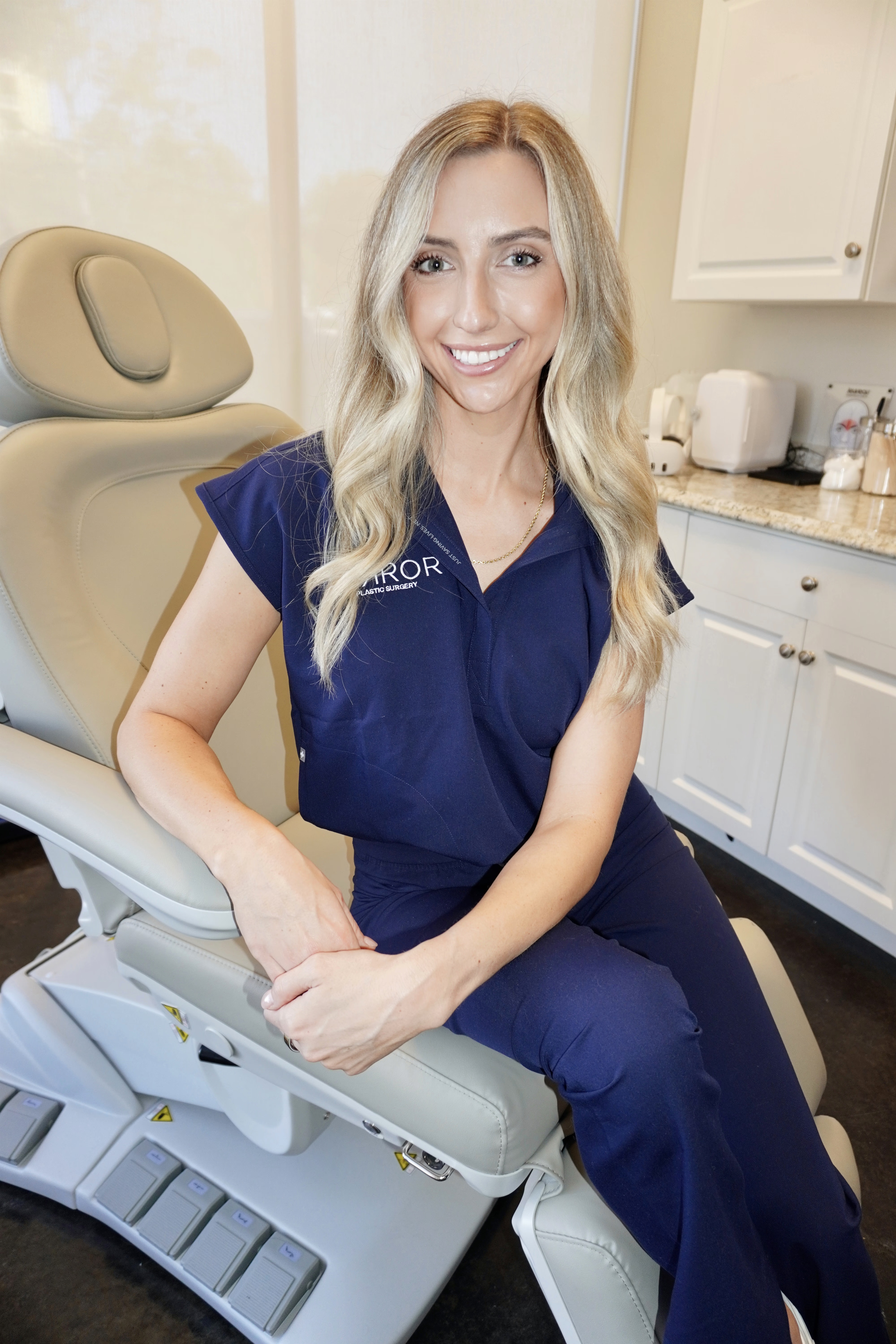
Mirror Plastic Surgery is also supplier-neutral. Product recommendations follow patient anatomy and evidence, not vendor quotas or commission structures. When a treatment is not appropriate yet, Ellie will explain why and outline alternatives.
Frequently Asked Questions
Who is a good candidate for non-surgical hip dip correction with biostimulatory fillers?
Ideal candidates are adults in good general health who are at or near a stable body weight and have noticeable hip dips caused by skeletal structure and soft-tissue distribution. They also hold realistic expectations that the goal is contour softening rather than complete elimination. Patients with pronounced skin laxity, active skin inflammation or infection in the area, a history of keloid scarring, active autoimmune disease, or who are pregnant or breastfeeding are not appropriate candidates. A thorough consultation remains the only reliable way to determine candidacy, because individual anatomy, including bone width, fat distribution, skin quality, and fascial integrity, varies significantly between patients.
How many sessions will I need, and how long will results last?
The number of sessions depends on the depth of the hip dip, the filler selected, and individual collagen response. Sculptra typically requires 2–4 sessions spaced 4–6 weeks apart, with visible improvement beginning in 6–12 weeks and full results at 3–6 months after the final session. As discussed in the Sculptra section above, results last over two years with maintenance. Radiesse often achieves the desired structural result in 1–2 sessions, with immediate volume visible from day one and collagen stimulation over subsequent months, and results that last 12–18 months.1 Most patients plan for maintenance treatments every 18–24 months. One session is rarely sufficient for complete correction, and any provider who suggests otherwise is not setting realistic expectations.
Are biostimulatory fillers safe for the hip and buttock region?
When a provider with deep anatomical knowledge of the gluteal region administers them, biostimulatory fillers carry a favorable safety profile for hip dip correction. The gluteal region contains major blood vessels and the sciatic nerve, so correct injection depth, blunt-tip cannula technique, small aliquot volumes, and subcutaneous-plane deposition are non-negotiable safety requirements. With current dilution and massage protocols, Sculptra nodule rates have decreased in published series, and Radiesse nodule rates are generally low. Vascular occlusion is a rare but serious risk with any injectable and is minimized by provider anatomical expertise and proper technique. As noted in the Key Considerations section, these fillers cannot be reversed with an enzyme, which is why provider selection is the most important safety decision a patient makes.
What is the recovery like after biostimulatory filler for hip dips?
Recovery is minimal compared with surgical alternatives. Common side effects include injection-site swelling, bruising, redness, and tenderness, which typically resolve within a few days to 10 days. Patients are usually able to resume normal activities the same day or the following day, although strenuous exercise and prolonged pressure on the treated area are often avoided for a short period. Post-treatment massage protocols are important for Sculptra to minimize nodule risk. Your provider will give you specific aftercare instructions based on the product used and the volume injected.
When should I consider surgery instead of injectable fillers for hip dips?
Surgical fat transfer (Brazilian Butt Lift) becomes the more appropriate option when the hip dip is structurally dominant, driven primarily by wide pelvic geometry with minimal overlying soft tissue, and the patient has sufficient donor fat for harvest. Fat grafting offers greater volumetric capacity, addresses the entire gluteal frame in a single session, and produces permanent results from surviving fat cells. Injectable fillers are better suited to patients with shallow-to-moderate dips, insufficient donor fat for grafting, or a preference for avoiding surgery and general anesthesia. At Mirror Plastic Surgery, if Ellie determines during consultation that a surgical approach would better serve your goals, she will refer you to Dr. Akash Chandawarkar, the practice’s Harvard-educated, Johns Hopkins-trained plastic surgeon, for a surgical evaluation.
Making an Informed Decision About Hip Dip Fillers
Non-surgical hip dip correction with biostimulatory fillers offers a clinically validated, evidence-based option for patients seeking moderate, natural-looking improvement without surgery. Sculptra and Radiesse, along with AlloClae at Mirror Plastic Surgery, represent the safest and most effective injectable approaches currently available for this indication. The decision between them, and the specific protocol applied, depends on individual anatomy, the depth of correction needed, and each patient’s timeline preferences.
The most consequential choice is not which product to use, but who administers it. A provider with genuine anatomical expertise, a concierge approach to assessment, and a commitment to honest communication about what fillers can and cannot achieve forms the foundation of a safe, satisfying outcome.
Mirror Plastic Surgery serves patients in St. Petersburg and the greater Tampa Bay area of Florida. Consultations are comprehensive, unhurried, and grounded in evidence rather than sales quotas.
Disclaimer: Results may vary from person to person. Editorial content, before and after images, and patient testimonials do not constitute a guarantee of specific results.
1 Results may vary from person to person. Editorial content, before and after images, and patient testimonials do not constitute a guarantee of specific results.