
Written by: Ellie Pranckevicius, FNP-BC, Aesthetic Nurse Practitioner & Aesthetic Injector | Facial Restoration & Regenerative Injectable Specialist, Mirror Plastic Surgery | Last updated: July 21, 2026
Key Takeaways
- Biostimulatory fillers such as Sculptra (PLLA) and hyperdilute Radiesse (CaHA) stimulate your own collagen to gradually soften hip dips without instant bulk.
- PLLA and CaHA differ in mechanism, onset, number of sessions, and longevity, with PLLA lasting longer and CaHA giving some early firmness.
- Treatment usually involves 2–4 sessions spaced 4–6 weeks apart, with visible changes over 3–6 months and results that can last 12–24 months or longer.1
- Candidacy depends on a personalized anatomical assessment that looks at hip dip severity, skin quality, body composition, and expectations.
- Schedule your consultation at Mirror Plastic Surgery for an individualized evaluation to see whether biostimulatory fillers align with your goals.
How Biostimulatory Fillers Improve Hip Dips
Hip dips are the inward curves between the iliac crest and the greater trochanter and are driven by pelvic bone structure and soft-tissue distribution, not by how fit you are. When soft tissue in that trochanteric depression is lacking, biostimulatory fillers recruit your body’s repair pathways to build new support from within.
PLLA (Sculptra) works through a controlled, immune-mediated inflammatory cascade. PLLA stimulates Collagen I and III, promotes angiogenesis, and upregulates tropoelastin. Because this mechanism is indirect, results appear gradually. Patients see almost no immediate volume change after injection.1 Conservative, staged dosing helps prevent over-correction once collagen fully matures.
CaHA (hyperdilute Radiesse) behaves differently. CaHA microspheres form a physical scaffold, and as the carrier gel is absorbed over two to three months, fibroblasts attach directly to the microspheres. This direct contact stimulates collagen and elastin without relying primarily on inflammatory signaling. Hyperdilution of CaHA softens immediate volumizing effects and improves spread and fibroblast interaction, which supports long-term neocollagenesis, neoelastogenesis, and extracellular matrix remodeling.
Protocols from 2025–2026 place reconstitution and dilution choices at the center of safety and results. A 2026 multicenter retrospective chart review (NCT05463978) of 498 US subjects found that nonfacial PLLA often used higher reconstitution volumes, which differ from facial protocols. For CaHA, diluted and hyperdiluted formulations are standard for the buttocks and thighs. These dilution choices shape how each product behaves in direct comparison.
Sculptra vs Radiesse for Hip Dips
Choosing between Sculptra and Radiesse for hip dips depends on your anatomy, skin quality, and priorities rather than a one-size-fits-all protocol.
| Attribute | Sculptra (PLLA) | Radiesse — Hyperdilute (CaHA) |
|---|---|---|
| Primary mechanism | Indirect inflammatory cascade, Collagen I and III plus tropoelastin upregulation | Direct fibroblast attachment to CaHA scaffold, collagen and elastin production |
| Immediate visible effect | No true immediate effect, temporary fullness from reconstitution water fades within days | Early visible firmness from gel carrier, with collagen reinforcement around three months1 |
| Typical session range (hip dips) | 2–4 sessions, mean 3.2 in multicenter US data for nonfacial treatments | 1–2 sessions, often using hyperdilute technique |
| Result longevity | Can persist for 24 months or longer.1 | Often 12 months or longer.1 |
| Elastin induction advantage | Baseline elastin stimulation through tropoelastin upregulation | Higher elastin staining intensity than PLLA in head-to-head histology |
Neither agent can be dissolved with an enzyme equivalent to hyaluronidase. Both are biocompatible and gradually absorbed over time, so careful assessment and anatomical expertise matter as much as the product itself.
Session Planning and Treatment Timeline
Most biostimulatory filler plans follow a 2–4 session series spaced 4–6 weeks apart, with results emerging over 3–6 months and peaking about six months after the final session.1
For PLLA, the 2026 multicenter US retrospective study of 498 subjects reported a mean of 3.2 sessions across nonfacial treatments. Within that group, hip dip treatments were included and often used higher reconstitution volumes.
A split-body randomized controlled trial adds direct evidence. Zubair et al. published the SPLASH split-body trial of PLLA for hip dip volumization in Dermatologic Surgery. Available summaries do not support a specific 27% increase in subcutaneous adipose layer at nine months.
The typical PLLA timeline looks like this:
- Visible improvements begin around 4–6 weeks after the first session
- Noticeable volume builds between 6–12 weeks
- Peak collagen development occurs 3–6 months after the final session.1
- By month six, skin feels denser with a “trained effect” even without external changes
For CaHA, the sequence is shorter. You see immediate firmness from the gel carrier, followed by collagen reinforcement at about three months, with results that can last a year or more.1
Personalized Hip Dip Candidacy at Mirror Plastic Surgery
Biostimulatory fillers work best for mild-to-moderate trochanteric depressions caused by soft-tissue deficit. They improve firmness and skin quality but do not enlarge the buttocks like implants or fat transfer and cannot correct severe ptosis. True candidacy requires a hands-on anatomical evaluation of the entire hip-to-thigh transition zone.
| Candidacy Factor | Favorable | Requires Further Evaluation |
|---|---|---|
| Hip dip severity | Mild-to-moderate trochanteric depression | Severe structural depression driven mainly by bony anatomy |
| Skin quality | Adequate elasticity and overall skin quality | Very loose skin may need alternative treatments |
| Body composition | Stable, healthy weight, especially in lean patients without donor fat for surgical BBL | Significant recent weight changes |
| Health status | Generally healthy non-smoker with realistic expectations | Active infection or uncontrolled autoimmune disorder |
| Pregnancy / breastfeeding | Not pregnant or breastfeeding | Pregnant or breastfeeding, where treatment is contraindicated |
| Outcome expectations | Seeking subtle-to-moderate enhancement, symmetry, or a smoother waist-to-thigh curve | Seeking a dramatic change similar to surgical fat transfer |
At Mirror Plastic Surgery, Ellie Pranckevicius performs a comprehensive top-to-bottom anatomical assessment that often lasts up to an hour before any plan is proposed. She evaluates the hip dip region in the context of your full waist-to-thigh silhouette, skin tone, tissue feel, and long-term goals. The practice maintains a supplier-neutral approach, so product choice follows your anatomy rather than inventory.
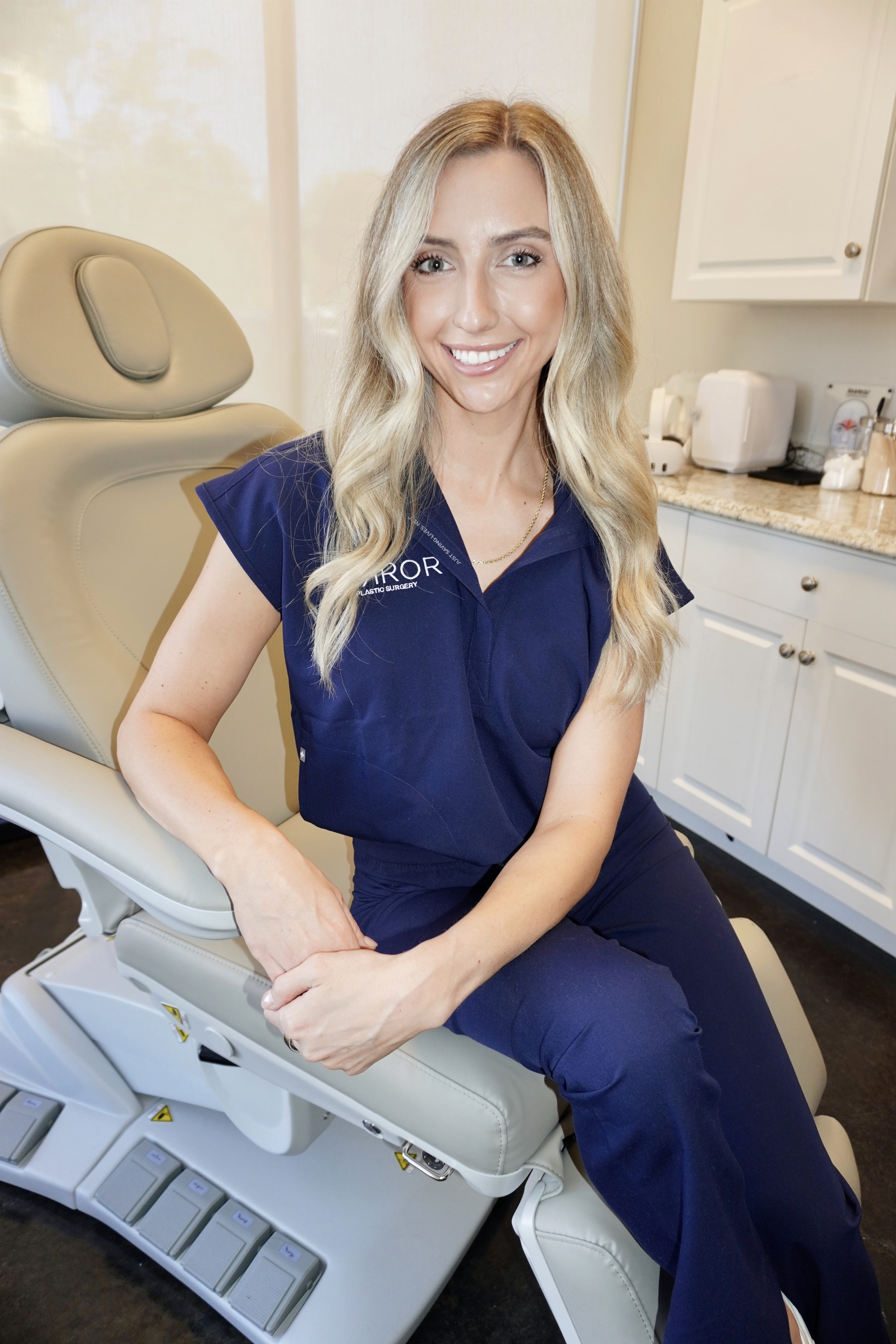
Book a consultation with Ellie to receive a candidacy assessment grounded in evidence-based anatomical evaluation.
Risks, Limitations, and Technique at Mirror Plastic Surgery
The 2026 multicenter US retrospective study of 498 subjects offers the most current nonfacial PLLA safety data. Most treatment-related adverse events were mild or moderate, with injection-site bruising as the most common. Nodules or papules were rare, and no serious or late-onset adverse events were reported. Most events required no clinical intervention.
Common, expected side effects include:
- Swelling that settles within a few days
- Bruising that lasts about one week
- Tenderness, redness, and itching at injection sites
Technique functions as a primary safety variable. Because PLLA is non-dissolvable, precise anatomical placement reduces nodule risk during off-label body use. Proper reconstitution volumes and post-treatment massage further lower that risk. Patients follow the 5-5-5 rule after Sculptra, massaging for 5 minutes, 5 times daily, for 5 days to distribute product evenly.
Because both agents are irreversible, as noted earlier, provider selection carries more weight than with dissolvable fillers. Ellie Pranckevicius’s background in esthetics and advanced nursing, combined with four years of Neuroscience ICU experience, informs the clinical judgment behind every body contouring assessment at Mirror Plastic Surgery. To review your anatomy, risk profile, and a safety-first protocol for your hip dips, schedule your consultation at Mirror Plastic Surgery.
Biostimulatory Fillers Compared with Surgical BBL
The surgical Brazilian Butt Lift (BBL) involves liposuction, fat processing, and fat re-injection under general anesthesia, which introduces both safety and recovery demands. Surgical BBL historically carried a mortality rate of roughly 1 in 3,000 due to fat embolism risk, while non-surgical biostimulatory treatment avoids this risk because no fat is transferred. Recovery from surgical BBL usually requires 4–6 weeks, with limited direct sitting for 2–3 weeks.
Biostimulatory fillers involve minimal downtime and are often described as a “lunch break” procedure, with most patients resuming normal activity within one to two days. The trade-off lies in scope of correction. Non-surgical treatment delivers subtle-to-moderate enhancement and hip dip softening rather than the dramatic reshaping possible with surgical fat transfer.
Patients without sufficient donor fat may not qualify for surgical BBL at all. Lean patients considering a “skinny BBL” often lack enough fat for meaningful transfer, so biostimulatory fillers become a more practical option for hip dip correction.
Surgical fat grafting can provide larger volume changes. In a 2026 peer-reviewed series, good volume retention was seen at follow-up. For hip dips driven mainly by bone structure, enriched fat grafting may help, but a custom silastic hip implant or composite augmentation can be necessary for fuller correction. At Mirror Plastic Surgery, when surgery is appropriate, Ellie’s work is complemented by a Harvard-educated, Johns Hopkins-trained plastic surgeon to maintain continuity of care across non-surgical and surgical options.
Book a consultation with Ellie to decide whether biostimulatory fillers, a surgical referral, or a combined plan best fits your anatomy and goals.
Maintenance Planning and Long-Term Results
The longevity advantage of PLLA over CaHA, roughly double the duration, shapes maintenance planning from the start. Some clinical series report Sculptra hip dip results lasting over two years, with a few suggesting up to five years.1
Maintenance enters the conversation during your first planning visit at Mirror Plastic Surgery. Annual touch-up treatments after initial Sculptra correction help sustain the collagen framework. For CaHA, maintenance or reinforcement sessions are common between months 12 and 24. These sessions usually require fewer vials because the existing collagen scaffold already supports the area.
Lifestyle choices influence how long results last. Stable weight, good hydration, and avoiding smoking support collagen durability by maintaining a healthy metabolic environment for new tissue. Buttocks strengthened through exercise tend to respond better to collagen-inducing biostimulators than untrained tissue, since the underlying muscle provides a stronger scaffold for neocollagenesis.
Frequently Asked Questions
Are biostimulatory fillers for hip dips reversible if I do not like the results?
Neither Sculptra (PLLA) nor Radiesse (CaHA) can be dissolved with an enzyme the way some other fillers can. Both are biocompatible and gradually absorbed over months to years. This irreversibility makes conservative, staged treatment and deep anatomical knowledge essential. At Mirror Plastic Surgery, Ellie Pranckevicius uses a stepwise protocol that builds collagen gradually across several sessions to reduce the chance of over-correction.
How is biostimulatory filler treatment for hip dips different from a surgical BBL?
A surgical BBL uses liposuction, fat processing, and fat re-injection under general anesthesia, followed by several weeks of recovery and sitting restrictions. Biostimulatory filler treatment takes place in-office without general anesthesia, and most patients return to normal activity within one to two days. Biostimulatory fillers suit mild-to-moderate hip dip correction and create subtle-to-moderate enhancement, while surgical fat transfer can deliver more dramatic volume. Patients without enough donor fat for surgery are often better served by biostimulatory fillers. When surgery is appropriate, Mirror Plastic Surgery offers continuity of care through a Harvard-educated, Johns Hopkins-trained plastic surgeon.
How many sessions will I need, and when will I see results?
Most patients need two to four sessions spaced four to six weeks apart, which aligns with the multicenter data discussed earlier that showed a mean of 3.2 sessions. With Sculptra, early changes usually appear 4–6 weeks after the first session, and full collagen development peaks 3–6 months after the last session. Radiesse provides some immediate firmness from its gel carrier, with collagen reinforcement building over the next three months. The exact number of sessions and vials depends on your anatomy, especially hip dip depth and width, and is set after a thorough in-person assessment.
What is the downtime after biostimulatory filler treatment for hip dips?
Downtime is brief for most patients. Mild swelling, tenderness, or bruising at injection sites typically resolves within a few days to one week. Intense workouts should pause for 48 hours, and prolonged direct pressure on the treated area should be limited for the first 24 hours. Most people return to daily activities the same day or the next day. Post-treatment massage, including the 5-5-5 protocol for Sculptra, remains a key part of aftercare to promote even product distribution and reduce nodule risk.
Am I a candidate if I have very little body fat?
Lean patients are often excellent candidates for biostimulatory filler treatment of hip dips. Hip dips tend to look more pronounced at lower body fat percentages because less soft tissue covers the trochanteric depression. Lean patients also frequently lack enough donor fat for surgical BBL, so biostimulatory fillers become the more realistic non-surgical option. Final candidacy still depends on skin quality, overall health, and hip dip severity, which are best assessed through an in-person anatomical evaluation.
Conclusion
Biostimulatory fillers for hip dips offer a documented, non-surgical way to refine trochanteric contours by working with your body’s collagen pathways. Evidence from 2025–2026 multicenter data supports a favorable safety profile, a predictable multi-session protocol, and durability that exceeds many shorter-term options. The choice between PLLA and CaHA centers on matching mechanism, onset, and longevity to your anatomy and goals.
A thoughtful biostimulatory plan starts with a thorough assessment, not with the syringe. At Mirror Plastic Surgery, Ellie Pranckevicius combines advanced nursing training, critical care experience, and detailed surface and subdermal anatomical knowledge in every non-surgical body contouring consultation. The practice’s concierge model, which prioritizes safety, function, and then aesthetics, ensures that no treatment plan moves forward until your anatomy, health history, and long-term goals are fully understood.
Book a consultation with Ellie at Mirror Plastic Surgery in St. Petersburg, Florida, and begin with an individualized, evidence-based assessment designed to create natural, lasting results.
Disclaimer: Results may vary from person to person. Editorial content, before and after images, and patient testimonials do not constitute a guarantee of specific results.
1 Results may vary from person to person. Editorial content, before and after images, and patient testimonials do not constitute a guarantee of specific results.