
Written by: Ellie Pranckevicius, FNP-BC, Aesthetic Nurse Practitioner & Aesthetic Injector | Facial Restoration & Regenerative Injectable Specialist, Mirror Plastic Surgery | Last updated: July 28, 2026
Key Takeaways for BHRT and Peptide Costs in 2026
- Bioidentical hormone replacement therapy (BHRT) costs in 2026 range from under $50 per month for FDA-approved generics to over $500 for compounded or pellet-based regimens.
- Insurance coverage generally applies to FDA-approved products, while compounded formulations and pellets are almost never covered.
- Compounded bioidentical hormones create higher out-of-pocket costs, have regulatory gaps, and require more frequent lab monitoring than FDA-approved options.
- Peptide therapy offers a non-hormonal alternative for patients seeking anti-aging, inflammation, or energy support without altering hormone levels.1
- Patients exploring non-hormonal options can schedule a personalized peptide consultation to discuss tailored protocols with Ellie Pranckevicius, FNP-BC.
Bioidentical Hormones, Delivery Methods, and Typical Costs
The term “bioidentical” describes the molecular structure of the hormone, not its regulatory status. FDA-approved bioidentical options such as generic estradiol patches and oral micronized progesterone exist alongside compounded formulations prepared by 503A pharmacies. The delivery method is the primary driver of cost, and the comparison below shows how price, coverage, and lab needs shift with each option.
| Delivery Method | Typical Monthly Cash-Pay Cost (2026) | Insurance Coverage Likelihood | Typical Monitoring / Lab Fees |
|---|---|---|---|
| FDA-Approved Generic (pills, patches, gel) | $15–$75 (pills and patches), $50–$120 (gel) | Usually covered (Tier 1–2) | $0–$150 with insurance |
| Compounded Creams / Troches | $50–$250+/month | Rarely covered (cash-pay) | $100–$500/round |
| Hormone Pellets (compounded) | $300–$500+/insertion (every 3–4 months) | Almost never covered | $100–$500/round |
| Telehealth Subscription (FDA-approved or compounded) | $99–$399/month (medication included) | Visit fees rarely covered, meds vary | $75–$200 baseline, $50–$120 follow-up |
A standard FDA-approved regimen of generic estradiol plus micronized progesterone often lands well under $70 per month cash-pay. This combination is frequently covered by insurance because both molecules sit on most commercial formularies. Compounded and pellet-based programs carry substantially higher cash costs and almost no insurance offset.
Explore non-hormonal peptide options with Ellie to see whether a peptide protocol may address your wellness goals without the cost complexity of BHRT.
Annual Cost of Hormone Pellets
Hormone pellets are small compounded cylinders implanted under the skin, typically in the hip or buttock. They typically last 3 to 6 months, with women often needing replacement every 3 to 4 months and men every 5 to 6 months. Each insertion procedure costs $300–$500 or more, which usually means three or four procedures per year. Periodic lab panels can add roughly $100–$500, producing annual out-of-pocket totals that commonly reach $1,500–$3,000 or more.
As shown in the cost comparison above, insurance coverage for pellets is effectively nonexistent. Most commercial plans do not cover BioTE pellets, and the insertion procedure itself is self-pay. Lab work and office visits may be billed to insurance separately, subject to deductible and copay requirements.
Insurance Coverage for Bioidentical Hormones in 2026
Coverage depends almost entirely on whether the product is FDA-approved. FDA-approved generic estradiol and oral micronized progesterone are typically covered on commercial insurance formularies at Tier 1–2 when prescribed for medically indicated conditions. Compounded bioidentical formulations, including pellets, custom creams, and troches, are rarely covered by any U.S. payer because compounded products are not FDA-approved as finished drugs.
Key coverage realities for 2026 reveal a consistent pattern: payers favor FDA-approved products and deny compounded formulations across most plans. Medicare Part D covers some FDA-approved hormone therapy medications but does not cover compounded bioidentical hormones, a policy mirrored by many commercial plans. Blue Cross Blue Shield plans, for example, are more likely to cover FDA-approved estrogen or testosterone products than custom-compounded formulas. The coverage gap is even wider for women seeking testosterone therapy, which is almost never covered because there is no FDA-approved testosterone product for female use in the United States. When insurance denies coverage, patients can still use FSA and HSA funds to pay for compounded HRT prescriptions, and a denial is not final. Patients have the right to file an internal appeal and, if needed, request an external review by an independent third party.
Clinical Negatives of Compounded Bioidentical Hormones
Several professional bodies have raised concerns about compounded bioidentical hormone therapy specifically. ACOG and the Endocrine Society state there is no evidence that compounded bioidentical hormones are safer or more effective than FDA-approved formulations. A NASEM review commissioned by the FDA assessed the safety and efficacy of compounded bioidentical hormone therapy and highlighted multiple gaps.
The core issue is regulatory. Compounded products are not subject to the same pre-market safety and efficacy review as FDA-approved drugs, so potency, sterility, and dosing accuracy vary by pharmacy. This regulatory gap translates directly to outcome variability, and the NASEM 2020 review found the evidence for the safety and effectiveness of compounded bioidentical hormones to be limited. The lack of standardization also drives higher monitoring requirements. Pellet programs require lab panels aligned with each insertion cycle, and some compounded HRT providers do not require labs before initiating treatment, which introduces clinical risk.
These quality and safety concerns come with a high out-of-pocket burden, as spending on compounded bioidenticals in the U.S. is significant. Insurance plans commonly deny coverage for pellets by classifying them as investigational, for compounded formulations in general, and for optimization when hormone levels exceed clinical thresholds. Patients are often left to absorb the full cost of a product with limited evidence.
Bioidentical Hormone Costs Compared to Peptide Therapy
Given the high costs, insurance gaps, and regulatory concerns surrounding compounded BHRT, many patients ask about non-hormonal alternatives that target similar wellness goals. Patients researching BHRT for inflammation, skin aging, energy, or weight management often encounter peptide therapy as a parallel option. The two categories differ in mechanism, regulatory status, and cost structure, but share a common requirement: medical supervision and lab-panel review before and during treatment.
BHRT works by supplementing or replacing endogenous hormones. Peptide therapy uses short amino acid chains to signal the body’s own systems, such as stimulating collagen production, modulating inflammation, supporting growth hormone release, or targeting gut health, without directly altering the hormonal axis. For patients who are not candidates for hormone therapy, or who prefer a non-hormonal approach, peptides address overlapping wellness goals through a distinct biological pathway.
Key structural differences between the two categories include the following:
- FDA-approved BHRT (generic estradiol, micronized progesterone): Standardized dosing, formulary insurance coverage common, lowest cash-pay floor, but limited to hormonal indications.
- Compounded BHRT and pellets: Customizable but cash-pay, high annual cost, minimal evidence base per NASEM, and significant monitoring burden.
- Supervised peptide protocols: Non-hormonal, compounded, almost never insurance-covered, require baseline lab panels (thyroid, liver, kidney, metabolic markers), and carry quality risks when sourced without medical oversight. At Mirror Plastic Surgery, peptides are sourced from reputable providers with batch testing, and every protocol begins with a comprehensive lab review and medical history evaluation.
Insurance coverage for peptide therapy is almost nonexistent in 2026, with narrow exceptions limited to certain FDA-approved peptides prescribed for their approved indications such as GLP-1 agonists for diabetes or obesity, tesamorelin for HIV lipodystrophy, and PT-141 for HSDD. HSA and FSA accounts may be applicable depending on plan rules. The absence of insurance coverage is a shared characteristic of compounded BHRT and peptide therapy, which makes the quality of clinical supervision the primary differentiator between programs.
Get a lab-reviewed protocol assessment to understand which approach, hormonal, peptide, or combined, aligns with your health profile and goals.
Meet Your Peptide Practitioner: Ellie Pranckevicius, FNP-BC
Peptide therapy at Mirror Plastic Surgery is led by Ellie Pranckevicius, FNP-BC, a board-certified Family Nurse Practitioner with experience in high-end medical aesthetics and advanced critical care. Ellie earned her Bachelor’s in Health Science from Boston University on the premedical track, completed a rigorous aesthetics licensure program, and obtained both her Bachelor’s and Master’s in Nursing from the University of South Florida. She spent four years in the Neuroscience ICU at Tampa General Hospital, where she managed complex patients and developed a deep command of physiology, metabolic health, and recovery mechanisms.
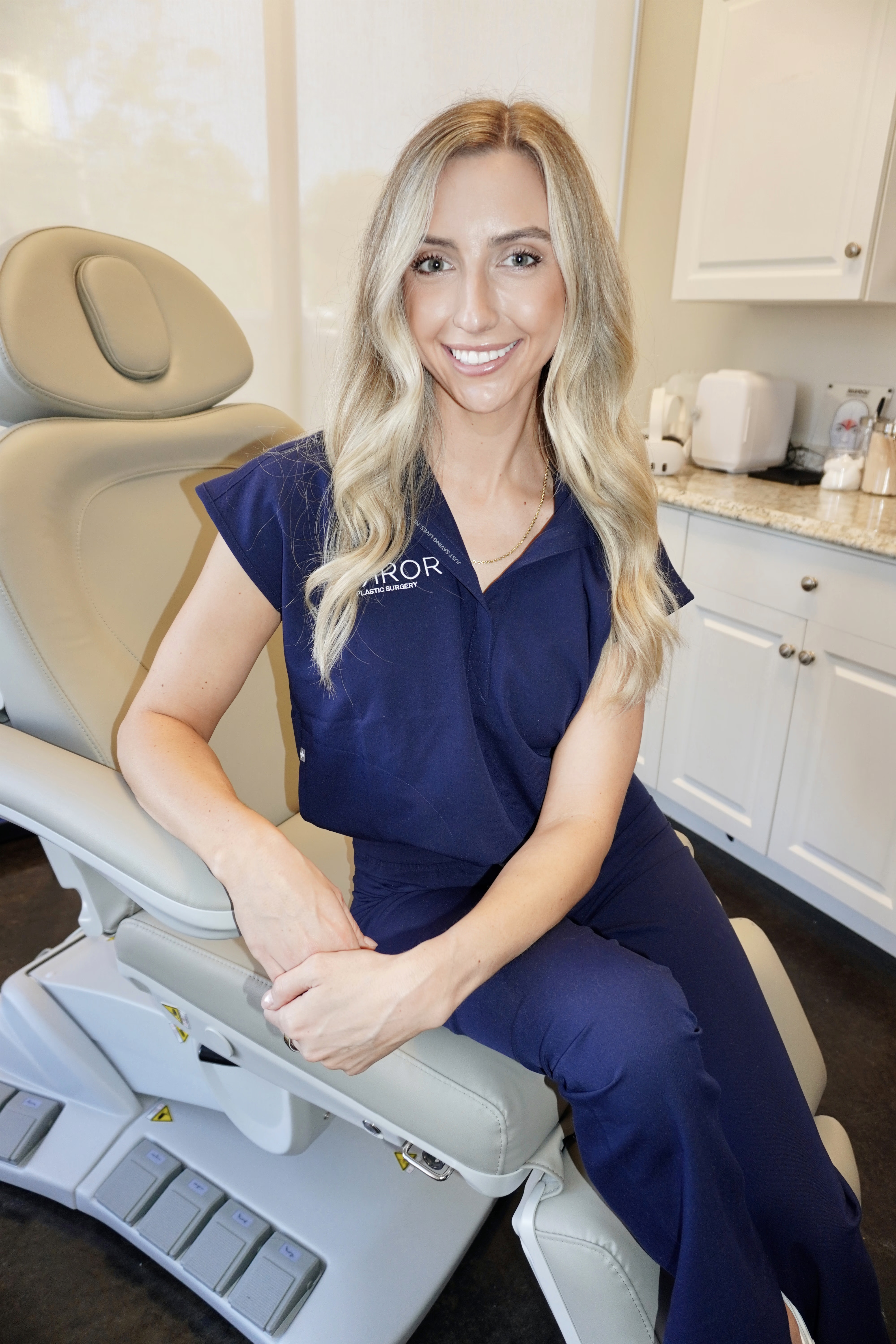
That clinical foundation pairs with esthetician training from early in her career, giving Ellie a dual perspective that is rare in peptide practice. She understands both the aesthetic outcomes patients want and the clinical science required to achieve them safely. Her approach to every consultation is rooted in education, and she breaks down the physiology behind each recommendation in plain terms so patients understand not just what they are taking, but why. She is known for telling patients when a service or product is not yet necessary for them and prioritizes long-term outcomes over short-term revenue.
Every peptide protocol at Mirror Plastic Surgery begins with a comprehensive 30–60 minute consultation, a review of medical history, and, for weight management or inflammatory conditions, a full lab panel covering thyroid, liver, kidney, diabetes markers, and hormone levels. Peptides are sourced from providers with documented batch testing. Ongoing concierge support is available via direct text access to Ellie, and the entire process from consultation to prescription and shipping can be conducted in-person in St. Petersburg or remotely across all 50 states.
When a patient’s goals extend into the surgical realm, Ellie’s work can be complemented by Dr. Akash Chandawarkar, MD, a Harvard-educated physician, Johns Hopkins-trained plastic surgeon, and fellowship-trained aesthetic surgeon at Manhattan Eye Ear & Throat Hospital/Lenox Hill Hospital.
Frequently Asked Questions
Does insurance cover bioidentical hormone therapy in 2026?
Coverage depends on the specific product. FDA-approved generic estradiol and micronized progesterone are typically covered on commercial insurance formularies at low copay tiers. Compounded bioidentical formulations, including pellets, custom creams, and troches, are almost never covered by any U.S. payer because they lack FDA approval as finished drug products. HSA and FSA accounts can generally be used for compounded prescriptions even when insurance denies reimbursement. Patients who receive a denial for an FDA-approved product have the right to file an internal appeal and request an external independent review.
What are the risks of bioidentical hormones compared to non-hormonal alternatives?
Compounded bioidentical hormone therapy carries regulatory, quality, and monitoring risks that FDA-approved formulations do not. As noted earlier, major professional bodies have found no evidence supporting superior safety or efficacy for compounded formulations. Pellet programs require repeated insertion procedures and frequent lab panels, and some providers do not require baseline labs before initiating treatment. Non-hormonal alternatives such as medically supervised peptide therapy operate through different biological pathways, targeting inflammation, collagen production, or energy metabolism, and also require baseline lab review and ongoing monitoring, but do not directly alter the hormonal axis. Quality sourcing and clinical supervision are the critical safety variables for both categories.
What happens if I stop taking peptides or hormones, and will I lose the benefits?
For both BHRT and peptide therapy, benefits are generally sustained only with continued use. Discontinuing hormone therapy typically results in a return of the symptoms it was managing. Peptides that modulate inflammation or support collagen production also lose effect when the protocol ends, similar to stopping a consistent exercise regimen.1 Maintenance protocols with periodic lab monitoring and dose adjustments are the standard approach for patients who achieve meaningful results and want to sustain them. At Mirror Plastic Surgery, Ellie designs protocols with long-term maintenance in mind from the outset.
Are peptides a viable alternative to BHRT for anti-aging and inflammation?
Peptides and BHRT address overlapping wellness goals through distinct mechanisms. BHRT replaces or supplements hormones that decline with age. Peptides signal the body’s own systems, and examples include GHK-Cu for collagen and elastin production, BPC-157 for systemic inflammation and tissue repair, and NAD for cellular mitochondria, energy, and anti-aging effects.1 For patients who are not candidates for hormone therapy, who have experienced side effects from hormonal approaches, or who prefer a non-hormonal protocol, peptides represent a clinically supervised alternative. The two approaches are not mutually exclusive and can be evaluated together during a comprehensive consultation.
How does Mirror Plastic Surgery ensure peptide quality and safety?
Mirror Plastic Surgery sources peptides exclusively from reputable providers that conduct rigorous batch testing for purity, potency, and accurate dosage, which is a critical safeguard because peptides are not FDA-regulated. Every patient begins with a comprehensive consultation and, where clinically indicated, a full lab panel. Ellie Pranckevicius reviews medical history, current medications, and pre-existing conditions before designing any protocol. Patients receive detailed instructions for reconstitution and self-administration, often with video demonstrations, and have direct 24/7 text access to Ellie for questions, adjustments, and refill requests. This level of oversight is the primary distinction between a supervised protocol and purchasing unverified peptides online.
Conclusion: Choosing Between BHRT and Peptide Therapy
Bioidentical hormone replacement therapy in 2026 spans a wide cost spectrum, from affordable generic FDA-approved regimens that are frequently insurance-covered to compounded and pellet-based programs that carry high annual cash-pay costs, minimal insurance offset, and a monitoring burden that adds hundreds of dollars per year. Patients evaluating BHRT benefit from transparent, numbers-first information about what they will actually pay and what the evidence supports.
For patients whose goals include inflammation management, anti-aging, energy, or weight support, and who prefer a non-hormonal approach or are not candidates for BHRT, medically supervised peptide therapy at Mirror Plastic Surgery offers a personalized, lab-reviewed alternative under the same standards of concierge care.1 Every protocol is built on a comprehensive assessment, quality-tested sourcing, and ongoing clinical support from Ellie Pranckevicius.
Start with a comprehensive consultation to receive an individualized assessment, review your lab results, and determine which protocol, hormonal, non-hormonal, or combined, is the right fit for your health profile and long-term goals.
1 Results may vary from person to person. Editorial content, before and after images, and patient testimonials do not constitute a guarantee of specific results.
Peptide therapy is intended for wellness and optimization purposes and is not prescribed to diagnose, treat, cure, or prevent disease unless specifically stated. Many peptides are not FDA-approved and may be used off-label. Some have limited long-term safety data, with a potential for unknown risks, complications, or desensitization with prolonged use.