
Written by: Dr. Akash Chandawarkar, Board Certified Plastic Surgeon, Mirror Plastic Surgery | Last updated: September 9, 2026
Key Takeaways
- Ipamorelin is a selective growth-hormone secretagogue used in concierge medicine to support recovery, body composition, sleep, and anti-aging goals.
- As of 2026, ipamorelin is not FDA-approved and holds Category 2 status under Section 503A, so physician oversight and verified sourcing are essential for safety.
- Concierge care at Mirror Plastic Surgery includes comprehensive labs, individualized protocols, batch-tested peptides, and 24/7 physician access for ongoing monitoring.
- Benefits typically emerge over 8–16 weeks, and realistic expectations, diet, and exercise remain foundational to meaningful results.1
Ready to explore concierge ipamorelin therapy? Schedule your consultation with Ellie at Mirror Plastic Surgery to begin a personalized, physician-led evaluation.
What Is Ipamorelin?
Ipamorelin is a synthetic pentapeptide (Aib-His-D-2-Nal-D-Phe-Lys-NH2) that binds the ghrelin receptor (GHS-R1a) and stimulates the anterior pituitary gland to release growth hormone. Physicians in concierge medicine use it to support lean muscle mass, fat loss, recovery, sleep quality, and anti-aging goals. Unlike older growth hormone-releasing peptides such as GHRP-6 or GHRP-2, ipamorelin does not provoke meaningful increases in ACTH, cortisol, or prolactin at GH-releasing doses. Raun et al. first characterized this selectivity in 1998. Many clinicians and patients prefer ipamorelin over earlier secretagogues because of this cleaner endocrine profile.
Clinicians frequently combine ipamorelin with CJC-1295, a growth hormone-releasing hormone (GHRH) analog. The dual-pathway stimulation, via cAMP at the GHRH receptor and phospholipase C at GHS-R1a, produces synergistic GH release estimated at three to five times higher than either agent alone. Researchers at Novo Nordisk originally synthesized ipamorelin in the mid-1990s. Helsinn Therapeutics advanced it into Phase II clinical trials for postoperative ileus, but the program ended after ipamorelin failed to beat placebo on primary and secondary endpoints in a 2014 bowel-resection study.
These mechanisms and clinical findings align with Mirror Plastic Surgery’s broader surgical and non-surgical practice. In that practice, ipamorelin also supports post-operative recovery by reducing inflammation and promoting healing, a role revisited later in this guide.
The Regulatory Reality: What You Need To Know In 2026
Ipamorelin is not FDA-approved for any human indication. In October 2024, the FDA’s Pharmacy Compounding Advisory Committee voted 0–12 (with one abstention) against adding ipamorelin to the 503A bulk substances list, citing a lack of information supporting safety and efficacy. It also does not appear on the 503B outsourcing facility list. As of 2026, ipamorelin holds Category 2 status under Section 503A of the Federal Food, Drug, and Cosmetic Act, meaning the FDA determined there is insufficient evidence to justify inclusion on the list of bulk substances that may be compounded for human use.
Between 2019 and 2024, the FDA issued warning letters to multiple compounding pharmacies producing ipamorelin, citing violations of the FD&C Act under Sections 503A and 503B, including marketing ipamorelin as a new drug without an approved NDA or ANDA and failing to compound pursuant to valid patient-specific prescriptions. Federal enforcement actions against peptide suppliers with therapeutic marketing claims increased 300% from 2023 to 2025, with the FDA issuing warning letters to 14 suppliers and three facing product seizures.
This regulatory context highlights the risk of unregulated sourcing, incorrect dosing, and lack of medical screening. Transparent, physician-authored discussion of this landscape is what most online providers omit. At Mirror Plastic Surgery, every protocol reflects the current regulatory environment, and peptides come from reputable compounding providers with batch testing, Certificates of Analysis, purity verification, and endotoxin screening.
How Concierge Medicine Delivers Ipamorelin: The Mirror Plastic Surgery Model
This is where concierge medicine differs from both traditional healthcare and online peptide retail, in the depth of physician involvement at every stage. At Mirror Plastic Surgery, the process centers on safety, personalization, and ongoing accountability:
- Initial Consultation (30–60 Minutes): Dr. Akash Chandawarkar conducts a thorough clinical assessment of medical history, current medications, health goals, and concerns. This process takes time and goes far beyond a rushed telehealth script.
- Comprehensive Lab Testing: Baseline panels include thyroid, liver, kidney, hormone levels, IGF-1, fasting glucose, and HbA1c. These same markers are rechecked at week 6 and at cycle end, with action thresholds including pausing or reducing dose if IGF-1 exceeds the age-adjusted upper limit.
- Personalized Protocol Design: Dosing, timing, cycling schedule, and decisions about combining ipamorelin with CJC-1295 or other peptides are based on labs and individual goals, with no reliance on pre-set templates.
- Quality-Assured Sourcing: Peptides are sourced from reputable compounding pharmacies with batch testing, purity verification by HPLC, endotoxin testing, and sterility screening. The FDA has documented cases of contaminated compounded injectables causing serious harm, including the 2012 New England Compounding Center fungal meningitis outbreak that killed 76 people, so verified sourcing remains non-negotiable.
- Ongoing Concierge Support: Patients receive direct 24/7 access to Dr. Akash via text, scheduled telemedicine follow-ups, and IGF-1 rechecks at 6–8 weeks to guide dose adjustments.
This concierge model is available in-person in St. Petersburg and Tampa, Florida, and remotely across the United States, including Hawaii and Alaska.
Explore concierge ipamorelin care with Ellie to see how this model fits your health profile and goals.
Benefits And What To Expect From Ipamorelin Therapy
Clinically reported benefits of ipamorelin therapy include increased lean muscle mass, reduced body fat, improved recovery, deeper sleep, enhanced skin elasticity, and general anti-aging effects.1 These outcomes align closely with Mirror Plastic Surgery’s broader surgical and non-surgical services. In that practice, ipamorelin also supports post-operative recovery by reducing inflammation and promoting healing.1
A realistic timeline, based on clinical reporting and available pharmacology data, looks like this:
- Weeks 1–4: Sleep quality changes are the earliest commonly reported effect, often within the first one to two weeks.1
- Weeks 4–8: Improved recovery and reduced muscle soreness become noticeable, and measurable IGF-1 elevation is typically present by weeks 4–6.1
- Weeks 8–16: Measurable body-composition changes, including increased lean mass retention and gradual reduction in visceral and subcutaneous fat, emerge in this window.1
No human trial has tested ipamorelin against body composition, recovery, sleep, or aging endpoints specifically. The nearest class evidence comes from a two-year trial of an oral ghrelin mimetic in older adults, which added approximately 1.1 kg of fat-free mass without improving strength or function. Ipamorelin functions as a tool within a broader plan. Diet, exercise, and lifestyle still drive most meaningful outcomes.
Like any tool, ipamorelin also carries risks that deserve careful review.
Risks, Side Effects, And Who Should Avoid Ipamorelin
Ipamorelin has a favorable short-term safety profile compared with exogenous growth hormone, but long-term data are absent. Ipamorelin’s human safety database consists only of single-dose pharmacokinetic studies from the late 1990s involving fewer than 100 subjects, and the only controlled human safety dataset from a clinical trial showed imbalances in adverse events including hyperglycemia at discharge (14.3% vs. 8.6% on placebo), hypokalemia (12.5% vs. 3.4%), and insomnia (10.7% vs. 5.2%).
Commonly reported short-term side effects include:
- Injection-site erythema and induration, reported in approximately 15–20% of users based on clinic surveys
- Transient headache, typically resolving within 2–4 hours
- Fluid retention, including puffy hands or face, swollen ankles, and hand numbness or tingling from carpal tunnel compression
- Vivid dreams or sleep changes
- Mild hunger increase, mediated through GHS-R appetite signaling
Absolute contraindications, extrapolated from GH-axis pharmacology, include active malignancy, proliferative diabetic retinopathy, uncontrolled intracranial hypertension, and pregnancy or breastfeeding. Sustained GH/IGF-1 elevation from ipamorelin can raise fasting glucose and reduce insulin sensitivity, so fasting glucose and HbA1c monitoring remain essential throughout therapy. The Endocrine Society has explicitly stated that GH secretagogues, including ipamorelin, should not be used outside of research protocols given the absence of adequate safety and efficacy data. Medical supervision, including baseline screening and ongoing IGF-1 monitoring, is the primary mechanism for mitigating these risks.
Ipamorelin Vs. Sermorelin: Choosing The Right Growth Hormone Peptide
Ipamorelin and sermorelin are both growth hormone secretagogues used in concierge medicine, yet they act on different receptor systems and have distinct regulatory histories. No randomized trial has directly compared sermorelin with ipamorelin in the same patient cohort, so any claim that one peptide is superior to the other remains inference rather than evidence-based.
| Attribute | Ipamorelin | Sermorelin |
|---|---|---|
| Mechanism | Ghrelin receptor (GHS-R1a) agonist | GHRH analog; activates GHRH receptor on pituitary somatotrophs |
| Cortisol / Prolactin Effect | Does not significantly elevate cortisol or prolactin | May moderately increase cortisol; carries a small prolactin risk |
| Half-Life | Approximately 2 hours | Approximately 11–12 minutes |
| Regulatory History | Never FDA-approved; 503A Category 2 as of 2026 | Previously FDA-approved as Geref for pediatric GH deficiency; voluntarily withdrawn for commercial reasons; remains on 503A Category 1 list |
| Typical Monthly Cost | Cost varies by individual protocol and is discussed during consultation | Cost varies by individual protocol and is discussed during consultation |
A physician may recommend one peptide over the other based on patient goals, labs, cortisol sensitivity, and tolerance. Ipamorelin may be preferred for patients with anxiety, adrenal fatigue, or metabolic syndrome, where cortisol spikes are undesirable, or when combination with CJC-1295 is planned. Sermorelin may be preferred when budget is the primary constraint or when the prescriber values the regulatory precedent of a formerly FDA-approved compound. Some protocols combine both peptides for synergistic GH release, although no randomized controlled trial validates this approach.
How To Choose A Concierge Ipamorelin Provider: 5 Questions To Ask
Choosing a concierge ipamorelin provider works best when you ask specific, direct questions before committing to any protocol:
- Are you a licensed physician, and what are your credentials? Board certification and surgical or endocrine training matter. A physician-led practice differs significantly from a nurse practitioner or wellness coach operating under a distant medical director.
- Do you require comprehensive lab testing before starting therapy? Reputable peptide providers should require or strongly recommend baseline labs and periodic monitoring; providers who prescribe peptides without any blood work are a red flag. Baseline IGF-1, fasting glucose, HbA1c, and a metabolic panel are non-negotiable.
- Where do you source your peptides, and are they batch-tested? Ask for Certificates of Analysis that include HPLC purity verification, endotoxin testing by LAL assay, and sterility confirmation. Gray market peptide vials cost $30–$80 compared to $199–$299 for pharmacy-compounded versions; the price difference covers sterility testing, potency verification, contamination screening, and licensed prescriber oversight.
- How do you personalize protocols? Dosing, cycling, and combination decisions should reflect individual labs and goals rather than a one-size-fits-all template.
- What follow-up and support do you offer? IGF-1 rechecks, dose adjustments, and direct physician access are essential for safety and effectiveness throughout the therapy cycle.
Cost and Insurance: What Concierge Ipamorelin Therapy Really Costs
Concierge ipamorelin therapy is almost never covered by insurance for anti-aging or wellness purposes, so patients typically pay out of pocket. Cost depends on four main factors: raw active pharmaceutical ingredient synthesis, sterile compounding pharmacy fees, clinic markup that covers consultation and physician time plus software and marketing, and delivery costs such as sterile vials and cold-chain shipping. HSA and FSA funds may apply in some cases when a licensed provider writes the prescription for a documented clinical indication, although eligibility varies by plan administrator. For a personalized quote based on your labs and goals, schedule a consultation directly with Mirror Plastic Surgery.
Why Mirror Plastic Surgery Is The Preferred Choice For Concierge Ipamorelin Therapy
Mirror Plastic Surgery is led by Dr. Akash Chandawarkar, MD, a Harvard Medical School graduate (through the Harvard-MIT Division of Health Sciences and Technology), Johns Hopkins-trained plastic surgeon, and board-certified member of the American Board of Plastic Surgery. His fellowship training in aesthetic surgery at the Manhattan Eye Ear & Throat Hospital (MEETH)/Lenox Hill Hospital and medical innovation training through the Stanford University Biodesign Innovation Fellowship provide a broad clinical and scientific foundation for evidence-based peptide therapy.
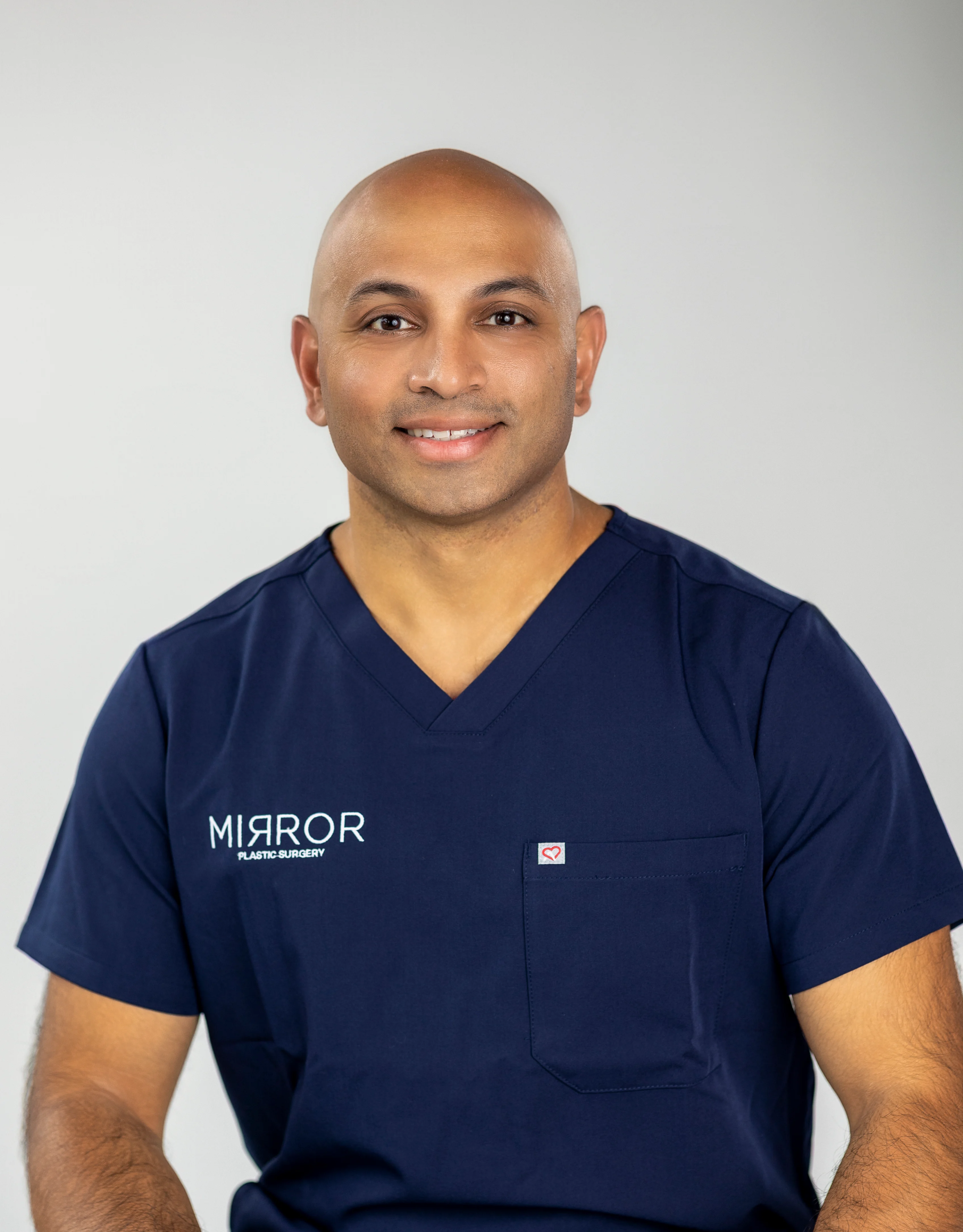
Dr. Akash leads every peptide protocol personally. The practice limits itself to one to two surgeries per day and spends up to an hour in consultation with each patient, which supports deep, personalized attention. Every ipamorelin protocol at Mirror Plastic Surgery is built from individual lab results, with no reliance on pre-set templates, and patients receive 24/7 direct access to Dr. Akash via text throughout their therapy. Peptides are sourced exclusively from reputable compounding providers with documented batch testing, purity verification, and endotoxin screening.
The full concierge experience is available in-person at Mirror Plastic Surgery’s St. Petersburg, Florida location and remotely across the United States, including Hawaii and Alaska.
Discuss a tailored ipamorelin plan with Ellie at Mirror Plastic Surgery and explore how therapy can align with your health and wellness goals under the direct supervision of a board-certified physician.
Frequently Asked Questions
Can My Doctor Prescribe Ipamorelin?
A licensed physician can write a prescription for ipamorelin, but the legal pathway for compounding remains severely constrained. As noted earlier, ipamorelin is not FDA-approved and holds Category 2 status, so the legal pathway for compounding is narrow. Patients should verify that any provider offering ipamorelin operates within current federal and state compounding regulations and should ask directly about the pharmacy’s compliance status. A prescription alone does not make compounding lawful.
Do You Have To Inject Ipamorelin Daily?
Most protocols use daily injection because ipamorelin has a terminal half-life of approximately two hours and requires regular subcutaneous dosing, typically once or twice daily. The bedtime dose is most commonly recommended because it aligns with the body’s natural nocturnal growth hormone pulse during slow-wave sleep. Injecting on an empty stomach, at least two hours after the last meal, maximizes the GH response by avoiding insulin-mediated blunting. Injections are administered subcutaneously using a small-gauge insulin syringe, and site rotation helps prevent localized reactions.
Does Ipamorelin Need To Be Cycled?
Most clinicians recommend cycling ipamorelin, commonly 8–12 weeks on followed by 4 weeks off, to reduce the theoretical risk of GHS-R1a receptor desensitization and allow the GH axis to return to baseline. However, no large human trial has validated a specific cycling protocol for subcutaneous ipamorelin use. The published clinical program used short intravenous infusions for gastrointestinal endpoints, rather than months of subcutaneous dosing for body composition or anti-aging. Cycling schedules in clinical practice function as informed conventions, not FDA-approved guidelines. Your physician should direct the specific schedule based on your IGF-1 response and clinical goals.
What Are The Downsides Of Ipamorelin?
Common side effects include injection-site redness and induration, transient headache, water retention, mild hunger increase, and vivid dreams or sleep changes. More significant concerns include glucose dysregulation with sustained IGF-1 elevation, a finding documented in trials of oral ghrelin mimetics in older adults, and the unknown long-term effects of chronic GHS-R1a activation at peripheral sites including the myocardium and gastrointestinal tract. The human safety database for ipamorelin is limited to a small number of short-duration studies, and no post-market surveillance registry exists. Medical supervision, including baseline screening and ongoing IGF-1 and glucose monitoring, is the primary mechanism for mitigating these risks.
Is Ipamorelin Safe?
Ipamorelin has a favorable short-term safety profile relative to exogenous recombinant growth hormone, and it does not meaningfully elevate cortisol or prolactin at standard doses, which offers an advantage over older growth hormone-releasing peptides. However, it remains outside FDA approval, and no long-term human safety data exist beyond the limited clinical trial program conducted for postoperative ileus. As the Endocrine Society has warned, GH secretagogues lack adequate safety data for routine use. Safety in a concierge medicine context depends on proper screening for contraindications, quality-assured sourcing from a verified compounding pharmacy, and ongoing monitoring of IGF-1, fasting glucose, and HbA1c throughout therapy.
Conclusion: Your Next Step Toward Safe, Supervised Ipamorelin Therapy
Ipamorelin is a promising peptide therapy with a rational mechanism and growing clinical interest for anti-aging, recovery, and body-composition support. Its safety and effectiveness depend entirely on how clinicians deliver it. The regulatory landscape as of 2026 is complex, the human evidence base is limited, and the risks of unregulated online sourcing are real and documented. Concierge medicine, with comprehensive baseline labs, physician-led protocol design, quality-assured sourcing, and ongoing monitoring, turns ipamorelin from a speculative experiment into a medically supervised wellness strategy.
Mirror Plastic Surgery, under the direct leadership of Dr. Akash Chandawarkar, offers that standard of care for patients in St. Petersburg, Tampa, and across the United States. Every protocol is built from individual lab results, every peptide is sourced with verified batch testing, and every patient has direct access to their physician throughout the process.
Patients who want to explore whether concierge ipamorelin therapy fits their goals can arrange a one-on-one consultation with Ellie at Mirror Plastic Surgery and begin their journey with a physician who prioritizes safety and results.
Disclaimer: Ipamorelin is not FDA-approved for any human indication. All information in this article is educational and does not constitute medical advice. Results vary by individual. Medical supervision, including baseline laboratory evaluation and ongoing monitoring, is essential for any peptide therapy. Consult a licensed physician before beginning any new therapeutic regimen.
1 Results may vary from person to person. Editorial content, before and after images, and patient testimonials do not constitute a guarantee of specific results.
Peptide therapy is intended for wellness and optimization purposes and is not prescribed to diagnose, treat, cure, or prevent disease unless specifically stated. Many peptides are not FDA-approved and may be used off-label. Some have limited long-term safety data, with a potential for unknown risks, complications, or desensitization with prolonged use.