
Written by: Ellie Pranckevicius, FNP-BC, Aesthetic Nurse Practitioner & Aesthetic Injector | Facial Restoration & Regenerative Injectable Specialist, Mirror Plastic Surgery | Last updated: July 5, 2026
Key Safety Takeaways for Florida Botox Patients
- Botox safety depends on injector qualifications and medical oversight, not the molecule itself or how the office looks.
- Florida law requires physician supervision protocols for non-physician injectors, and patients should verify active licenses and written agreements before treatment.
- High-risk environments include unlicensed settings, counterfeit products, and practices without emergency protocols or physician escalation access.
- Verify product authenticity by inspecting unopened vials for Allergan packaging, US license #1889, and authorized distributor sourcing.
- Schedule your consultation at Mirror Plastic Surgery to receive care from a fully supervised, experienced injector in a medical-grade setting.
How Safe Is a Med Spa for Botox in Florida?
Safety in a med spa comes from the legal supervision structure, not décor or branding. Florida law requires a physician-signed written supervision protocol for all non-physician Botox injectors. The supervising physician must be reachable for consultation and provide documented oversight, including chart reviews and protocol updates. Remote supervision can be legal when the physician remains accessible during patient care.
The main risk difference between settings comes from volume and attention. High-volume clinics may see dozens of patients per day, which compresses assessment time for each person. Studies indicate that 70% of medical spas lack any affiliation with a physician practice. Mirror Plastic Surgery limits non-surgical appointments to one to two procedures per day so the clinical team can focus fully on each patient before, during, and after treatment.
Regardless of a clinic’s volume model, every patient should verify the supervision structure before booking. Ask who the supervising physician is and whether their name appears on a posted written protocol. Confirm that the physician is reachable by phone during your appointment. Ask for the injector’s specific license type and number. Confirm that the injector has documented training in facial anatomy and complication management.
Highest-Risk Places to Get Botox in Florida
In 2024, the CDC reported 22 people across 11 states experienced adverse effects after receiving counterfeit or mishandled botulinum toxin injections, including cases linked to unlicensed providers and non-healthcare settings such as homes or spas. Complications from counterfeit Botox can appear within hours or days, with symptoms including muscle weakness, drooping eyelids, blurred vision, or difficulty swallowing requiring immediate medical attention.
The table below summarizes key safety factors across common provider environments.
| Safety Factor | Unlicensed / Home Setting | Med Spa (Physician-Supervised) | Medical Practice (On-Site Physician) |
|---|---|---|---|
| Legal injector authority | None, constitutes unlicensed practice of medicine under Florida Statutes Chapter 456.065 | Valid only with active written supervision protocol | MD/DO may inject independently, NP/PA under written agreement |
| Product authenticity risk | High, counterfeit and illegally imported products common | Variable, depends on distributor sourcing practices | Low when ordered through Allergan Aesthetics or an authorized distributor |
| Complication management | None | Requires an emergency kit and staff trained to manage complications | Access to a medical director and written emergency protocols |
The highest-risk environments share three traits. They lack verifiable physician supervision, have no documented product sourcing chain, and do not maintain on-site emergency capability. Unusually low-priced Botox often signals diluted, counterfeit, or illegally imported products that may contain unknown toxins or improper concentrations. Price alone does not prove safety, but pricing far below local norms should trigger direct questions about sourcing.
How to Check Botox Provider Credentials in Florida
Florida’s licensing hierarchy for Botox injectors, from broadest to most restricted authority, is as follows.
- MD / DO: May independently prescribe and administer Botox without any supervision protocol or delegation agreement.
- ARNP / NP (FNP-BC): Must maintain a written collaborative practice agreement with a supervising physician that specifically defines prescriptive authority for Botox under Florida Statute 464.012.
- PA: Must operate under a formal written delegation agreement with a supervising physician explicitly authorizing Botox administration per Florida Statute 458.347.
- RN: May administer Botox only under a physician-signed order or standing order protocol and cannot prescribe it per Florida Statute 464.003.
- Estheticians, cosmetologists, medical assistants, and unlicensed individuals: Are prohibited from injecting Botox or dermal fillers under any circumstances in Florida.
Step-by-step vial verification process:
- Request to see the unopened vial before injection. Authentic Botox Cosmetic features a secure closure flap for tamper-evidence, an immovable etched vial label, US license #1889, matching lot numbers on carton and vial, and security varnish with tracking elements.
- Confirm the US license number 1889 is printed on both the box and the vial. A holographic Allergan film appears on the vial.
- Verify the lot number and expiration date. Allergan Aesthetics can confirm authenticity and US approval status through its track-and-trace system.
- Ask where the product was ordered. BOTOX Cosmetic should be ordered through an authorized distributor, and federal law prohibits importation of non-FDA-approved botulinum toxin products.
Credential checklist:
- Active Florida professional license verifiable on the Florida Department of Health license lookup
- License type confirming legal authority to inject (MD, DO, ARNP, PA, or RN under protocol)
- Written supervision or collaborative practice agreement on file
- Documented training in facial anatomy and complication management
- Prior clinical experience in high-acuity settings such as ICU, emergency medicine, or surgical units
- Malpractice insurance explicitly covering aesthetic injectables
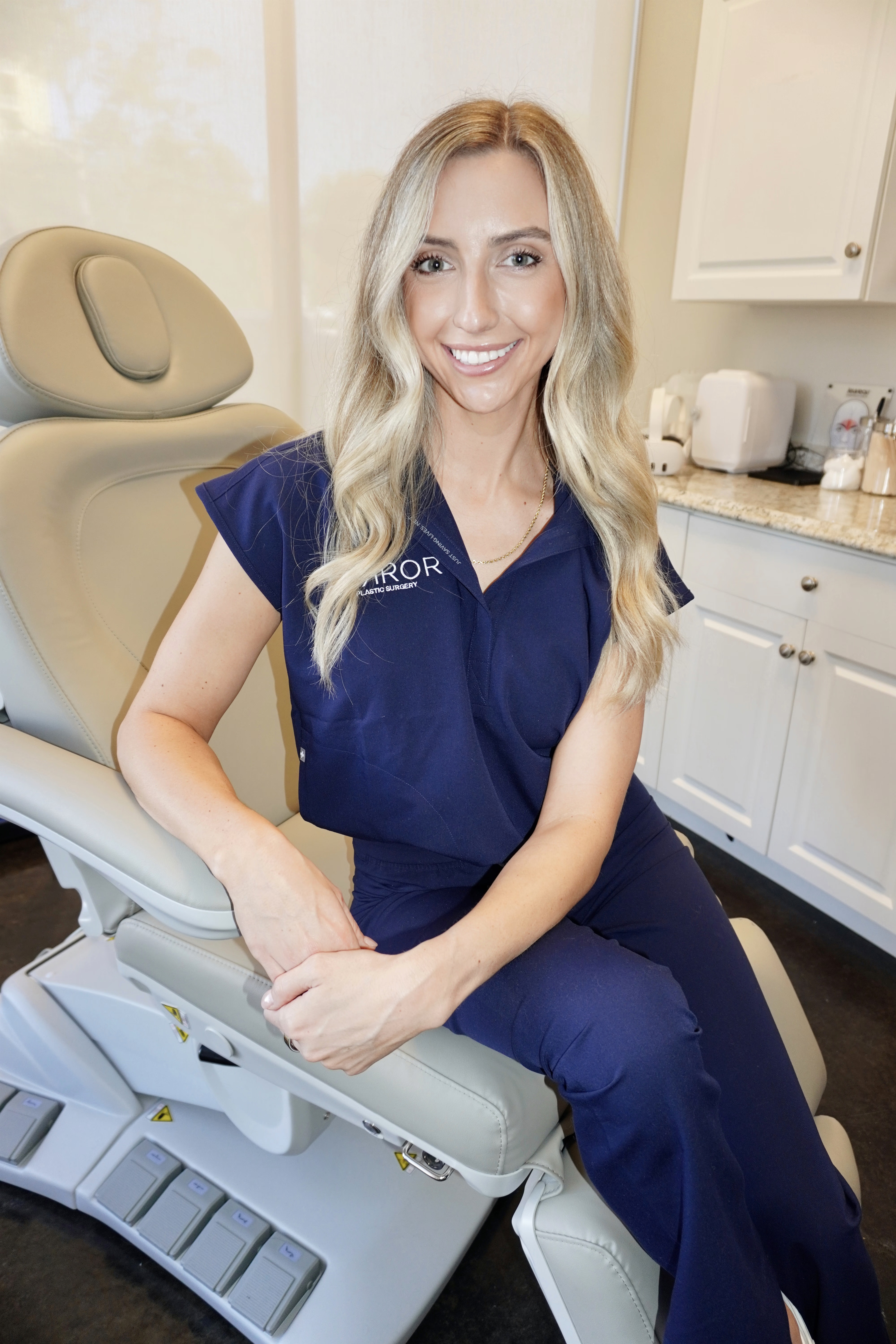
Ellie Pranckevicius holds an active FNP-BC license and maintains a written collaborative practice agreement under the oversight of Dr. Akash Chandawarkar, MD, a Harvard-educated, Johns Hopkins-trained plastic surgeon. She spent four years in the Neuroscience ICU at Tampa General Hospital before transitioning to aesthetics, which directly satisfies the high-acuity clinical experience criterion above.
Who Handles Botox Complications at Your Clinic?
Complications that can occur with Botox
Local complications such as temporary eyelid drooping or asymmetry come from injection technique and toxin migration. Systemic events including difficulty swallowing or breathing are rare but require immediate medical attention. A responsible practice maintains a current emergency kit with medications for severe reactions like anaphylaxis and ensures staff are trained to manage complications.
Who is qualified to manage a Botox complication
Key provider factors determining Botox safety include legal authority via medical license, safer dosing and placement via training, complication management via emergency protocols, and realistic outcome balancing via cosmetic judgment. A reputable aesthetic practice maintains access to a medical director and written emergency protocols to manage adverse events. Systemic toxicity, anaphylaxis, or vascular compromise require physician-level escalation.
What patients should do if symptoms appear after injection
Symptoms such as muscle weakness, drooping eyelids, blurred vision, or difficulty swallowing appearing within hours or days after injection require immediate medical attention. Patients should contact the supervising physician for their injector and go to an emergency department if systemic symptoms occur. A practice without a named, reachable supervising physician cannot meet this standard.
At Mirror Plastic Surgery, Ellie’s neuroscience ICU background means she has managed acute neurological events in critically ill patients. That experience supports her ability to recognize and respond to neuromodulator complications quickly. Dr. Chandawarkar remains available for physician-level escalation when needed.
Conclusion and Next Steps for Safe Botox in Florida
The verification process for any Botox provider centers on five questions. Confirm that the injector’s Florida license is active and of a type legally authorized to inject. Verify that a written physician supervision or collaborative practice agreement is on file. Check that you can inspect the product vial for authentic Allergan packaging and US license number 1889. Ask whether the practice maintains documented emergency protocols and physician-level escalation. Confirm that the injector’s clinical background includes high-acuity experience beyond aesthetics training alone.
Mirror Plastic Surgery is structured to meet each of these criteria. Ellie Pranckevicius, FNP-BC, holds an active Florida license and practices under a written collaborative agreement with Dr. Akash Chandawarkar. The practice sources product exclusively through authorized distributors, and Ellie brings four years of Neuroscience ICU experience to every injection appointment. The team limits non-surgical treatments to one to two procedures per day, conducts up to an hour-long top-to-bottom assessment per patient, and prioritizes safety first, function second, and aesthetics third.
Disclaimer: Results may vary from person to person. Editorial content, before and after images, and patient testimonials do not constitute a guarantee of specific results.
Frequently Asked Questions
Is the Botox molecule different at a medical practice versus a med spa?
No. FDA-approved Botox Cosmetic (onabotulinumtoxinA) from Allergan Aesthetics is the same product in any legal setting. The key requirements are ordering through an authorized distributor, correct refrigerated storage, and use before expiration. The product itself does not change between offices. What changes is the injector’s training, the oversight structure, the depth of the pre-treatment assessment, and the clinic’s ability to manage complications. Patients should treat claims that one clinic’s Botox is a superior formulation as marketing, not science.
Can an esthetician legally inject Botox in Florida if they work at a medical spa?
No. Florida law prohibits estheticians, cosmetologists, medical assistants, and unlicensed individuals from administering Botox or dermal fillers in any setting. Botox is a prescription medication, and its administration counts as a medical procedure under Florida law. Only MDs, DOs, ARNPs with a written collaborative practice agreement, PAs with a written delegation agreement, and RNs working under a physician-signed standing order protocol may inject. Performing injections without an appropriate license constitutes the unlicensed practice of medicine, a third-degree felony under Florida Statute 456.065.
What should I look for in an injector’s clinical background beyond their license type?
License type confirms legal authority but not full clinical skill. Patients should ask about years of nursing or medical practice before aesthetics and whether that work included high-acuity settings such as ICU, emergency medicine, trauma, surgical units, or anesthesia. Ask whether the injector holds ACLS or equivalent emergency certifications. High-acuity experience builds rapid assessment skills, calm crisis response, deep anatomy knowledge, and precision under pressure, which all support safer aesthetic outcomes. Ellie Pranckevicius’s four years in the Neuroscience ICU at Tampa General Hospital provide this foundation, supported by 600 hours of hands-on esthetics training and a Master’s in Nursing from the University of South Florida.
How do I verify that the Botox being used is authentic and not counterfeit or diluted?
Before any injection, ask to see the unopened vial. Authentic Botox Cosmetic features a secure closure flap for tamper-evidence, an immovable etched vial label, US license #1889, matching lot numbers on carton and vial, and security varnish with tracking elements. Confirm that US license number 1889 appears on both the box and the vial and that a holographic Allergan film appears on the vial. Ask the practice to confirm that the product came from an authorized distributor. Federal law prohibits importation of non-FDA-approved botulinum toxin products, and Allergan’s track-and-trace system can verify authenticity when questions arise. Unusually low pricing often signals diluted, counterfeit, or illegally imported product and should prompt careful questioning.
What is Mirror Plastic Surgery’s approach to a first Botox consultation?
Mirror Plastic Surgery conducts a comprehensive top-to-bottom assessment that can last up to an hour. The visit starts with the patient’s emotional drivers and long-term goals before any treatment is recommended. Ellie evaluates facial anatomy across the upper, middle, and lower regions as a connected system, which helps reduce the risk of asymmetry or an overdone look. The practice is supplier-neutral, so product recommendations reflect age, skin quality, texture, and desired outcome rather than volume quotas or brand commissions. Patients receive a clear explanation of the physiology behind each recommendation and may be advised that a treatment is not yet necessary, which reflects a focus on long-term relationships over single-visit revenue.
Disclaimer: Results may vary from person to person. Editorial content, before and after images, and patient testimonials do not constitute a guarantee of specific results.