
Written by: Dr. Akash Chandawarkar, Board Certified Plastic Surgeon, Mirror Plastic Surgery | Last updated: September 9, 2026
Key Takeaways
- Online reviews alone cannot identify the best clinic for hip dip filler treatment. Injector expertise, consultation quality, and safety protocols matter most.
- Board-certified plastic surgeons or dermatologists with deep anatomical knowledge and a documented hip dip portfolio deliver the safest, most natural results.1
- Use a clinic checklist that includes 30-minute consultations, before-and-after photos, transparent pricing, and clear follow-up protocols.
- Sculptra and Radiesse are the primary biostimulatory fillers for hip dips, and each offers different timelines, session requirements, and longevity profiles.1
- To experience this standard of care, book a consultation with Ellie at Mirror Plastic Surgery.
Why There Is No Single “Best” Clinic For Hip Dip Fillers
Patient satisfaction depends heavily on the injector’s anatomical expertise and consultation transparency, rather than on aggregate star ratings. A clinic with a 4.9-star average in one city cannot be compared directly to one in another city, because the experience is shaped by the specific injector’s credentials, technique, and approach, rather than the clinic’s brand or marketing.
Hip dips, clinically termed the lateral trochanteric depression, are a normal anatomical feature determined entirely by skeletal structure, specifically the gap between the iliac crest and the greater trochanter. The depth and width of that depression vary from person to person. Treatment plan, product choice, and number of sessions must be individualized for that reason. No universal “best” clinic exists.
Use the evaluation criteria below to identify the best-rated provider for your specific anatomy and goals.
How To Evaluate A Clinic For Hip Dip Fillers: What Reviews Really Tell You
Reviews on Google, RealSelf, and Reddit reflect individual experiences shaped by expectations, anatomy, and injector skill, rather than objective measures of quality. Reading them critically is a learned skill.
Positive review themes that signal genuine quality include:
- Thorough, unhurried consultations of 30 minutes or longer where the injector listens and educates
- Clear communication about product choices, expected outcomes, and realistic timelines1
- Natural-looking results that friends notice positively but cannot quite identify1
- Honest discussion of risks and what the treatment cannot achieve
- Responsive follow-up care and a willingness to address concerns after treatment
Red flags in negative reviews include:
- Rushed consultations that feel transactional
- Pressure to book immediately or upsell additional treatments
- Lack of verifiable before-and-after photos specific to hip dip patients
- Poor communication about complications or difficulty reaching the clinic afterward
- Reviews mentioning high-volume “filler mill” practices that prioritize speed over care
Clinic Evaluation Checklist
- The consultation lasts at least 30 minutes with the actual injector.
- The injector explains why they recommend a specific product for your anatomy.
- Before-and-after photos of hip dip patients, not just facial filler, are available for review.
- The injector is a board-certified plastic surgeon or dermatologist with deep anatomical knowledge.
- The clinic has a clear follow-up protocol and complication management plan.
- The stated philosophy prioritizes safety and function alongside aesthetics.
Schedule your consultation with Ellie at Mirror Plastic Surgery to experience this standard of care firsthand.
The Role Of Injector Credentials And Expertise
The injector’s qualifications shape both safety and results more than the clinic’s name or rating. Hip dip filler requires placement strictly in the subcutaneous fat plane of the lateral trochanteric depression, an area that demands deep anatomical understanding to avoid vascular complications and achieve natural results. A surgeon’s command of subdermal anatomy makes injections safer and more precise.
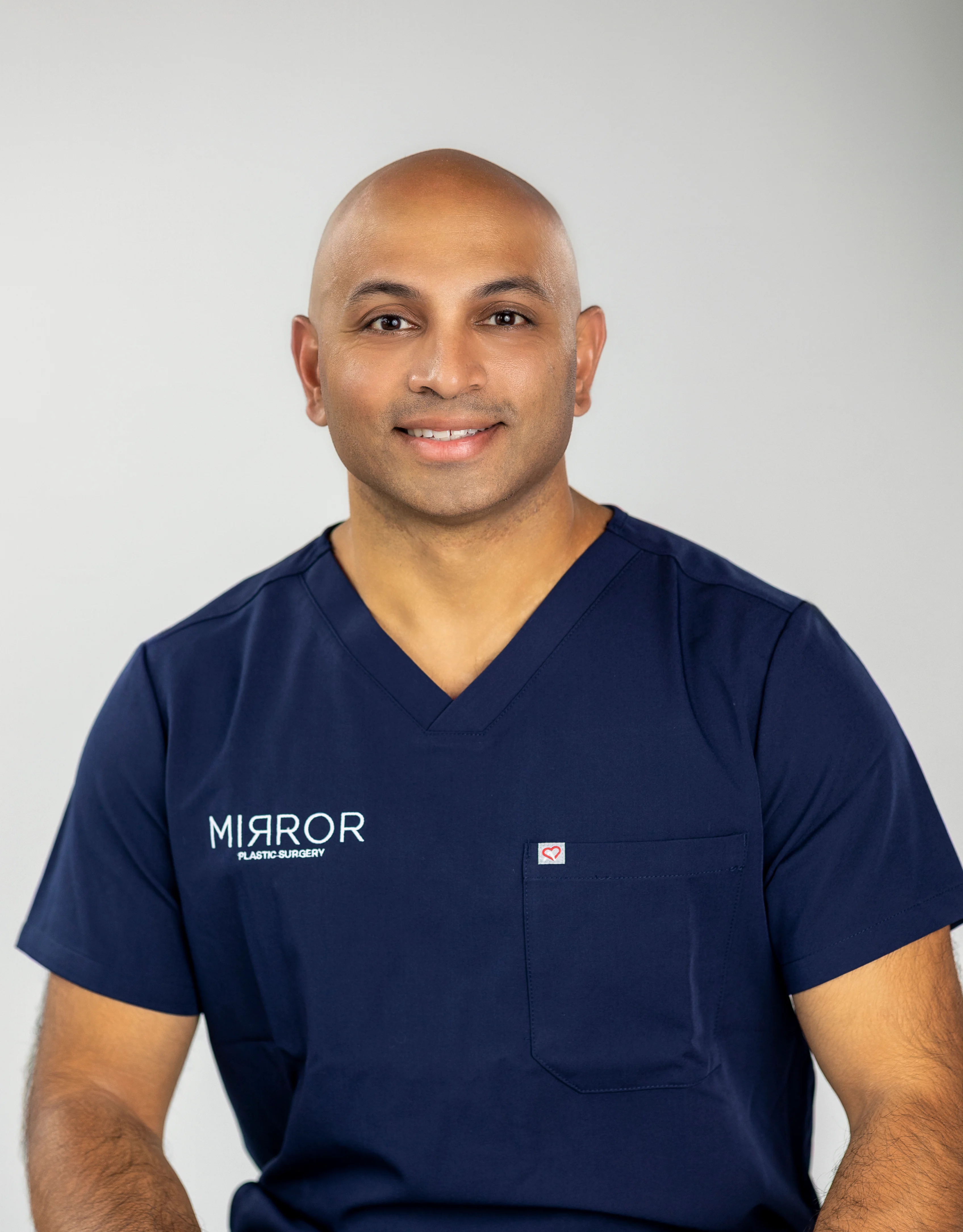
At Mirror Plastic Surgery, Dr. Akash Chandawarkar is a Harvard-educated, Johns Hopkins-trained, board-certified plastic surgeon with fellowship training in aesthetic surgery at the Manhattan Eye Ear & Throat Hospital. He personally performs all injections, so every neuromodulator and dermal filler is placed by a physician with a surgeon’s command of facial and subdermal anatomy. He also serves on the advisory board for Merz Aesthetics (Radiesse) and Tiger Aesthetics (AlloClae), which keeps him at the forefront of injectable innovation.
Product Comparison: Sculptra Vs. Radiesse For Hip Dips
The two most common biostimulatory fillers used for hip dip correction differ in mechanism, timeline, and longevity. Neither can be dissolved with hyaluronidase, which becomes a critical consideration when larger body volumes are involved. The table below summarizes these key differences so you can compare them side by side.
| Factor | Sculptra (Poly-L-Lactic Acid) | Radiesse (Calcium Hydroxylapatite) |
|---|---|---|
| Mechanism | Stimulates collagen production gradually over 3–6 months, with no immediate volumizing effect1 | Provides immediate volume from a gel carrier plus ongoing collagen stimulation1 |
| Typical Sessions | Most patients receive 2–3 sessions, with an average of 4.0 vials per session in a clinical study | Often fewer sessions are needed because of the immediate volumizing effect |
| Longevity | 24–36 months | 12–24 months |
| Patient Satisfaction Themes | Natural, gradual results, with friends noticing improvement without identifying what changed1 | Immediate visible improvement with a firmer, smoother contour1 |
Mirror Plastic Surgery also offers AlloClae, an FDA-approved fat-based filler. It contains 60% fat cells and 40% extracellular matrix, and it is an innovative option for hip dips where additional structural support is appropriate. Dr. Chandawarkar recommends the right product based on your individual anatomy and goals, rather than a one-size-fits-all protocol.
Cost And Session Requirements: What To Expect
Hip dip filler cost varies based on the number of sessions required, the product selected, and individual anatomy. Most patients need 2–3 sessions spaced several weeks apart, and each session typically lasts about 30–45 minutes. A personalized quote is provided after consultation, because there is no meaningful way to give an accurate figure without assessing your specific dip depth, width, and desired outcome.
Most patients require 2–3 sessions spaced several weeks apart for optimal results1, though this can vary. Hidden costs can include consultation fees, numbing, and touch-up sessions charged at the full per-vial rate, so a quoted figure can increase significantly once these are included. Always request a complete written estimate. Mirror Plastic Surgery provides transparent, all-inclusive pricing with no pressure tactics or upselling.
Red Flags And Risks: What To Avoid
Complications are rare when treatment is performed correctly. A 2026 multicenter retrospective study of 498 patients treated with Sculptra in nonfacial areas across nine US clinics found treatment-related adverse events in only 6.6% of subjects, with injection-site bruising the most common event at 5.0%, and no serious or late-onset adverse events reported. Choosing an experienced, board-certified injector is the single most effective risk-reduction strategy.
Red flags that should prompt you to seek another provider include:
- Injectors without medical credentials or board certification in plastic surgery or dermatology
- High-volume clinics that prioritize throughput over individualized care
- Lack of verifiable before-and-after photos specific to hip dip treatment
- Unwillingness to discuss risks or complications openly
- Significant discounts on filler, where the discount often comes from changing the product or injector
- Pressure to book immediately or commit to more product than seems appropriate at a first visit
Potential complications include bruising, delayed-onset nodules that present two to six months after injection, filler migration, asymmetry, and rare vascular events. Strict subcutaneous placement using a blunt cannula and an injector with deep anatomical knowledge minimizes these risks.
Mirror Plastic Surgery’s guiding philosophy of safety first, function second, and aesthetics third sets a standard every provider should meet.
Talk to Ellie about your anatomy and goals with a board-certified plastic surgeon who performs every injection personally.
Questions To Ask In Your Consultation
Use this list with any provider you consider. Providers who give honest, unbiased answers, even when that means recommending against treatment, earn the most trust.
- What is your specific experience with hip dip fillers, and how many procedures have you performed?
- Which product do you recommend for my anatomy and goals, and why?
- What are the potential risks and complications, and how do you manage them?
- Can I see before-and-after photos of your hip dip patients with similar anatomy to mine?
- How many sessions will I likely need, and what is the total cost estimate, including touch-ups?
- What does your follow-up care and complication management protocol look like?
- What is your approach to achieving natural-looking results rather than an overdone appearance?
Local Spotlight: Mirror Plastic Surgery In St. Petersburg
If you are in the Tampa Bay area, Mirror Plastic Surgery offers a clear example of how these criteria look in practice. The clinic, located at 780 4th Ave S, St. Petersburg, FL, stands apart through its concierge medicine model. Dr. Chandawarkar personally performs every injection, consultations run up to an hour, and the practice limits itself to one to two surgeries per day so each patient receives focused attention before, during, and after treatment.
That combination of board-certified surgical expertise, physician-led injections, transparent communication, and a safety-first philosophy sets the gold standard for any provider in the region.
Frequently Asked Questions
What Are Hip Dip Fillers?
Hip dip fillers are injectable biostimulatory treatments using products like Sculptra (poly-L-lactic acid) or Radiesse (calcium hydroxylapatite) to smooth the inward curve below the hips, known as the lateral trochanteric depression. They improve contour and symmetry without surgery. The depression is determined by skeletal structure, so fillers soften rather than eliminate it. Realistic expectations support long-term satisfaction.
How Long Do Hip Dip Fillers Last?
Longevity depends on the product used and individual metabolism. As shown in the comparison table above, Sculptra generally lasts longer than Radiesse, although individual results vary. Maintenance sessions can extend results without starting from scratch. A stable final result from Sculptra is usually visible by month six after the final session.1
Are Hip Dip Fillers Safe?
When a qualified, board-certified injector with deep anatomical knowledge performs the procedure, risks remain low. As noted earlier, the 2026 multicenter study reported a low adverse event rate with no serious complications. Serious issues such as vascular occlusion and nodule formation are rare and are minimized by correct subcutaneous placement using a blunt cannula and an experienced injector. Neither Sculptra nor Radiesse can be dissolved if complications arise, which makes injector selection the most important safety variable.
Do Hip Dip Fillers Hurt?
Most patients describe discomfort as minimal. Numbing cream or local anesthetic keeps the procedure surprisingly comfortable. Mild soreness, swelling, and bruising in the first one to three days are normal and typically resolve within a week.1 Most patients return to normal activities within 24–48 hours and avoid strenuous exercise for the first 48 hours.1
What Is The Most Effective Treatment For Hip Dips?
Biostimulatory fillers such as Sculptra and Radiesse are the most effective non-surgical options for hip dip correction. They offer gradual, natural-looking improvement with longevity that exceeds other injectable approaches. AlloClae, an FDA-approved fat-based filler, is an emerging option for patients who benefit from additional structural support. Surgical fat grafting is an alternative for patients seeking more significant volume change, although it involves greater downtime, recovery, and procedural risk. The right choice depends on individual anatomy, goals, and the injector’s assessment, so a thorough consultation with a board-certified provider is the essential first step.
Conclusion: Your Path To A Top-Rated Provider
No universal “best” clinic exists for hip dip fillers. You can, however, use a clear framework to identify the best provider for your needs. Rely on the evaluation checklist, ask the right questions in every consultation, and prioritize injector credentials over convenience or price. The best-rated clinic is one where board-certified expertise, transparent communication, and a safety-first philosophy come together, and where the injector performing your treatment has the anatomical knowledge to make it both safe and effective.
Mirror Plastic Surgery embodies that standard in the Tampa Bay region. Dr. Akash Chandawarkar personally performs every hip dip filler injection, brings a Harvard and Johns Hopkins-trained surgeon’s command of anatomy to every treatment, and operates a concierge practice where your care is never rushed or deprioritized.
Start your journey toward natural, confident results with a provider who puts your safety first.
Disclaimer: Results may vary from person to person. Editorial content, before and after images, and patient testimonials do not constitute a guarantee of specific results.
1 Results may vary from person to person. Editorial content, before and after images, and patient testimonials do not constitute a guarantee of specific results.